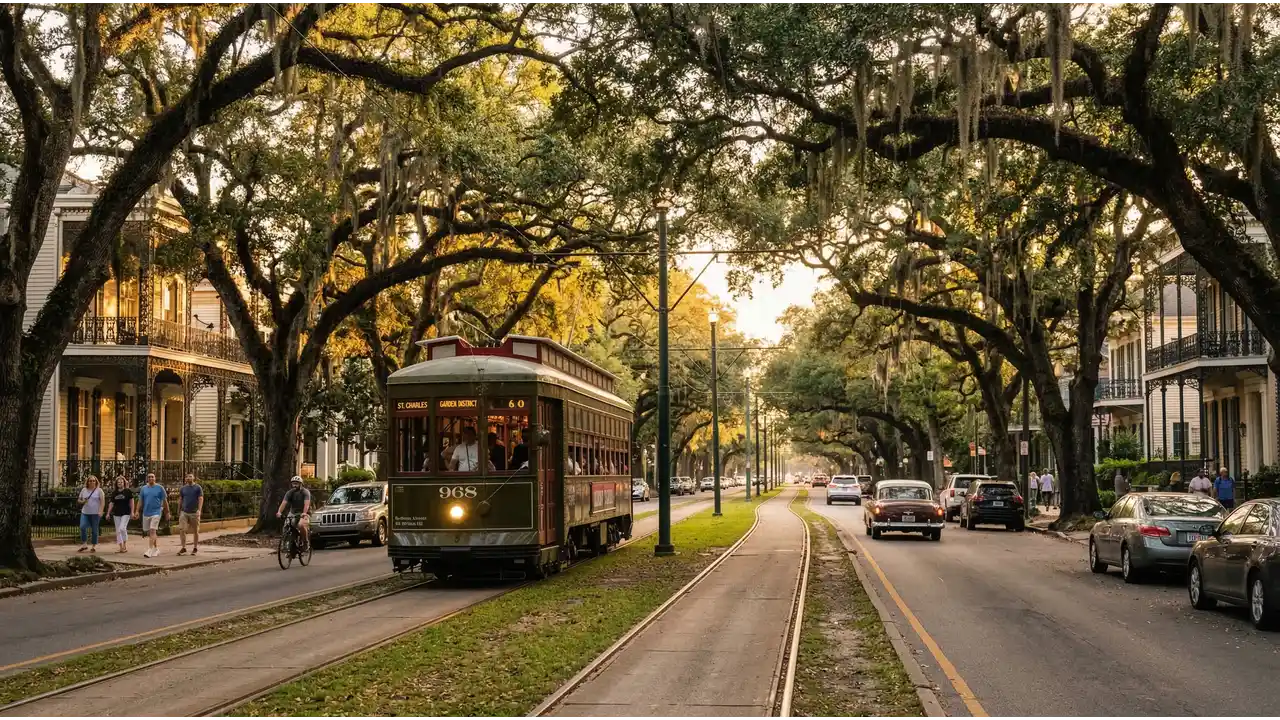
Arkansas is a rural and small-city state in the south-central US with a low cost of living and slower pace than major urban centers. Most residents live in towns under 100,000 people, though Little Rock (the capital, population roughly 190,000) offers more amenities. The climate is humid subtropical with hot summers and mild winters. Manufacturing, agriculture, and healthcare drive the economy. Daily life centers on cars rather than public transit. The state has a significant retiree population and increasingly attracts remote workers seeking affordability. Social culture is conservative and church-centered. Natural scenery includes forests, rivers, and the Ozark Mountains in the north.
💡 Local Insights
Arkansas · 2026
Arkansas delivers low absolute costs because housing and land remain genuinely cheap outside Little Rock. A moderate lifestyle runs $2,300/month, with housing at $810/month and groceries at $481/month. That housing figure represents a one-bedroom apartment in a town like Fayetteville or Conway, or a two-bedroom in smaller cities like Hot Springs. Rural areas and secondary towns (Eureka Springs, Jonesboro, Pine Bluff) run lower. Groceries are inexpensive because of competition from regional chains and agricultural production. Eating out is cheap, with casual meals under $10 and a restaurant entree under $15. Transportation is mandatory; there is no meaningful public transit outside Little Rock. A used car costs $15,000-$20,000 and gas is state average. Healthcare is a cost advantage for remote workers with good insurance. Expats find Arkansas genuinely affordable but often report isolation. The state offers no special visa or tax breaks for foreigners. Local wages are low ($35,000-$45,000 median), so cost advantage matters most to remote workers with outside income.
Frequently Asked Questions
How much does it cost to live in Arkansas per month?
A moderate lifestyle costs $2,300/month. This covers housing ($810/month), groceries ($481/month), utilities (around $150/month for a one-bedroom apartment), transport (roughly $400/month with a car and gas), and discretionary spending. A budget tier lifestyle runs $1,380/month by cutting housing, eating out less, and using secondhand goods. A comfortable lifestyle requiring more space, dining out regularly, and recreation costs around $3,565/month. Actual spending varies by city; Little Rock runs higher, rural towns lower.
What is the average rent in Arkansas?
Average monthly housing costs are $810, which reflects a one-bedroom apartment in a mid-size town like Fayetteville or Conway. In Little Rock, a one-bedroom apartment rents for $900-$1,100/month and a two-bedroom for $1,200-$1,500/month. Smaller towns like Hot Springs or Eureka Springs run $650-$850/month for one-bedroom apartments. Mobile homes or older rental homes in rural areas can run $500-$700/month. House rentals (three-bedroom) range from $900/month in small towns to $1,400/month in Little Rock suburbs. Utilities add $120-$180/month depending on season and efficiency.
Is Arkansas cheap to live in for expats?
Yes, Arkansas is genuinely cheap by international standards and by US comparison. Rent, food, and transport costs are 30-40% below the US average. For expats from Western Europe, Asia, or urban America, it will feel very affordable. However, expats often find Arkansas isolating. There are no significant expat communities outside Little Rock. Most residents are American-born, churches and civic groups are the social center, and cultural amenities are limited. English is the working language, but you will hear Southern dialect and colloquialisms. If you prioritize low cost over cultural diversity and urban amenities, Arkansas works. If you need expat community or cosmopolitan infrastructure, consider Austin, Nashville, or Denver instead.
How much does food cost per month in Arkansas?
Groceries cost around $481/month, reflecting a person buying staples and cooking at home. A gallon of milk runs $3.50-$4.00, a pound of chicken $8-$10, bread $2.50-$3.50, and a dozen eggs $3.00-$4.00. Eating out is cheap: a burger and fries run $8-$12, a diner lunch $9-$14, and casual restaurant entrees $12-$18. Grocery chains like Walmart Super Centers, Save-A-Lot, and regional chains dominate. Farmers markets operate in Fayetteville, Little Rock, and larger towns, spring through fall, with local produce cheaper than supermarkets. Alcohol is cheaper than many US states, with beer $6-$8 per six-pack and wine $8-$15 per bottle.
What salary do you need to live comfortably in Arkansas?
A comfortable lifestyle costs roughly $3,565/month, suggesting an annual income of $43,000 (after tax) for a single person. That supports renting a two-bedroom apartment ($900-$1,200/month), dining out 2-3 times per week, owning and maintaining a car, and traveling occasionally within the region. For a household of two, $70,000-$80,000 annual household income (combined, after tax) provides comfort. Remote workers earning $50,000-$60,000 USD annually have excellent quality of life. Local Arkansas wages are lower, typically $35,000-$50,000, so comfort often depends on outside income (remote work, retirement, investment). Cost of living alone does not create wealth if your income is local.
How does the cost of living in Arkansas compare to other places?
Arkansas is genuinely affordable compared to most US states. A moderate lifestyle costs $2,300 per month with housing at $810 monthly, which puts it well below the national average. Missouri, a neighboring peer state, runs $2,400 monthly for the same lifestyle, with housing at $903. Connecticut is considerably more expensive at $3,175 for a moderate lifestyle and $1,410 for housing. If you're comparing internationally, Arkansas costs more than Lithuania, which runs $1,600 monthly with housing at $640, but that reflects a developing economy versus a developed one. What makes Arkansas stand out is the low housing cost relative to overall expenses. You're getting substantial purchasing power here, particularly in smaller cities and rural areas, without sacrificing access to services.
Yes, but with real cuts. The budget tier of $1,380/month requires housing at $550-$700/month (shared rental, mobile home, or rural town apartment), groceries at $350/month (rice, beans, eggs, bulk staples), minimal transport (carpool or secondhand bike in town), and almost no discretionary spending. This budget eliminates dining out, entertainment, travel, new clothing, and most hobbies. Utilities, phone, and internet push costs up, leaving little buffer for emergencies or car repair. Some retirees and local workers live at this level. Remote workers or travelers passing through can manage it short-term by house-sitting or finding roommates. Long-term, $1,380/month in Arkansas means financial stress and limited quality of life.