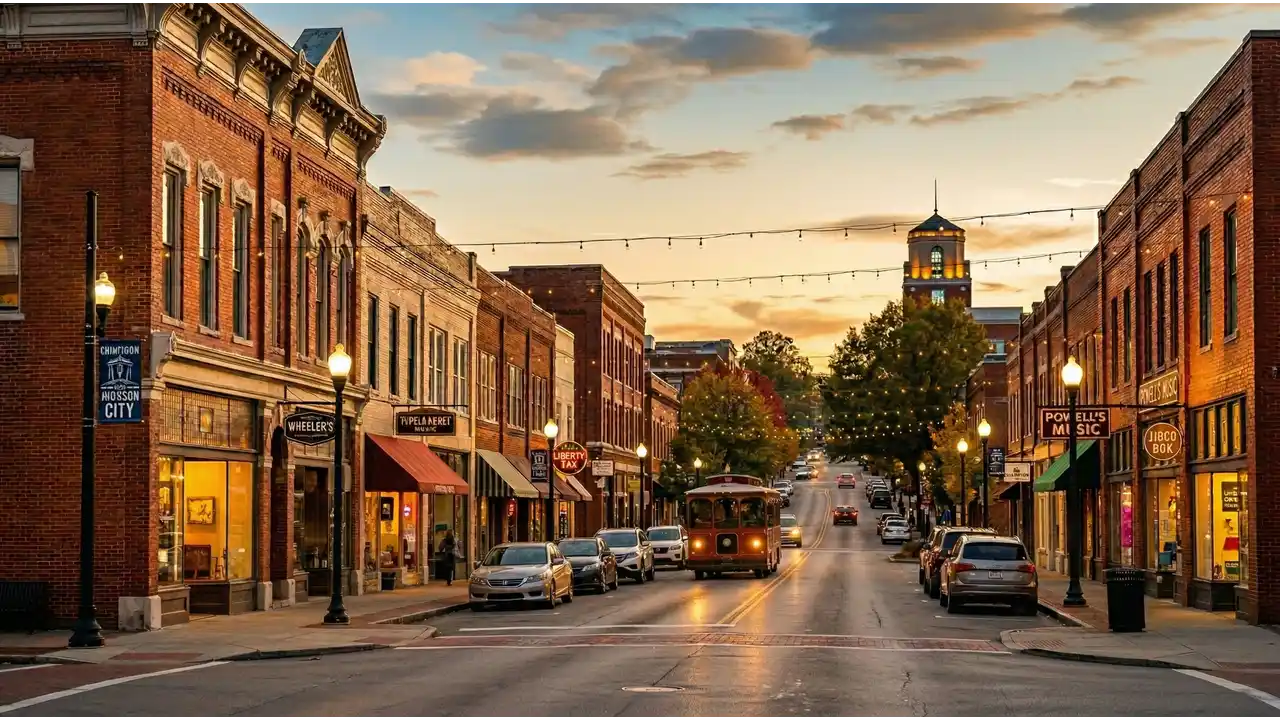
Asheville is a mountain city in western North Carolina with a population around 95,000, known for its arts community, craft beer scene, and outdoor access. The climate is mild compared to northern US winters, with moderate snow and humidity. Daily life centers on walkable downtown areas, local restaurants, and proximity to Blue Ridge Mountains. The population skews toward remote workers, retirees, creatives, and younger professionals drawn by lower costs than major metros. Traffic and parking in downtown are regular frustrations. The culture emphasizes local business over chains, though chain stores and restaurants have expanded steadily.
💡 Local Insights
Asheville NC · 2026
Asheville's costs have risen sharply over the past decade as remote work and lifestyle migration accelerated. Housing now averages $1,424 per month, with large variations by neighborhood. Downtown and South Slope near the brewery district command $1,600 to $1,900 for one-bedroom apartments. West Asheville and North Asheville neighborhoods run $1,200 to $1,500. Suburbs like Weaverville add 10-15 minutes commute but drop rents to $1,100 to $1,350. Groceries average $508 monthly, consistent with regional US prices. Eating out is moderately priced, with casual restaurants averaging $12 to $16 per entree. Public transit (HART buses) costs $1 per ride; most residents drive. Expats and remote workers pay standard local prices, no foreign discounts. The biggest cost driver remains housing scarcity, with inventory tight year-round. Utility costs are moderate due to mild winters, typically $100 to $150 monthly for a one-bedroom.
Frequently Asked Questions
How much does it cost to live in Asheville NC per month?
A moderate lifestyle in Asheville costs around $3,000 per month. This breaks down as housing at $1,424, groceries at $508, and remaining budget covering utilities, transport, dining out, and entertainment. A budget tier lifestyle runs $1,800 monthly, suitable only with roommates or studio apartments and minimal discretionary spending. A comfortable lifestyle with more dining out, activities, and personal space costs $4,650 monthly. Actual costs vary significantly by neighborhood, lifestyle choices, and whether you own a car.
What is the average rent in Asheville NC?
Average rent is $1,424 per month. One-bedroom apartments in downtown and South Slope neighborhoods (near breweries and galleries) range from $1,600 to $1,900. West Asheville and North Asheville are cheaper, typically $1,200 to $1,500 for one-bedroom units. Two-bedroom rentals average $1,700 to $2,100 in central locations. Suburbs like Weaverville offer $1,100 to $1,350 for one-bedrooms. Houses for rent start around $1,600 and climb quickly. Rental inventory is tight and competitive; landlords often request income verification and move quickly on applications.
Is Asheville NC cheap to live in for expats?
Asheville is moderately priced for the US but not cheap by global standards. Remote workers from Western Europe or Australia will find it affordable compared to home; those from Southeast Asia or Latin America will find it expensive. At $3,000 monthly for a moderate lifestyle, costs are lower than major US metros like New York or San Francisco but higher than smaller Southern cities like Greenville, South Carolina. Expats should budget $4,650 per month for genuine comfort and social life. The main appeal is stability, safety, and quality of life, not rock-bottom prices.
How much does food cost per month in Asheville NC?
Groceries average $508 per month for one person, covering basics like produce, meat, dairy, and pantry staples at chains like Food Lion, Harris Teeter, and Ingles. Fresh produce from local farmers markets is slightly higher but competitive. Eating out varies: casual restaurants (tacos, sandwiches, pizza) cost $12 to $16 per entree; mid-range restaurants run $18 to $28. Asheville's craft beer and coffee culture adds discretionary spending. Alcohol is tax-free on groceries but standard prices otherwise. Cooking at home is notably cheaper than frequent dining out.
What salary do you need to live comfortably in Asheville NC?
A comfortable lifestyle in Asheville requires approximately $4,650 per month, or $55,800 annually for a single person. This budget covers a one-bedroom apartment in a desirable neighborhood, regular dining out, car ownership and insurance, entertainment, and modest travel. For couples or those willing to live frugally, $3,000 monthly ($36,000 annually) is workable but tight. Remote workers should confirm their role allows North Carolina residency and understand any tax implications. The median household income in Asheville is around $50,000, so a $55,000+ individual salary provides above-average comfort.
How does the cost of living in Asheville NC compare to other places?
Asheville runs $3,000 per month for a moderate lifestyle, with housing at $1,424 per month. That puts it in the mid-range for comparable US cities. Raleigh, a peer city, comes in just slightly cheaper at $2,900 monthly overall, though its housing costs $1,317 per month. If you're coming from a more expensive market, Miami runs $3,925 per month with housing at $2,311, making Asheville noticeably more affordable. On the other end, Tucson offers lower costs at $2,550 per month and $930 for housing. Asheville's positioning reflects its appeal as a destination city with outdoor amenities and cultural activity. Your actual spending will depend on lifestyle choices, but these figures give you a clear baseline against other popular US locations.
Yes, but with significant constraints. The $1,800 budget tier requires a studio or shared housing (roommates), costing $700 to $900 monthly. This leaves $900 to $1,100 for groceries, utilities, transport, and everything else. You would need to cook most meals, use public transit or bike, avoid dining out and entertainment spending, and maintain an emergency fund separately. This works for young professionals, students, or those with very low expenses but excludes solo living with personal space, car ownership, or social spending. Most people at this budget live with roommates or move outside central Asheville.