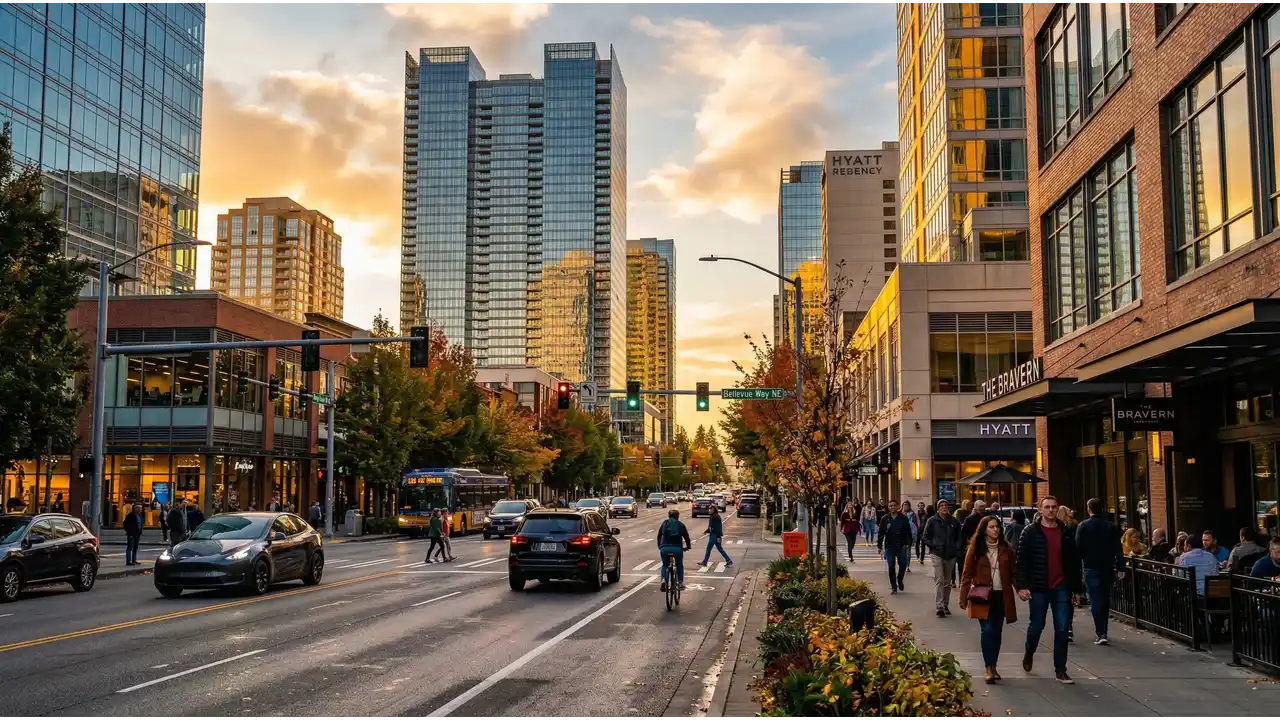
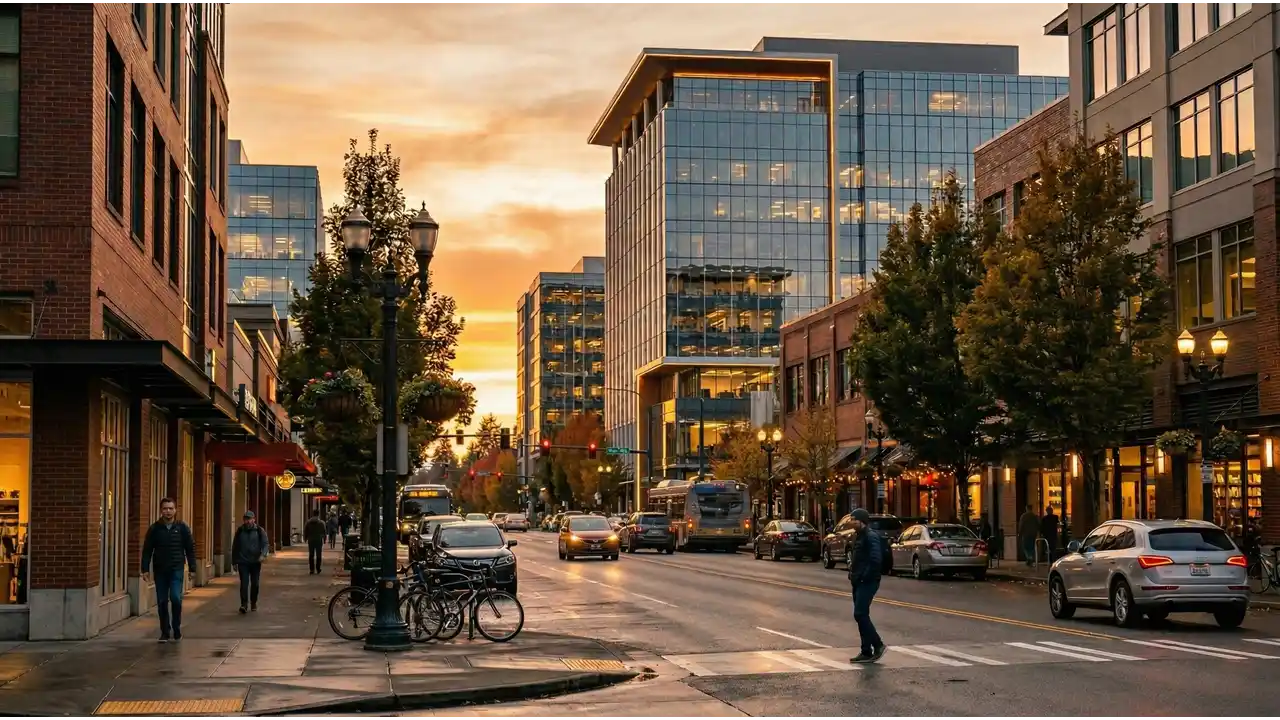
Bellevue is a planned suburb east of Seattle in King County, built around a downtown commercial core and residential neighborhoods spreading toward the Cascade foothills. The population is around 150,000, with a significant Asian American demographic (roughly 28 percent) and a high concentration of tech workers, finance professionals, and affluent families. Winters are mild and wet (November through March brings frequent rain). Summers are dry and mild. Daily life centers on car commuting or transit to tech campuses in the region, shopping at Bellevue Square and Bellevue Collection downtown, and outdoor recreation in nearby forests and parks. The city has a planned, orderly feel with good schools, low crime rates, and consistent upkeep of neighborhoods.
💡 Local Insights
Bellevue WA · 2026
Bellevue's cost of living reflects proximity to Seattle's tech economy and high regional wages. Housing dominates the budget at $2,375 per month, covering a range from $1,900 to $2,850 depending on neighborhood and unit type. Downtown and luxury neighborhoods cost more; areas closer to Redmond or further east cost less. Groceries run $573 per month for a moderate household, slightly above the US average due to higher regional costs. A household earning $80,000 to $100,000 annually can sustain the moderate lifestyle. Public transit via King County Metro connects Bellevue to Seattle and surrounding communities, though most residents rely on cars. Expats and remote workers relocating from lower-cost regions should expect significant adjustment; Bellevue is not cheap. Dining out is expensive (casual meals $15 to $25 per person), so meal planning saves money. Utility costs are moderate year-round because heating needs are minimal.
Frequently Asked Questions
How much does it cost to live in Bellevue WA per month?
A moderate lifestyle in Bellevue costs $4,150 per month. Housing runs $2,375 per month, food and groceries approximately $573 per month, transport around $300 to $400, and utilities roughly $150 to $200. That covers rent or mortgage, groceries, local transportation, phone, internet, insurance, and modest entertainment and dining out. A budget tier lifestyle (cutting dining out, using transit only, shared housing) is possible on $2,490 per month. A comfortable tier with more frequent dining out, a car, and more discretionary spending runs $6,433 per month.
What is the average rent in Bellevue WA?
Average rent in Bellevue is $2,375 per month. A one-bedroom apartment in downtown or near Bellevue Square typically costs $2,100 to $2,600 per month. Two-bedroom units range from $2,500 to $3,200. Single-family homes start around $2,800 per month for rental and go considerably higher. Neighborhoods like Factoria and the south end tend toward the lower end of ranges. Downtown and Crossroads are more expensive. Some landlords offer slight discounts for longer leases. Utilities (electric, gas, water) add another $150 to $200 monthly.
Is Bellevue WA cheap to live in for expats?
No. Bellevue is expensive by international and US standards. Expats relocating from London, Sydney, or Toronto will find similar or slightly lower housing costs, but those accustomed to Southeast Asia, Southern Europe, or Mexico will experience significant sticker shock. A moderate lifestyle at $4,150 per month is well above the global urban median. Salaries in tech and finance tend to be high enough to offset costs for employed expats, but contract workers, students, or retirees on fixed income will find budgeting tight. The tax environment is favorable (Washington has no state income tax), which helps offset high housing costs.
How much does food cost per month in Bellevue WA?
Groceries average $573 per month for a moderate household of two to three people. A loaf of bread costs $3 to $4, eggs $4 to $5 per dozen, chicken breast $6 to $8 per pound, and fresh produce varies seasonally from $2 to $4 per pound. Common supermarkets are Safeway, QFC, and Whole Foods. Bellevue has Asian markets (H Mart, Uwajimaya) with competitive prices on produce and specialty items. Eating out is expensive: casual dining (burger, sandwich) runs $14 to $18; mid-range restaurant meals $20 to $35 per person. Cooking at home is noticeably cheaper than dining out.
What salary do you need to live comfortably in Bellevue WA?
A comfortable lifestyle costs $6,433 per month, which translates to roughly $77,000 per year gross income before taxes (using a rough 1/12 rule). That allows for dining out regularly, occasional travel, a reliable car, and discretionary spending on hobbies and entertainment. For a household of two earning professionally, combined income of $120,000 to $150,000 is typical for genuine financial comfort. Household earning less than $60,000 will feel budget constraints. In tech roles, software engineers and product managers regularly earn $120,000 to $200,000-plus in salary and equity, which comfortably supports the comfortable tier and higher.
How does the cost of living in Bellevue WA compare to other places?
Bellevue sits in the middle-to-upper range of major U.S. metros. A moderate lifestyle here costs $4,150 per month, with housing at $2,375. That puts it nearly identical to Los Angeles, which runs $4,350 overall with housing at $2,446. Both cities serve as peer markets for tech and professional workers facing similar cost pressures.
Dallas is substantially cheaper, with a moderate lifestyle at $2,925 and housing at $1,377, making it roughly 30 percent less expensive overall. New York City, by contrast, is notably dearer at $5,775 for a moderate lifestyle and $4,100 for housing alone.
Bellevue's cost reflects its role as a major tech and business hub in the Pacific Northwest. If you're relocating from the coasts, expect spending comparable to Los Angeles. If you're coming from lower-cost metros like Dallas, the jump will be significant.
Yes, but with significant constraints. The budget tier of $2,490 per month requires shared housing or a studio apartment ($1,400 to $1,700), groceries and home cooking only ($400 to $450), and minimal discretionary spending. Car ownership is not realistic on this budget; public transit (King County Metro day pass $2.75) or bike commuting is necessary. Dining out, entertainment, and entertainment subscriptions must be cut or severely limited. This budget works for students, temporary residents, or those with supplementary income or financial support. It is tight but doable with discipline and local knowledge.