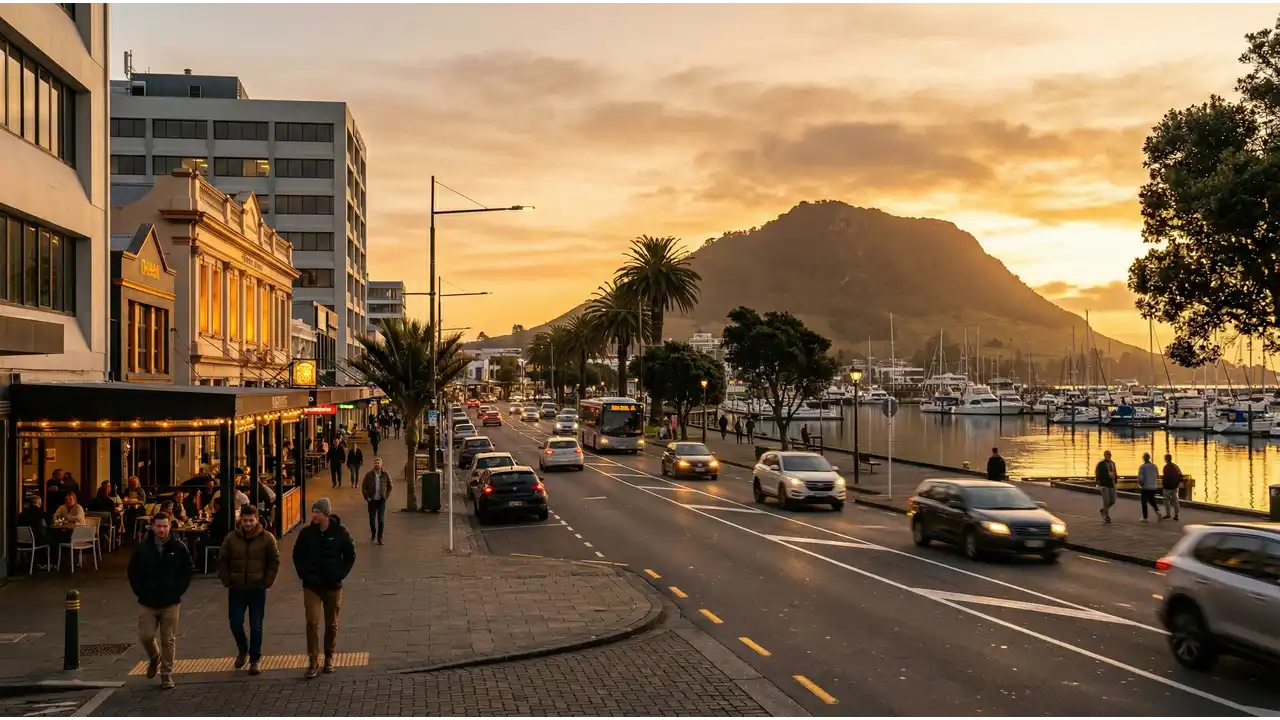
Bora Bora is a small South Pacific island in French Polynesia with roughly 10,000 residents. Daily life centers on the lagoon, tourism, and subsistence fishing. The climate is tropical and humid year-round, with cyclone season from November to April. Most residents are Polynesian; expats form a small but visible community tied to tourism, hospitality, and remote work. Days move slowly. Infrastructure is basic but functional. Internet is reliable enough for work. The island has one main town (Vaitape) with shops, schools, and government services. Outside town, life is quiet. Most people travel by boat or road around the lagoon. French is the official language; English is less common outside tourism.
💡 Local Insights
Bora Bora · 2026
Bora Bora is expensive by global standards because nearly everything is imported. Housing dominates your budget at $1,719 per month, reflecting scarcity and import costs. A modest one-bedroom bungalow or apartment rents for $1,200 to $2,200 depending on location and condition. Vaitape and lagoon-facing areas command premiums. Local housing is rare; most rentals cater to expats or tourists. Groceries cost $462 monthly for basic cooking at home, roughly double North American prices. Imported staples like dairy, grains, and packaged goods are pricey. Fresh local fish, tropical fruit, and vegetables from local markets are cheaper. Eating out runs $15 to $35 per meal at casual spots. No public transport exists; most people drive rental cars ($40 to $60 daily) or use boats. A used car costs $8,000 to $15,000. Utilities add $150 to $250 monthly. Fuel is expensive. Banking and healthcare are available but limited. Remote work income in stronger currencies makes the budget manageable; local wages do not.
Frequently Asked Questions
How much does it cost to live in Bora Bora per month?
A moderate lifestyle costs $3,150 per month. Housing accounts for $1,719, food (groceries) $462. The remainder covers utilities, transport, phone, dining out, and entertainment. A tighter budget of $1,890 monthly is possible if you cook at home, share housing, and minimize transportation. A comfortable lifestyle requiring more dining out, regular travel, and modern amenities runs $4,883 monthly. Actual costs depend heavily on whether you work remotely in a strong currency or earn local wages.
What is the average rent in Bora Bora?
Average housing costs are $1,719 per month. Rent ranges from $1,200 to $2,200 for a modest one or two bedroom property. Vaitape, the main town, and lagoon-facing locations command higher rents, often $1,800 to $2,200. Inland or residential areas may run $1,200 to $1,600. Luxury properties exceed $3,000. Most rentals are short-term or cater to expats; long-term leases with locals are uncommon. Furnished bungalows are standard. Deposits typically equal one month's rent. Real estate agents and expat forums are your main rental sources.
Is Bora Bora cheap to live in for expats?
No. Bora Bora is expensive by global standards and ranks among the costliest Pacific destinations. It is not comparable to Southeast Asia or Central America. Expats typically find it affordable only if earning remote income in US dollars, euros, or Australian dollars. Local wages are low, so traditional employment is not viable for newcomers. The high cost reflects import dependency, limited housing stock, and tourism-driven prices. Most expat residents work remotely or draw on savings. It suits sabbaticals, retirement with passive income, or location-independent work more than traditional relocation.
How much does food cost per month in Bora Bora?
Groceries average $462 monthly for home cooking. Imported staples like cheese, butter, and bread cost two to three times North American prices. A liter of milk is $3 to $4. Eggs are $4 to $5 per dozen. Rice and pasta are $1 to $2 per box. Fresh local fish at the market is affordable at $8 to $12 per pound. Tropical fruit and vegetables in season are reasonably priced. Eating out costs $15 to $20 for a casual lunch, $25 to $35 for dinner at a restaurant. A beer or soft drink is $3 to $5. Shopping at the main supermarket (Carrefour) is more expensive than local markets.
What salary do you need to live comfortably in Bora Bora?
A comfortable lifestyle costs $4,883 per month. This covers housing at $1,719, groceries and dining out at roughly $800 to $900, utilities $200, transport $300, and discretionary spending. To achieve this through local work is difficult; wages for tourism and hospitality jobs average $1,800 to $2,500 monthly. Most comfortable residents rely on remote work, rental income, pensions, or savings. Remote workers earning $5,000 to $8,000 monthly in USD or EUR find Bora Bora feasible. Retirees with $50,000 to $60,000 annual passive income can live securely.
How does the cost of living in Bora Bora compare to other places?
Bora Bora sits at the expensive end of the Pacific. A moderate lifestyle costs $3,150 per month, with housing running $1,719 monthly. That puts it above Australia, where a moderate lifestyle runs $2,800 with housing at $1,382 per month. It's considerably more expensive than Fiji, where you can live moderately on $1,350 monthly and find housing for $705. However, Bora Bora remains more affordable than Monaco, where the same moderate lifestyle costs $4,025 and housing reaches $2,323 per month. Your money stretches furthest in Fiji, moderately in Australia, tightly in Bora Bora, and barely at all in Monaco. If you're considering the region, Bora Bora works as a middle ground between Southeast Asian prices and top-tier luxury destinations, though still pricey by global standards.
Yes, but with discipline. A budget of $1,890 monthly means living in modest housing ($1,200 to $1,400), cooking at home, minimizing dining out, and using inexpensive transport. You would need to share housing or accept a small, plain bungalow inland. Groceries and home meals keep food costs low. No car; rely on cycling, walking, or occasional boat rides. This budget excludes travel, entertainment, and unexpected repairs. It is achievable if you earn this amount remotely in a strong currency or have very low expenses. However, it leaves little buffer for emergencies or quality-of-life spending. Most long-term residents find $2,500 to $3,500 more realistic.