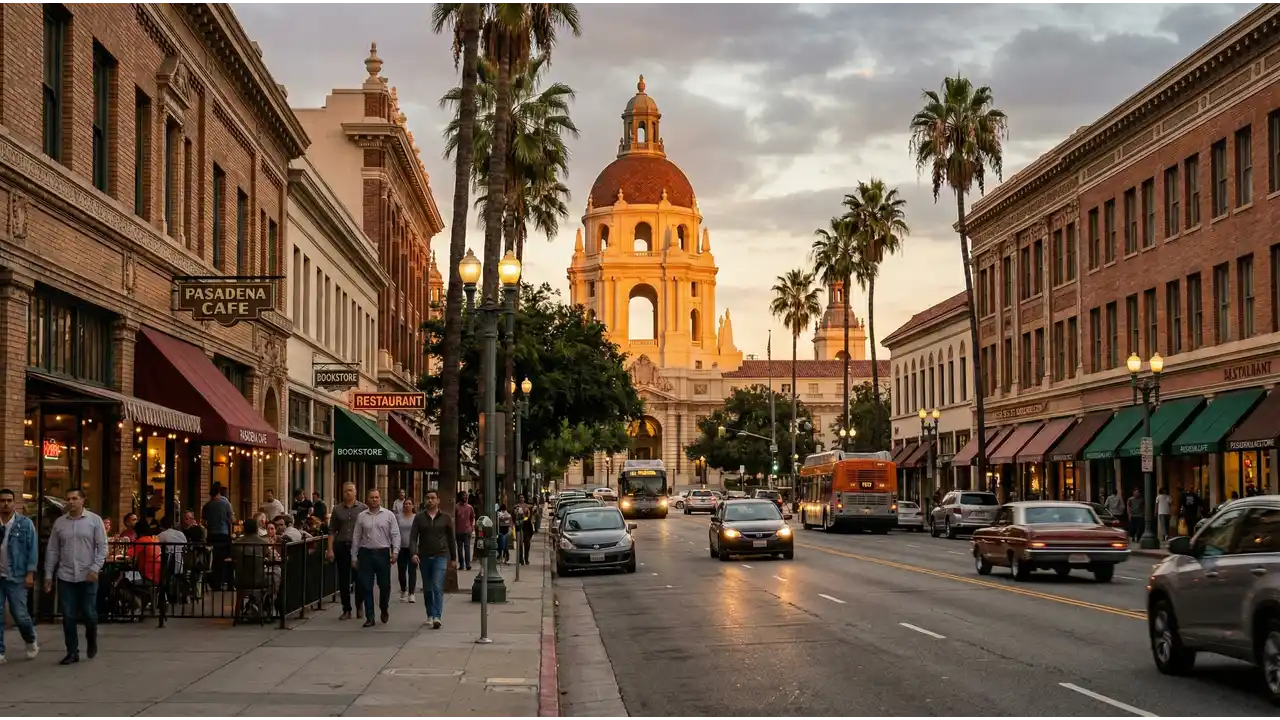
Burbank is a working-class city in the San Fernando Valley, 10 miles north of downtown Los Angeles. It's known as a media hub, home to major film studios, television production facilities, and the Walt Disney Company headquarters. The population is around 107,000, mostly working professionals and families. Daily life centers on car travel, studios, and local commercial strips. Weather is hot and dry year-round, with summer temperatures regularly exceeding 90 degrees Fahrenheit. The city has minimal public transit beyond the MetroLink commuter rail and local bus service. Neighborhoods vary from older residential areas near the studios to newer developments. Burbank lacks the coastal appeal of Santa Monica or Malibu, making it primarily a practical residential choice for people working in entertainment or nearby industries.
💡 Local Insights
Burbank CA · 2026
Burbank's cost of living reflects its location in the Los Angeles metro area, though it's less expensive than West LA or Santa Monica. Housing dominates the budget at $2,403 per month for a moderate lifestyle. One-bedroom apartments in central Burbank rent for $1,800 to $2,400, while two-bedroom units run $2,200 to $3,100 depending on age and location. Older complexes near the studios are cheaper; newer developments west of Magnolia Boulevard command higher rents. Groceries at $612 monthly are comparable to LA county averages, though specialty stores on Olive Avenue and Magnolia add costs if you avoid supermarkets. Eating out is expensive; casual lunch runs $14 to $18, dinner entrees $18 to $28. Public transit is limited, making a car essential. Gas, insurance, and parking add $200 to $300 monthly. Utilities run $120 to $180 in summer due to air conditioning demand. Expats find little price advantage over Los Angeles proper. The studio proximity means some salaries are higher than regional averages, offsetting living costs.
Frequently Asked Questions
How much does it cost to live in Burbank CA per month?
A moderate lifestyle in Burbank costs $4,300 per month. Housing accounts for $2,403, groceries $612, leaving roughly $1,285 for utilities, transport, dining out, and entertainment. The budget tier runs $2,580 monthly if you restrict housing to $1,400 to $1,600 and minimize dining and entertainment. The comfortable tier reaches $6,665 if you want a newer apartment, frequent dining out, and more discretionary spending. Your actual costs depend heavily on whether you own a car and how often you eat restaurant meals.
What is the average rent in Burbank CA?
Average rent in Burbank is $2,403 per month for a moderate lifestyle. One-bedroom apartments range from $1,800 to $2,400 depending on location and condition. Two-bedroom units typically rent for $2,200 to $3,100. Older complexes near the studios, particularly around Olive Avenue, are cheaper ($1,800 to $2,000 for one-bedroom). Newer buildings west of Magnolia Boulevard rent higher. Apartments with washer-dryer or garage add $150 to $300. Utility costs run $120 to $180 monthly, higher in summer. Single-family home rentals start at $2,800 but are rare. Most renters are studio workers and young professionals.
Is Burbank CA cheap to live in for expats?
No. Burbank is moderately expensive for expats coming from most of the world. At $4,300 monthly for a moderate lifestyle, it's comparable to central London or Toronto, costlier than most European cities, and far pricier than Asia or Latin America. Housing alone at $2,403 is substantial. Compared to other LA neighborhoods, Burbank offers no special advantage; it's actually cheaper than Santa Monica or West Hollywood but similar to Long Beach or Pasadena. The main draw is proximity to studios and relatively walkable commercial areas. Expats should budget for a car and higher utilities. Visa and tax residency rules matter more than cost for expat decisions here.
How much does food cost per month in Burbank CA?
Groceries cost roughly $612 monthly for a moderate diet. A week of groceries for one person runs $30 to $40 at Ralphs or Vons supermarkets. Eggs cost $4 to $6 per dozen, chicken breast $8 to $10 per pound, bread $3 to $4 per loaf. Farmer's markets on weekends offer slightly cheaper produce. Dining out is expensive: casual lunch $14 to $18, dinner entrees $18 to $28, coffee $5 to $6. Ethnic restaurants on Magnolia and Olive (Vietnamese, Mexican, Chinese) offer better value than chains. A month of regular restaurant dining easily adds $400 to $600 to food costs. Alcohol is 15 to 25 percent pricier than national average.
What salary do you need to live comfortably in Burbank CA?
The comfortable tier is $6,665 per month, suggesting a gross salary of roughly $80,000 annually to live without financial stress. This allows for a newer apartment, regular dining out, entertainment, and a small emergency fund. Accounting for federal, state, and FICA taxes in California (roughly 30 percent effective rate), you need gross income around $95,000 to $100,000 annually. Household income of $120,000 plus is comfortable for a family of three or four. Those earning less than $50,000 annually will find the budget tier ($2,580/month) tight, requiring roommates or shared housing. Studio workers and media professionals often earn above average, offsetting Burbank's cost premium.
How does the cost of living in Burbank CA compare to other places?
Burbank ($4,300/month moderate) is more expensive than Long Beach ($3,900) or Riverside ($3,400) but cheaper than Santa Monica ($5,200) or San Francisco ($6,100). Compared to US national average ($3,100), Burbank costs 39 percent more. Against international peers, it's pricier than Toronto ($3,800 CAD equivalent) or Sydney ($4,500 AUD equivalent), but cheaper than London ($4,900) or Tokyo ($5,100). If you're relocating from coastal California, Burbank offers modest savings. If coming from the Midwest or South, expect a 40 to 60 percent increase. The Los Angeles metro area as a whole ranks in the top 10 costliest US regions.
Can you live in Burbank CA on $2,580/month?
Yes, but with serious constraints. The budget tier of $2,580/month requires housing at $1,400 to $1,500 maximum, groceries around $400 to $450 (cooking most meals), and minimal dining out. This typically means a shared one-bedroom, studio, or room rental in an older complex near the studios or further from downtown. You'll need to cut entertainment, avoid restaurant meals, use public transit or bike, and keep utilities minimal. A single income of $3,500 to $4,000 gross monthly is workable with discipline. Couples can stretch further. It's feasible for students, studio interns, or those with very low discretionary spending. Any medical emergency, car repair, or rent increase becomes a genuine hardship. Most locals earning median salaries find the budget tier unsustainable long-term.