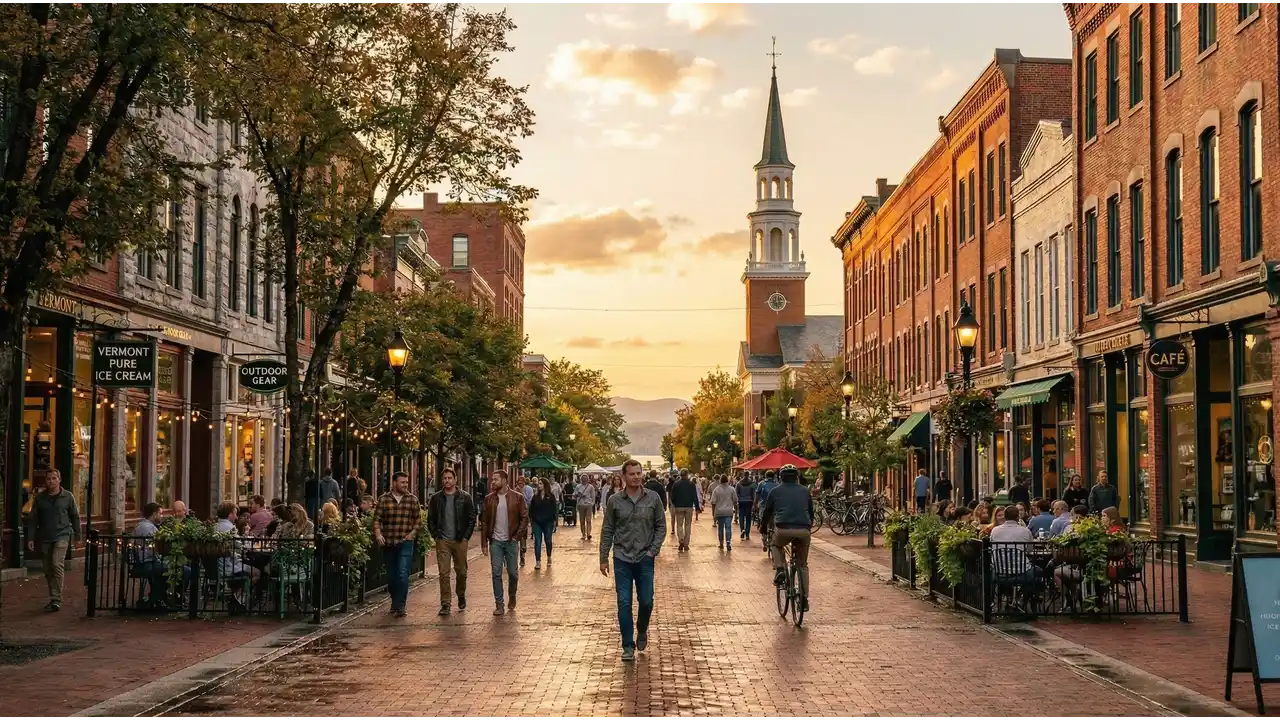
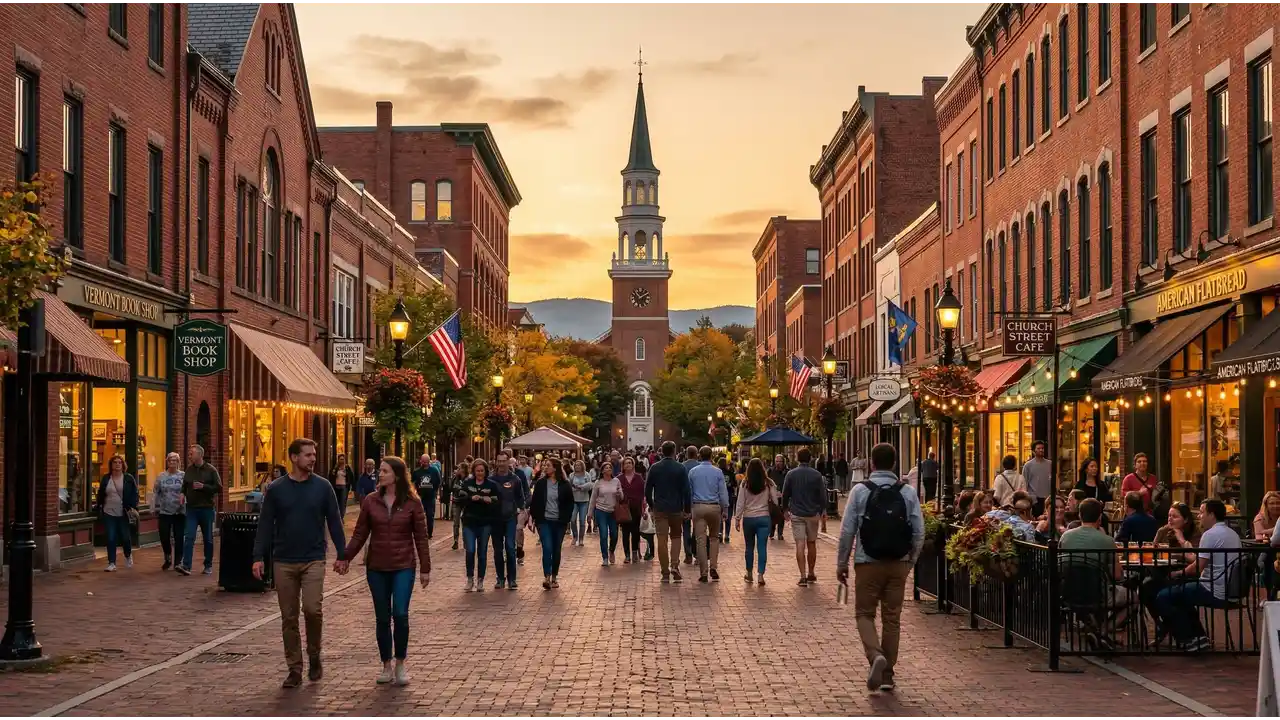
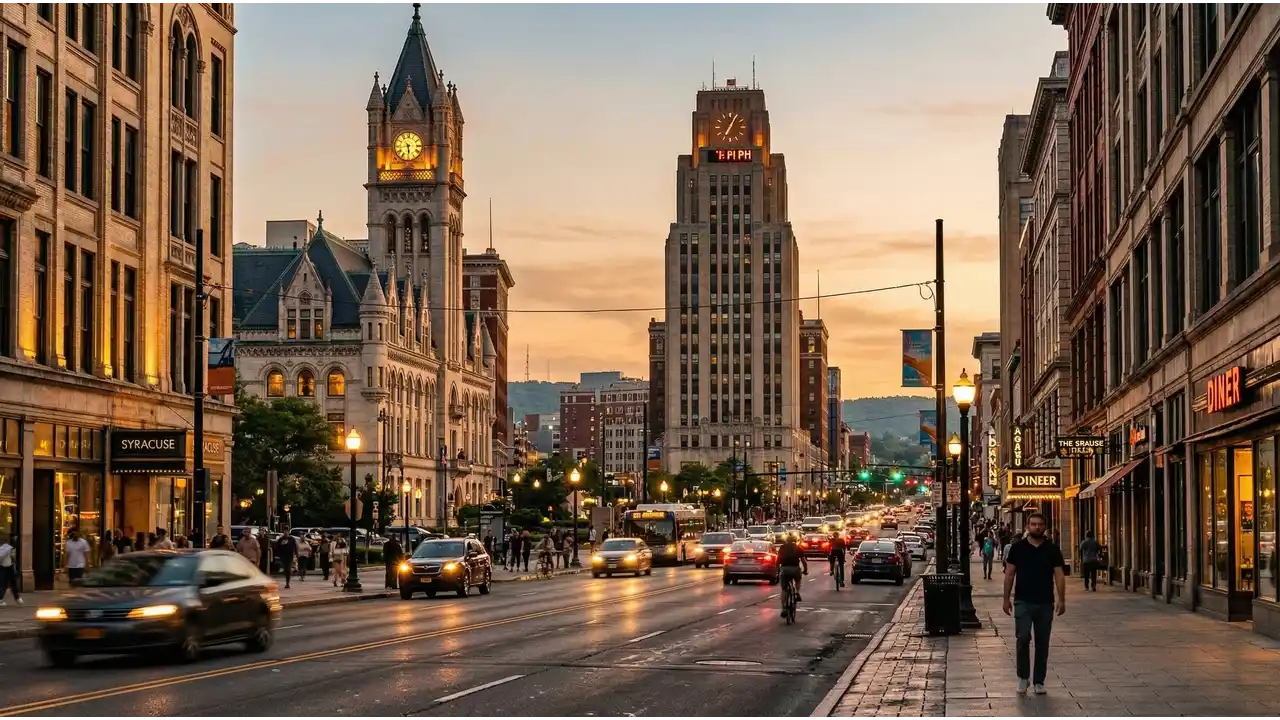
Burlington is Vermont's largest city, with about 45,000 people in the metro area. It sits on Lake Champlain, with the Green Mountains visible from downtown. Winters are long and cold, typically November through March. The population skews younger because of the University of Vermont, which anchors the local economy alongside healthcare, tech startups, and tourism. Daily life centers on Church Street, a walkable downtown pedestrian mall with local shops and restaurants. Most residents own cars, though the local bus system (CCTA) is free and covers the city. The culture is outdoorsy and politically progressive. Housing is tight and expensive for the region. Summers draw tourists; winter quiets things down considerably.
💡 Local Insights
Burlington VT · 2026
Burlington's cost of living at $3,875/month for a moderate lifestyle puts it well above rural Vermont but below Boston or New York. Housing is the dominant expense at $2,171/month. Rental stock is limited, especially affordable units, because of steady demand from students, healthcare workers, and remote workers relocating from higher-cost metros. Landlords typically require income verification and good credit. Groceries average $550/month and are pricier than the national average due to the rural supply chain, though competition from Hannaford and the local food co-op keeps prices in check. Eating out costs more than national averages. Transportation is secondary; the CCTA bus system is free, but most households maintain a car for winter access. Utilities run higher in winter (heating) and lower in summer. Expat housing hunters often overpay initially because inventory moves fast. A practical move: arrive in summer or fall before winter rentals spike, and budget for at least $1,800 for a one-bedroom apartment downtown or $1,600 in adjacent neighborhoods.
Frequently Asked Questions
How much does it cost to live in Burlington VT per month?
A moderate lifestyle costs $3,875/month. Housing runs $2,171/month, food around $550/month for groceries. Utilities, transportation (bus is free but most people own a car), entertainment, and dining out make up the balance. A tighter budget of $2,325/month cuts housing to shared rentals or roommate situations and prioritizes home cooking. The comfortable tier is $6,006/month, which allows for larger housing, dining out regularly, and travel. Cost varies by lifestyle choices and neighborhood selection within the city.
What is the average rent in Burlington VT?
Housing averages $2,171/month. A one-bedroom apartment in downtown Burlington or the Old North End runs $1,800 to $2,100/month. Two-bedroom units range from $2,200 to $2,600. Shared rentals or rooms are $800 to $1,200. Adjacent neighborhoods like the South End or Winooski (just south of Burlington) offer slightly lower rates, $1,600 to $2,000 for one-bedrooms. Utilities (heat, electric, water) add $150 to $250 monthly, higher in winter. Rental market is tight year-round. Most landlords require first month, last month, and security deposit upfront, plus proof of income at three times the rent.
Is Burlington VT cheap to live in for expats?
Not particularly. Burlington is expensive for New England by rural standards but affordable compared to Boston, Portland, or Toronto. Expats from high-cost metros (San Francisco, London, Sydney) find it reasonable. Those from lower-cost countries or rural areas will find housing and food noticeably pricier than expected. The university and healthcare jobs attract international students and skilled workers who accept the higher costs. The main advantage is walkability and access to outdoor recreation without major city premiums. Expect to pay more than comparable rural towns in the region but less than East Coast metros.
How much does food cost per month in Burlington VT?
Groceries average $550/month for one person eating a moderate diet. A loaf of bread costs $3 to $4, eggs $5 to $6/dozen, milk $4/gallon, chicken $8 to $10/lb. Produce prices rise in winter due to regional supply. The Burlington Food Coop (co-op member-owned) and Hannaford supermarket are the main options. Eating out is pricier. Casual lunch runs $14 to $18, dinner entrees $16 to $25. Church Street has upscale and casual options; prices reflect tourist economy. Coffee is $3 to $4 at most places. Farmers markets operate May through October with lower seasonal produce prices.
What salary do you need to live comfortably in Burlington VT?
Comfortable living costs $6,006/month, or about $72,000/year before taxes. This supports independent housing (not shared), regular dining out, travel, and savings. For a household of two, $120,000 to $130,000 combined income provides stability and cushion. Most full-time jobs in healthcare, tech, and education pay $50,000 to $70,000; supplementary remote work is common. University of Vermont positions often include benefits that reduce out-of-pocket costs. Self-employed individuals should target 1.5 times the comfortable figure to account for taxes and irregularity. Couples often meet the comfortable threshold by combining two moderate incomes.
How does the cost of living in Burlington VT compare to other places?
Burlington sits in the middle tier for Northeast cities. A moderate lifestyle here costs $3,875 per month, with housing at $2,171. This makes Burlington notably more expensive than Fort Worth, where a moderate lifestyle runs $2,775 with housing at $1,240. Boise offers a closer comparison as a peer city, though still cheaper overall at $3,100 monthly while housing there costs $1,523. San Francisco, by contrast, represents a significant jump at $5,200 for a moderate lifestyle and $3,302 for housing alone. Burlington's cost reflects New England pricing and demand for a college town with strong local food and outdoor recreation scenes. If you're coming from a major coastal city, you'll likely find relief here. If you're relocating from the Mountain West or South, expect noticeably higher expenses.
Yes, but with constraints. This is the budget tier and requires discipline. Rent must stay below $1,400/month, which means a shared apartment, room rental, or edge neighborhoods like Winooski or the South End. Groceries should be $400 to $450/month, emphasizing bulk items and home cooking (limited takeout). No car ownership; rely on the free CCTA bus system. Utilities, phone, and internet run $120 to $150. Entertainment and dining out are minimal. Unexpected expenses create strain. This works for students, minimalist earners, or those with supplemental support. It's livable but requires active budgeting and geographic flexibility within the metro area.