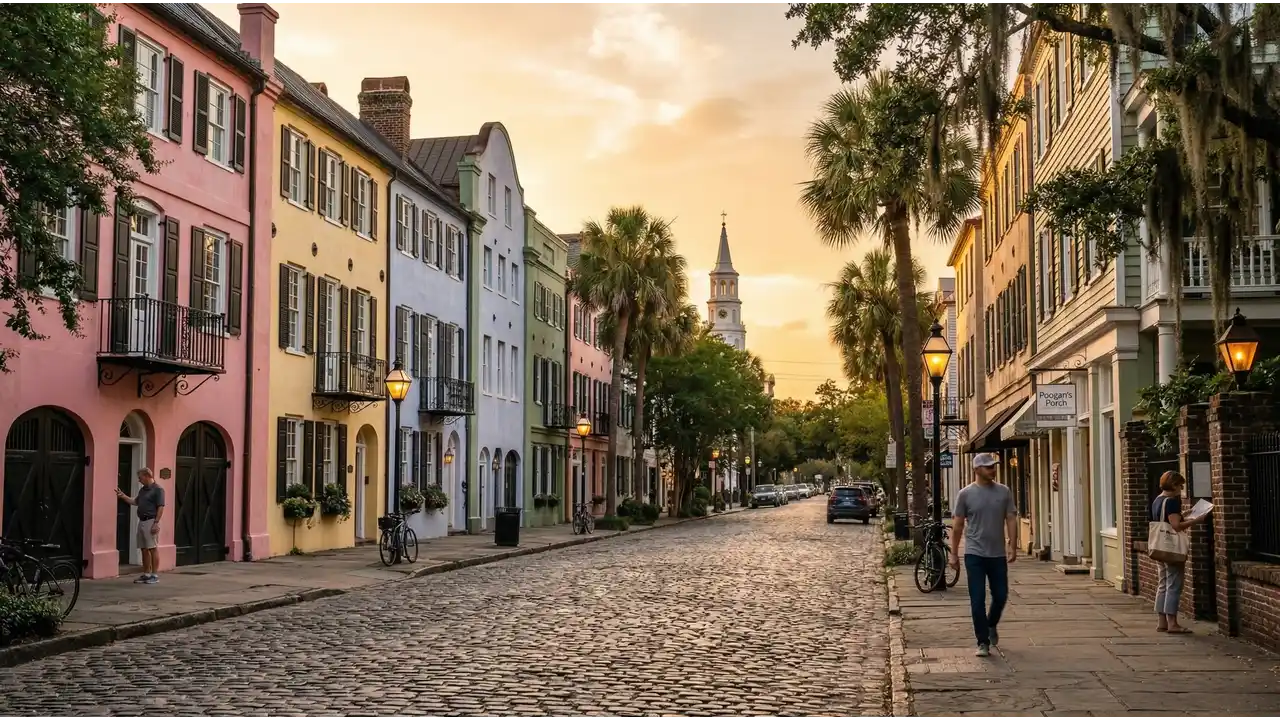
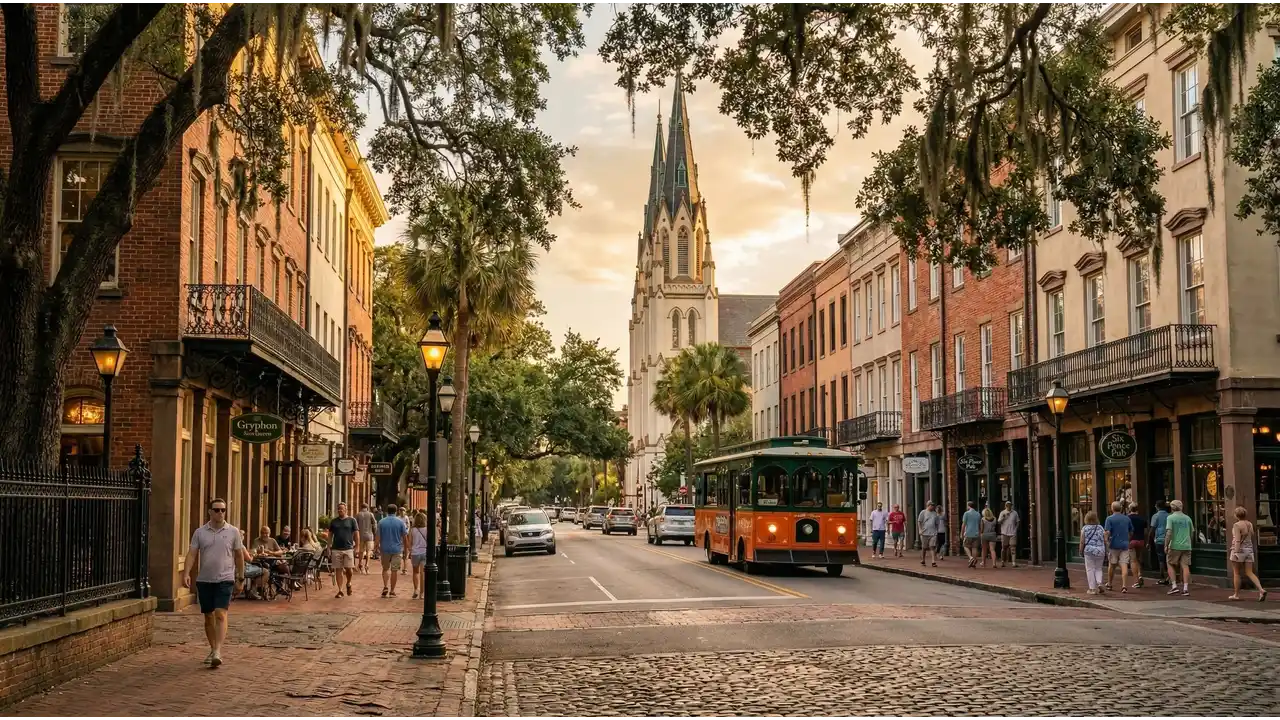
Charleston is a port city on South Carolina's coast with a compact historic district, warm subtropical climate, and a mix of long-term residents, retirees, and people working in tourism, healthcare, and tech. Daily life centers on the downtown peninsula, where streets are walkable but car-dependent beyond it. Summers are hot and humid (90+ degrees). The city draws professionals from the Northeast and Europe alongside families with deep roots. Beyond the tourist areas, neighborhoods range from working-class to upscale, each with distinct character. Traffic and parking are genuine frustrations during peak season.
💡 Local Insights
Charleston · 2026
Charleston has experienced real housing appreciation over the past decade, driving up both rentals and purchases. Monthly rent averages $1,767, but this masks sharp variation: a one-bedroom in downtown or nearby Cannonborough runs $1,400 to $1,800, while the same in West Ashley or James Island lands closer to $1,200 to $1,500. Roommate situations and older multi-unit rentals can undercut these figures. Groceries average $503 monthly for a single person buying standard supermarket items; farmers markets (open year-round at Marion Square) offer modest savings on produce but require cash or local cards. Eating out is pricier than the Midwest but cheaper than major Northeast cities. No public transit to speak of means most residents budget for a car (insurance, fuel, parking). Expats sometimes discover that tourist-area pricing, especially restaurants and accommodations, bears little relation to what locals actually pay. Neighborhoods like Folly Beach and Sullivan's Island command premium rents; James Island and Goose Creek offer lower costs with longer commutes.
Frequently Asked Questions
How much does it cost to live in Charleston per month?
A moderate lifestyle in Charleston costs $3,325 per month. This breaks down to housing at $1,767, groceries at $503, and the remainder covering utilities, transport, dining out, and miscellaneous expenses. The budget tier is $1,995/month for stripped-down essentials (shared housing, minimal dining out, no car). A comfortable lifestyle runs $5,154/month, supporting a one-bedroom apartment, regular restaurant meals, and discretionary spending. Individual costs vary significantly by neighborhood, personal habits, and whether you own a car.
What is the average rent in Charleston?
Average rent is $1,767 per month. One-bedroom apartments in downtown Charleston, Cannonborough, or near The Citadel range $1,400 to $1,800. West Ashley and James Island (more suburban, car-dependent) run $1,200 to $1,500 for similar units. Two-bedroom rentals typically start around $1,900 to $2,200 in accessible neighborhoods. Furnished short-term rentals and tourist-district rooms cost 40 to 60 percent more. Older multi-unit buildings and properties with landlords willing to negotiate can come in below the average. Peak season (October through April) sees higher prices and faster turnover.
Is Charleston cheap to live in for expats?
Charleston is moderately priced for expats compared to coastal US cities like Boston or San Francisco, but significantly more expensive than most of Southeast Asia or Central America where many expats have lived previously. Housing costs are real and have climbed steadily. Europeans and Canadians typically find it reasonable; those accustomed to $400 rent in Vietnam may experience sticker shock. The lack of walkable neighborhoods outside downtown means almost all expats end up buying or leasing a car, adding $400 to $600 monthly in payments, insurance, and fuel. Restaurants and services cater to tourists at inflated prices, but locals know cheaper spots. Expats save most by living outside the peninsula.
How much does food cost per month in Charleston?
Groceries average $503 monthly for one person. A gallon of milk costs around $3.50, a dozen eggs $2.50 to $3.50, chicken breast $4 to $6 per pound, and pasta $1 to $1.50 per box. Farmers markets at Marion Square and on Folly Beach offer seasonal produce at competitive prices but typically require cash. Eating out is moderately expensive: casual lunch runs $12 to $16, dinner at a mid-range restaurant $18 to $35 per person. Grocery chains include Harris Teeter, Harris Teeter, and Food Lion; specialty stores like Harris Teeter's organic section or local co-ops cost 15 to 25 percent more. Alcohol is taxed by the state; beer and wine at grocery stores are cheaper than bars.
What salary do you need to live comfortably in Charleston?
A comfortable lifestyle in Charleston requires approximately $5,154 per month, or roughly $62,000 annually before taxes. This supports independent housing (one-bedroom apartment or small house), regular dining out, entertainment, travel, and a buffer for emergencies. Most financial advisors suggest earning 1.5 to 2 times your monthly expenses to account for taxes and savings, pointing toward $75,000 to $100,000 gross income. This varies by age, household size, and lifestyle. Couples or those with roommates can live on less. Local job market salaries (healthcare, tech, hospitality) typically range $35,000 to $65,000 depending on role and experience, so many residents supplement with remote work or rely on relocation packages.
How does the cost of living in Charleston compare to other places?
Charleston sits in the moderate range for U.S. coastal cities. A moderate lifestyle costs $3,325 per month, with housing running $1,767 per month of that total.
For context, Santa Fe, New Mexico, a peer city in terms of character and amenities, costs $3,175 monthly with housing at $1,631, making it slightly cheaper overall. If you're willing to trade coastal access for a larger metro area and lower costs, Albuquerque comes in at $2,725 per month with housing at $1,182, a meaningful difference for budget-conscious relocators.
On the other end, Boston runs $4,675 monthly with housing at $2,813. So Charleston costs roughly 30 percent less than Boston while maintaining similar urban density and professional opportunity. The main driver of Charleston's moderate positioning is housing, which sits between smaller Southwestern cities and major Northeast metros.
Yes, but with real constraints. The budget tier of $1,995/month requires roommates (shared rent $800 to $1,000 per person), minimal dining out, no car ownership, and use of ride-share or cycling. Groceries must stay under $350 monthly (rice, beans, sales, farmers markets). This budget eliminates gym memberships, frequent entertainment, and travel. Healthcare costs and unexpected car repairs create risk. Most people on $1,995/month are students, early-career professionals, or those with very low housing costs via family or employer arrangements. It is doable but leaves little margin for error. After taxes, a gross income of $28,000 to $32,000 approximates this budget.