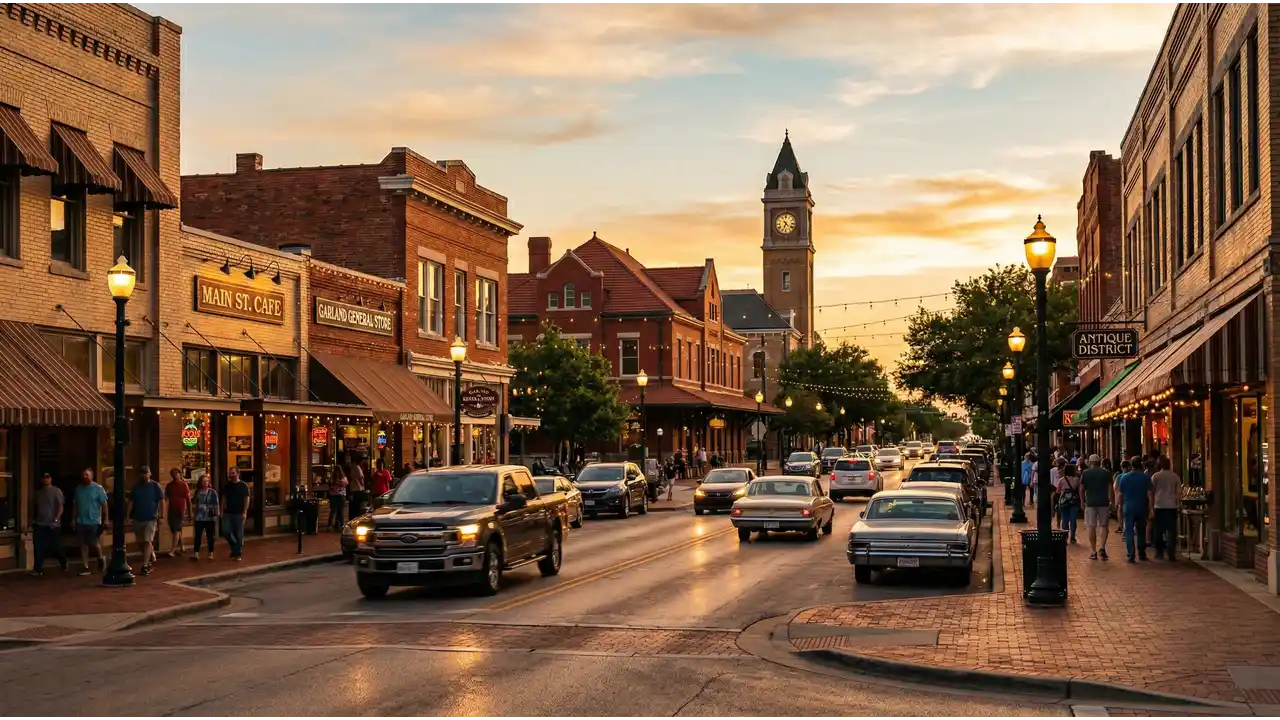
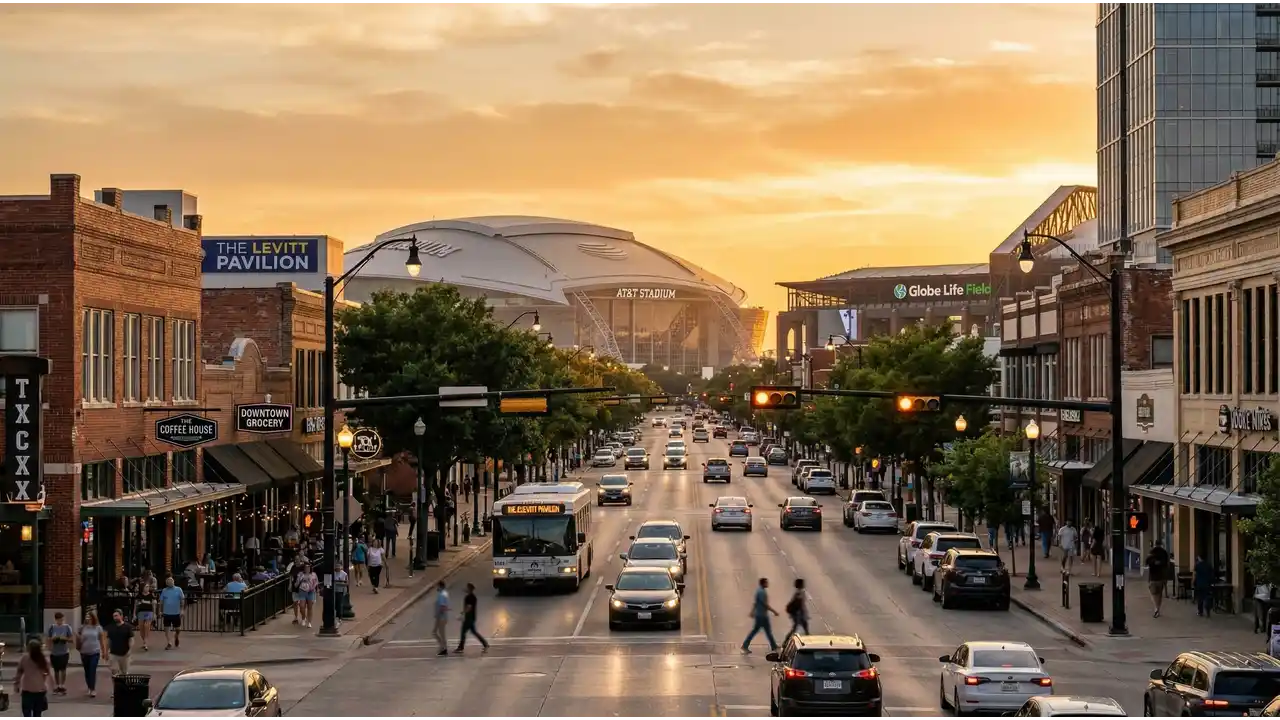
Dallas is a sprawling Sun Belt city of 1.3 million people, anchored by downtown but spreading across flat terrain into suburbs. The economy runs on energy, finance, tech, and healthcare. Summers are hot and long (90s–100s are routine); winters are mild. People here tend to be direct and work-focused. Traffic is heavy during rush hours. The city lacks the walkability of older metros, so a car is necessary for most residents. Neighborhoods vary sharply: upscale enclaves like Highland Park, middle-class suburbs like Plano and Frisco, and cheaper areas further out or south of downtown.
💡 Local Insights
Dallas · 2026
Dallas costs less than most major US metros, but it is not a bargain city. Housing drives the overall budget at $1,377/month, which covers a one-bedroom apartment in walkable central areas or a two-bedroom in outer suburbs. North Dallas (Plano, Frisco) and the Uptown corridor push prices higher; south Dallas and far suburbs keep them lower. Groceries run $499/month for a single person buying standard US supermarket goods like milk ($3.50/gallon), chicken ($6–8/pound), and vegetables. Eating out is affordable compared to coastal cities: casual lunch is $10–15, dinner with drinks around $30. Public transit exists but is limited; DART operates buses and light rail, though coverage is sparse. Most residents drive, meaning gas and car insurance factor heavily into actual monthly spend. Used car prices are near national average. Expats should expect Dallas pricing to feel similar to other major Texas cities but notably cheaper than New York, San Francisco, or Boston.
Frequently Asked Questions
How much does it cost to live in Dallas per month?
A moderate lifestyle costs around $2,925/month for one person. That breaks down to $1,377 for housing (rent or mortgage), $499 for groceries, and the remainder for transport, utilities, dining out, entertainment, and personal care. A budget tier setup runs $1,755/month, which means shared housing, minimal dining out, and careful spending. A comfortable tier with more space, regular dining out, and leisure activities runs $4,534/month. Actual costs depend heavily on neighborhood choice and car ownership.
What is the average rent in Dallas?
Average rent aligns with $1,377/month for a one-bedroom apartment in central or moderately desirable areas. Studio and one-bedroom units in Uptown or Deep Ellum range from $1,200–1,600. Two-bedroom apartments in the same areas run $1,500–2,000. Suburbs like Plano and Irving offer one-bedrooms from $1,000–1,300. Far-out areas south of downtown drop to $900–1,200. Luxury downtown high-rises exceed $2,000 for one-bedroom. Prices have risen steadily but remain below national urban averages. Most leases require proof of income, credit checks, and typically first month plus security deposit upfront.
Is Dallas cheap to live in for expats?
Dallas is moderately priced for expats. It costs significantly less than London, Singapore, or Sydney, and somewhat less than New York or Boston. However, it is not cheap compared to smaller US cities or Mexico City. For expats accustomed to London or Western Europe, Dallas feels affordable on housing and food but requires factoring in a car and gas costs that don't exist in car-free cities. Healthcare costs are lower than many expat destinations, especially if you have employer coverage. The tradeoff is sprawl: you pay less per month but spend time driving. Expat communities exist in North Dallas and Uptown, where English-language services and international networks are established.
How much does food cost per month in Dallas?
Groceries for one person average $499/month at supermarkets like Walmart, Kroger, or Tom Thumb. A week of basic groceries costs around $50–70: chicken breasts run $6–8 per pound, milk $3.50/gallon, bread $2–3, eggs $4–6 per dozen, and fresh produce $1–3 per item. Eating out is affordable: lunch specials $10–15, casual dinner $15–25, upscale restaurant dinner $40–70 per person. Ethnic groceries (Asian, Hispanic, Middle Eastern markets) offer cheaper produce and proteins. Dallas has many taco stands and food trucks with full meals under $10. Meal kit services and fast-casual chains (Chipotle, Panera) are widespread.
What salary do you need to live comfortably in Dallas?
A comfortable lifestyle costs $4,534/month, suggesting a gross monthly income of $13,600–14,000 (applying the standard 30-35% housing cost rule). That translates to roughly $55,000–56,000 annually for a single person. This budget allows a one-bedroom in a nice neighborhood, regular dining out, a car, and leisure spending. For a household of two, $80,000–90,000 combined income provides comparable comfort. Renters should aim for income at least 3 times the monthly rent; lenders typically require debt-to-income ratios under 43%. Dallas salaries in tech and healthcare are competitive with national averages, though lower than Silicon Valley or New York.
How does the cost of living in Dallas compare to other places?
Dallas at $2,925 per month for a moderate lifestyle sits in the middle of the Texas cost spectrum. It's cheaper than Miami, where a moderate lifestyle costs $3,925 monthly, but more expensive than Wichita, which runs $2,325 per month. Las Vegas comes in as a close peer at $2,825 monthly. Housing is where Dallas shows real value. At $1,377 per month, Dallas housing costs significantly less than Miami at $2,311 monthly, though more than Las Vegas at $1,230 or Wichita at $808. If you're coming from a coastal city, Dallas will feel like a genuine step down in price across the board. Compared to smaller regional markets, you'll pay the premium that comes with a major metropolitan area, but that premium is still modest by national standards.
Yes, but with significant constraints. That budget tier requires a one-bedroom apartment or shared housing at $900–1,050, leaving $800–900 for food, utilities, transport, phone, and everything else. Groceries must stay around $300–350 monthly (rice, beans, budget proteins, minimal produce). Dining out happens rarely or at food trucks. A used car is essential but affordable; public transit covers some routes but is unreliable for most commutes. No subscriptions, limited entertainment, minimal savings. This works for students, early career workers, or those minimizing expenses short-term. Long-term sustainability requires income growth or shared housing. Healthcare costs (copays, insurance) can break this budget quickly without employer coverage.