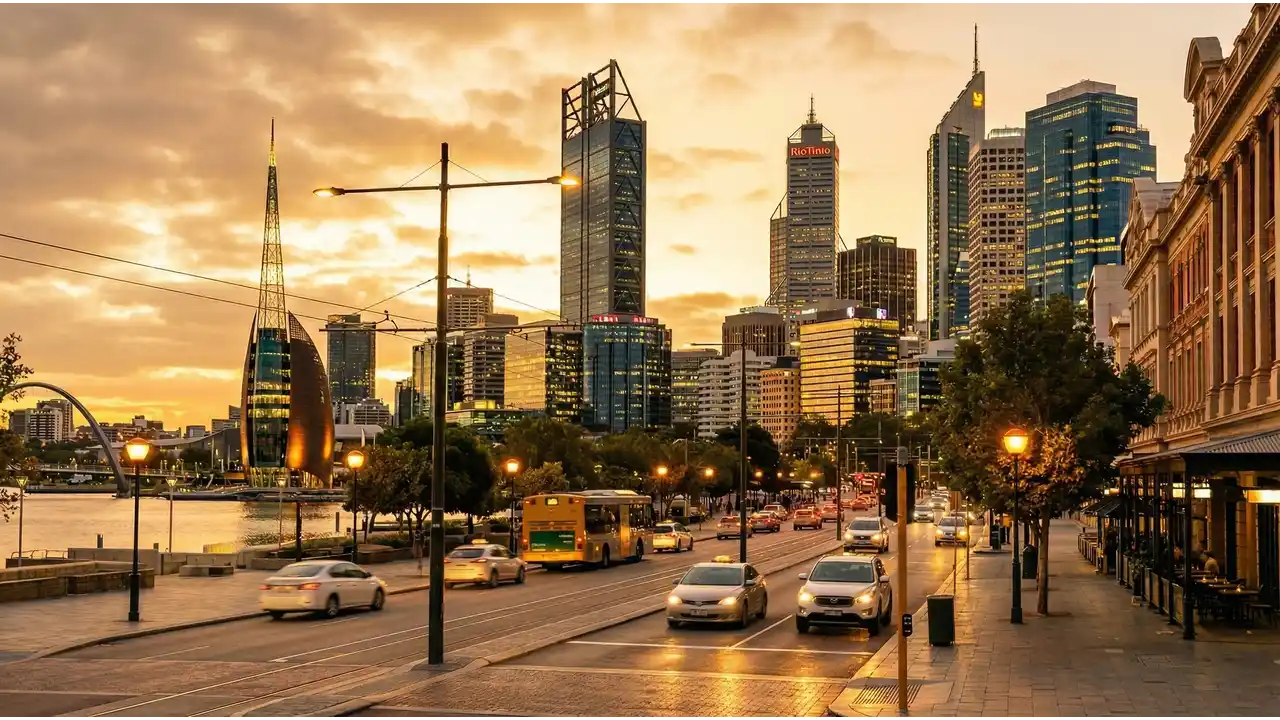
Darwin is Australia's smallest capital city, with about 150,000 people spread across tropical northern Australia. The climate is hot and humid year-round, with a pronounced wet season from November to April that brings cyclones and flooding. The population is mobile and transient, heavily weighted toward workers on temporary contracts, young professionals, and expats drawn by mining jobs or government positions. Daily life centers on outdoor activities when weather permits, with beaches, outdoor dining, and water sports occupying weekends. The city feels more frontier than coastal resort, with a working-class edge despite rising amenity investment in the CBD.
💡 Local Insights
Darwin · 2026
Darwin's cost of living sits higher than most Australian regional cities because it functions as a supply hub for remote mining and oil operations. Housing at $1,476/month reflects limited rental stock and strong demand from fly-in/fly-out workers and corporate relocations. Expect $1,200 to $1,700 for a one-bedroom apartment in central suburbs like Larrakeyah or Fannie Bay; outer areas like Palmerston drop closer to $1,100. Grocery prices at $459/month run 15-20 percent above southern Australian capitals due to transport costs and import reliance. Milk, bread, and imported goods carry the biggest premiums. Fresh local produce and seafood are competitively priced when in season. Transport is car-dependent; public buses exist but are infrequent. Expats and contractors often receive housing allowances that offset rental inflation. Eating out at cafes runs $15-22 for lunch, higher than Melbourne or Brisbane. Utilities cost more due to air conditioning demands in heat.
Frequently Asked Questions
How much does it cost to live in Darwin per month?
A moderate lifestyle in Darwin costs $2,900/month. This breaks down roughly as housing at $1,476, groceries at $459, transport at around $250, utilities at $180, and dining and entertainment at $400. A budget lifestyle costs $1,740/month, cutting back on dining out, accommodation, and discretionary spending. A comfortable lifestyle costs $4,495/month, allowing for private accommodation, regular dining out, and travel. The wide range reflects Darwin's transient population; locals on stable salaries spend differently than contract workers with housing allowances.
What is the average rent in Darwin?
Average rent is $1,476/month. One-bedroom apartments in inner suburbs like Larrakeyah, Fannie Bay, and Stuart Park rent from $1,200 to $1,600. Two-bedroom places range $1,400 to $1,900. Outer suburbs like Palmerston and Howard Springs offer three-bedroom houses from $1,300 to $1,600. Furnished short-term rentals and corporate housing run higher, $1,600 to $2,100, because they target fly-in/fly-out workers on allowances. The market is tight; vacancies are low and turnover is high. Real estate agents recommend applying quickly and expect bond requirements of four to six weeks' rent.
Is Darwin cheap to live in for expats?
Darwin is not cheap. It ranks above most Australian regional cities and sits closer to Sydney or Brisbane than to regional hubs like Townsville or Cairns. Expats with housing allowances from employers often feel the cost is manageable, but those paying market rent out of pocket find it expensive relative to salaries outside the mining and oil sectors. Compared to Southeast Asia, Darwin costs two to three times more. Compared to Western Europe, it's cheaper but not by much once you account for limited amenity variety and high import costs. Expats on local salaries without allowances typically budget $2,900 to $3,500/month.
How much does food cost per month in Darwin?
Groceries average $459/month for one person eating a mix of local and imported goods. Bread costs $3.50-4.50, milk $1.80-2.20/liter, chicken breast $12-15/kg, and eggs $5-7/dozen. Imported items (cheese, snacks, European goods) carry 30-40 percent premiums over southern capitals. Fresh local seafood like barramundi and prawns costs $18-25/kg when in season (dry season, May to October). Eating out costs $15-22 for lunch at casual cafes, $50-80 for dinner at mid-range restaurants. Supermarkets like Coles and Woolworths dominate; farmers markets operate Saturday mornings with seasonal produce at competitive prices.
What salary do you need to live comfortably in Darwin?
A comfortable lifestyle costs $4,495/month, suggesting a gross annual salary of $60,000 to $65,000 for a single person, or $85,000 to $95,000 for a household of two. This allows for private rental accommodation, regular dining out, travel within Australia, and discretionary spending. Many expats in professional roles (mining, government, consulting) earn $70,000 to $120,000 and often receive housing allowances, which substantially reduce personal cost pressure. Local salaries for non-specialist roles (retail, hospitality, administration) run $50,000 to $60,000, making the moderate budget of $2,900/month more appropriate. Couples with dual incomes above $100,000 combined find Darwin affordable.
How does the cost of living in Darwin compare to other places?
Darwin sits in the middle range for Australian and regional costs. A moderate lifestyle in Darwin runs $2,900 per month, with housing at $1,476 per month. That puts it slightly above Canberra, which costs $2,750 monthly with identical housing costs at $1,476. Auckland is noticeably cheaper at $2,325 per month overall, though housing there runs $1,238. By contrast, Singapore is substantially more expensive across the board at $4,125 per month, with housing alone at $2,649. Darwin's relative affordability compared to Southeast Asian financial hubs reflects its smaller scale and distance from major trade centers. Your housing budget will stretch similarly to Canberra, making accommodation the main wildcard in your total expenses. Food, transport, and utilities tend to track higher than Auckland due to geographic isolation and smaller market competition.
Yes, but with significant constraints. A $1,740/month budget requires shared housing (cutting rent to $700-900/month), cooking at home almost entirely, no car ownership (or walking/biking only), and minimal dining out or travel. You'd spend roughly $400 on rent, $380 on groceries, $80 on transport (buses or cycling), $150 on utilities and phone, and $330 on everything else. This works for students, long-term backpackers, or locals with free or subsidized housing. It's uncomfortable without a vehicle in Darwin's sprawl. Most people doing this share houses with 2-3 others. Temporary workers and expats rarely live this tightly; the budget tier represents sacrifice, not comfort.