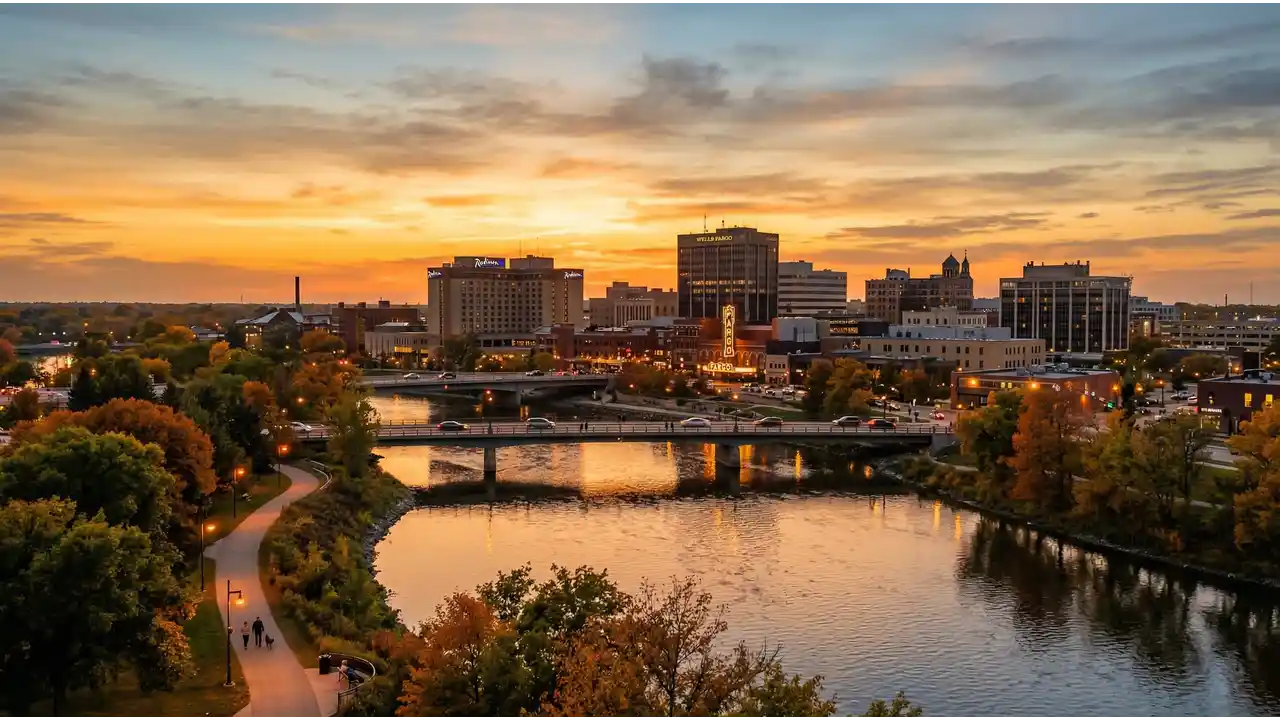
Duluth sits on Lake Superior's western shore in northeastern Minnesota, a working port city with a population around 90,000. The winters are long and cold, with significant snowfall from November through March. The community includes longtime residents, young professionals drawn by outdoor access, and students at the University of Minnesota Duluth. Daily life revolves around water views, hiking and skiing in nearby state parks, and a downtown with local restaurants and galleries. The pace is slower than major metros, and most people drive or walk locally.
💡 Local Insights
Duluth · 2026
Duluth's cost of living sits well below the US median, making it accessible for remote workers and early-career professionals. Housing runs around $1,311 per month, with one-bedroom apartments in central neighborhoods like Lincoln Park or Woodland averaging $900 to $1,100, and two-bedroom units $1,200 to $1,500. Groceries average $513 monthly, lower than national benchmarks because chain supermarkets dominate and produce is competitively priced. Transit is minimal, so a car is nearly essential. Eating out is affordable: casual meals run $12 to $18, ethnic restaurants $10 to $16. Winters drive up heating costs November through April. The moderate lifestyle budget of $2,900 per month accounts for rent, food, transport, utilities, and discretionary spending without tight constraints. Expats find Duluth cheaper than comparable US cities like Madison or Minneapolis, though job markets are narrower outside healthcare, education, and port industries.
Frequently Asked Questions
How much does it cost to live in Duluth per month?
A moderate lifestyle in Duluth costs around $2,900 per month. That covers housing at $1,311 monthly, groceries at $513 monthly, plus utilities, transport, and discretionary spending. A tighter budget of $1,740 per month is possible if you minimize dining out and live in outer neighborhoods, while a comfortable lifestyle with more flexibility runs $4,495 monthly. Most people's costs fall somewhere in the middle depending on housing choice and whether they eat out frequently.
What is the average rent in Duluth?
Average rent aligns with $1,311 per month for a moderate household budget. One-bedroom apartments in central areas like the East Hillside or Lincoln Park typically run $850 to $1,050 monthly. Two-bedroom units range from $1,100 to $1,500 depending on condition and location. Older buildings and suburbs push below $1,000, while newer downtown properties or waterfront-adjacent units exceed $1,400. Rental inventory is steady but not oversupplied, so prices have remained stable. Most leases run 12 months.
Is Duluth cheap to live in for expats?
Yes, relative to other US cities and most Western countries. At $2,900 per month for a moderate lifestyle, Duluth undercuts Madison, Minneapolis, Denver, and Portland by 20 to 40 percent. European expats find housing particularly affordable. The trade-off is that job opportunities outside healthcare, education, and maritime work are limited, and winters are harsh. For remote workers earning foreign salaries, Duluth offers genuine cost relief and access to outdoor recreation. For those seeking employment, competition is tighter.
How much does food cost per month in Duluth?
Groceries average $513 monthly. A typical weekly shop at chains like Cub Foods or Target runs $90 to $120 for a single person. Milk is around $3.50 per gallon, ground beef $4 to $5 per pound, and fresh produce varies seasonally but stays reasonable year-round. Eating out is cheaper than most US cities: casual restaurants charge $12 to $18 per meal, and ethnic cuisine runs $10 to $16. Coffee shops average $5 to $6.
What salary do you need to live comfortably in Duluth?
A comfortable lifestyle costs around $4,495 per month, suggesting a gross annual salary of roughly $54,000 to $58,000 (accounting for taxes and assuming moderate debt). This allows for eating out regularly, car ownership with insurance and maintenance, recreational activities, and modest savings. Households earning $50,000 to $65,000 combined typically feel stable and can cover unexpected costs without stress. Lower salaries work in Duluth but require careful budgeting and limited leisure spending.
How does the cost of living in Duluth compare to other places?
Duluth sits squarely in the middle of the cost-of-living spectrum for mid-sized American cities. A moderate lifestyle costs $2,900 per month here, with housing running $1,311 monthly. That puts you just slightly ahead of Knoxville, Tennessee, which runs $2,800 for the same moderate tier and has comparable housing at $1,313 per month. Both are genuine peers on affordability.
If you're coming from a pricier market, Duluth feels genuinely accessible. Anchorage, Alaska costs $3,375 monthly by comparison. On the other end, Tulsa runs $2,325 monthly with housing at just $831, making it noticeably cheaper if you prioritize lowest costs.
The key: Duluth's affordability comes without sacrificing a functioning downtown, cultural institutions, or walkable neighborhoods. You're paying for actual urban amenities, not just low density.
Yes, but tightly. That budget requires sharing an apartment or renting in outer neighborhoods for around $700 to $850 monthly, leaving roughly $1,000 for food, transport, utilities, and everything else. Groceries must stay minimal, dining out nearly eliminated, and utilities managed carefully during heating season. A car is still necessary unless you live within walking distance of work and grocery stores, which limits flexibility. This budget works for students, minimalists, or short-term stays but leaves no cushion for emergencies or leisure.