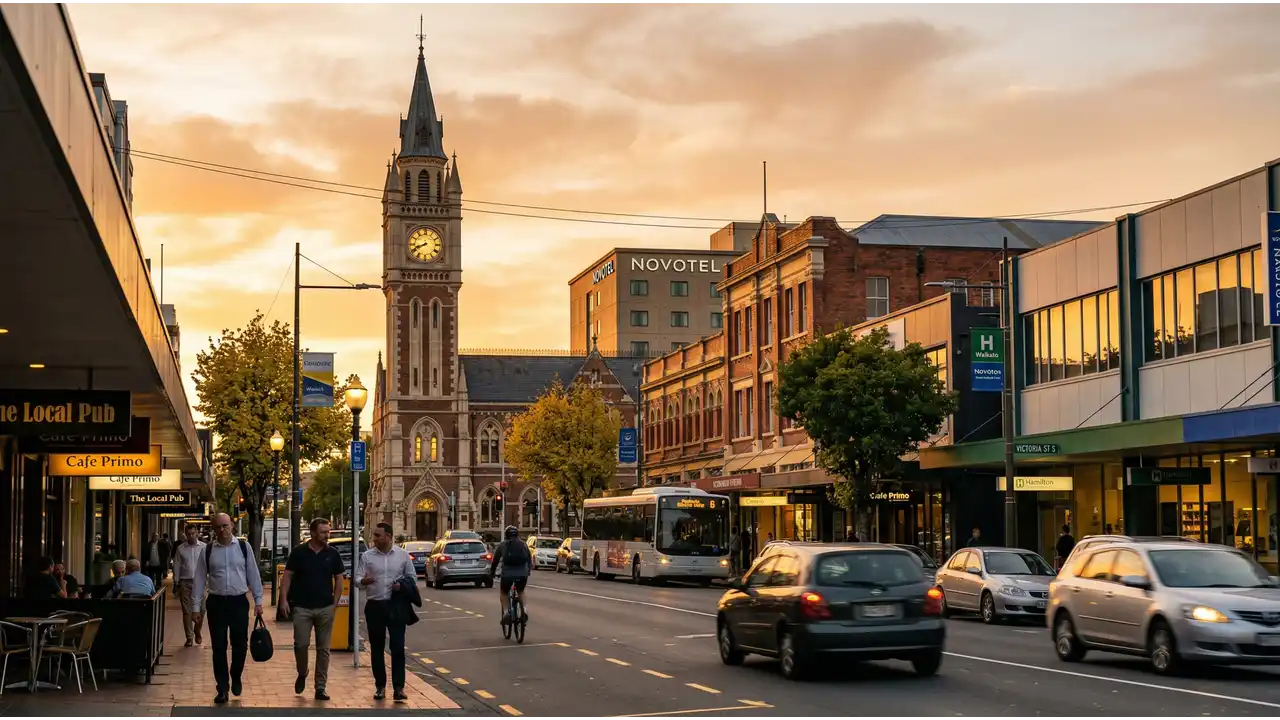
Dunedin is a mid-sized city on New Zealand's South Island, home to the University of Otago and about 130,000 people. It has a Scottish heritage visible in its architecture and place names. The city sits on a harbor with surrounding hills and beaches. Weather is cool and often wet, with four distinct seasons. Life revolves around the university, local food culture, craft breweries, and outdoor activities. Weekends draw people to hiking trails, beaches, and the Otago Peninsula for wildlife. The student population gives the city energy but also makes accommodation competitive during the academic year.
💡 Local Insights
Dunedin · 2026
Dunedin's cost of living sits below New Zealand's major centers (Auckland, Wellington) but remains expensive by global standards. Housing costs are significant. The $1,074/month figure is the New Zealand national average that Dunedin inherits, as no separate local rent measurement exists. In practice, renters find one-bedroom apartments in central areas ranging from $900 to $1,200, with flatshares (common here) at $600 to $900. Student housing pressure peaks February to November. Groceries average $460/month for basic staples. Supermarket chains Countdown and New World dominate. Local produce at the farmers market costs less than supermarkets. Eating out runs $15 to $25 per meal at casual spots. Transport is manageable: buses cost around $2 to $3 per journey or $50 to $60 monthly for a pass. Most residents bike or walk given the compact center. Car ownership adds fuel and parking costs but isn't essential. Expats report that utilities (electricity, water, internet) run higher than expected, around $150 to $200/month combined. International students often share housing to reduce per-person rent.
Frequently Asked Questions
How much does it cost to live in Dunedin per month?
A moderate lifestyle in Dunedin costs around $2,500/month. This breaks down roughly as housing at $1,074, groceries at $460, transport at $80 to $100, utilities at $150 to $200, and dining and entertainment at $400 to $500. A tighter budget runs $1,500/month and requires shared housing, minimal eating out, and careful grocery shopping. A comfortable lifestyle (dining out regularly, more entertainment, nicer accommodation) sits closer to $3,875/month. Individual costs vary widely depending on housing choice and lifestyle preferences.
What is the average rent in Dunedin?
The $1,074/month housing figure is the New Zealand national average that Dunedin inherits as a measurement standard, not a separate Dunedin market rate. Actual Dunedin rents vary by location and type. Central Dunedin one-bedroom apartments typically range from $900 to $1,200/month. Shared flats (the most common arrangement for students and young professionals) run $600 to $900 per person. Outer suburbs and areas farther from the university and city center offer lower rates, around $800 to $950 for one-bedroom places. Rental demand peaks during the university academic year (February to November), pushing prices upward.
Is Dunedin cheap to live in for expats?
Dunedin is cheaper than Auckland or Wellington but not inexpensive by global standards. Rent is the largest expense and remains high by international measures. Groceries cost more than North America or Europe due to New Zealand's isolation and import-heavy economy. Utilities and services are pricier than most developed countries. The main savings for expats come from lower entertainment costs (museums, local activities), no car requirement if you live centrally, and lower overall tax burden than some countries. Expats on working visas or with flexible income often find Dunedin livable but not dramatically cheap. Compared to Australian cities, it's moderately less expensive.
How much does food cost per month in Dunedin?
Groceries average $460/month for one person buying basics at supermarkets. This covers bread, dairy, eggs, canned goods, rice, pasta, and seasonal produce. Fresh fruits and vegetables cost more in winter (June to August) when local supply drops. Farmers markets (Saturday mornings on the Octagon) offer cheaper produce than supermarkets. Eating out is moderately priced: fish and chips around $12 to $15, casual cafe meals $15 to $20, restaurant dinners $25 to $40. Supermarket chains Countdown and New World are standard. International and specialty foods cost significantly more. Cooking at home keeps food budgets down; regular restaurant eating pushes monthly food spending to $800 or more.
What salary do you need to live comfortably in Dunedin?
A comfortable lifestyle in Dunedin costs around $3,875/month. This assumes nicer rental accommodation (one-bedroom in a good area), regular dining out two to three times weekly, entertainment and hobbies, reliable transport, and travel. In annual terms, this roughly translates to a gross salary of $55,000 to $60,000, accounting for New Zealand income tax (19% on income up to $70,000). Those earning $50,000 gross can live comfortably but with less discretionary spending on travel and entertainment. The moderate budget of $2,500/month suits salaries around $40,000 gross. Lower salaries require shared housing and careful spending on food and entertainment.
How does the cost of living in Dunedin compare to other places?
Dunedin sits in the middle of the Australasian cost spectrum. A moderate lifestyle here runs $2,500 per month, with housing at $1,074 per month. That makes it cheaper than Perth, where a moderate lifestyle costs $2,625 monthly and housing runs $1,435. Gold Coast is noticeably dearer at $2,875 overall and $1,641 for housing alone. If you're coming from Christchurch, expect to pay more. Christchurch's moderate lifestyle is $2,050 per month with housing at $1,050, making it one of the region's more affordable options. Dunedin's position reflects its size as a mid-tier New Zealand city. You'll find it reasonably priced by Australasian standards, though housing costs have risen steadily alongside other regional centers.
Yes, but with tight constraints. This budget requires shared flat accommodation (around $600 to $700/month), minimal eating out (perhaps once weekly), cooking most meals at home, using public transport or biking, and cutting entertainment spending to almost nothing. Groceries must stay under $300/month through careful shopping at budget-conscious supermarkets and buying basics. Utilities and phone need to stay under $100/month combined. This leaves almost no buffer for emergencies, clothing, or unexpected costs. Most people on this budget are students using university support or those with very low cost-of-living goals. It is possible but uncomfortable and requires discipline.