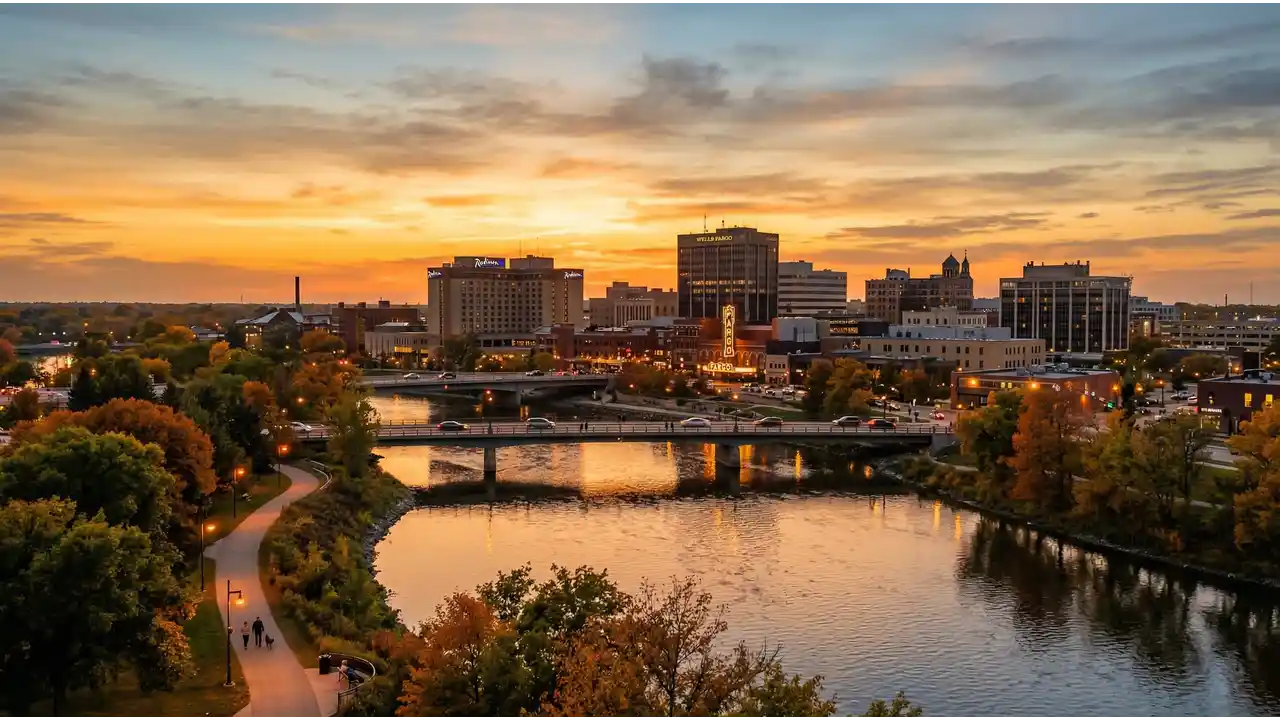
Fargo is a medium-sized city in North Dakota's Red River Valley, home to around 140,000 people. It functions as a regional hub for retail, healthcare, and technology jobs. Winters are harsh, dropping well below freezing from November through March, with significant snowfall. Summers are brief and warm. The city has a Scandinavian heritage visible in local food and culture. Daily life centers on car-dependent suburbs, shopping malls, and chain restaurants, though downtown has developed a modest restaurant and brewery scene in the past decade. Fargo attracts young professionals, families, and remote workers seeking affordable housing and low crime rates. The pace is slower than coastal cities, with strong community involvement and church attendance.
💡 Local Insights
Fargo ND · 2026
Fargo's affordability stems from its location far from job centers and harsh climate, which depress housing demand relative to supply. Rent for a one-bedroom apartment in central neighborhoods runs $800 to $1,000, with two-bedroom rentals at $950 to $1,150. Homeownership is accessible; median home prices sit around $400,000. Food costs are reasonable due to chain supermarket competition and agricultural proximity. Groceries like milk, eggs, and produce average $2 to $4 per item. Eating out costs less than coastal equivalents: casual dining entrees are $12 to $16. Transportation is car-dependent, with few public transit options; most residents own vehicles. Winter heating bills spike significantly from November to March. Expats find Fargo affordable compared to Toronto, Seattle, or Denver, but should budget for winter clothing and vehicle maintenance. Local employers include Sanford Health, Essentia, and tech firms, which influences salary levels and job availability.
Frequently Asked Questions
How much does it cost to live in Fargo ND per month?
A moderate lifestyle in Fargo costs around $2,475 per month. Housing averages $925 per month (rent or mortgage for a one-bedroom apartment or modest rental). Groceries run about $500 monthly for one person. The remaining $1,050 covers utilities (electricity, internet, water), transportation (vehicle payment, fuel, insurance), dining out, entertainment, and miscellaneous expenses. A budget lifestyle is possible at $1,485 per month, while comfortable living that includes more dining out and discretionary spending runs $3,836 per month.
What is the average rent in Fargo ND?
Average rent in Fargo is $925 per month for a one-bedroom apartment in moderate neighborhoods. One-bedroom apartments in central or slightly desirable areas run $800 to $1,000. Two-bedroom units range from $950 to $1,150 per month. Suburbs and newer developments may cost slightly less, between $850 and $1,050 for a two-bedroom. Single-family home rentals start around $1,200. Prices have risen modestly over the past five years due to population growth and limited new construction. Income-based housing is available through local nonprofits. Most leases run 12 months; furnished units are rare and cost more.
Is Fargo ND cheap to live in for expats?
Yes, Fargo is genuinely affordable compared to major expat destinations. Housing costs roughly 40 to 50 percent less than Seattle, Denver, or Toronto. Food and utilities are lower than those cities as well. However, expats should expect a slower pace, limited international services, and a small foreign community outside university circles. Healthcare is accessible through Sanford Health. Winter climate is harsh and requires investment in heating and snow removal. The city suits expats seeking cost savings and community stability, but may feel isolating to those accustomed to multicultural urban centers. Visa sponsorship exists mainly in healthcare and tech sectors.
How much does food cost per month in Fargo ND?
Groceries for one person average $500 per month. A gallon of milk costs around $3.50, a dozen eggs $3, and chicken breasts run $7 to $9 per pound. Produce varies seasonally; apples and root vegetables are cheaper in fall and winter. Chain grocers like Cub Foods and Hy-Vee dominate pricing. Eating out is affordable: a casual burger or sandwich lunch runs $12 to $15, and a dinner entree at a sit-down restaurant costs $14 to $18. Coffee at local cafes is $2.50 to $4. Alcohol is available; beer is cheaper than wine. Food delivery services operate but add 15 to 20 percent to total cost.
What salary do you need to live comfortably in Fargo ND?
A comfortable lifestyle in Fargo costs $3,836 per month, or roughly $46,000 per year before taxes. This budget includes $925 for housing, $500 for groceries, and $2,411 for dining out, entertainment, hobbies, and savings. For a household of two, double these figures to $92,000 annually. Most full-time jobs in Fargo pay $40,000 to $65,000 depending on sector. Healthcare positions through Sanford Health and tech roles through local companies often pay $50,000 to $75,000. Remote workers on coastal salaries live well in Fargo; a $60,000 annual salary provides solid comfort. Couples with dual incomes easily exceed comfortable levels.
How does the cost of living in Fargo ND compare to other places?
Fargo sits in the middle range for US cities. A moderate lifestyle costs $2,475 per month here, with housing running $925 monthly. That makes it slightly cheaper than Tucson, which runs $2,550 overall and $930 for housing. You'll find genuinely different economics if you compare further. Fukuoka is considerably less expensive at $1,675 monthly with $603 housing costs, though you're looking at Japan rather than the US. At the other extreme, Anchorage, Alaska costs substantially more: $3,375 for a moderate lifestyle and $1,282 for housing. Fargo's real advantage is stability. Housing costs have remained reasonable while many comparable cities have seen rapid inflation. If you're coming from a coastal metropolitan area, the monthly expenses will feel notably lower. If you're relocating from a rural area or smaller town, expect expenses to tick upward.
Yes, but with significant constraints. A budget of $1,485 per month covers housing at $925 and groceries at $500, leaving only $60 for utilities, transport, phone service, and any emergencies. This works only if you have reliable free transportation (employer shuttle, carpooling, biking in summer) or already own a vehicle outright with no fuel or maintenance costs. Renters' insurance, internet, and electricity must be minimal. No dining out, entertainment, or savings are possible. This budget suits short-term stays or those with employer-provided housing. Students with university housing and meal plans can operate here. For sustainable living, aim for at least $1,800 to $2,000 monthly to avoid financial stress and cover vehicle maintenance, seasonal heating, and modest emergencies.