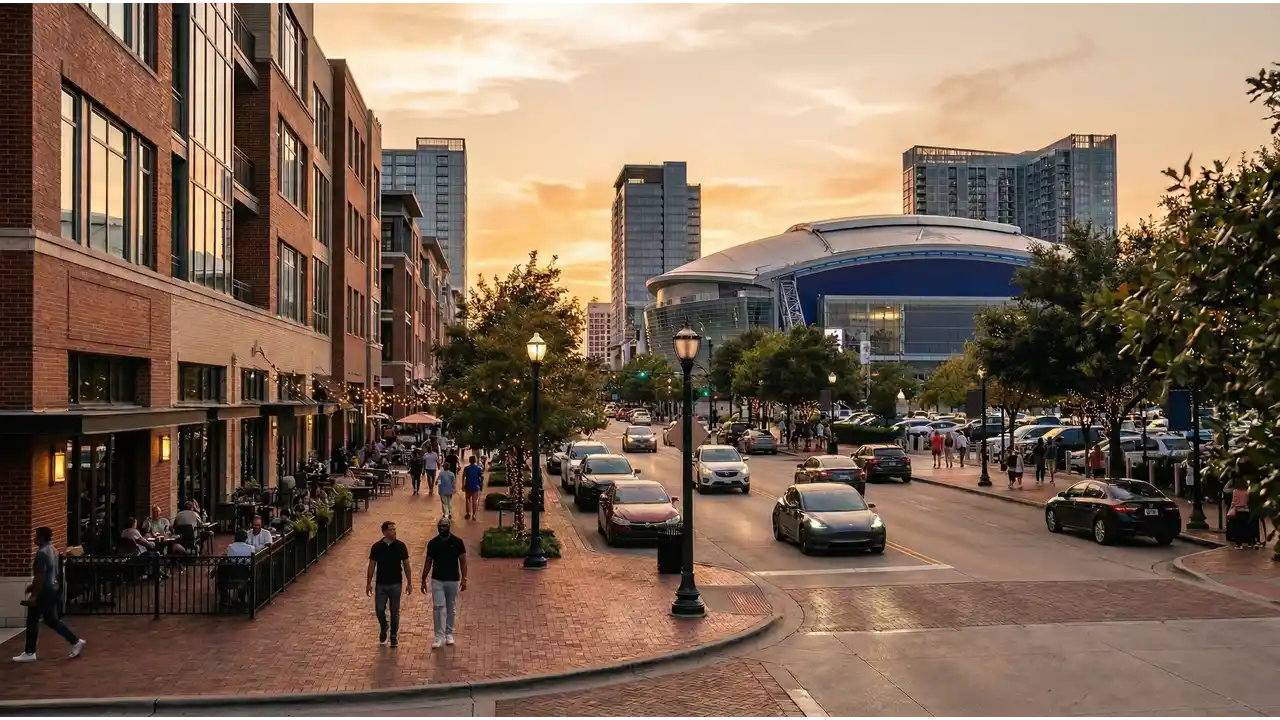
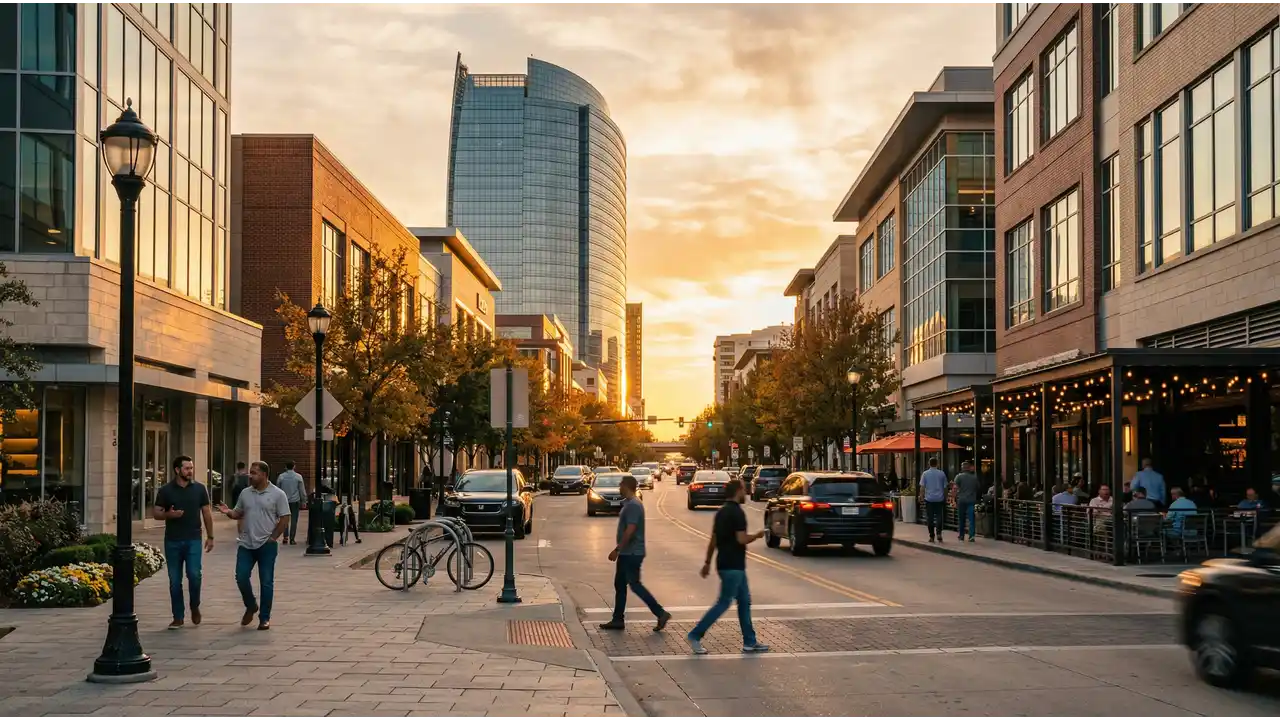
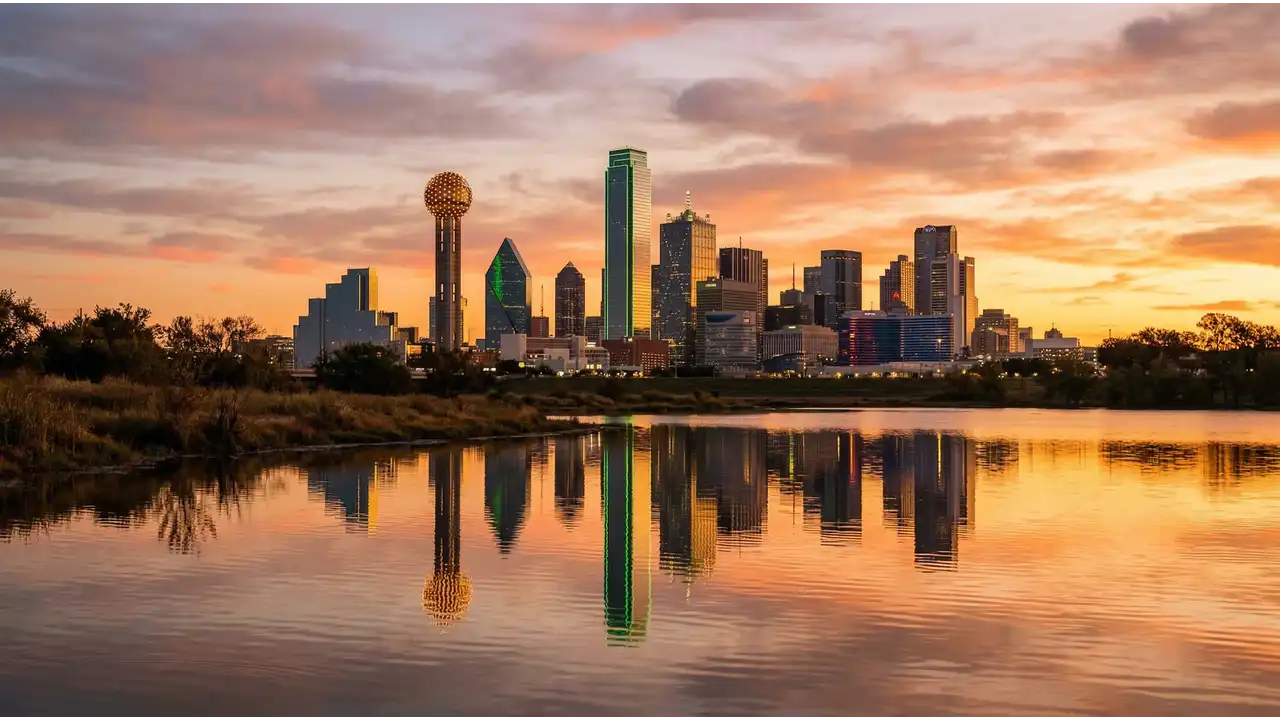
Frisco is a northern Dallas suburb of around 230,000 people, built largely in the last 20 years on what was prairie. It attracts families and remote workers seeking newer housing stock and lower costs than central Dallas. The city sits on the Dallas-Fort Worth metropolitan edge, with corporate headquarters (Toyota, Comerica, PepsiCo divisions) and consistent job growth in tech and finance. Summers are hot and humid (95-100°F typical), winters mild. Daily life revolves around car commuting, shopping centers, and master-planned communities with trails and parks. Schools rank high among Texas districts, which drives population and property values. It feels planned and developing, less historic than established Dallas neighborhoods.
💡 Local Insights
Frisco TX · 2026
Frisco's cost profile reflects the Dallas metro's moderate pricing relative to coastal tech hubs, offset by rapid growth that pushes housing up annually. Housing costs center on $1,424/month, which typically means a two-bedroom apartment or modest single-family rental in outer Frisco or nearby Plano; newer townhomes run $1,600-$1,800/month. Buying is common here (median home price around $460,000), so renters are often temporary residents or early-career workers. Groceries average $492/month for a single person, consistent with Texas supermarket chains (Kroger, Albertsons, HEB). Car ownership is essential; public transit (DART bus) exists but is limited. Gas, car insurance, and maintenance add $300-$400/month for most households. Utilities run $120-$160/month year-round (AC and heat both used). Expats find Frisco familiar and English-dominant, but lack the cultural diversity of inner Dallas. No significant local vs. expat pricing gap exists; costs are standardized. Job market strength and new housing stock keep young professionals here despite suburban sprawl character.
Frequently Asked Questions
How much does it cost to live in Frisco TX per month?
A moderate lifestyle in Frisco costs $2,950/month. This breaks down roughly as: housing $1,424, groceries $492, utilities $140, transportation $350, dining and entertainment $350, and miscellaneous expenses $194. A tighter budget is possible at $1,770/month if you skip dining out and minimize discretionary spending. Those seeking comfort (dining out regularly, gym membership, travel fund) should budget $4,573/month. Actual costs vary by neighborhood, household size, and whether you own or rent a car.
What is the average rent in Frisco TX?
Average housing costs are $1,424/month. For apartments, a one-bedroom in central Frisco or nearby Plano typically rents $1,200-$1,500/month; two-bedroom units run $1,400-$1,700/month. Newer complexes with amenities (pool, gym, parking) sit at the higher end. Townhomes rent $1,500-$1,800/month. Outer Frisco and surrounding areas (McKinney, Prosper) offer lower rates, $1,100-$1,300/month for one-bedrooms. Single-family home rentals are rare and expensive ($1,800+/month). Most renters are young professionals or relocating families; buying is more common long-term. Prices have risen 5-8% annually over the past several years due to population growth.
Is Frisco TX cheap to live in for expats?
Frisco is moderately priced for expats within the US, cheaper than San Francisco, New York, or Seattle, but not particularly affordable. The $2,950/month moderate budget is higher than many expat destinations in Southeast Asia or Latin America, but reasonable compared to other major US metros. For expats relocating from Europe, Frisco feels expensive. Advantages include low taxes (Texas has no state income tax), straightforward rental processes, and English-language ease. Disadvantages include car-dependency and limited international community compared to larger cities. Expat Facebook groups are active. Healthcare costs are significant if uninsured; employer plans are standard for full-time work.
How much does food cost per month in Frisco TX?
Groceries average $492/month for one person. A week of basics (chicken $8/lb, ground beef $6/lb, eggs $4/dozen, milk $4/gallon, bread $3/loaf, rice $1.50/lb, seasonal produce $3-5 per item) totals roughly $80-$120 weekly at Kroger, Albertsons, or HEB. Eating out is separate: casual restaurants run $12-$18 per meal; chains and food courts $8-$12. A monthly dining budget of $350 allows 15-20 restaurant meals at casual spots. Grocery costs are stable; no significant markup for expats or tourists. Walmart and ethnic grocers (Asian, Hispanic markets in Plano) offer lower prices than main supermarkets.
What salary do you need to live comfortably in Frisco TX?
A comfortable lifestyle requires $4,573/month, or roughly $55,000/year gross (accounting for taxes, 401k, and healthcare). This budget includes dining out 2-3 times weekly, gym membership, streaming services, occasional travel, and a car payment or lease. For a household with two earners, combined income of $80,000-$100,000 is typical. Most Frisco employers (tech, finance, healthcare) offer salaries in the $50,000-$85,000 range for mid-level roles, with significant variation by sector. Remote workers from higher-paying markets often find Frisco very affordable. Housing alone at $1,424/month leaves substantial room for other costs at this income level.
How does the cost of living in Frisco TX compare to other places?
Frisco sits in the middle of the Texas cost spectrum. A moderate lifestyle runs $2,950 per month, with housing at $1,424. That puts it slightly cheaper than Atlanta, where a moderate lifestyle costs $3,075 with housing at $1,519. If you're coming from Oklahoma City, expect to pay considerably more. Oklahoma City runs $2,400 monthly for the same moderate tier, with housing at $891. On the other hand, Frisco is substantially cheaper than Seattle. Seattle costs $3,950 monthly with housing at $2,177. The real difference comes down to what drew you to the Dallas area. Frisco's pricing reflects its position as a prosperous suburb with good schools and newer infrastructure, but you're not paying the premium you would in a major coastal city.
Yes, but with constraints. The $1,770/month budget tier covers housing ($1,424), groceries ($492), and leaves roughly $150 for utilities, phone, and transport. This requires shared housing (roommate), no car payment, and reliance on DART bus or cycling. Dining out is nearly impossible; entertainment and discretionary spending are minimal. This budget works for students, early-career workers, or those with employer housing assistance. It cuts too close for comfort if car-dependent (fuel, insurance, maintenance easily exceed $150/month). Temporary residents or those with additional income sources make this work; permanent residents typically need $2,300+/month for basic comfort. Medical emergencies or car repairs break this budget immediately.