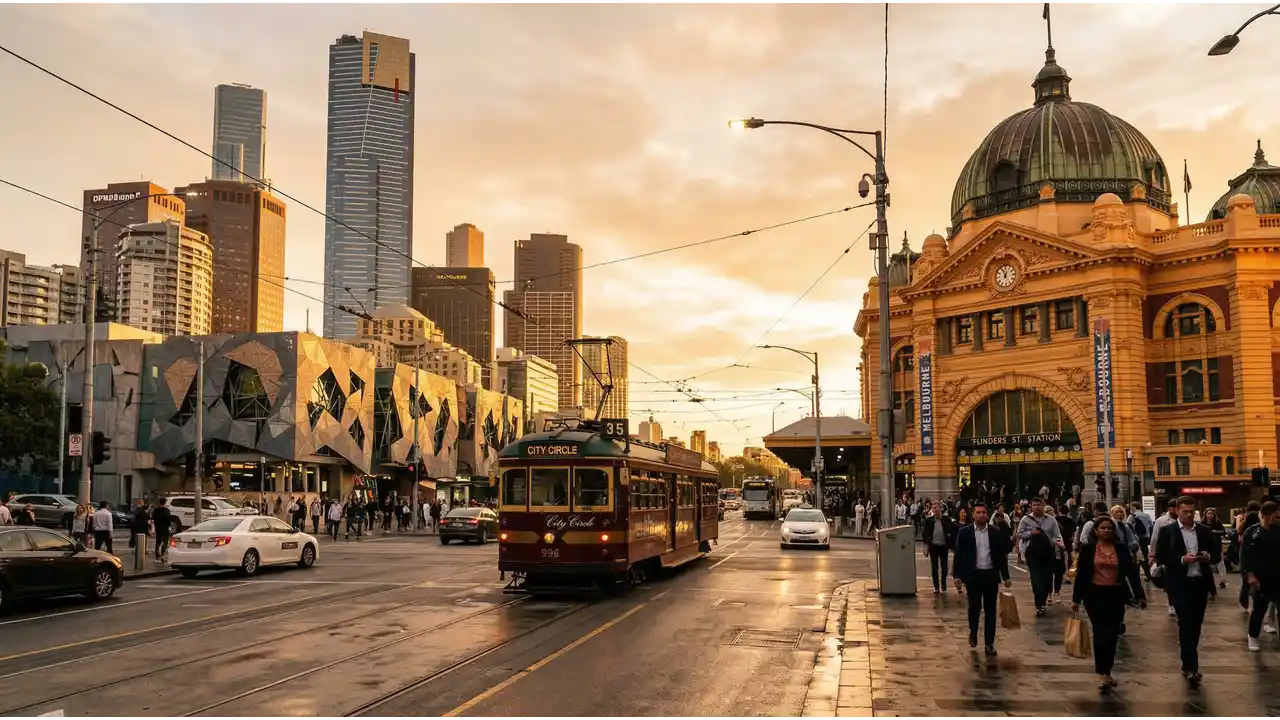
Geelong is a regional city on Victoria's coast, about 75 kilometers southwest of Melbourne. Population around 260,000. It has shifted from industrial decline to a mix of young professionals, retirees, and families attracted by lower costs than Melbourne and beach access. Daily life centers on the waterfront precinct (restaurants, shops), industrial heritage neighborhoods with renovated Victorian homes, and suburban sprawl inland. Weather is temperate, occasionally windy. Local character is practical rather than trendy, though gentrification is underway in inner suburbs.
💡 Local Insights
Geelong · 2026
Geelong's cost advantage over Melbourne is real but narrowing. Housing at $1,230/month reflects a market where inner suburbs (Newtown, Bellerine Street precinct) command $1,400 to $1,600 for a one-bedroom apartment, while outer suburbs and satellite towns like Lara or Gheringhap offer $900 to $1,100. Groceries average $458/month, slightly higher than rural Victoria but lower than Melbourne CBD, driven by Coles and Woolworths dominance and local farmers markets. Public transport (local buses, V/Line trains to Melbourne) costs roughly $180/month for a monthly pass; most residents drive. Petrol and car maintenance are cheaper than major capitals. Eating out ranges from $15 (casual lunch) to $35 (dinner in central precinct). Expats report that while no longer a bargain destination, Geelong still offers 20-30 percent savings versus inner Melbourne on housing. Utilities run $200-250/month.
Frequently Asked Questions
How much does it cost to live in Geelong per month?
A moderate lifestyle in Geelong costs $2,650/month. This breaks down roughly as: housing $1,230, groceries $458, utilities and household $200-250, transport $180, and the remainder on dining, entertainment, and personal care. A budget lifestyle runs $1,590/month (minimal entertainment, shared housing, no car), while a comfortable lifestyle with dining out, hobbies, and a car costs $4,108/month. These figures assume a single adult; couples reduce per-person costs through shared housing.
What is the average rent in Geelong?
Average rent sits around $1,230/month. One-bedroom apartments in inner suburbs (Newtown, Bellerine Street, Geelong West) rent for $1,400 to $1,600. Two-bedroom houses in the same areas run $1,600 to $1,900. Outer suburbs (Lara, Gheringhap, Corio) and smaller towns 15-20 kilometers out offer one-bedroom apartments at $900 to $1,100 and two-bedroom houses at $1,200 to $1,500. Rental demand is strong; expect to apply quickly. Short-term rentals are harder to find and command premiums. Real estate websites Domain and realestate.com.au list most available properties.
Is Geelong cheap to live in for expats?
Geelong is moderately priced for expats compared to major Australian capitals. Housing costs are roughly 20-30 percent lower than inner Melbourne and significantly less than Sydney or Brisbane, though higher than regional towns in rural Victoria. It appeals to expats seeking lower costs without the isolation of remote areas. Visa holders and working holiday makers find the city manageable on $2,200-2,400/month. However, it is not a bargain destination like Southeast Asia or parts of Eastern Europe. Cost advantages are shrinking as inner suburbs gentrify. The trade-off is stability, safety, public services, and beach access.
How much does food cost per month in Geelong?
Groceries average $458/month for one person on a moderate diet. A loaf of bread costs $3.50-4, a liter of milk $1.80-2.20, chicken breast $12-14 per kilogram, and fresh produce roughly $2-4 per item depending on season. Eating out is cheaper than Melbourne: a casual lunch runs $12-18, a casual dinner $20-28. A sit-down restaurant meal for two with drinks costs $60-90. Farmers markets in central Geelong and Bellerine Street offer seasonal produce at 10-15 percent discounts. Coles and Woolworths dominate supermarket shopping; ALDI outlets offer modest savings on staples.
What salary do you need to live comfortably in Geelong?
A comfortable lifestyle costs $4,108/month, suggesting a gross monthly income around $5,500-6,000 (accounting for tax at roughly 25 percent). For annual income, aim for $65,000-75,000 AUD. This budget includes eating out regularly, hobbies, car ownership and maintenance, entertainment, and modest savings. If you plan to support dependents or save aggressively, add 30-40 percent. Budget lifestyles (around $1,590/month) are achievable on $2,400-2,800/month gross, though they require careful spending and shared housing. Most full-time jobs in Geelong (retail, hospitality, trades, healthcare) pay $50,000-65,000 annually.
How does the cost of living in Geelong compare to other places?
Geelong sits in the middle of Australia's major city costs. A moderate lifestyle here runs $2,650 per month, with housing at $1,230 monthly.
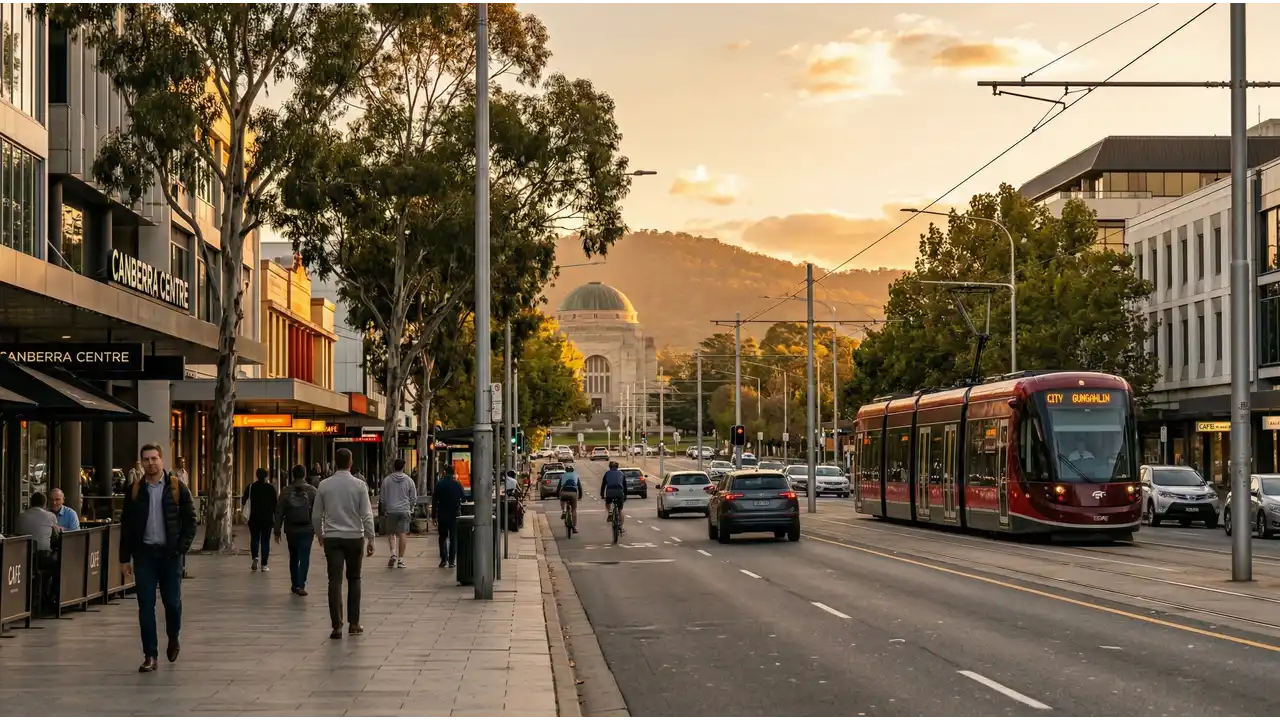
Sydney is noticeably dearer, where a moderate lifestyle costs $3,050 per month and housing reaches $1,709. Canberra is your closest peer, running $2,750 for a moderate lifestyle with housing at $1,476, so expect slightly higher expenses there across the board.
If you're coming from New Zealand, Christchurch offers real savings. A moderate lifestyle in Christchurch costs $2,050 per month with housing at $1,050, making it genuinely cheaper than Geelong.
Geelong's advantage is that it avoids Sydney's premium while remaining more expensive than smaller regional centers. You get proximity to Melbourne (45 minutes by train) without paying metropolitan rents.
Yes, but with constraints. The budget tier of $1,590/month requires shared housing (rent $700-850), careful grocery shopping ($400), minimal transport ($80 bus pass), no car, and little to no dining out or entertainment spending. This lifestyle suits students, early-career workers, or those prioritizing savings. It is tight: no emergency buffer, limited social spending, and reliance on free activities (beach, walking trails, library events). Most people at this budget live in outer suburbs or share houses inland, away from the waterfront precinct. Working holiday makers and students make it work; permanent residents usually aim for $2,200+/month for stress-free living.