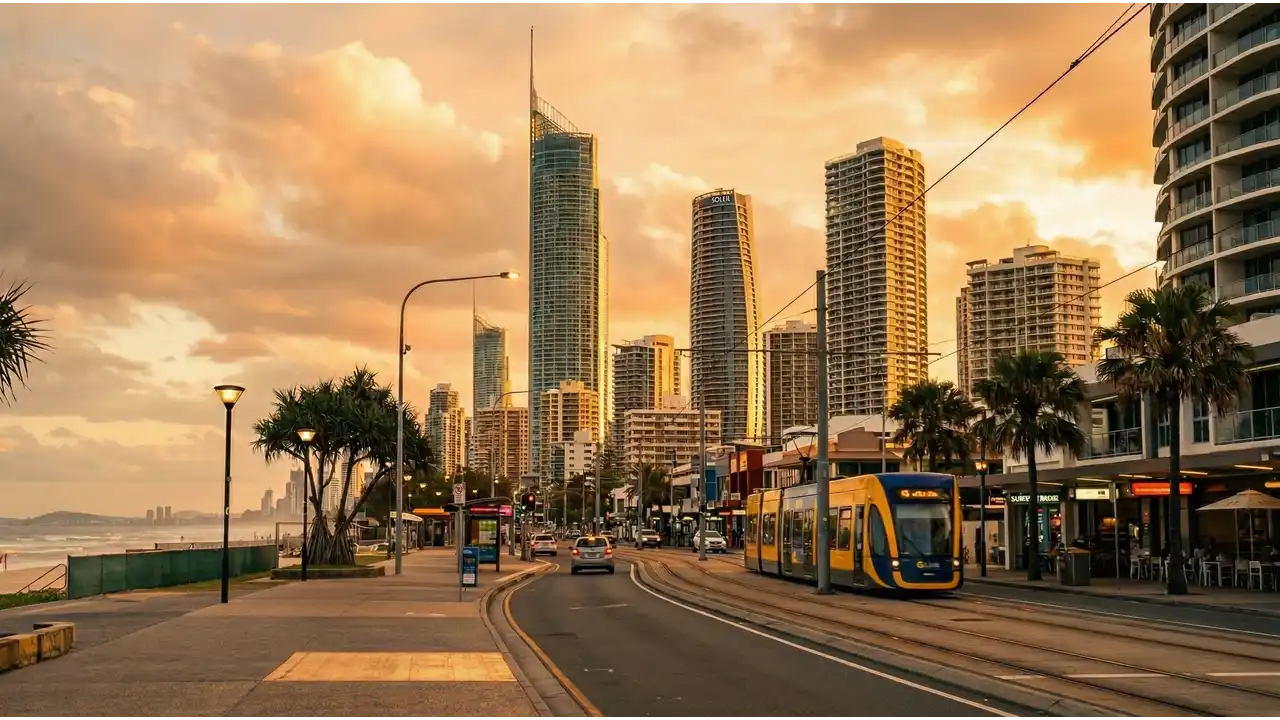
Gold Coast is a beachside city on Australia's Queensland coast, about 80 kilometers south of Brisbane. It draws retirees, families, and young professionals seeking a coastal lifestyle without Sydney's expense. The climate is subtropical: warm year-round with hot, humid summers and mild winters. High-rise residential towers line the beach at Surfers Paradise. Inland suburbs like Ashmore and Broadbeach offer quieter neighborhoods. The city's economy centers on tourism, real estate, and professional services. Daily life revolves around beaches, outdoor activities, and a casual Australian pace. Traffic congestion is common during peak tourist season (June to August). Most residents have cars; public transport exists but is limited compared to major cities.
💡 Local Insights
Gold Coast · 2026
Gold Coast occupies an unusual position in Australia: cheaper than Sydney or Melbourne, but more expensive than regional Queensland towns. Housing dominates the budget at $1,641/month, a figure driven by strong investor demand and limited land supply. Beachfront and inner-city rentals (Surfers Paradise, Broadbeach) command $1,900 to $2,300 per month for a one-bedroom apartment. Suburban rentals inland (Ashmore, Nerang, Mudgeeraba) range from $1,400 to $1,700 per month. Purchase prices remain high: median house prices exceed $700,000. Groceries average $398/month, comparable to other Australian cities. Local supermarkets (Coles, Woolworths) are the norm. Eating out costs more; a cafe lunch runs $15 to $18. Transport is car-dependent outside central Surfers Paradise. Petrol prices track national averages. Expats often find housing costs their biggest shock, though the weather and beaches justify the expense for many.
Frequently Asked Questions
How much does it cost to live in Gold Coast per month?
A moderate lifestyle costs $2,875/month. This covers housing ($1,641), groceries ($398), utilities, transport, entertainment, and personal care. A budget tier lifestyle runs $1,725/month, cutting back on dining out and entertainment. A comfortable tier runs $4,456/month, allowing for more spacious housing, regular dining out, and travel. These figures assume a single adult or a couple sharing costs. Families with children should budget higher, particularly for childcare and schools.
What is the average rent in Gold Coast?
Average rent aligns with $1,641/month for a moderate one-bedroom apartment. Beachfront and central Surfers Paradise apartments rent for $1,900 to $2,300 per month. Broadbeach and Southport add $1,700 to $2,000 per month. Suburbs further inland like Ashmore, Nerang, and Mudgeeraba offer one-bedroom rentals for $1,400 to $1,600 per month, reducing commute times. Two-bedroom apartments typically run $2,100 to $2,600 depending on location. House rentals start around $2,000 to $2,400 per month. Lease terms are usually 12 months. Furnished short-term rentals cost 20 to 30 percent more.
Is Gold Coast cheap to live in for expats?
Gold Coast is moderately priced for Australia, but not cheap globally. Expats from North America or Northern Europe find housing and dining expensive relative to their home countries. Australians relocating from Sydney or Melbourne save 15 to 25 percent on rent. The appeal lies less in affordability than in lifestyle: you pay for the beach, warm climate, and lower density than major cities. Expats on corporate packages often find it workable. Retirees and remote workers benefit from favorable exchange rates if earning in USD, GBP, or EUR. Budget travelers and backpackers typically base themselves in Brisbane instead.
How much does food cost per month in Gold Coast?
Groceries average $398/month for one person eating at home. A loaf of bread costs $4 to $5. Eggs run $6 to $7 per dozen. Chicken breasts are $12 to $14 per kilogram. Milk costs $1.50 to $2 per liter. Coles and Woolworths dominate; Aldi offers cheaper alternatives. Farmers markets operate weekends in Burleigh Heads and Surfers Paradise, sometimes cheaper for produce. Eating out is pricier: cafe breakfasts $12 to $16, lunch mains $16 to $22, dinner mains $22 to $35 at casual restaurants. Alcohol is taxed heavily. Imported goods cost significantly more than in North America.
What salary do you need to live comfortably in Gold Coast?
A comfortable lifestyle costs $4,456/month, requiring approximately $53,000 to $55,000 annually before tax (gross income varies by tax residency). This allows for a one-bedroom apartment in a good location ($1,800 to $2,000), regular restaurant meals, weekend trips, and hobbies. Couples can live comfortably on $70,000 to $75,000 combined gross income. Higher salaries are common in finance, healthcare, and professional services; median individual income in Queensland sits around $62,000. Remote workers and retirees with passive income have greater flexibility. Local wages are typically 5 to 10 percent lower than Sydney or Melbourne for equivalent roles.
How does the cost of living in Gold Coast compare to other places?
Gold Coast sits in the middle of Australia's cost-of-living spectrum. A moderate lifestyle here costs $2,875 per month, with housing at $1,641 per month.
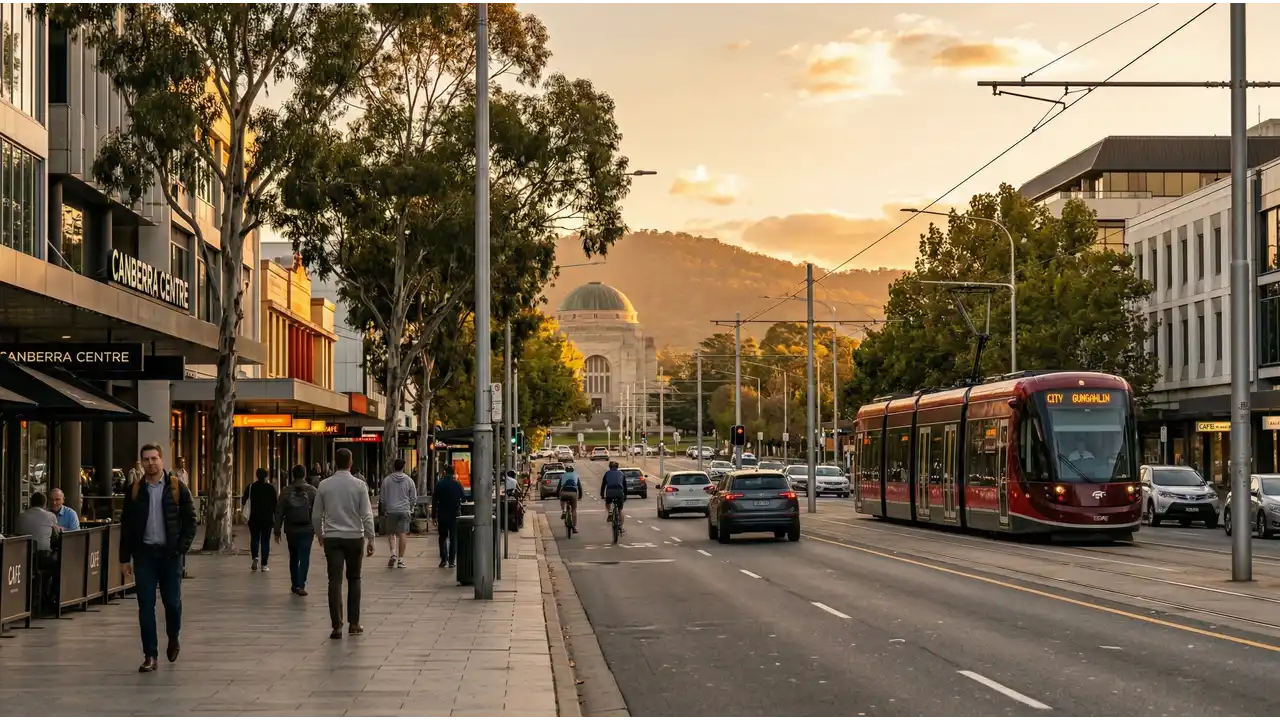
You'll find it slightly pricier than Auckland, where a moderate lifestyle runs $2,325 monthly and housing $1,238. Canberra is the closest peer, at $2,750 for a moderate lifestyle and $1,476 for housing, so Gold Coast edges out the capital by a small margin on both fronts.
The gap widens considerably if you're comparing to Singapore, where a moderate lifestyle costs $4,125 monthly with housing at $2,649. Gold Coast remains significantly cheaper than that regional financial hub.
For Australian standards, Gold Coast occupies reasonable middle ground. You're paying more than some Asia-Pacific cities but less than premium financial centers. Housing represents your largest expense at either location.
Yes, but with clear tradeoffs. The budget tier ($1,725/month) requires living inland away from the beach (Ashmore, Nerang, Tallebudgera Valley) in a one-bedroom rental or shared accommodation at $1,300 to $1,400/month. Groceries consume your full $398/month allocation. Entertainment, transport, and dining out are minimal. You'll rely on cooking at home, using buses for occasional trips, and free outdoor activities (hiking, beaches). No emergency buffer exists; unexpected costs become problematic. This budget suits temporary stays, students with part-time income, or those with free accommodation. Long-term residents typically move to the moderate tier ($2,875/month) after a few months.