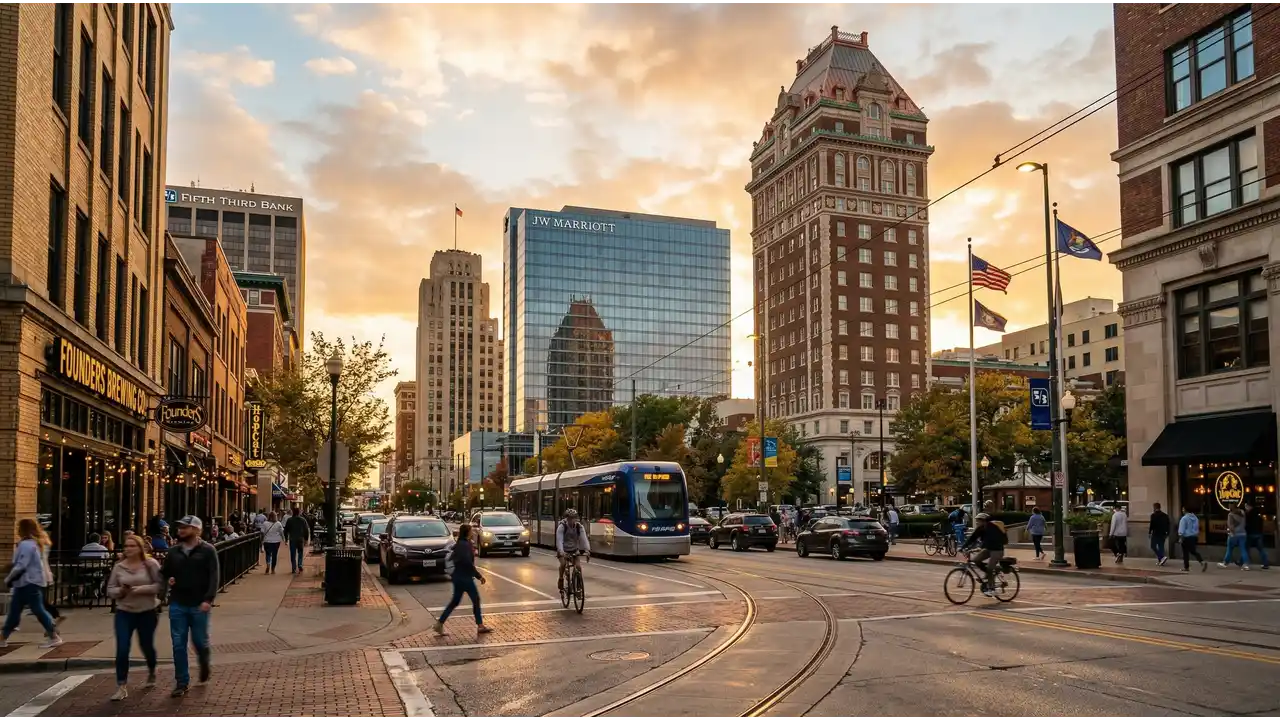
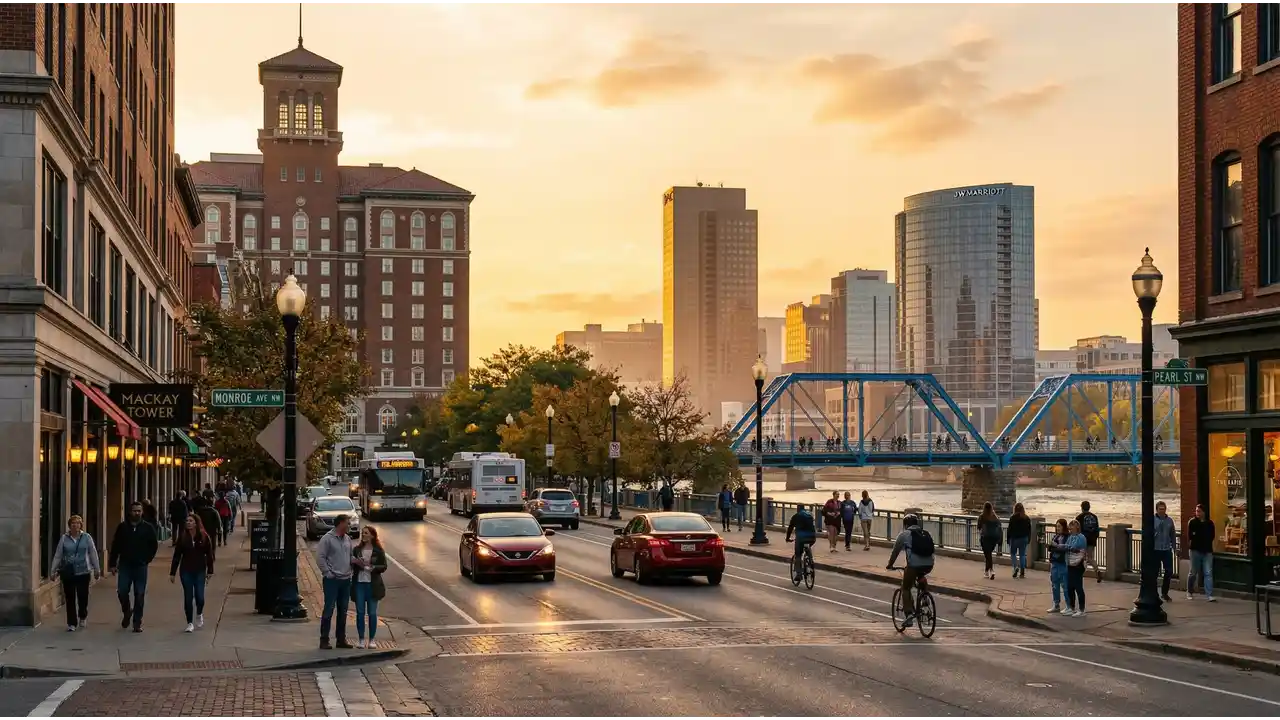
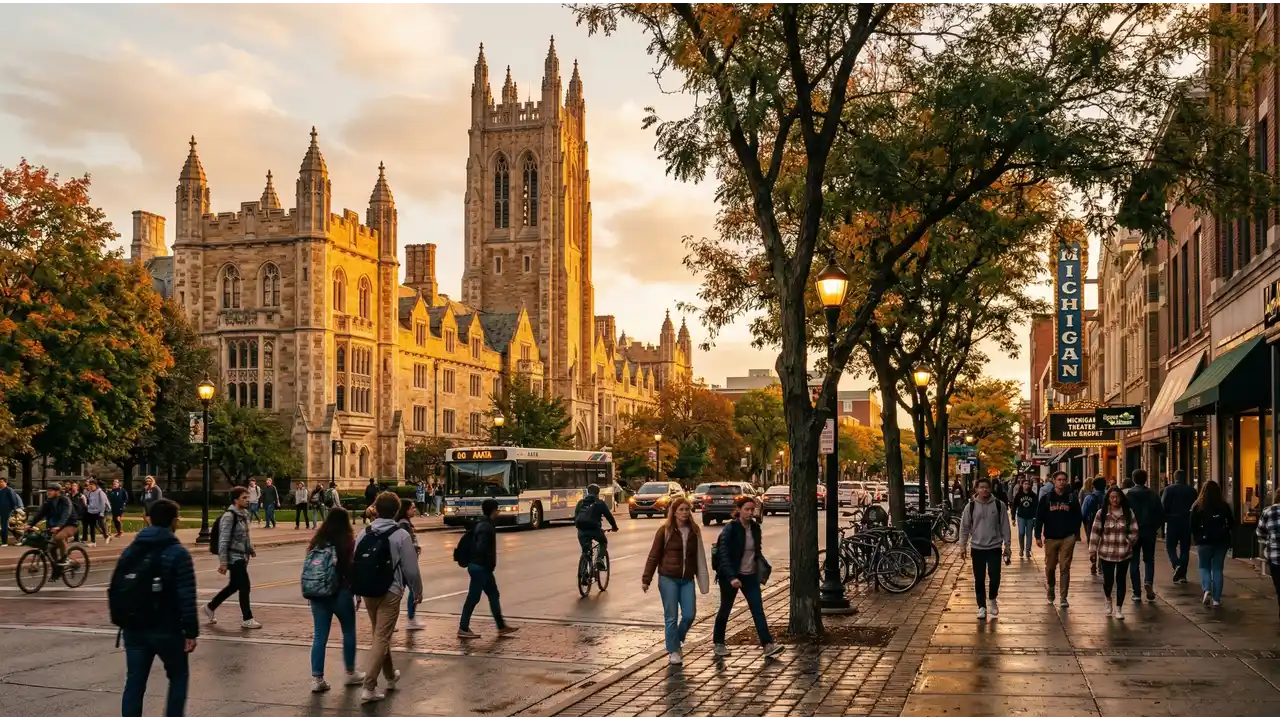
Grand Rapids is a mid-sized city in western Michigan with around 195,000 residents, part of a metro area of roughly 1.3 million. It sits on the Grand River, about 30 miles east of Lake Michigan. The winters are cold and snowy (December through March regularly drop below freezing). The city has a manufacturing heritage, particularly furniture, and has diversified into healthcare, technology, and professional services. Daily life centers on downtown neighborhoods, the nearby South Hills residential area, and East Hills. Most people drive; public transit exists but is limited. The population skews young and professional, with growing numbers of remote workers and expats from across the US.
💡 Local Insights
Grand Rapids MI · 2026
Grand Rapids costs less than most US metros but more than rural Michigan. Housing dominates the budget at $1,317 per month. A one-bedroom apartment downtown or in the East Hills neighborhood runs $950 to $1,200; two-bedrooms in the same areas go $1,250 to $1,500. Single-family homes in established neighborhoods (Wealthy Street corridor, East Hills) rent for $1,400 to $1,800. Buying is affordable: median home prices are around $280,000, though this varies significantly by neighborhood. Groceries cost $503 monthly for a household, in line with Midwest averages. A gallon of milk runs $3.50 to $4, eggs $4 to $5 per dozen, ground beef $5 to $6 per pound. Eating out is reasonable: casual lunch $10 to $14, dinner entrees $14 to $22. Transportation requires a car for most residents. Gas averages $3.00 to $3.50 per gallon. Public transit (The Rapid) costs $2 per ride or $70 per month for unlimited. Utilities (electricity, gas, water) average $150 to $200 monthly. Expats often find Grand Rapids cheaper than coastal or major tech hubs but similar to other Midwest cities like Columbus or Indianapolis.
Frequently Asked Questions
How much does it cost to live in Grand Rapids MI per month?
A moderate lifestyle in Grand Rapids costs $2,875 per month. This covers housing at $1,317, groceries at $503, utilities around $150 to $200, transportation (car costs or transit) around $250 to $350, and discretionary spending on dining, entertainment, and personal services. A tighter budget runs $1,725 monthly (covering rent around $750 to $850, groceries, and minimal transport and utilities). A comfortable lifestyle with larger housing, frequent dining out, and entertainment costs $4,456 monthly. These figures assume you own or lease a vehicle, which most Grand Rapids residents do.
What is the average rent in Grand Rapids MI?
Average rent is $1,317 per month, representing the housing component of a moderate budget. One-bedroom apartments in downtown Grand Rapids or East Hills run $950 to $1,200. Two-bedroom apartments rent for $1,250 to $1,500 in the same areas. Three-bedroom homes rent for $1,600 to $2,100. Older, smaller units in less central neighborhoods (Northpointe, southwest Grand Rapids) can be found for $750 to $950. East Hills and the Wealthy Street corridor command premium prices due to proximity to downtown and local amenities. Rental inventory is steady, with most leases requiring first month, last month, and a security deposit.
Is Grand Rapids MI cheap to live in for expats?
Yes, relative to most expat destinations. Grand Rapids is significantly cheaper than coastal US cities (New York, San Francisco, Boston) and comparable to other Midwest metros like Madison or Des Moines. Expats from Europe or Asia often find rents and groceries reasonable, though car ownership is essential and adds ongoing costs. The main trade-off is climate: winters are long and snowy, which affects heating bills and requires winter clothing and vehicle maintenance. Healthcare is accessible and well-priced for those with insurance. The city lacks the international amenities of larger metros, though restaurants and services have expanded. Expats typically budget $2,875 to $3,500 monthly for a comfortable lifestyle.
How much does food cost per month in Grand Rapids MI?
Groceries cost $503 monthly for a household. Milk runs $3.50 to $4 per gallon, eggs $4 to $5 per dozen, chicken breasts $7 to $9 per pound, ground beef $5 to $6 per pound, bread $2.50 to $3.50 per loaf. Fresh produce varies seasonally; winter vegetables (carrots, potatoes, onions) are cheaper than summer berries. Eating out is affordable: casual lunch at a cafe or sandwich shop costs $10 to $14, dinner entrees at mid-range restaurants run $14 to $22, and ethnic restaurants (Mexican, Thai, Vietnamese) offer meals for $10 to $16. Grocery chains like Meijer, Kroger, and Trader Joe's are common. Farmers markets operate summers.
What salary do you need to live comfortably in Grand Rapids MI?
A comfortable lifestyle costs $4,456 per month, or roughly $53,500 annually before taxes. This allows for rent or mortgage payments around $1,800 to $2,100, regular dining out, entertainment and travel, professional services, and savings. Accounting for federal and state income taxes (Michigan has a 4.25% state income tax), you need a gross income around $60,000 to $65,000 to comfortably sustain this spending. Couples or dual-income households often aim for combined household income of $80,000 to $100,000 for a comfortable two-bedroom lifestyle with regular discretionary spending. Housing costs, property taxes (averaging 1.4% of home value statewide), and utilities are the largest ongoing expenses.
How does the cost of living in Grand Rapids MI compare to other places?
Grand Rapids sits in the moderate range for US cities. A moderate lifestyle costs $2,875 per month, with housing at $1,317 per month. That puts it slightly cheaper than Baltimore, where a moderate lifestyle runs $2,975 per month and housing costs $1,264 per month. Both cities are peer-level options for budget planning.
If you're looking for significantly lower costs, Tulsa offers a moderate lifestyle at $2,325 per month with housing at just $831 per month, making it roughly 20 percent cheaper overall. On the other end, Alexandria is noticeably dearer at $3,500 per month for a moderate lifestyle, with housing jumping to $1,910 per month.
For most people relocating to Michigan, Grand Rapids provides reasonable pricing without requiring the concessions you'd make in a much smaller city.
Yes, but with significant constraints. A tight budget of $1,725 allocates roughly $750 to $850 for rent, $503 for groceries, $150 to $180 for utilities, and $100 to $150 for basic transportation and other essentials. This requires living in a smaller apartment or studio in a less central neighborhood or sharing housing. Eating out becomes rare; most meals are home-cooked. Entertainment and personal spending shrink dramatically. Car ownership is difficult at this budget; relying on transit, biking, or walking is necessary. It is feasible for a single person with few dependents, but tight. Unexpected expenses (car repair, medical costs, home maintenance) strain the budget quickly. Most people at this income level qualify for assistance programs or live with roommates to reduce housing costs.