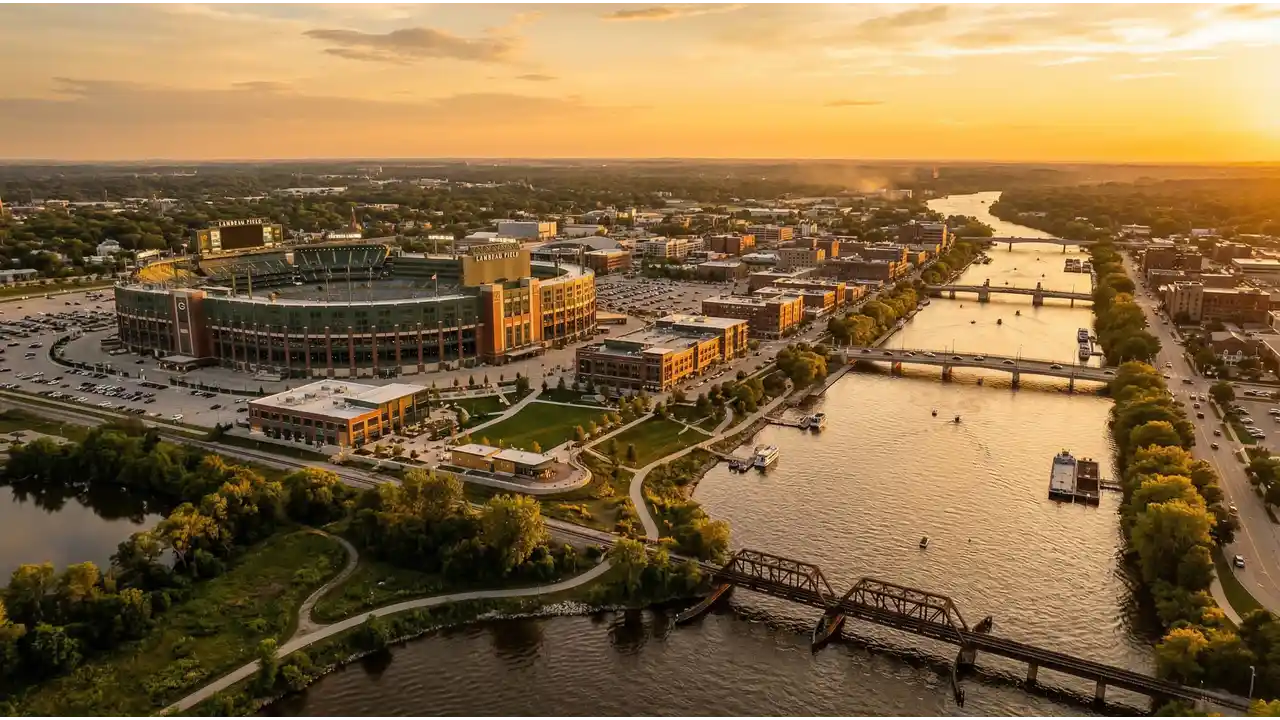
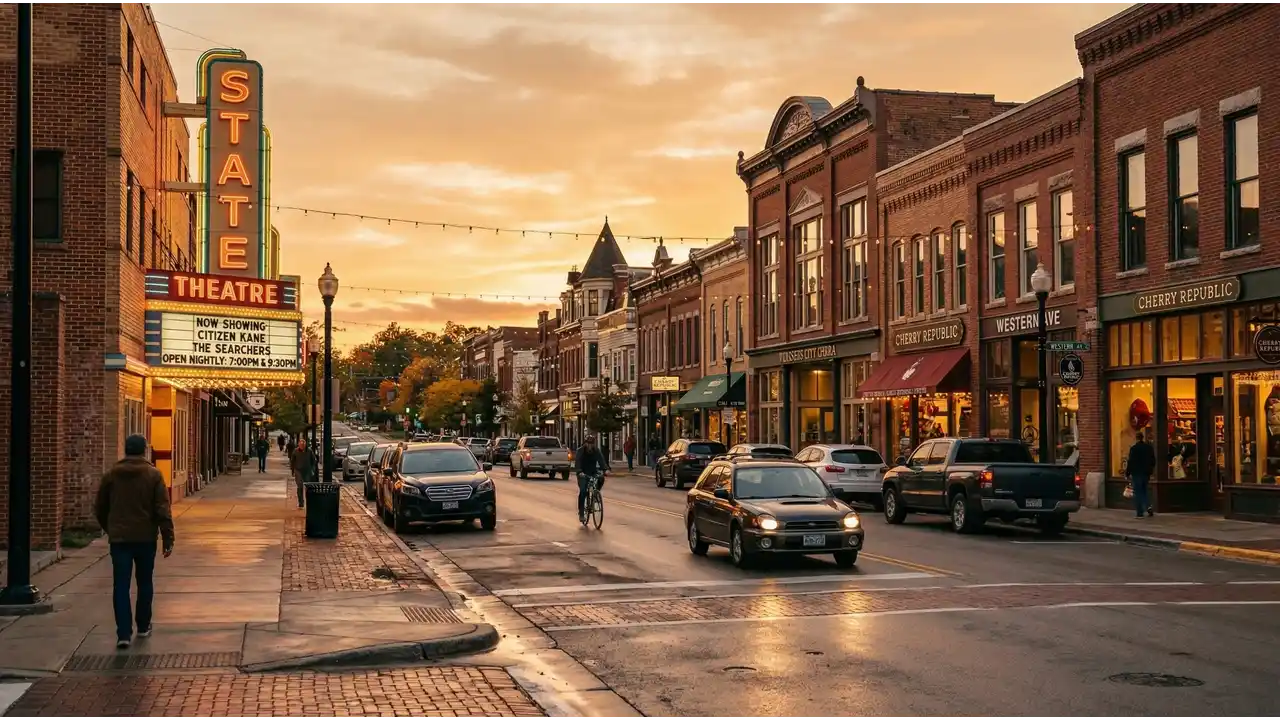
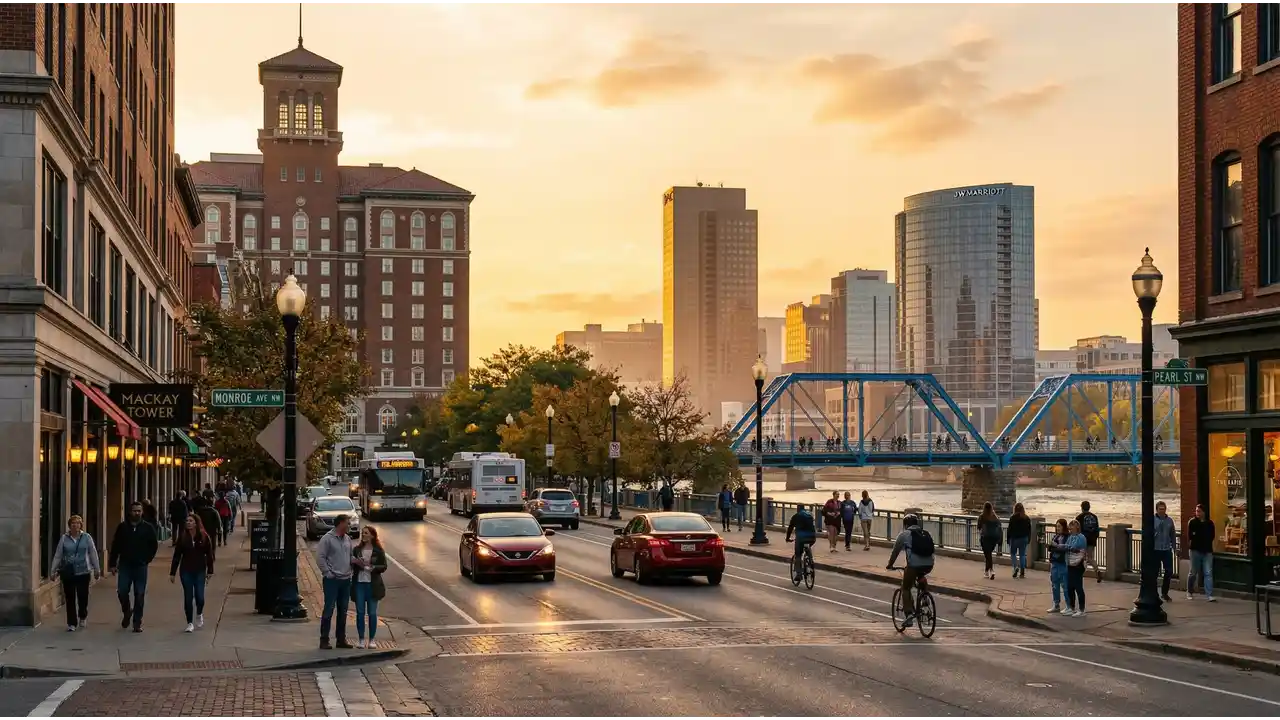
Green Bay is a mid-sized city in northeastern Wisconsin with roughly 100,000 residents. It centers on the Green Bay Packers, professional football, and manufacturing heritage. The climate is cold and snowy from November through March, with average January lows around 20 degrees Fahrenheit. The city has a working-class character, with a mix of longtime residents, young professionals drawn by lower costs, and some expat communities. Daily life revolves around local neighborhoods, seasonal outdoor activities, and a straightforward pace. Downtown is walkable but car-dependent for most errands. Housing stock ranges from historic Victorian homes to modest single-family houses and newer apartments.
💡 Local Insights
Green Bay · 2026
Green Bay's appeal lies in its affordability. Housing costs $853/month on average, which stretches further than regional comparisons: a modest one-bedroom apartment rents for $700 to $950, while two-bedroom houses start around $900 to $1,100. Neighborhoods like Preble and Lineville are older and cheaper; newer developments near Highway 41 command higher rents. Groceries run $507/month for a moderate household diet, consistent with Midwest averages. Eating out is inexpensive: a casual restaurant meal costs $12 to $16, and major chains are cheaper. Utilities add significantly in winter, often $150 to $200/month November through March. Car ownership is necessary; public transit is limited to a small bus system. No state income tax and relatively low property taxes help offset housing costs. Expats find Green Bay straightforward and stable, not flashy, with predictable expenses and no hidden urban premiums.
Frequently Asked Questions
How much does it cost to live in Green Bay per month?
A moderate lifestyle costs $2,425/month. Housing is $853/month, groceries around $507/month. The remainder covers utilities (higher in winter), transportation, phone, internet, and discretionary spending. A tighter budget of $1,455/month is possible but requires roommates or subsidized housing and minimal dining out. A comfortable lifestyle runs $3,759/month, allowing for dining out regularly, hobbies, car ownership, and travel. Most households fall between moderate and comfortable depending on family size and work situation.
What is the average rent in Green Bay?
Average housing costs $853/month. A one-bedroom apartment in central Green Bay runs $700 to $900/month, while two-bedroom units rent for $900 to $1,200/month. Older neighborhoods like Preble offer lower rents, $650 to $800. Newer apartments near Highway 41 or in established suburbs reach $950 to $1,100. Single-family home rentals average $950 to $1,250/month depending on age and location. Utilities are not always included and add $100 to $200/month, with higher bills in winter. Lease terms typically require first month, last month, and security deposit upfront.
Is Green Bay cheap to live in for expats?
Yes, relative to most major North American cities. Housing and food are genuinely affordable. Expats accustomed to Toronto, Chicago, or Minneapolis find Green Bay 30 to 40 percent cheaper overall. The tradeoff is fewer cultural amenities and a smaller job market outside healthcare, manufacturing, and retail. Winter is real and sustained, which surprises expats from warm climates. Public transit is limited; a car is essential. Community integration takes effort in a tight-knit, long-rooted population. For expats prioritizing cost and stability over nightlife or cultural density, Green Bay works well.
How much does food cost per month in Green Bay?
Groceries average $507/month for a moderate diet. A loaf of bread costs $2 to $3, a dozen eggs $2.50 to $3.50, ground beef $5 to $6 per pound, and a gallon of milk $3.50 to $4. Major chains like Metcalfe's, Pick 'n Save, and Aldi are the main supermarkets. Eating out is inexpensive: a burger and fries at a local diner runs $10 to $14, pizza by the slice $2 to $3. Coffee shops charge $2.50 to $4 for basic drinks. Ethnic restaurants are limited but available in central areas. Farmers markets operate May through October and offer seasonal produce at good prices.
What salary do you need to live comfortably in Green Bay?
A comfortable lifestyle costs $3,759/month, translating to roughly $45,000/year gross income. This covers $853 for housing, $507 for groceries, and additional room for dining out, hobbies, car maintenance, health insurance, and savings. Couples with dual incomes totaling $45,000 to $55,000 live very comfortably. A single earner at $48,000 to $52,000/year can sustain a comfortable lifestyle without financial stress. Green Bay's low cost means this income level provides genuine discretionary spending, not survival mode. Healthcare workers and manufacturing professionals typically earn in this range locally.
How does the cost of living in Green Bay compare to other places?
Green Bay is significantly cheaper than Milwaukee (30 percent lower housing), Chicago (40 percent lower overall), and Minneapolis (25 to 30 percent lower). It is comparable to Madison, Wisconsin, though Madison has higher housing due to university demand. Green Bay is modestly more expensive than rural Wisconsin or Iowa, but offers better job prospects and services. Compared to U.S. averages, housing is 15 to 20 percent below national median rent. Food costs track Midwest norms. Winter heating and car dependency are costs shared with other cold-climate Midwest cities.
Can you live in Green Bay on $1,455/month?
Yes, but with significant constraints. The budget tier at $1,455/month requires shared housing, cutting rent to $600 to $700, or subsidized options. Groceries must stay tight at $507/month, meaning minimal meat, heavy reliance on staples, and no dining out. Utilities, internet, and phone must total under $150/month. Public transit or carpooling replaces car ownership. Healthcare, dental, and unexpected expenses create risk. This budget works for students with stipends, gig workers, or those with employer benefits and minimal debt. It is survivable but leaves no buffer for emergencies.