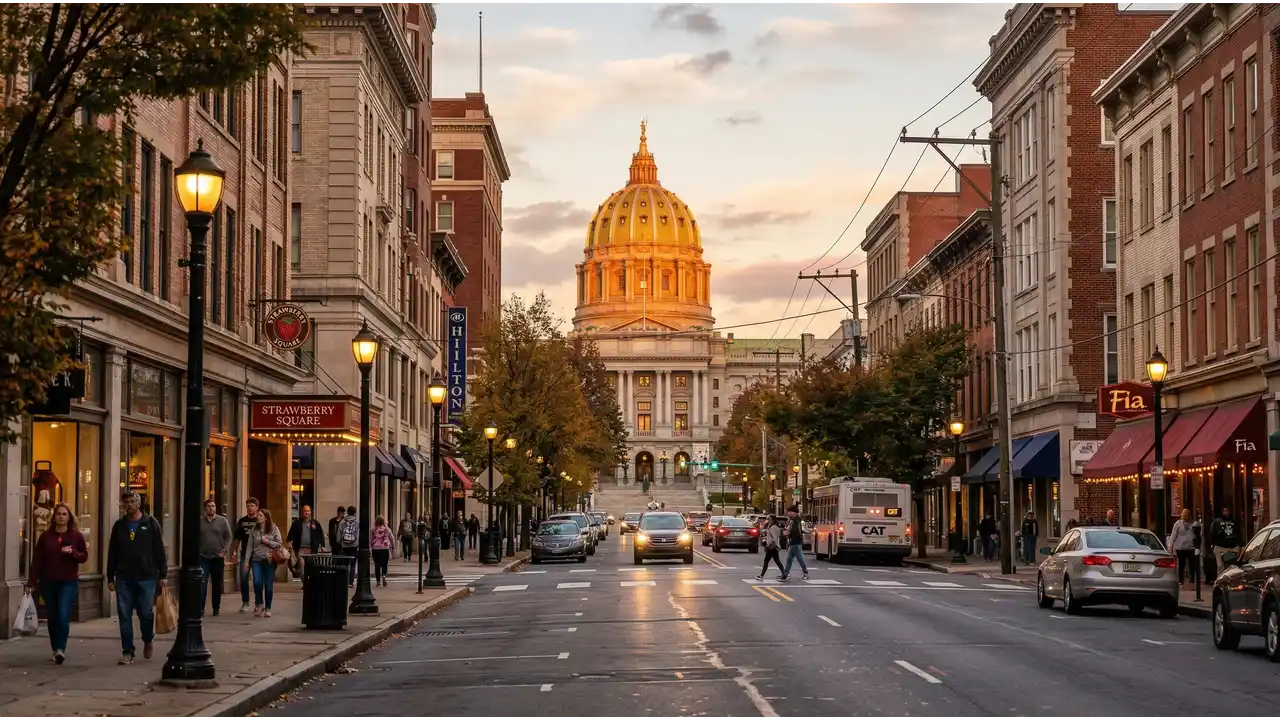
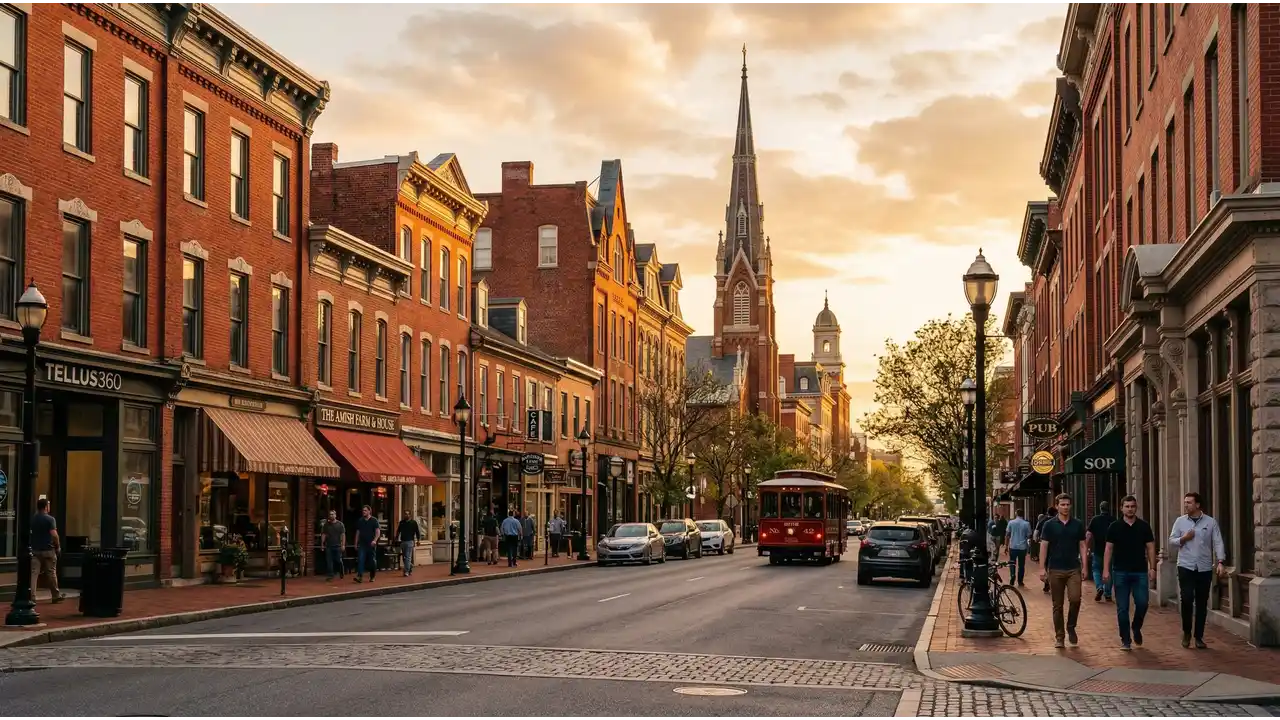
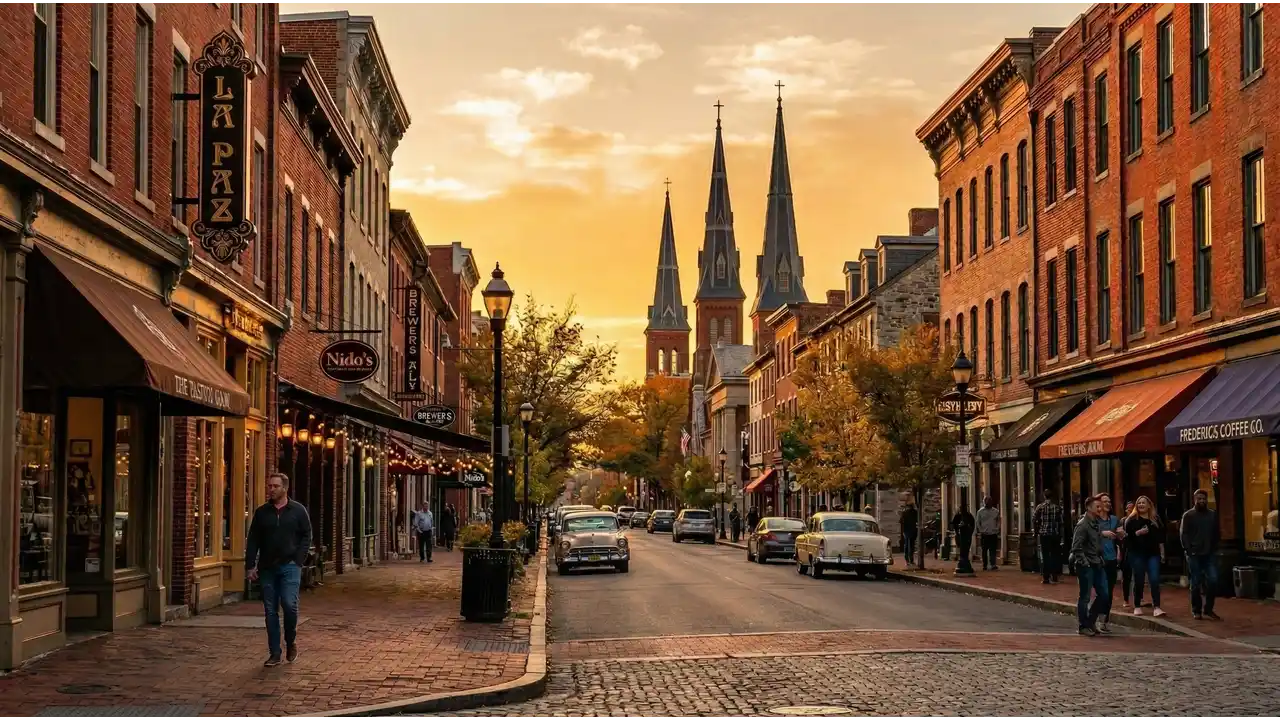
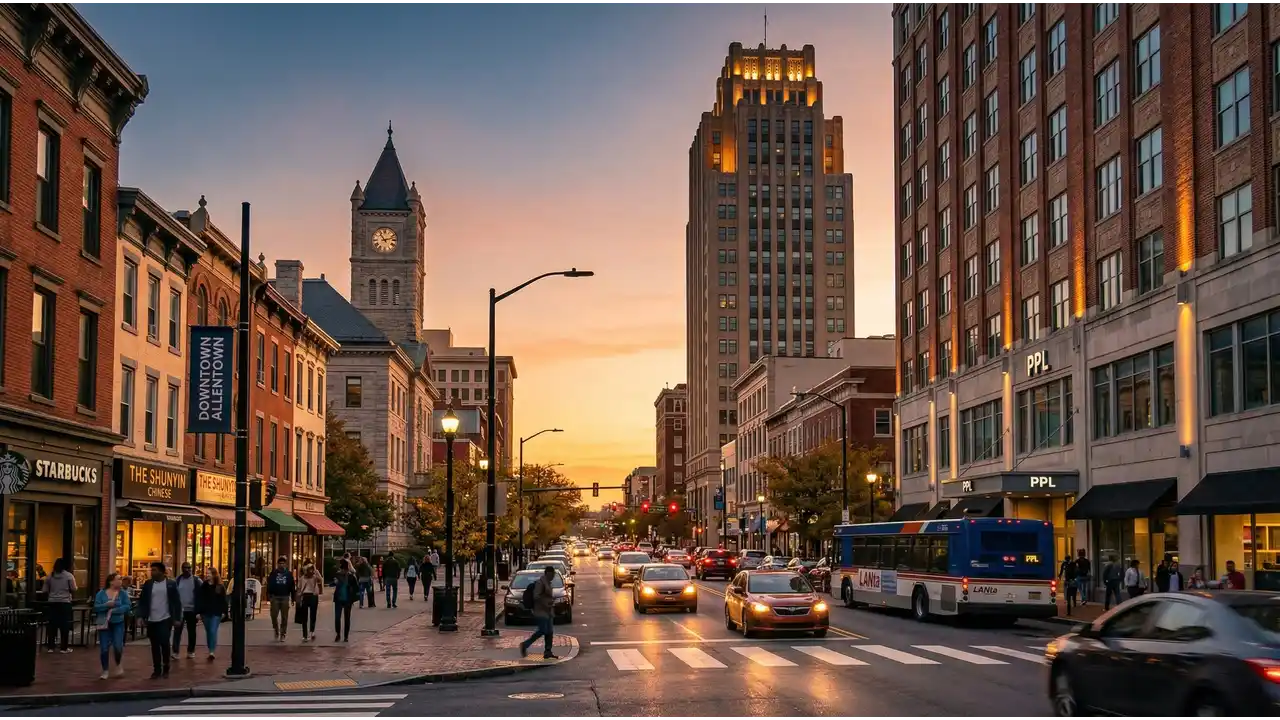
Harrisburg is Pennsylvania's capital, a mid-sized city of roughly 50,000 people on the Susquehanna River. The downtown has seen steady revitalization over the past decade, with restaurants, galleries, and small businesses filling restored buildings. Summer humidity is significant (July averages in the upper 80s), winters are cold with occasional snow. The population is mixed working-class, government employees, students from nearby colleges, and a growing number of remote workers. Daily life centers around downtown corridors, riverfront parks, and neighborhood pockets like Midtown. Traffic is manageable compared to major metros, and most people get by with one car or public transit via local bus service.
💡 Local Insights
Harrisburg · 2026
Harrisburg's cost of living stays low because it lacks the tech-sector wage inflation or tourism premiums of larger Pennsylvania cities. Housing runs $1,189/month on average, with one-bedroom apartments in downtown or Midtown typically $900 to $1,300/month, and two-bedroom rentals $1,100 to $1,500/month. Older Victorian neighborhoods like the Sixth Ward offer cheaper stock but require inspection for maintenance issues. Homeownership is accessible; median home prices sit well below state average. Groceries average $520/month, consistent with rural Pennsylvania pricing. A typical week of supermarket shopping (Weis Markets, Giant, or Aldi) costs less than northeastern urban centers. Dining out runs $12 to $18 per entree at casual restaurants. Public transit via CATA (Capital Area Transit Authority) costs $1.50 per ride; most residents drive. Utilities average $120 to $160/month depending on season. The $2,800/month moderate budget leaves room for car ownership, occasional dining, and modest recreation. Expats report no significant pricing premium; locals and newcomers pay the same.
Frequently Asked Questions
How much does it cost to live in Harrisburg per month?
A moderate lifestyle in Harrisburg costs $2,800/month. This covers housing ($1,189/month), groceries ($520/month), utilities ($140/month), local transport ($40/month), phone and internet ($80/month), and discretionary spending. At the budget tier, you can live on $1,680/month by renting a studio or one-bedroom outside downtown, cooking most meals, and skipping dining out and recreation. The comfortable tier runs $4,340/month, adding a larger apartment, regular restaurant visits, fitness memberships, travel, and entertainment.
What is the average rent in Harrisburg?
Average rent is $1,189/month. One-bedroom apartments in downtown Harrisburg or Midtown range from $900 to $1,300/month, depending on age and amenities. Two-bedroom rentals typically rent for $1,100 to $1,500/month. Older Victorian buildings in neighborhoods like the Sixth Ward or Allison Hill are cheaper (often $700 to $950/month for one bedroom) but may need structural assessment before leasing. Suburbs like Camp Hill or Mechanicsburg run slightly higher. Most leases require first month, last month, and a security deposit. Furnished short-term rentals cost 20 to 30 percent more. There is minimal seasonal variation.
Is Harrisburg cheap to live in for expats?
Yes, Harrisburg is affordable for expats, especially those relocating from Western Europe, Canada, or major US metros. Rent is significantly lower than Boston, Philadelphia, or Toronto. Groceries are cheaper than UK or Australian supermarkets. Utilities and transport are inexpensive. One limitation is that Harrisburg is smaller and quieter than many expat hubs; there is no established expat community infrastructure like London or Singapore offers. However, the proximity to Philadelphia (90 minutes by car or Amtrak), affordable housing, and low cost of living make it appealing for remote workers and early-career professionals seeking lower expenses without isolation from regional amenities.
How much does food cost per month in Harrisburg?
Groceries average $520/month for one person eating three meals a day at home. A typical weekly shop (chicken breasts $6 to $8/lb, ground beef $5 to $7/lb, seasonal produce $1 to $3/lb, milk $3.50/gallon, eggs $2.50/dozen, bread $2 to $3/loaf) at Weis Markets, Giant, or Aldi totals $100 to $130. Dining out is cheaper than major cities: casual restaurants cost $12 to $18 per entree, and ethnic restaurants (Vietnamese, Mexican, Italian) run $10 to $15. Coffee shops charge $2.50 to $4 per drink. Alcohol is inexpensive; beer costs $4 to $7 per six-pack at stores.
What salary do you need to live comfortably in Harrisburg?
A comfortable lifestyle requires $4,340/month, or roughly $52,000/year gross income before taxes. This budget covers a modern one-bedroom or two-bedroom apartment, regular dining out (3 to 4 times weekly), a car payment and insurance, fitness or recreation memberships, occasional travel, and a modest emergency cushion. For a couple, combined household income of $70,000 to $80,000/year allows for homeownership, child-related expenses, and discretionary spending. Government jobs (state capital positions) and healthcare roles commonly offer salaries in that range. Remote workers earning coastal salaries find the budget generous.
How does the cost of living in Harrisburg compare to other places?
Harrisburg's moderate lifestyle costs $2,800 per month, with housing running $1,189. That puts it squarely in the lower-middle range for mid-sized U.S. cities.
For direct comparison, Richmond, Virginia runs $3,000 monthly with housing at $1,406, making it about 7% more expensive overall and notably steeper on rent. If you're coming from a larger metro, Harrisburg is substantially cheaper. Tulsa is the budget option at $2,325 per month and $831 for housing, roughly 17% less across the board.
On the expensive end, Providence costs $3,925 monthly with housing at $2,215, nearly 40% more than Harrisburg. Harrisburg works well if you want affordable living in a state capital with decent infrastructure and services, without the price tag of Northeast corridor cities.
Yes, but with trade-offs. On a budget tier of $1,680/month, you rent a studio or one-bedroom outside downtown ($750 to $950/month), buy groceries carefully ($400 to $450/month), skip dining out and entertainment, and limit transport to one car or transit-only. Utilities, phone, and basics consume another $200/month. You have almost no margin for unexpected costs. This works for students, freelancers with supplementary income, or those with free housing. It requires discipline: cooking all meals, no streaming subscriptions or gym memberships, minimal travel. Emergency savings become difficult. Most people on this budget view it as temporary; moving toward the moderate tier ($2,800/month) adds breathing room and quality of life.