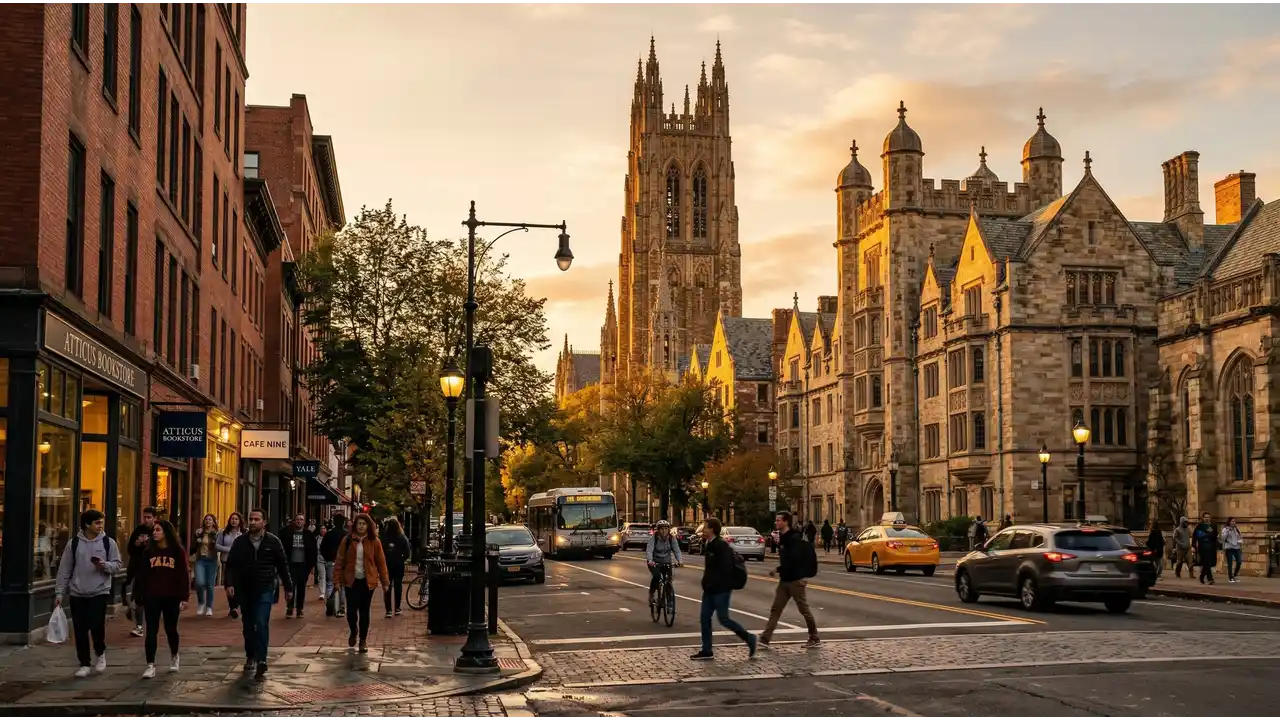
Hartford is Connecticut's capital, a mid-sized city of roughly 120,000 people on the Connecticut River. The downtown has seen revitalization efforts, with museums, theaters, and educational institutions anchoring the city center. Winters are cold and snowy (December through March); summers are warm and humid. The city draws government workers, students, and families. Daily life centers on downtown, the neighborhoods of South End and North End, and nearby suburbs. Public transit exists but is limited compared to larger Northeast cities. Hartford is significantly more affordable than Boston or New York, but less cheap than smaller Connecticut towns.
💡 Local Insights
Hartford · 2026
Hartford's affordability stems from its smaller population and slower economic growth compared to regional peers. Housing costs around $1,502/month, making it accessible for budget-conscious renters and lower-income earners. The rental market skews toward older multifamily buildings and converted homes, particularly in South End and Clay Hill neighborhoods. Downtown and near-university areas command higher rents. Groceries average $564/month, consistent with regional supermarket prices. The city has no subway system; most residents drive or rely on bus transit (CTTRANSIT), which costs roughly $50/month for unlimited passes. Expats should expect Hartford to feel significantly smaller and less cosmopolitan than major metros. Neighborhoods vary sharply in safety and condition; research specific blocks before committing. Property taxes are moderate for Connecticut but higher than surrounding states. Local wages in government and nonprofits are stable but modest.
Frequently Asked Questions
How much does it cost to live in Hartford per month?
A moderate lifestyle in Hartford costs around $3,250/month. This breaks down roughly as $1,502/month for housing (rent, utilities, renter's insurance), $564/month for groceries, $150/month for transportation via public transit or shared driving, and the remaining budget for dining out, entertainment, clothing, and personal services. A tighter budget lifestyle runs $1,950/month, while a comfortable lifestyle (including dining out regularly, car ownership, and discretionary spending) reaches $5,038/month. Costs vary by neighborhood; downtown and near Trinity College tend to be pricier.
What is the average rent in Hartford?
Average rent in Hartford hovers around $1,502/month for a moderate lifestyle. One-bedroom apartments in central neighborhoods like South End or Clay Hill range from $1,200 to $1,700/month, depending on condition and amenities. Downtown lofts and renovated units command $1,500 to $1,900/month. Older, less-updated units in outer neighborhoods drop to $900 to $1,200/month. Two-bedroom apartments run $1,400 to $2,000/month. Utilities add $120 to $180/month. Hartford's rental stock skews toward pre-1970s buildings; newer construction is limited. Landlord quality varies significantly; use local tenant networks before signing leases.
Is Hartford cheap to live in for expats?
Hartford is moderately affordable for expats but not exceptionally cheap. Rents are lower than Boston, New York, or Philadelphia, but higher than many Midwest cities. At $1,502/month average rent, expats accustomed to major metros will find relief; those from smaller towns may find it pricey. The trade-off is a smaller job market for specialized roles and fewer international communities than larger cities. Expats benefit from stable government and nonprofit employment, good healthcare (Hartford Hospital, Connecticut Children's), and no language barrier. However, cultural amenities and international food options are limited compared to major metros. Expats typically settle in downtown or South End; university-adjacent areas attract younger expat populations.
How much does food cost per month in Hartford?
Groceries average $564/month for a single person on a moderate budget. A week of basics (milk, eggs, bread, chicken, rice, canned vegetables, fruit) costs roughly $60 to $80 at Stop & Shop or Big Y supermarkets. Specialty or organic items run 20-30 percent higher. Dining out is cheaper than major metros: casual restaurants charge $12 to $16 for lunch mains, $16 to $24 for dinner. Food trucks and ethnic restaurants (Caribbean, Latin American, Asian) in central neighborhoods offer good value at $8 to $12 per meal. Farmers markets operate seasonally and offer competitive produce prices.
What salary do you need to live comfortably in Hartford?
A comfortable lifestyle in Hartford requires roughly $5,038/month, suggesting an annual gross income around $60,450 to $67,000 (accounting for taxes). This covers $1,502/month rent on a nicer apartment, regular dining out, car ownership or expanded transit use, entertainment, travel, and savings. Government positions (state/city roles) and nonprofit jobs typically offer $45,000 to $65,000 starting salaries. Healthcare workers and skilled trades earn $50,000 to $75,000. Remote workers earning outside Hartford can live very comfortably on less. For renters, aim to earn at least 3 times the monthly rent to stay financially healthy; that suggests $4,500 to $5,000/month gross income.
How does the cost of living in Hartford compare to other places?
Hartford sits comfortably in the middle tier for US cities. A moderate lifestyle costs $3,250 per month here, with housing running $1,502 monthly.
For context, Columbus is notably cheaper at $2,725 for a moderate lifestyle and $1,146 for housing, making it one of the more affordable mid-sized cities in the region. Boise comes in as a peer city at $3,100 overall, though its housing costs $1,523, almost identical to Hartford's. If you're considering the coasts, San Diego runs significantly higher at $4,450 monthly, with housing alone at $2,533.
Hartford's advantage is stability. You're not paying premium prices for urban density or climate appeal, but you're getting a functioning city with transit, culture, and job markets. The trade-off is straightforward: lower costs than coastal metros, comparable to other Rust Belt revivals.
Yes, but with trade-offs. A $1,950/month budget tier requires tight choices. Rent must stay around $1,100 to $1,200/month, limiting options to older buildings in outer neighborhoods or shared housing. Groceries drop to roughly $350 to $400/month (minimal dining out, bulk staples, budget brands). Transportation relies on public transit ($50/month) rather than car ownership. Utilities, phone, and internet total $120 to $150/month. This leaves roughly $300 to $400 for clothing, personal care, entertainment, and savings. It's feasible for single adults without dependents, especially those qualifying for food assistance programs. Expect limited flexibility for emergencies or discretionary spending.