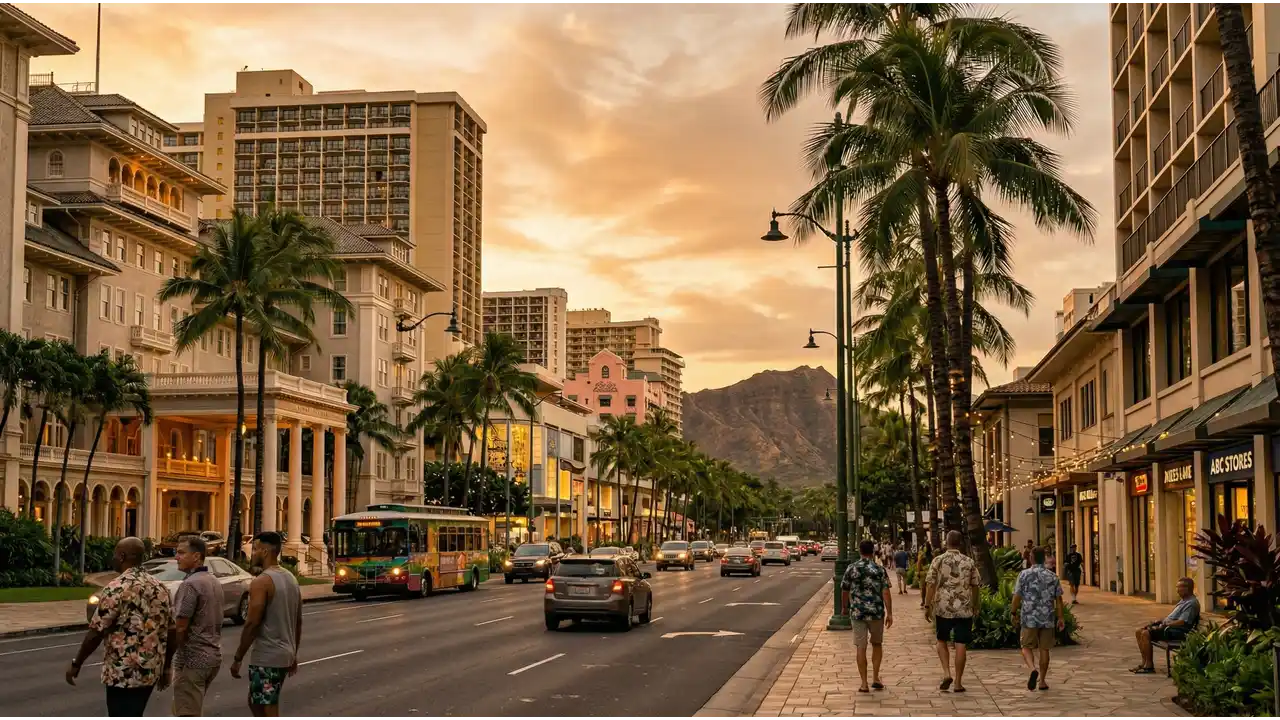
Hilo is Hawaii's second-largest city, located on the Big Island's windward side. It's a working town, not a resort destination, with a mix of local Hawaiian, Filipino, Japanese, and mainland residents. The climate is wet and tropical, with frequent rain supporting lush vegetation. Daily life centers on modest commercial streets, small local restaurants, and access to Hawaii Volcanoes National Park and outdoor recreation. Most people drive, though the pace is slower than mainland cities. Cost of living is lower than Honolulu but higher than comparable US mainland towns due to island supply chains and limited housing stock.
💡 Local Insights
Hilo HI · 2026
Hilo's cost structure reflects Hawaii's geographic isolation. Housing at $1,240 per month typically means a one-bedroom apartment in older buildings downtown or modest two-bedroom homes in outer neighborhoods like Keaau or Kurtistown, where rents run $1,100 to $1,400. Newer or larger units cost more. Groceries at $729 monthly are 30 to 40 percent higher than mainland prices due to shipping; staples like milk, cheese, and imported goods carry significant markups. Local produce from farmers markets is cheaper and fresher than supermarket imports. Eating out costs $12 to $18 for casual meals at local spots. Transportation is essential, with limited public transit; a used car purchase and maintenance can add $200 to $400 monthly. Utilities run $120 to $180. Healthcare and childcare are available but limited compared to urban centers. The key cost driver is housing scarcity and the reliance on imported goods. Residents on tight budgets skip dining out, shop sales carefully, and live inland rather than near town.
Frequently Asked Questions
How much does it cost to live in Hilo HI per month?
A moderate lifestyle in Hilo costs $3,500 per month. Housing runs $1,240, groceries $729, utilities roughly $150, transportation $250 to $350, and miscellaneous expenses $630 to $800. A budget tier is possible at $2,100 monthly if you live outside town, cook all meals, and avoid eating out. A comfortable lifestyle costs $5,425, which allows larger housing, frequent dining out, and travel. These figures reflect local salaries and expat experiences.
What is the average rent in Hilo HI?
Average rent is $1,240 per month. A one-bedroom apartment downtown or in central Hilo runs $1,000 to $1,400. Two-bedroom homes in neighborhoods like Keaau, Kurtistown, or Volcano run $1,100 to $1,600. Beachfront or newly renovated units cost more, often $1,600 to $2,000. Rental stock is limited, so availability can be tight. Landlords prefer longer leases. Many rentals are older buildings built in the 1970s to 1990s. Property taxes are lower than mainland states, but rental prices reflect local wages and limited supply.
Is Hilo HI cheap to live in for expats?
Hilo is cheaper than Honolulu and most mainland US cities, but it is not cheap in absolute terms. Housing at $1,240 and groceries at $729 monthly exceed costs in mid-sized mainland towns. Expats should expect to earn $2,500 to $3,500 monthly for a moderate lifestyle or have savings. Hilo attracts retirees, remote workers, and people priced out of Honolulu. Healthcare, entertainment, and social life are limited. Isolation and lack of amenities can feel constraining after six months.
How much does food cost per month in Hilo HI?
Groceries average $729 per month for one person eating at home. Milk is $6 to $7 per gallon, eggs $4 to $5 per dozen, chicken $8 to $10 per pound, rice and beans $1 to $2 per pound. Local farms sell cheaper produce at farmers markets. Eating out costs $12 to $18 for casual meals at local restaurants, $20 to $35 for sit-down dining. Coffee shops charge $4 to $6. Shopping at warehouse stores like Costco in Hilo saves money compared to smaller grocers.
What salary do you need to live comfortably in Hilo HI?
A comfortable lifestyle costs $5,425 per month, requiring an annual income of roughly $65,000 before tax or $4,500+ monthly after tax. This budget allows $1,500 to $1,800 housing, frequent dining out, a reliable car, travel, and activities. Many remote workers and professionals achieve this range. Local median household income is lower, around $50,000 annually, so comfortable living requires either remote work, entrepreneurship, or significant savings.
How does the cost of living in Hilo HI compare to other places?
Hilo runs $3,500 per month for a moderate lifestyle, making it genuinely affordable for Hawaii. Housing in Hilo costs $1,240 monthly, which is the real story here. That's substantially cheaper than Honolulu, where a moderate lifestyle reaches $4,475 and housing alone runs $2,214. Compared to mainland US cities, Hilo sits in the middle ground. Philadelphia runs $3,350 overall with housing at $1,746, so Hilo edges higher on total spending but offers cheaper rent. Louisville, Kentucky is the budget option at $2,650 monthly with $1,111 housing. The trade-off: you're paying island prices for groceries, utilities, and most goods in Hilo, but residential real estate stays reasonable. If you're choosing between Hawaiian islands, Hilo is the more practical option cost-wise.
Yes, but only with discipline. A budget lifestyle requires renting outside town (Keaau, Kurtistown) at $900 to $1,100, cooking all meals, no dining out, minimal entertainment, and a used car. Groceries need careful planning, around $500 to $550 monthly. Utilities, insurance, and gas consume the remainder. Medical emergencies, car repairs, or unexpected costs force use of savings. This budget works for retirees with Social Security or people with very low expenses, but is stressful for families or those without emergency reserves.