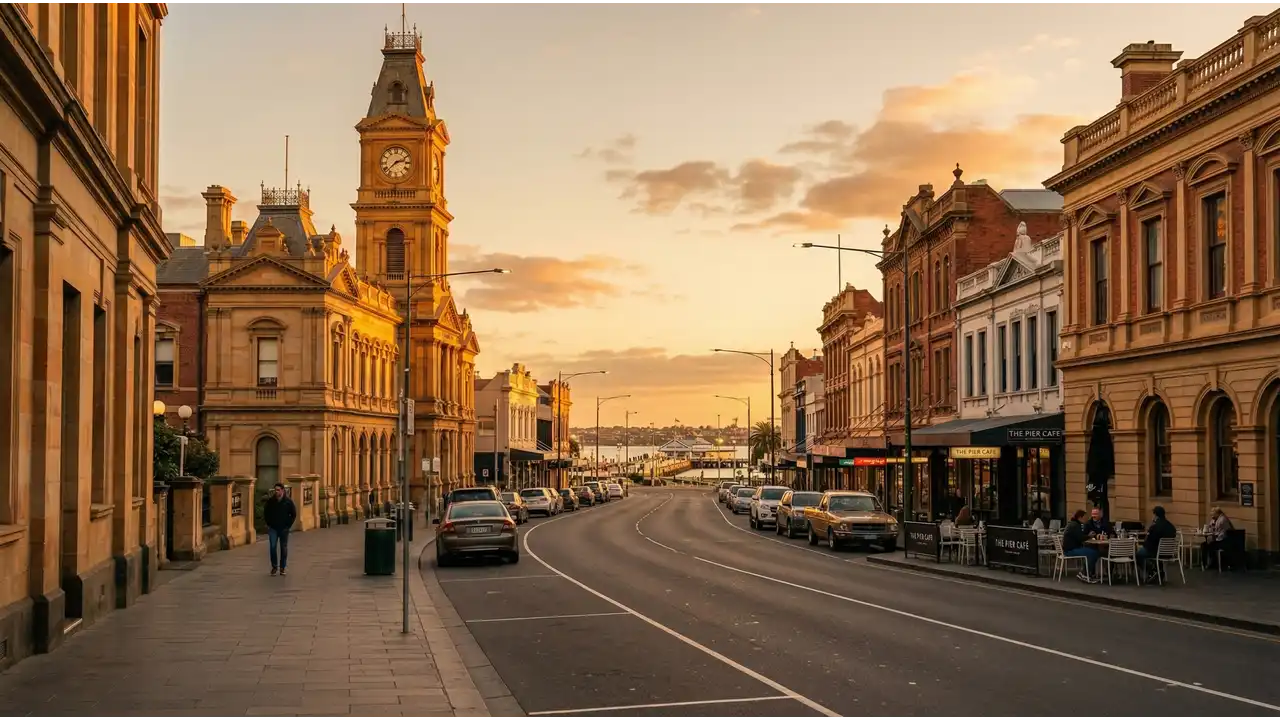
Hobart is Tasmania's capital and Australia's second-coldest major city. Around 230,000 people live here, a mix of long-term residents, retirees, and increasingly, remote workers and younger professionals drawn by lower costs than Sydney or Melbourne. Daily life centers on waterfront activity, markets, and strong seasonal rhythms. Winters are genuinely cold (4-8°C), summers mild (17-21°C). The pace is slower than mainland Australian cities. Most neighborhoods cluster within 10 kilometers of the CBD. Local food culture emphasizes fresh produce and seafood from surrounding regions. Public transport exists but is limited; many residents rely on cars.
💡 Local Insights
Hobart · 2026
Hobart's moderate cost of $2,675/month is driven primarily by housing at $1,259/month, which is substantially lower than Sydney or Brisbane but has risen noticeably as remote work has increased demand. Inner suburbs like South Hobart and Glebe command higher rents ($1,400-$1,600 for a one-bedroom apartment), while outer areas like Claremont or Kingston run $1,000-$1,200. Groceries at $457/month reflect competitive supermarket pricing (Coles, Woolworths, Aldi) but fresh produce, seafood, and imported goods can be expensive due to distance from mainland suppliers. Local produce markets offer cheaper alternatives. Transport costs are moderate; public bus fares are subsidized for some demographics, and fuel is typically 5-10 percent higher than mainland Australia. Expats often find Hobart affordable compared to global city costs, though cheaper than Melbourne. Utilities (electricity, heating) run higher than northern Australian cities because of winter demand. Healthcare through Medicare or private insurance is built into most expat budgets but not usually separated in cost of living figures.
Frequently Asked Questions
How much does it cost to live in Hobart per month?
A moderate lifestyle in Hobart costs around $2,675/month. This breaks down as housing at $1,259/month, groceries at $457/month, with the remainder covering utilities, transport, dining out, entertainment, and personal care. A tighter budget of $1,605/month is possible by minimizing eating out and choosing outer suburbs, though it requires discipline. A comfortable lifestyle at $4,146/month allows for inner-suburb housing, regular dining out, and more leisure spending. Most people settle between the moderate and comfortable tiers depending on neighborhood choice and personal habits.
What is the average rent in Hobart?
Average housing costs are around $1,259/month. This typically means a one-bedroom apartment in the inner suburbs (South Hobart, Glebe) rents for $1,400-$1,600, while two-bedroom places run $1,600-$2,000. Outer suburbs like Claremont, Kingston, or Rosny offer one-bedroom apartments at $1,000-$1,200 and two-bedroom houses at $1,300-$1,500. Shared housing drops costs to $600-$900 per person. The rental market is tight; availability depends on season (winter demand is lower). Short-term furnished rentals cost 20-30 percent more. Most leases require references and proof of income.
Is Hobart cheap to live in for expats?
Hobart is affordable relative to Sydney, Melbourne, or other global expat hubs, but not uniquely cheap by global standards. At $2,675/month for a moderate lifestyle, it sits between mid-tier Southeast Asian cities and Western European capitals. For North Americans or Western Europeans, Hobart offers lower housing and dining costs but higher utilities and transport. For expats from lower-cost countries, it will feel expensive. Visa status matters significantly: skilled migration visa holders can access some employer benefits, while tourists or digital nomads pay market rates. The city attracts remote workers specifically because the total cost remains reasonable while offering safety, healthcare, and stable infrastructure.
How much does food cost per month in Hobart?
Groceries run approximately $457/month for one person on a moderate budget. This means $8-12 per day on staples. Coles and Woolworths dominate; budget items are competitive, but specialty or organic products carry premiums. Fresh produce and seafood are relatively affordable when in season (January-April for berries, June-August for citrus). Eating out is moderate: casual meals cost $15-22, mid-range restaurants $25-40 per person. Weekly farmers markets in South Hobart and the CBD offer cheaper produce and prepared foods. Alcohol, particularly wine and imported beer, is pricier than mainland Australia due to import costs.
What salary do you need to live comfortably in Hobart?
A comfortable lifestyle requires about $4,146/month, which translates to roughly $50,000 annually after tax (accounting for Australian income tax rates and Medicare levy). This allows for inner-suburb housing ($1,500-$1,800/month), regular dining out, travel, and hobbies without monthly stress. A two-income household at $35,000 each (combined $70,000) provides breathing room and savings capacity. For visa sponsorship, employers typically need to demonstrate salary thresholds set by immigration; as of recent guidance, skilled roles often require $50,000-$65,000 minimum. Remote workers on global salaries find the cost very manageable.
How does the cost of living in Hobart compare to other places?
Hobart's moderate lifestyle costs $2,675 per month, with housing running $1,259 monthly. That puts it slightly above Adelaide, where a moderate lifestyle runs $2,525 with housing at $1,312 per month. If you're looking for genuine savings, Christchurch comes in notably cheaper at $2,050 overall and $1,050 for housing. On the other end, Nassau is substantially pricier at $3,625 monthly, with housing alone reaching $2,058. Within Australia, Hobart sits in the middle range. It's more expensive than many smaller regional centers but considerably cheaper than Sydney or Melbourne. For most expats and relocating professionals, the cost is reasonable given the quality of life, fresh produce, and lower-stress living. The housing market specifically reflects Tasmania's slower demand compared to mainland capitals.
Yes, but with significant constraints. At the budget tier of $1,605/month, you would typically rent in outer suburbs (Claremont, Rosny, Kingston) for $900-$1,050, buy groceries strategically for $400-$420/month, and minimize eating out. Public transport replaces car ownership, or a cheap used car covers transport. Utilities and phone together run $150-$180. Entertainment and personal spending shrink to $50-100/month. This requires discipline: no subscriptions, no regular dining out, careful meal planning, and no margin for emergencies. It's viable for students, digital nomads with low expense habits, or those with partner income. Most people on this budget eventually shift to the moderate tier once settled.