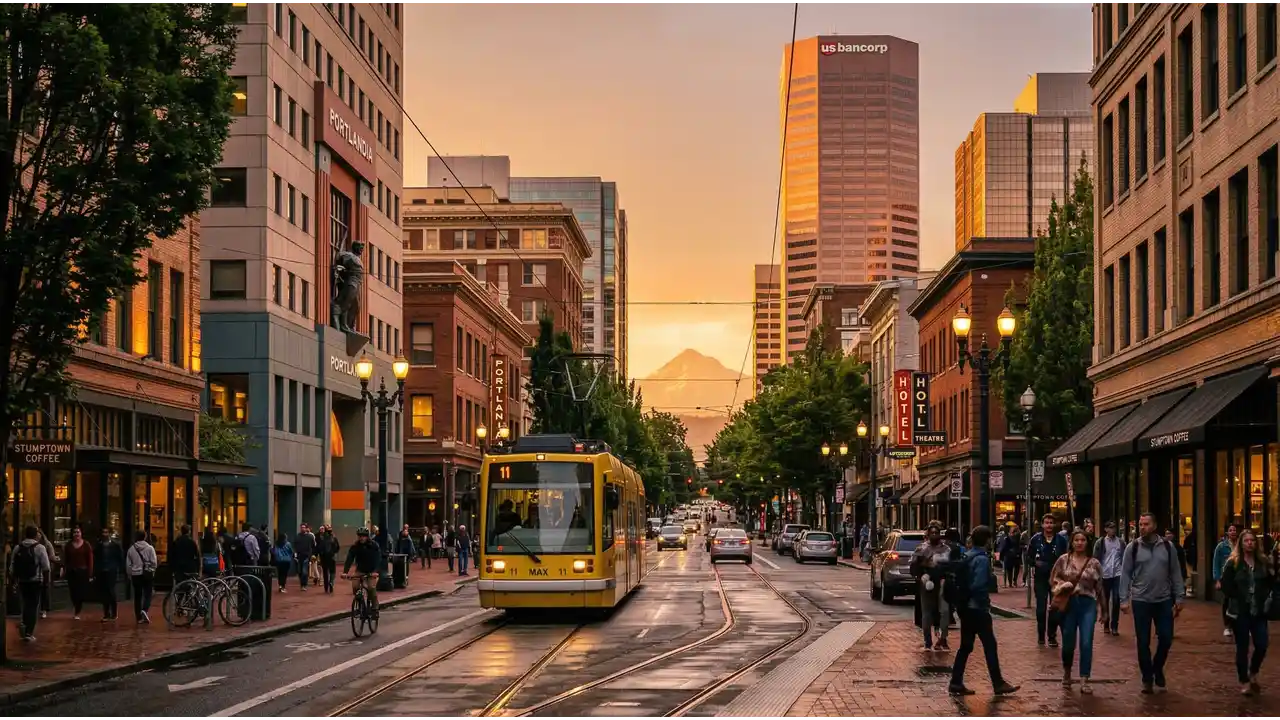
Idaho is a mix of small cities, rural towns, and outdoor recreation. Boise, the capital and largest city, has around 235,000 people and serves as the economic hub. The state spans high desert in the south and mountains in the north, with four distinct seasons and cold winters. Most residents live in the Treasure Valley around Boise or scattered through mountain valleys. Daily life centers on outdoor access, conservative communities, and a slower pace than major metro areas. Agriculture, tech startups, and outdoor tourism drive the economy. Population growth has accelerated in recent years, particularly among people relocating from California and the Pacific Northwest.
💡 Local Insights
Idaho · 2026
Idaho's affordability stems from lower property values outside Boise and limited urban sprawl pressure compared to neighboring states. Housing averages $1,201 per month, but this masks sharp differences: rural rentals and smaller towns run $800 to $1,100, while Boise central neighborhoods command $1,400 to $1,600 for comparable space. Groceries cost around $508 monthly for a moderate diet, slightly below the national average, though prices have risen with population growth. Transportation is car-dependent outside Boise, where bus service exists but is limited. Boise's tech influx has pushed wages up in software and skilled trades, but service sector pay lags. Expats and remote workers are common in Boise; locals and established residents pay the same prices. Winter heating costs (November to March) add $100 to $200 monthly in northern regions. Summer cooling is minimal. Sales tax runs 6 percent statewide; no state income tax.
Frequently Asked Questions
How much does it cost to live in Idaho per month?
A moderate lifestyle in Idaho costs $2,775 per month. This covers housing at $1,201, groceries at $508, utilities around $200, transport $250 to $350, and other expenses. The budget tier runs $1,665 monthly (housing $700 to $900, shared housing, minimal discretionary spending). A comfortable lifestyle costs $4,301 (better housing $1,600 to $1,800, dining out, hobbies, private transport). Actual costs vary sharply by location: rural areas and small towns run 20 to 30 percent below Boise.
What is the average rent in Idaho?
Average monthly rent is $1,201, but location determines actual cost. In Boise proper, expect $1,400 to $1,600 for a one-bedroom apartment. Outside central Boise (Eagle, Meridian, Nampa suburbs), rents drop to $1,100 to $1,300. Rural areas and smaller towns like Coeur d'Alene or Moscow average $900 to $1,100. A two-bedroom in Boise runs $1,600 to $1,900; in small towns $1,200 to $1,400. Rental market has tightened since 2020 with population growth, particularly in Boise and surrounding Treasure Valley. Single-family home rentals often cost more than apartments.
Is Idaho cheap to live in for expats?
Idaho is cheaper than major tech hubs (San Francisco, Seattle, Denver) but less affordable than it was five years ago. For expats from Western Europe or Australia, costs are moderate and housing especially reasonable compared to home. Compared to other US states, Idaho sits mid-range: cheaper than coastal states, similar to Colorado, more expensive than Mississippi or Kentucky. Boise attracts international remote workers; visa and immigration support infrastructure is minimal. Rural Idaho offers genuine savings but requires self-sufficiency and a car. Expats typically settle in Boise for amenities and community, paying the same prices as locals.
How much does food cost per month in Idaho?
Groceries run $508 monthly for a moderate diet (two people, cooking at home). Specific items: ground beef $5 to $6 per pound, chicken $3 to $4 per pound, eggs $3 to $4 per dozen, milk $4 per gallon, bread $2.50 to $3.50. Seasonal produce (summer berries, fall apples) is cheaper and local. Eating out averages $12 to $16 for casual lunch, $20 to $30 for dinner at mid-range restaurants in Boise. Rural areas have fewer restaurants and slightly lower prices. Prices have risen notably since 2020, particularly for meat and dairy.
What salary do you need to live comfortably in Idaho?
A comfortable lifestyle costs $4,301 per month, or roughly $51,600 annually before tax. This allows better housing ($1,600 to $1,800), regular dining out, hobbies, travel, and car ownership. In Boise, professionals in tech, healthcare, and skilled trades often earn $60,000 to $90,000, supporting this comfortably. For rural areas, $45,000 to $50,000 is sufficient. Idaho has no state income tax, which improves purchasing power. A household earning $65,000 to $75,000 can live very well outside Boise, with money to save. Remote workers on $50,000 to $60,000 find Idaho financially stable.
How does the cost of living in Idaho compare to other places?
Idaho's moderate lifestyle costs $2,775 per month, with housing at $1,201 monthly. This positions Idaho slightly above Mississippi, where a moderate lifestyle runs $2,325 per month and housing costs $832. Wisconsin, a peer state, is marginally cheaper overall at $2,675 monthly, though its housing at $1,096 is only modestly lower than Idaho's.
The real gap widens when you look west. California's moderate lifestyle reaches $4,050 per month, nearly 46 percent higher than Idaho, with housing alone at $2,146. This makes Idaho substantially more affordable than coastal markets while remaining competitively priced within the Mountain West and upper Midwest.
Your actual costs will depend heavily on which city or region of Idaho you choose. Boise runs higher than rural areas, though still well below California's benchmark.
Yes, on a tight budget. This tier requires shared housing ($650 to $800), minimal discretionary spending, cooking at home, using transit or a cheap car, and avoiding medical emergencies. Food ($400 to $450), utilities ($120 to $150), phone ($60 to $80), transport ($150 to $200). Works best in rural areas and small towns. In Boise, this budget squeezes significantly; shared apartments are necessary. No buffer for unexpected costs, travel, or entertainment. Realistic for students, early-career workers, or those with other income sources. Possible but not comfortable; most people living this way are in transition or subsisting on multiple income streams.