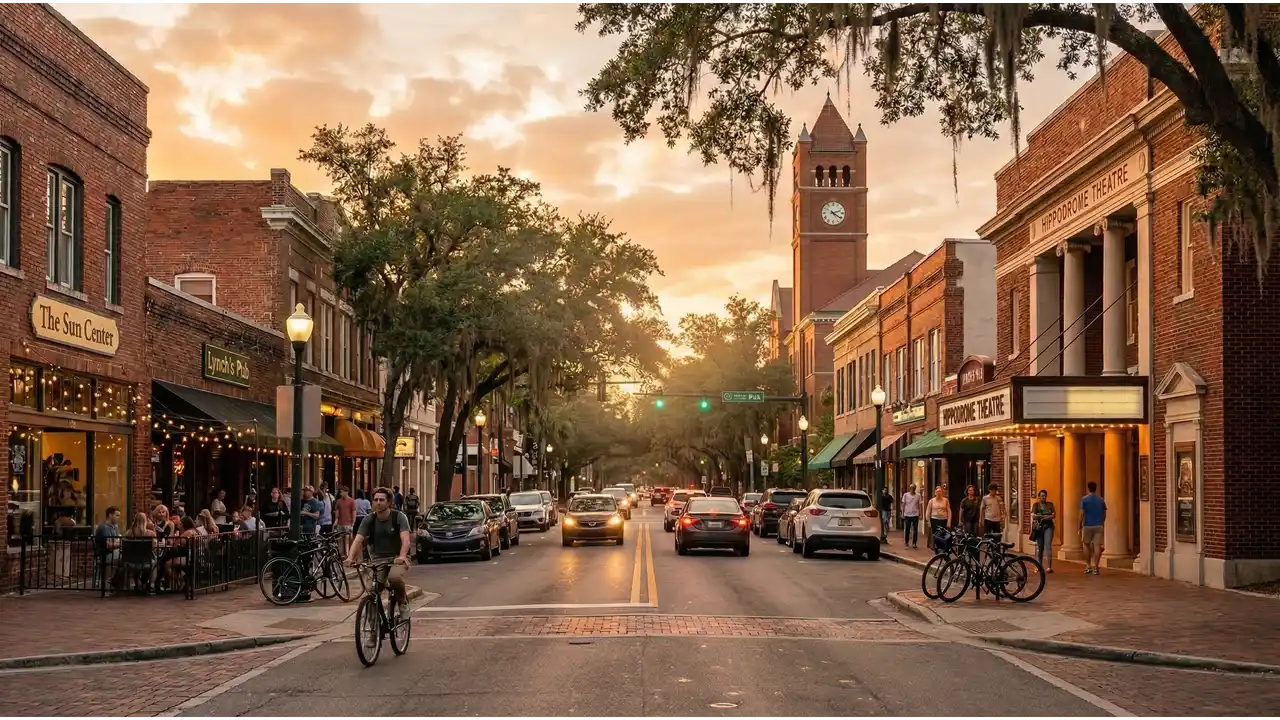
Jacksonville is Florida's largest city by area, sprawling across 747 square miles along the St. Johns River and Atlantic coast. It's a working port city with a military presence (Naval Station Mayport), corporate headquarters, and beach neighborhoods rather than a tourist destination. The climate is warm year-round with hot, humid summers and mild winters. Residents are a mix of military families, retirees, young professionals, and working-class locals. Daily life centers on driving, with many neighborhoods spread out. The downtown core is smaller than other major cities, but beachside areas like San Marco and riverside spots offer walkable pockets.
💡 Local Insights
Jacksonville · 2026
Jacksonville's main cost advantage is housing. At $1,253 per month, rent reflects a less competitive market than Miami or Tampa. One-bedroom apartments downtown run $900 to $1,100, while San Marco or beachside areas reach $1,300 to $1,600. Groceries at $515 monthly align with Southeast averages. Eating out is cheaper than coastal metros: casual dining runs $12 to $16 per person. Transportation costs matter because sprawl is real. Most residents drive, with gas and parking factored into daily budgets. Public transit (JTA) is limited compared to other major cities, so car ownership is nearly essential unless you're in a walkable neighborhood. Utilities run higher in summer due to air conditioning. Expats find Jacksonville notably cheaper than Miami (roughly 25 percent less for housing), though less cosmopolitan. Local wages don't match cost-of-living tier figures for all sectors, so remote work is common among people using this advantage.
Frequently Asked Questions
How much does it cost to live in Jacksonville per month?
A moderate lifestyle in Jacksonville costs $2,850 per month. Housing runs $1,253 per month across various neighborhoods. Groceries average $515 monthly for a single person. Utilities, transportation, dining out, and entertainment fill the remainder. A budget lifestyle costs around $1,710 monthly, cutting back on dining out and entertainment. A comfortable lifestyle runs $4,418 monthly with more flexibility on dining, travel, and housing quality. These figures reflect single-person budgets; couples or families will have different proportions.
What is the average rent in Jacksonville?
Average rent is approximately $1,253 per month across Jacksonville. One-bedroom apartments in downtown or midtown neighborhoods run $900 to $1,100. Two-bedroom units average $1,200 to $1,500. Beachside areas like San Marco, Jacksonville Beach, and Ponte Vedra are pricier, with one-bedrooms at $1,300 to $1,600. Westside and Arlington neighborhoods offer lower rents, $800 to $1,000 for one-bedrooms. Utilities add $120 to $160 monthly in summer due to air conditioning. Renter-friendly neighborhoods with apartment supply keep prices competitive compared to Florida's major metros.
Is Jacksonville cheap to live in for expats?
Yes, Jacksonville is cost-effective for expats, particularly those from European cities or coastal U.S. markets. Housing costs significantly less than Miami, Tampa, or Orlando. Groceries and dining out are cheaper than major international expat hubs. However, expats need to factor in Jacksonville's car-dependent nature. Public transportation is minimal, so owning or renting a vehicle adds $400 to $600 monthly. The city lacks the international amenities of larger metros, so cultural and dining diversity is lower. Expats from the U.K. or Northern Europe find prices reasonable overall. Those seeking international schools, advanced healthcare, or cosmopolitan social scenes may find Jacksonville less developed in those areas.
How much does food cost per month in Jacksonville?
Groceries run approximately $515 monthly for one person on a moderate budget. Common items: ground beef $5 to $6 per pound, chicken breast $7 to $8 per pound, eggs $4 to $5 per dozen, milk $3.50 to $4.50 per gallon, bread $2.50 to $3.50 per loaf. Casual dining averages $12 to $16 per person for lunch or dinner. Fast food is $8 to $12. Mid-range restaurants run $15 to $25 per person. Supermarket chains like Publix and Winn-Dixie are standard. Farmers markets operate year-round at lower produce costs. A family of four might budget $1,800 to $2,000 monthly on groceries.
What salary do you need to live comfortably in Jacksonville?
A comfortable lifestyle in Jacksonville requires approximately $4,418 per month, or roughly $53,000 annually before taxes. This budget allows for dining out regularly, entertainment, travel within the state, and quality housing in desirable neighborhoods. For a couple, combined income of $80,000 to $100,000 annually provides breathing room. Comfortable housing at this tier runs $1,600 to $2,000 monthly in established neighborhoods like San Marco or riverside areas. Salaries in Jacksonville average lower than major metros, so remote work or specialized positions (healthcare, tech, military contracting) often supply this income level. Cost of living increases with proximity to beaches and downtown.
How does the cost of living in Jacksonville compare to other places?
Jacksonville sits in the middle tier for US cost of living. A moderate lifestyle here costs $2,850 per month, with housing running $1,253 monthly. That puts it meaningfully cheaper than Seattle, where a moderate lifestyle reaches $3,950 and housing alone costs $2,177. Compared to peer cities like Minneapolis, Jacksonville edges out slightly less expensive overall at $3,025 monthly, though Minneapolis housing runs higher at $1,435. If you're relocating from a major coastal city, Jacksonville will feel genuinely affordable. If you're coming from the South, Oklahoma City is cheaper still at $2,400 for a moderate lifestyle and $891 for housing, though Jacksonville offers more urban amenities and job diversity. The gap between Jacksonville and the most expensive markets makes it a realistic choice for those seeking an established city without premium pricing.
Yes, but with constraints. This budget tier requires housing at $800 to $900 monthly in Westside or Arlington neighborhoods, leaving roughly $300 monthly for food, transport, and utilities. Groceries must be careful: $400 to $450 monthly means cooking at home, minimal eating out. Public transit is limited, so a used car (or bike in walkable areas) becomes necessary, adding gas and insurance costs. Utilities in summer push $150 to $180. This budget works for students, remote workers with low expenses, or those in subsidized housing. Entertainment and travel are minimal. Medical expenses or car repairs create stress. Living with roommates significantly increases comfort at this income level.