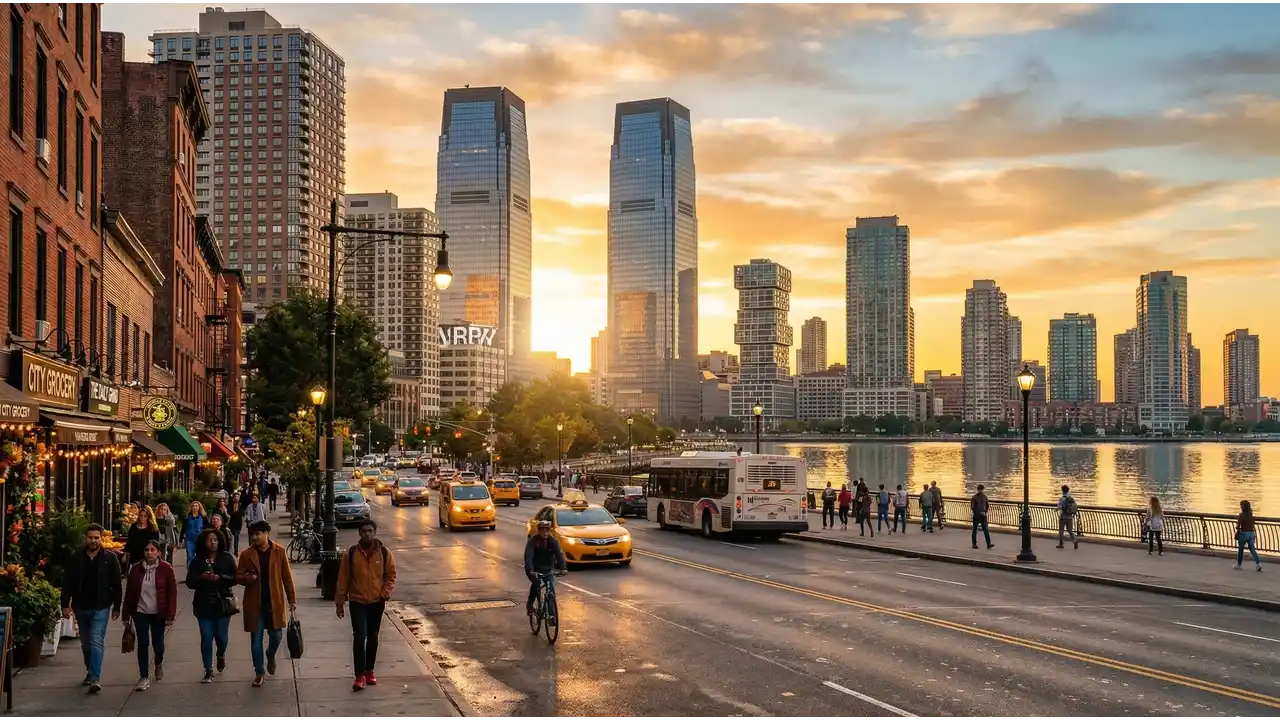
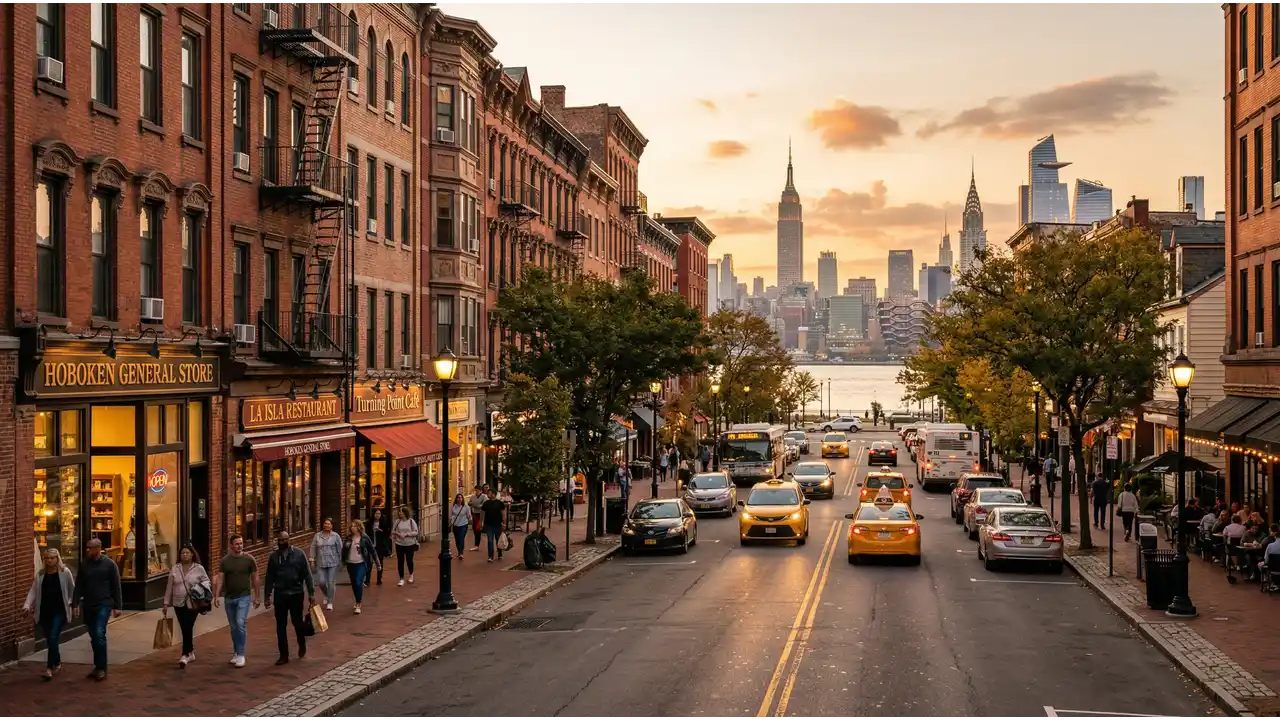
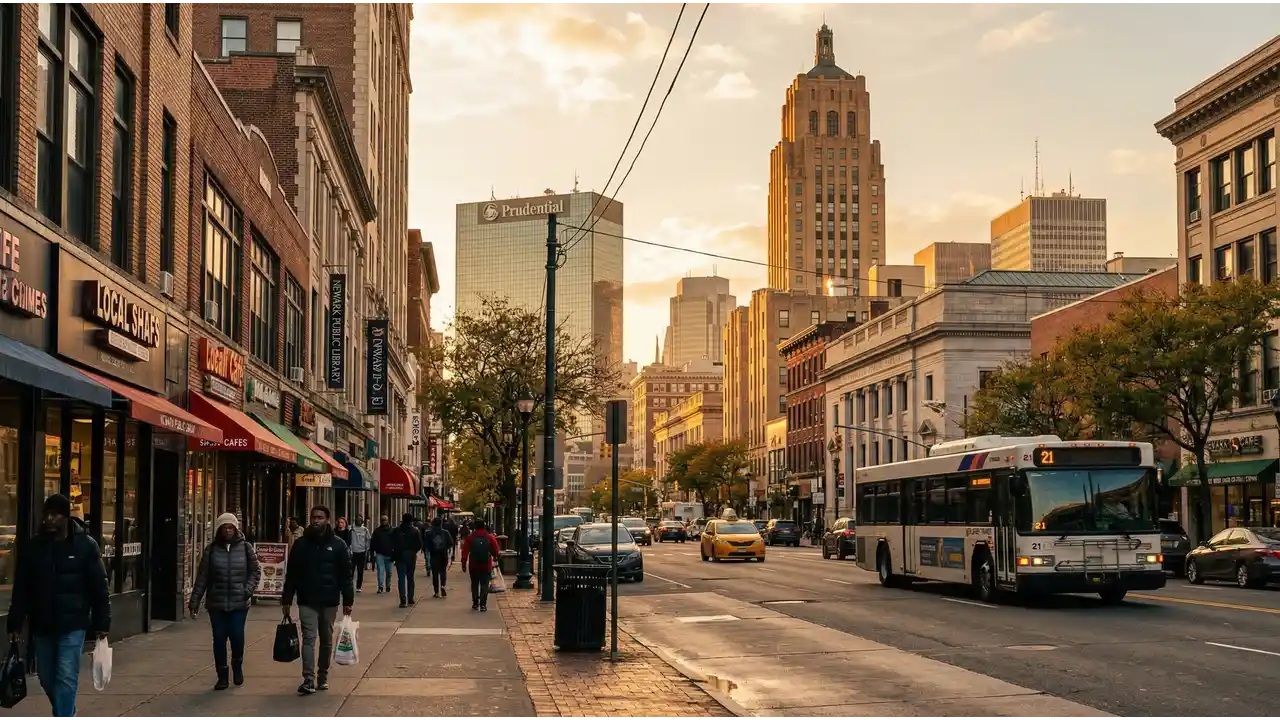
Jersey City is a waterfront city across the Hudson River from Manhattan, home to around 280,000 people. The population is diverse: young professionals, families, and long-term residents from Latin America, Asia, and Europe. Daily life centers on PATH train commutes to Manhattan, waterfront parks, and mixed neighborhoods of converted warehouses, new high-rises, and older residential blocks. Winters are cold and wet, summers humid. You get proximity to New York's job market without living in Manhattan, though that proximity drives prices up considerably compared to elsewhere in New Jersey.
💡 Local Insights
Jersey City NJ · 2026
Jersey City's cost structure is shaped almost entirely by its location. Housing at $3,249/month reflects demand from Manhattan commuters and reflects that rents vary sharply by neighborhood. Downtown near the PATH transit hub commands $2,800 to $3,600 for a one-bedroom apartment. Areas like Journal Square or Bergen-Lafayette, a 15-20 minute walk from PATH, run $2,400 to $3,000. Groceries at $541/month are standard for the Northeast but higher than most U.S. cities, driven by New York metro pricing. Basic groceries at local supermarkets like Shop-Rite run average: milk $4, bread $3, eggs $4 a dozen. Public transit via PATH ($40/month unlimited) is essential here. Without a commute to Manhattan, living costs drop noticeably, making Jersey City less attractive than cheaper inland New Jersey towns. Expats often find the city expensive compared to other U.S. metros but cheaper than Manhattan itself. Food prices do not vary much between neighborhoods; housing variation is the real driver.
Frequently Asked Questions
How much does it cost to live in Jersey City NJ per month?
A moderate lifestyle in Jersey City costs $4,925/month. Housing accounts for $3,249, food for $541. The remainder covers utilities, transport, personal care, and entertainment. This assumes a one-bedroom apartment in a middle-tier neighborhood and regular grocery shopping. A budget lifestyle runs $2,955/month, cutting back on dining out and housing to smaller or less central areas. A comfortable lifestyle reaches $7,634/month, factoring in larger apartments, more frequent dining out, and more leisure spending. Your actual costs depend heavily on whether you commute to Manhattan and how you structure housing.
What is the average rent in Jersey City NJ?
Average rent is $3,249/month for a moderate one-bedroom apartment. Downtown Jersey City near the PATH terminal ranges from $2,800 to $3,600/month for a one-bedroom. Bergen-Lafayette and Journal Square, slightly further out but still walkable to transit, run $2,400 to $3,000. Two-bedrooms typically cost $3,800 to $4,500. Prices have risen due to Manhattan overflow demand, especially post-2020. Newer waterfront buildings command premiums. Older walk-ups and converted industrial spaces offer slight savings. The PATH train ($40/month unlimited) makes neighborhoods 15-20 minutes from downtown viable. Utility costs add another $150 to $200/month on top of rent.
Is Jersey City NJ cheap to live in for expats?
Jersey City is not cheap by U.S. standards but is cheaper than Manhattan and competitive with other Northeast metros. Expats relocating from London, Toronto, or Sydney will find it affordable. Those from lower-cost regions (Portugal, Mexico, Southeast Asia) will find it expensive. The real appeal is access to Manhattan jobs while avoiding Manhattan rent. For remote workers not needing the job market, Jersey City is overpriced compared to mid-sized U.S. cities further inland. Many expats choose it for proximity to Manhattan's services, cultural offerings, and international community rather than cost savings. Visa sponsorship jobs often cluster in Manhattan, making the commute worthwhile despite the price.
How much does food cost per month in Jersey City NJ?
Groceries average $541/month for one person cooking regularly at home. Staples at local supermarkets: milk $4/gallon, eggs $4/dozen, bread $3, chicken breast $8/pound, rice $1.50/pound. A basic weekly grocery trip runs $120 to $140. Eating out is noticeably expensive: casual lunch $15 to $20, dinner at a mid-range restaurant $25 to $40 per person. The waterfront areas (Downtown, Paulus Hook) skew higher, with restaurant meals reaching $50 to $75 per person. Food trucks and ethnic restaurants in Journal Square and Bergen-Lafayette offer cheaper options, $8 to $12 for lunch. Grocery prices are consistent across neighborhoods. Dining-out frequency is the main cost variable.
What salary do you need to live comfortably in Jersey City NJ?
A comfortable lifestyle costs $7,634/month, suggesting a gross annual income of around $102,000 to $130,000 (accounting for taxes). This assumes a two-bedroom apartment in a good neighborhood, regular dining out, parking, and discretionary spending. A household earning $100,000 gross can live comfortably but not luxuriously. For a one-person household, $80,000 to $90,000 gross is tight but workable with discipline. Many people here earn more due to Manhattan job access, which pushes salaries higher but also normalizes higher spending. Living below the comfortable threshold requires deliberate choices: shared housing, cooking at home, no car. The $4,925/month moderate lifestyle is more realistic for most single earners.
How does the cost of living in Jersey City NJ compare to other places?
Jersey City sits in the middle tier of major U.S. metros. A moderate lifestyle runs $4,925 per month, with housing at $3,249 monthly. That puts it slightly cheaper than San Francisco, where moderate living costs $5,200 monthly. New York City is noticeably pricier at $5,775 per month for the same lifestyle, driven largely by housing that reaches $4,100 monthly compared to Jersey City's $3,249. If you're comparing to lower-cost areas, Anchorage, Alaska comes in at $3,375 for moderate living. Jersey City's advantage over New York makes sense given its waterfront development and transit access, though it remains an expensive market by national standards. Your actual costs will depend heavily on neighborhood choice, transportation habits, and whether you're renting or buying.
Yes, but with real constraints. This budget tier assumes a studio or one-bedroom in less central areas (Journal Square, Bergen-Lafayette), costing $2,200 to $2,500. Food is $450/month, requiring consistent home cooking. You skip car ownership, relying on PATH and local buses. Dining out is rare. Entertainment is free or cheap (parks, free events). Utilities and phone add $150/month. This lifestyle is sustainable for students, early-career workers, or those prioritizing savings. Many people manage it, but you live on the edge; unexpected costs (medical, urgent repairs) create stress. It works best in shared housing. Solo on this budget in Jersey City is possible but requires discipline and limits social flexibility.