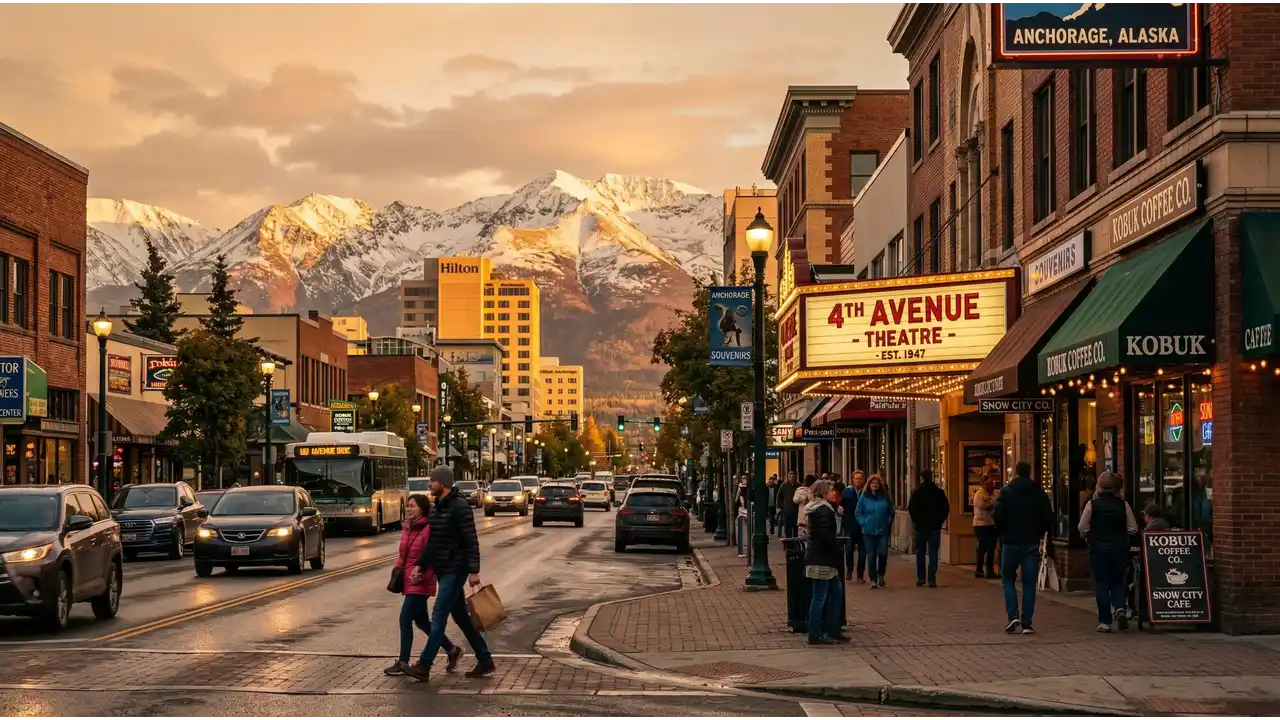
Juneau is Alaska's capital, a city of about 32,000 people spread across a coastal valley in the Inside Passage. Winters are dark and wet, with temperatures hovering around freezing. Summers bring long daylight and rain. Most residents work in government, tourism, fishing, or healthcare. Daily life revolves around water access—ferries are the primary transport between neighborhoods. The city has no road connection to the rest of Alaska. Outdoor recreation dominates weekends. The pace is slower than major US cities, and the community is tight-knit. Housing and food costs are substantially higher than the continental US, driven by remote location and limited supply.
💡 Local Insights
Juneau · 2026
Juneau's cost of living reflects its geography. At $3,425 per month for a moderate lifestyle, it sits well above the US average, primarily due to housing and food costs tied to isolation and limited shipping routes. Housing averages $1,335 per month and includes a mix of rentals and owned homes; supply is constrained. Groceries run $674 per month for a household, roughly 40 percent higher than the continental US average, according to MERIC C2ER data. A gallon of milk costs $4 to $5; ground beef runs $6 to $7 per pound. Eating out is expensive. Transportation is ferry-based within the city and to nearby towns (Southeast Alaska Discovery Center operates the Alaska Marine Highway System). No cars needed in downtown, though many households keep them. Winter heating costs spike November through March. Property purchase prices are high relative to local incomes. Expats should budget for seasonal depression and isolation. Local wages in government and hospitality are modest but reflect the cost structure.
Frequently Asked Questions
How much does it cost to live in Juneau per month?
A moderate lifestyle costs $3,425 per month. This breaks down to $1,335 for housing (rent or mortgage equivalents), $674 for groceries, and the remainder for utilities, transport, dining out, and other expenses. A budget tier lifestyle costs around $2,055 per month (minimal housing, basic food, few discretionary expenses). A comfortable tier lifestyle runs $5,309 per month, which allows for larger housing, frequent dining out, and regular recreation. Actual costs vary based on neighborhood, whether you own or rent, and personal spending habits.
What is the average rent in Juneau?
Housing averages $1,335 per month. A one-bedroom apartment in or near downtown Juneau typically rents for $1,200 to $1,500. Two-bedroom units run $1,400 to $1,800. Neighborhoods farther from downtown (Mendenhall Valley, for example) may be slightly cheaper. Utilities add $150 to $250 per month depending on heating needs. Winter heating costs are significant. Homeownership prices are high; median home prices exceed $400,000. The rental market is tight, and vacancies are low. Long-term rentals are easier to find than short-term. Many landlords require proof of income and references.
Is Juneau cheap to live in for expats?
No. Juneau is expensive by expat standards outside major global cities. Food and housing costs are substantially higher than most of continental North America, Western Europe outside London, and most developed nations outside high-cost hubs. The appeal for expats is lifestyle and access to wilderness, not affordability. Expats from lower-cost regions (Southeast Asia, Latin America, Eastern Europe) will find Juneau significantly more expensive. Those relocating from San Francisco, Vancouver, or New York will find it cheaper but still costly. The isolation means you cannot easily leave for a weekend of lower-cost shopping. Factor in the psychological cost of winter darkness and limited social options.
How much does food cost per month in Juneau?
Groceries average $674 per month for a household. Milk costs $4 to $5 per gallon. Ground beef runs $6 to $7 per pound. Fresh vegetables are expensive year-round and limited in winter selection; frozen or shipped produce costs more. Staples like rice, beans, and canned goods are cheaper. A modest weekly grocery bill for one person runs $35 to $50. Eating out is expensive; a meal at a casual restaurant costs $15 to $25 per person. A beer at a bar runs $6 to $8. Many residents buy in bulk, preserve food, or fish and hunt to reduce costs. Some shop in Ketchikan or other Southeast Alaska towns when ferry fares are low.
What salary do you need to live comfortably in Juneau?
A comfortable lifestyle costs $5,309 per month, which translates to roughly $64,000 per year (gross, before taxes). This allows for a decent two-bedroom rental or small owned home, regular dining out, recreation, and some savings. Government jobs (state, federal, municipal) typically pay $50,000 to $80,000 annually and are common. Tourism and hospitality jobs pay $30,000 to $50,000. Healthcare positions pay $55,000 to $90,000. Alaska has no state income tax, which helps. To live comfortably without financial stress, aim for $55,000 to $75,000 annual household income. Single earners at the higher end of that range can build savings.
How does the cost of living in Juneau compare to other places?
Juneau's moderate lifestyle costs $3,425 per month, placing it in the middle range for US cities. Tampa, a peer comparison, runs $3,100 monthly, making it slightly cheaper overall, though Tampa's housing at $1,492 per month actually exceeds Juneau's $1,335. If you're coming from a budget-conscious area, Tucson costs $2,550 per month with housing at $930, offering genuine savings. On the other end, Boston is substantially dearer at $4,675 monthly, with housing alone at $2,813. Juneau's costs reflect Alaska's remote location and limited supply chains, which drive up groceries and goods. However, you'll find it more affordable than major coastal metros while paying more than interior western cities. Your actual spending will depend heavily on whether you eat local seafood, fly outside the state frequently, and your housing situation.
Yes, but it requires discipline. The budget tier of $2,055 per month covers essentials: basic housing (shared apartment or small efficiency around $900 to $1,100), groceries ($674), utilities ($100 to $150), and minimal transport (ferries are inexpensive once you own a pass). This leaves $100 to $200 for phone, internet, and emergencies. Eating out is rare. Recreation is free (hiking, parks). No car ownership assumed. Clothing and personal items come from secondhand shops. Medical costs or unexpected expenses quickly break this budget. It works for young professionals, students, or those with very low expenses, but leaves no financial cushion. Many residents on this budget rely on fishing, foraging, or community resources to supplement.