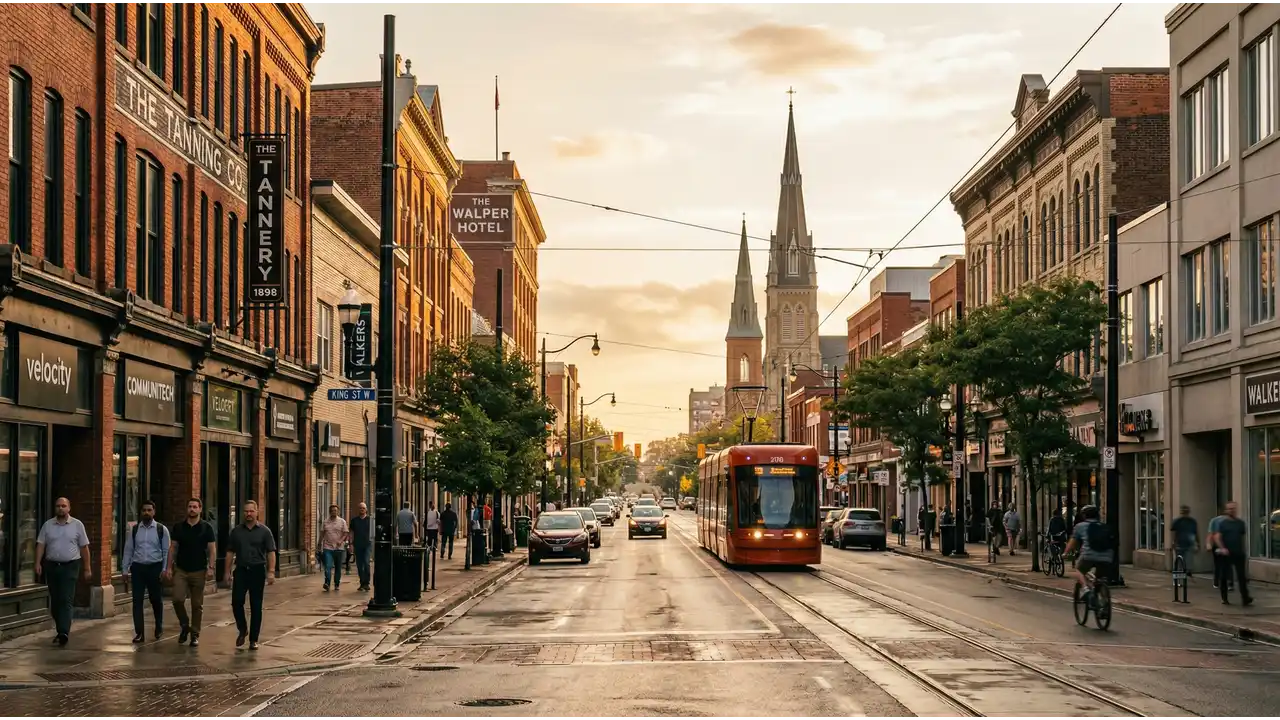
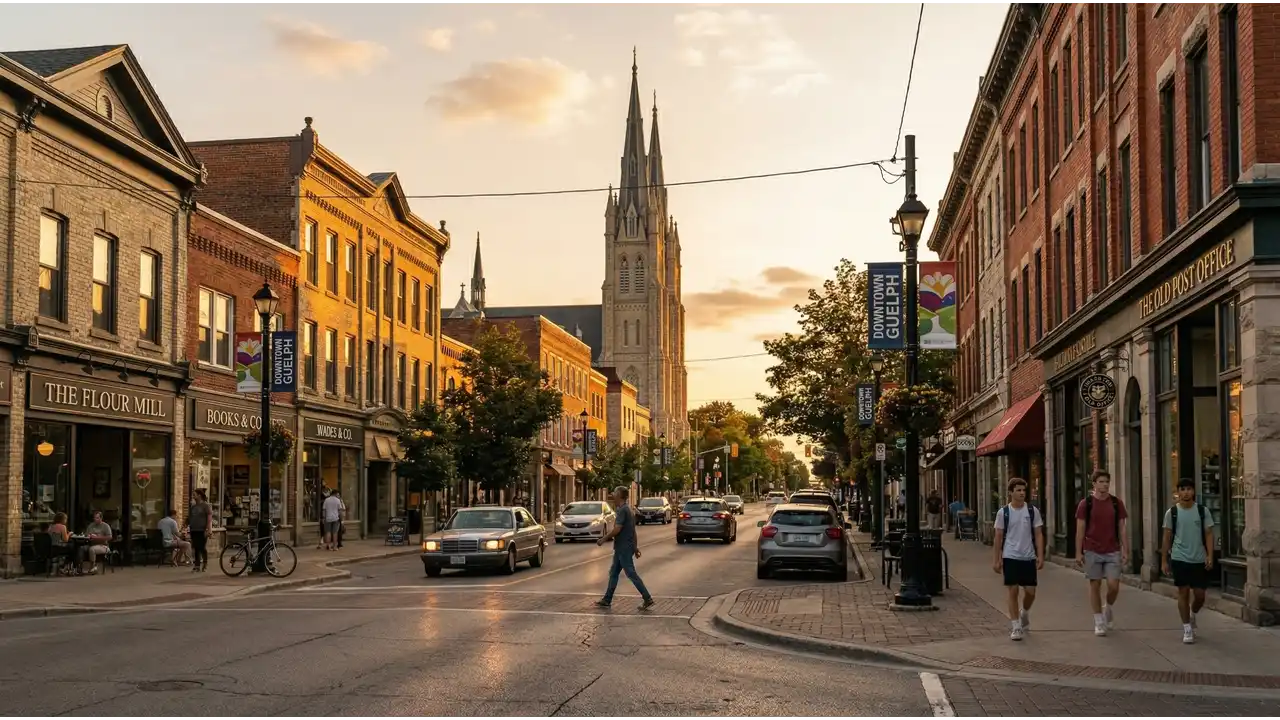
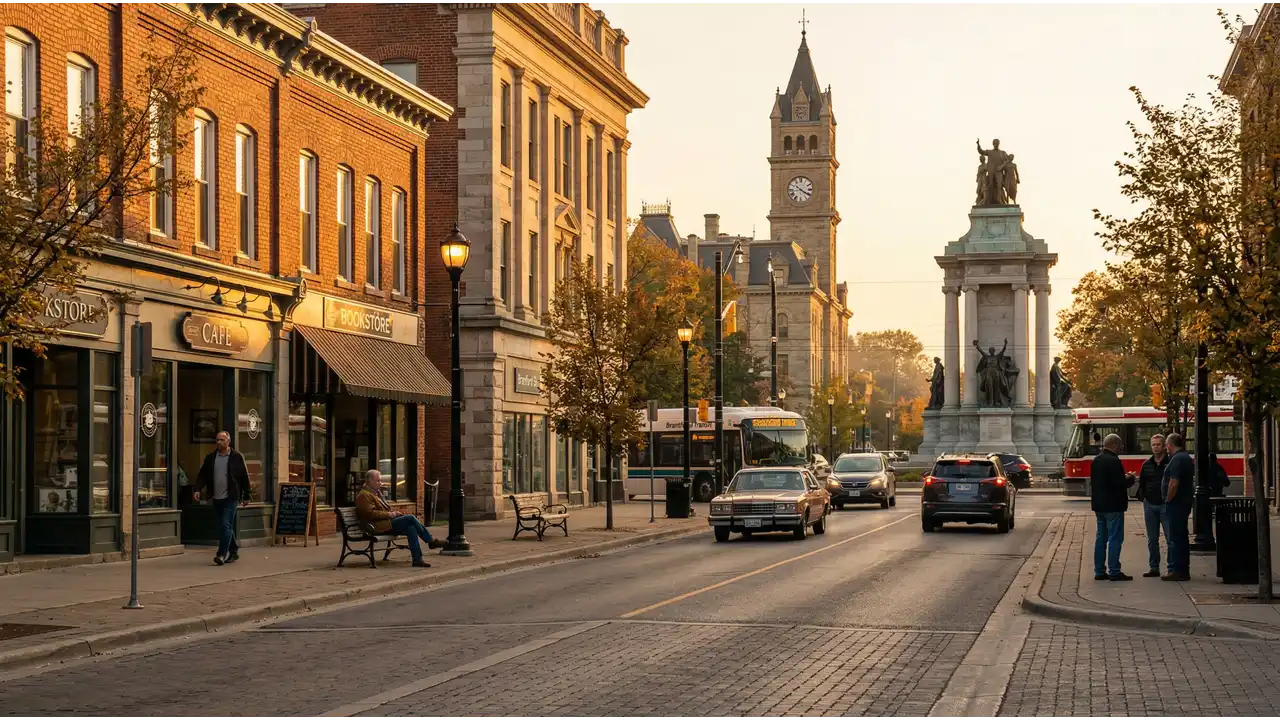
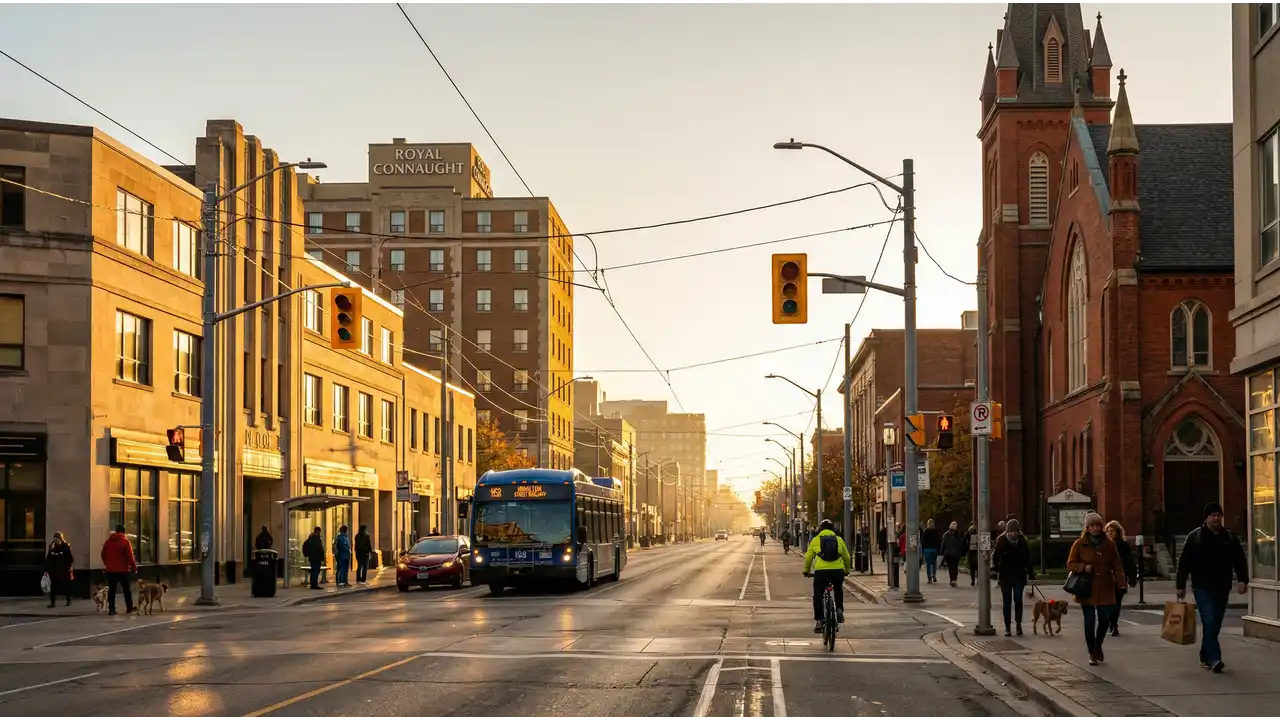
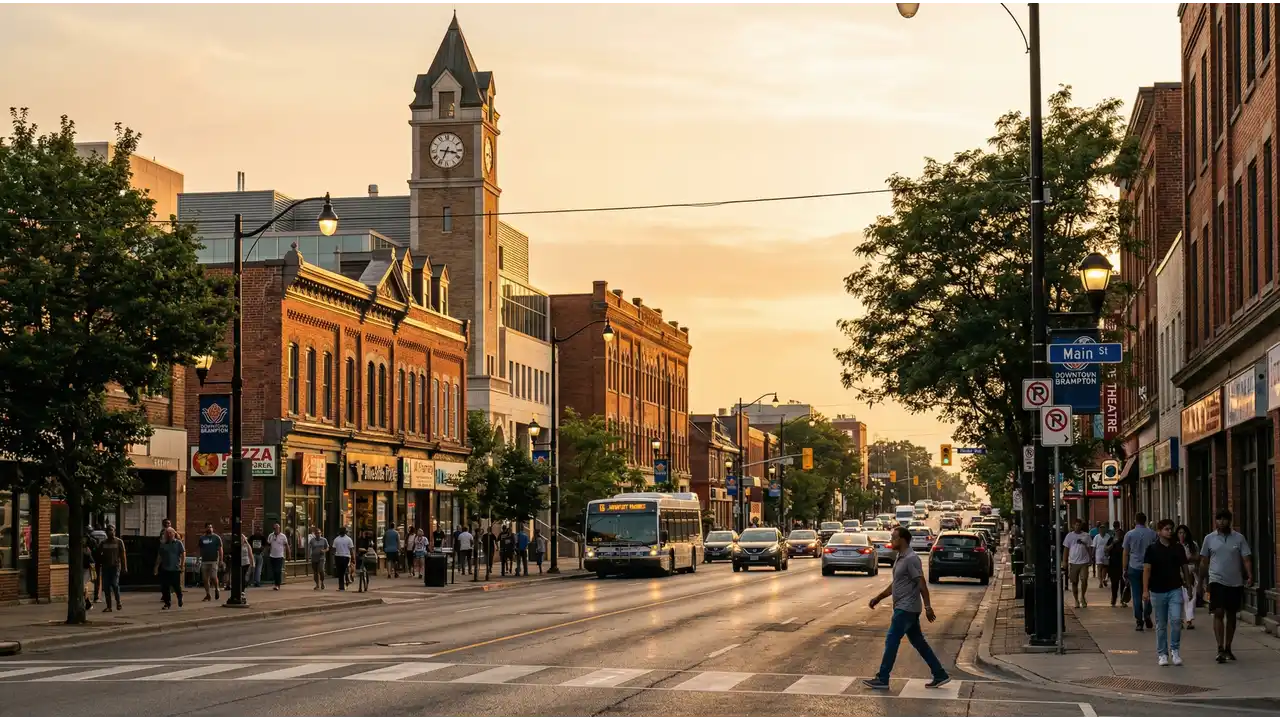
Kitchener is a mid-sized industrial and tech city in Ontario's Golden Triangle, about 100 kilometers west of Toronto. Home to roughly 230,000 people, it has a strong manufacturing heritage alongside growing software and engineering sectors. The climate is continental, with cold winters (temperatures dropping to -10°C) and warm summers. Daily life centers on local amenities: the downtown core has rebuilt around tech companies and restaurants, while residential neighborhoods spread into suburbs with access to hiking in nearby conservation areas. Public transit exists but car dependence is real outside the core. The population is diverse, with significant German and Eastern European communities reflecting immigration patterns.
💡 Local Insights
Kitchener ON · 2026
Kitchener's cost of living sits below Toronto but above smaller Ontario towns, reflecting its role as a growing regional hub. Housing dominates the budget at $1,220 per month. Rent for a one-bedroom apartment in central neighborhoods like Downtown or Victoria Park ranges from $1,100 to $1,400; suburban areas like Bridgeport or Westmount run $950 to $1,200. Groceries average $437 monthly, consistent with broader Ontario pricing. Eating out is cheaper than Toronto: casual meals run $12 to $18, while a sit-down dinner for two costs $50 to $80. Transit passes cost $85 monthly; many residents drive, adding $150 to $250 for insurance, gas, and maintenance. Utilities add $120 to $160 monthly. Expats note that professional salaries here are 15 to 25 percent lower than Toronto for similar roles, offsetting some cost advantage. Internet and phone services run $60 to $100 monthly. The key cost lever is housing choice: living near downtown or employment centers increases rent but reduces transportation needs and time.
Frequently Asked Questions
How much does it cost to live in Kitchener ON per month?
A moderate lifestyle in Kitchener costs $2,575 per month. This breaks down roughly as: housing $1,220, groceries $437, utilities and internet $180, transit or vehicle costs $200, dining out and entertainment $300, and other expenses $238. A tighter budget runs $1,545 monthly by cutting dining out, reducing entertainment, and choosing distant suburbs. A comfortable lifestyle reaches $3,991 by including higher-quality housing, frequent dining out, and more entertainment spending. These figures assume a single adult or two people sharing costs.
What is the average rent in Kitchener ON?
Average rent for a one-bedroom apartment is $1,220 per month. In walkable central neighborhoods like Downtown or Victoria Park, expect $1,100 to $1,400 for a one-bedroom. Two-bedroom apartments in these areas run $1,400 to $1,700. Suburban areas like Bridgeport, Westmount, and Kitchener's south end offer one-bedrooms for $950 to $1,200 and two-bedrooms for $1,200 to $1,450. Houses for rent start around $1,400 for a modest three-bedroom in outer suburbs and rise to $1,900 to $2,200 in central locations. Prices have climbed 3 to 5 percent annually. Room rentals in shared houses run $600 to $850 monthly.
Is Kitchener ON cheap to live in for expats?
Kitchener is moderately priced for Canadian expats, cheaper than Toronto or Vancouver but not dramatically so. Expats with employer transfers often find housing costs reasonable if earning in strong currencies or high salaries. The trade-off is salary: tech and engineering roles pay 15 to 25 percent less than Toronto equivalents. European expats accustomed to high housing-to-income ratios may find Kitchener reasonable. Those from lower-cost-of-living countries will find it expensive. Transit-dependent expats without cars should focus on Downtown or Victoria Park to avoid transportation costs. The city has modest expat infrastructure compared to Toronto, so community building requires more effort.
How much does food cost per month in Kitchener ON?
Groceries for one person average $437 monthly. A week of basics (bread, eggs, milk, chicken, vegetables, pasta) costs roughly $65 to $80. Major chains like Loblaws and Food Basics anchor prices; discount stores like No Frills and Walmart offer 5 to 15 percent savings. Ethnic groceries (German, Eastern European, South Asian markets) often undercut supermarket pricing. Eating out is cheaper than Toronto: casual meals range $12 to $18, coffee shops $4 to $6. A sit-down dinner for two runs $50 to $80 at mid-range restaurants. Fast food chains are ubiquitous. Two people sharing groceries and cooking most meals budget $700 to $800 monthly combined.
What salary do you need to live comfortably in Kitchener ON?
A comfortable lifestyle costs $3,991 per month, requiring a gross annual salary of roughly $52,000 for a single person after taxes and deductions. For two people sharing expenses, a combined household income of $75,000 to $80,000 is realistic. This budget includes moderate housing ($1,400 to $1,600), regular dining out, entertainment, and a car with associated costs. Salaries in tech, engineering, and skilled trades typically range $45,000 to $65,000 for mid-level roles, making this achievable. Customer service and retail roles pay $28,000 to $38,000, requiring roommates or partner income. Healthcare and trades often exceed $60,000. Remote workers earning Toronto or US salaries will find Kitchener very comfortable.
How does the cost of living in Kitchener ON compare to other places?
Kitchener's moderate lifestyle costs $2,575 per month, with housing at $1,220 per month. This positions it squarely in the middle of Ontario's regional spread. Mississauga runs $2,425 monthly overall and $1,371 for housing, making it slightly cheaper overall but notably more expensive for rent. If you're comparing to Western Canada, Edmonton is substantially less costly at $1,900 per month with housing at $835, a meaningful difference for budget-conscious movers. On the international scale, Hong Kong costs $3,450 monthly with $2,222 for housing, so Kitchener remains considerably more affordable than major global financial centers. For most people relocating within Southern Ontario, Kitchener offers reasonable middle ground between affordability and access to urban services.
Yes, but with real constraints. This budget tier requires finding rent in the $850 to $950 range (shared housing or outer suburbs), spending $400 on groceries, keeping transit or vehicle costs to $120 to $150, and cutting entertainment almost entirely. Eating out becomes rare; a monthly budget might be $20 to $30 for occasional coffee. Utilities must stay under $120. This works for students with support, roommate arrangements, or very disciplined single adults. It cuts out travel, new clothes, hobbies, and emergencies. Unexpected costs like car repairs or dental work create immediate problems. Many people at this budget level combine work with student loans, family support, or disability payments. It is sustainable but leaves minimal margin for error.