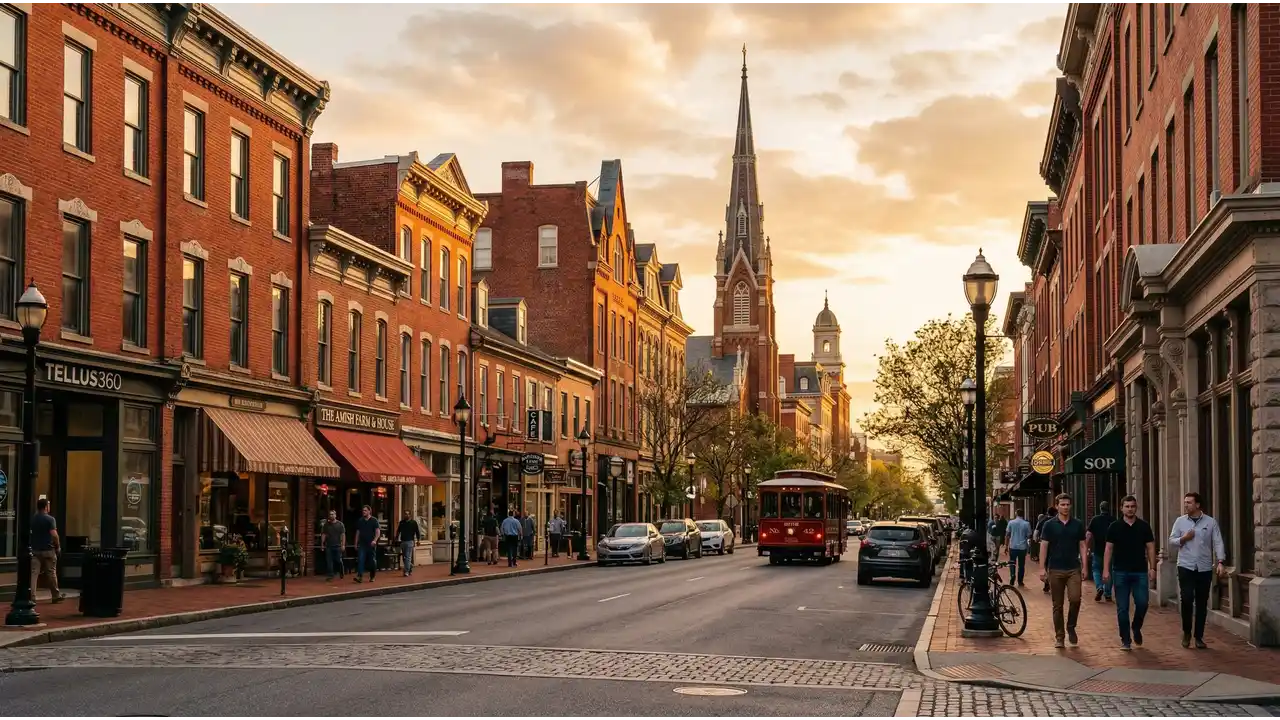
Lancaster is a mid-sized Pennsylvania city of roughly 58,000 people, sitting in the heart of Lancaster County's Amish farmland. The downtown has seen real reinvestment over the past decade, with restored historic buildings, local restaurants, and small galleries. Daily life here centers on walking neighborhoods like the Old City, where Victorian row homes line tree-lined streets, and the surrounding suburbs where newer housing spreads into farmland. Winters are cold and wet, summers warm and humid. The population is mixed: descendants of Amish and Mennonite communities, longtime working-class residents, young professionals drawn by affordability, and retirees. The pace is noticeably slower than Philadelphia or Baltimore, though traffic on Route 30 has intensified.
💡 Local Insights
Lancaster PA · 2026
Lancaster's affordability comes from lower property values than regional peers and relatively flat commercial development. Housing costs around $1,440 per month, which covers a modest one-bedroom apartment downtown or a small two-bedroom in outer neighborhoods like Fruitville or Greenfield. Buying is feasible here, with median home prices well below the national average, though rising. Groceries run about $519 monthly for a single person eating at home, consistent with national averages. Food costs spike if you rely on downtown restaurants, which cater to tourists visiting Amish attractions. Transportation is car-dependent outside downtown; public transit exists but is limited. SEPTA regional rail does not reach Lancaster. Expats find Lancaster cheaper than major metros but may find the pace and limited diversity initially stark. Local wages in manufacturing and healthcare are lower than in Philadelphia, so employment matters more than cost alone. Winter heating bills can push monthly expenses upward for renters in older housing stock.
Frequently Asked Questions
How much does it cost to live in Lancaster PA per month?
A moderate lifestyle costs around $3,050 per month. Housing averages $1,440, groceries about $519, and the remainder covers utilities, transportation, dining out, and entertainment. The budget tier is $1,830 monthly for essentials only (rental housing, basic food, transit). A comfortable lifestyle, with more dining out and recreation, runs closer to $4,728 per month. These figures reflect a single adult. Couples and families will have different ratios, particularly if both work or if childcare is needed.
What is the average rent in Lancaster PA?
Housing costs average $1,440 per month. A one-bedroom apartment downtown (Old City or Downtown Lancaster) typically rents for $1,200 to $1,500. Two-bedroom apartments or small houses in neighborhoods like Greenfield, Fruitville, or Rohrerstown run $1,400 to $1,700. Shared housing or rooms can be found for $600 to $900. Older row homes in the downtown core may be cheaper but often require upkeep. Newer suburban developments cost more. Availability varies seasonally; summer draws more tourists, which can tighten the market temporarily.
Is Lancaster PA cheap to live in for expats?
Yes, Lancaster is genuinely affordable compared to major US metros or Western European cities. Monthly living costs are roughly half those of Boston or Washington, DC. For expats from high-cost countries, Lancaster feels cheap. However, expats should expect limited public transit, a car-dependent culture, and a smaller international community than Philadelphia or Baltimore. Job opportunities outside healthcare, education, and light manufacturing are fewer. Expats often find the pace and cultural homogeneity initially surprising. For remote workers or retirees, it is excellent value. For those seeking career growth or urban amenities, the trade-off matters.
How much does food cost per month in Lancaster PA?
Groceries average $519 per month for one person eating at home. A week of basics (milk, bread, eggs, chicken, vegetables, canned goods) costs around $60 to $75 at Weis Markets or Giant Food, the local supermarket chains. Eating out is cheaper than major cities: a casual lunch runs $10 to $13, dinner entrees $14 to $20. Farmers markets operate year-round on Saturdays at Central Market House downtown, offering seasonal produce at modest markups. Ethnic groceries (Asian, Latin American markets) exist but are smaller than in larger cities.
What salary do you need to live comfortably in Lancaster PA?
A comfortable lifestyle costs roughly $4,728 per month, or about $57,000 annually before taxes. For a couple, $75,000 to $85,000 combined income provides genuine comfort with savings. Take-home income matters more than gross, so factor Pennsylvania state tax (3.07% minimum) and federal withholding. Healthcare is a major variable; employer coverage shifts the math significantly. Many jobs in Lancaster pay $35,000 to $50,000, so remote work or professional roles are often necessary to reach comfortable thresholds. Retirees or those with passive income find the city very manageable at lower income levels.
How does the cost of living in Lancaster PA compare to other places?
Lancaster sits in the middle of the U.S. cost-of-living spectrum. A moderate lifestyle costs $3,050 a month here, with housing at $1,440 a month.
You'll find Lancaster slightly more expensive than Austin, where a moderate lifestyle runs $2,875 monthly and housing $1,347. Memphis is notably cheaper at $2,500 for a moderate lifestyle and $1,022 for housing. On the other end, San Diego is substantially dearer at $4,450 monthly for a moderate lifestyle, with housing alone at $2,533.
The difference comes down to what Lancaster offers: lower housing costs than many East Coast cities, but higher prices than the South or some Sunbelt alternatives. If you're relocating from a major coastal metro, Lancaster will feel affordable. If you're coming from rural areas or cheaper regions, expect noticeably higher expenses, particularly for rent or a mortgage.
Yes, but only tightly. The budget tier is $1,830 monthly, which covers essentials: rent around $1,100 to $1,200 (older units or shared housing), groceries roughly $380 to $400, utilities $100 to $120, and transit or car insurance. Dining out is minimal. Medical costs beyond insurance, entertainment, and savings are squeezed. This works for students, those with roommates, or expats receiving subsidized housing. It leaves little margin for emergencies. Most people on this budget work full-time locally or receive supplemental income. A job paying $15/hour (roughly $2,400 monthly gross before tax) is survivable but leaves little comfort.