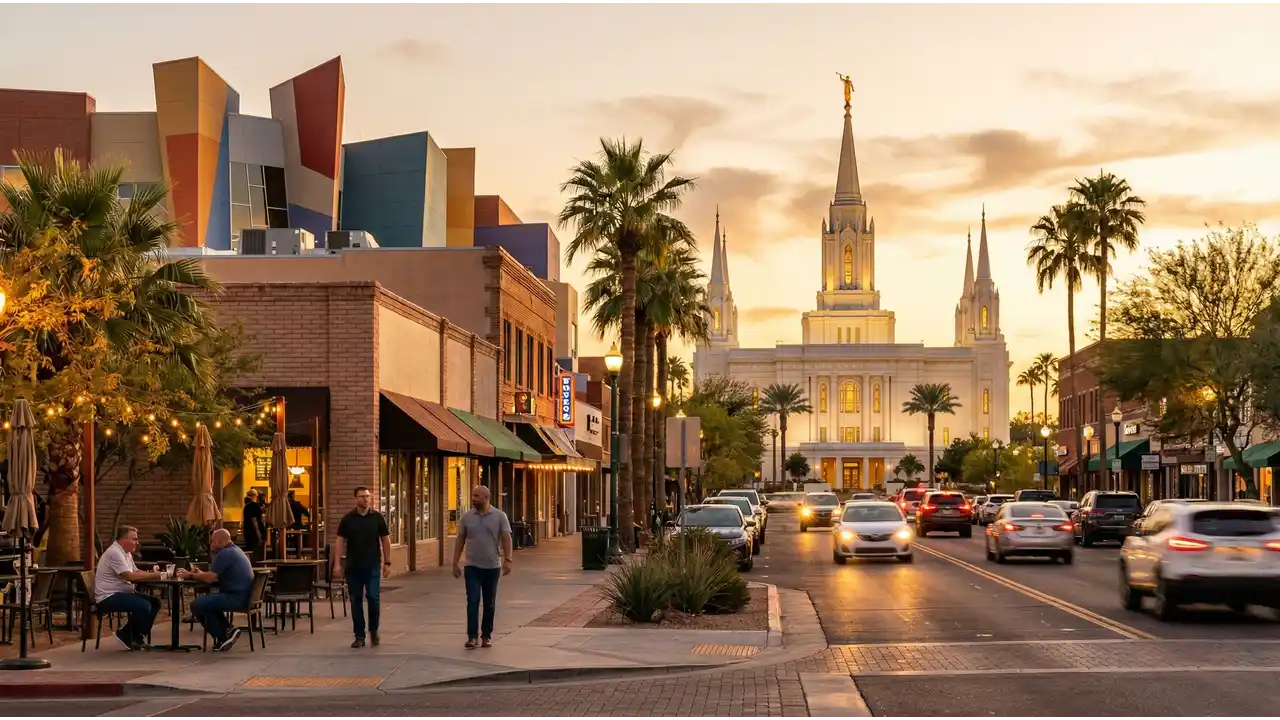
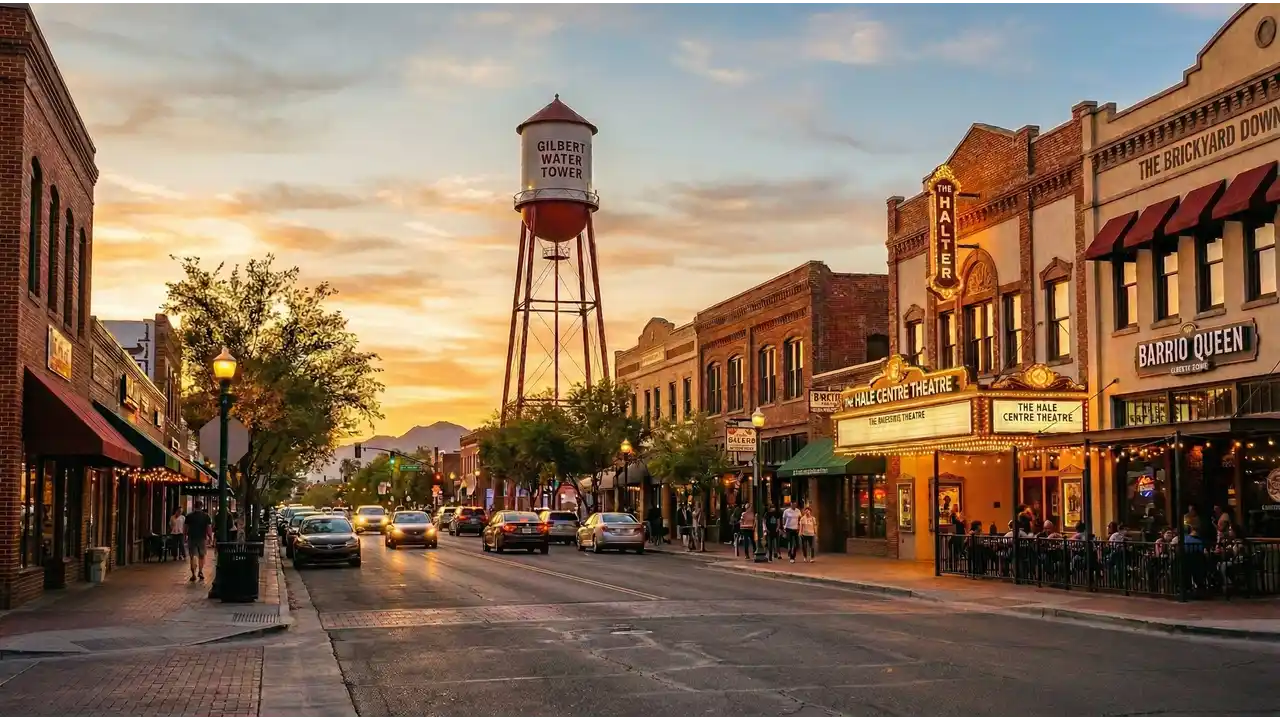
Mesa is Arizona's third-largest city, sprawling across the East Valley with a mix of suburban neighborhoods, golf courses, and desert terrain. The population skews toward families, retirees, and young professionals drawn by low housing costs and year-round heat. Daily life centers on driving: most errands and jobs require a car. Summers exceed 110 degrees Fahrenheit from June through August. The area has grown rapidly in recent decades, so infrastructure varies by neighborhood. Downtown Mesa has seen recent investment, but most of the city feels residential and car-dependent. Schools and parks are abundant. Cultural amenities exist but are modest compared to Phoenix proper.
💡 Local Insights
Mesa AZ · 2026
Mesa's affordability rests on cheap land and high housing supply. Rental apartments and homes average $1,232/month, though prices vary sharply by neighborhood and age of property. Older complexes in central Mesa run $900-$1,100 for a one-bedroom; newer developments in west Mesa near Gilbert border $1,300-$1,500. Buying remains cheaper per month than renting in many cases. Groceries cost $522/month for a single person eating at home, broadly in line with national averages. Eating out is inexpensive: casual meals run $8-$12, mid-range restaurants $12-$20 per entree. Transportation is non-negotiable. Most residents own cars; public transit (Valley Metro) is sparse outside main corridors. Gas and vehicle maintenance add up fast in a sprawling city. Expats often find Mesa dramatically cheaper than coastal or tech-hub cities, but should expect limited walkability and intense heat. No local expat pricing premium exists; costs are what they are for everyone.
Frequently Asked Questions
How much does it cost to live in Mesa AZ per month?
A moderate lifestyle in Mesa costs $2,850/month. This breaks down to $1,232 for housing (rent or mortgage equivalent), $522 for groceries, and the remainder for utilities, transport, dining out, and discretionary spending. A tighter budget runs $1,710/month, mostly by sharing housing or living in older rentals, eating at home exclusively, and minimizing car use. A comfortable lifestyle costs $4,418/month, allowing for newer housing, regular dining out, and more leisure spending. Costs vary with location, age, and personal habits.
What is the average rent in Mesa AZ?
Median rent is approximately $1,232/month, based on current market data. One-bedroom apartments in older, central Mesa complexes rent for $900-$1,100/month. Two-bedroom units run $1,100-$1,350/month. Newer or west-side properties near Gilbert or Tempe edges cost $1,300-$1,500+ for comparable sizes. Single-family homes average $1,200-$1,600/month depending on age, size, and neighborhood. Seasonal variation is minimal; summer (peak heat) sometimes sees slight discounts. Most leases require first month, last month, and a security deposit. Utility costs are lower in winter but spike in summer due to air conditioning.
Is Mesa AZ cheap to live in for expats?
Yes, Mesa is genuinely inexpensive compared to most expat hotspots. Rent at $1,232/month is well below London, Sydney, Singapore, or Toronto. It is comparable to some parts of Mexico City or Lisbon, but comes with American infrastructure, English, and healthcare access. Expats accustomed to high-cost cities often find Mesa shockingly affordable. The trade-off is climate severity (summer heat is extreme) and car dependence. No special pricing applies to foreigners; costs are identical regardless of origin. Visa requirements are a separate consideration; Mesa itself is purely a cost-of-living question.
How much does food cost per month in Mesa AZ?
Groceries for one person average $522/month. A typical shopping trip might include eggs ($3-$4/dozen), chicken breasts ($7-$9/pound), milk ($3.50/gallon), bread ($2.50-$3.50/loaf), and fresh vegetables ($3-$8 per item depending on season). Eating out is cheap: tacos and casual Mexican food ($6-$10), burgers ($8-$12), and chain restaurants ($12-$20 per entree). Ethnic groceries, particularly Mexican and Asian, are widely available and affordable. Farmers markets exist but are seasonal. No significant price premium exists for organic or specialty items compared to national chains.
What salary do you need to live comfortably in Mesa AZ?
A comfortable lifestyle requires approximately $4,418/month, or roughly $53,000 annually before tax. This allows for housing in newer areas, regular dining out, car ownership including fuel and insurance, and discretionary spending on hobbies or entertainment. At that level, you can afford a two-bedroom apartment in a desirable neighborhood ($1,400-$1,600), eat out 3-4 times weekly, maintain a reliable vehicle, and build modest savings. Household income figures are roughly double for couples or families. The $2,850/month moderate budget works on $34,000 annually; the $1,710/month tight budget on $20,500 annually, though both require discipline.
How does the cost of living in Mesa AZ compare to other places?
Mesa sits in the middle of the affordability spectrum for mid-sized US cities. A moderate lifestyle in Mesa, Arizona costs $2,850 per month, with housing running $1,232 per month. This puts it slightly cheaper than Baltimore, where a moderate lifestyle costs $2,975 per month and housing $1,264 per month. If you're looking for genuine savings, Wichita offers noticeably lower costs at $2,325 per month overall, with housing at just $808 per month. On the other end, Providence is substantially dearer, at $3,925 per month for a moderate lifestyle and $2,215 for housing. For most people relocating from the coasts, Mesa represents real affordability without sacrificing urban amenities or job market access.
Yes, but with serious constraints. This is the budget tier and requires roommates or shared housing to keep rent at $800-$950/month, grocery discipline at $400-$450/month, and minimal car use or very low vehicle ownership costs. Eating out is rare; most meals are home-cooked. No margin for medical emergencies, car repairs, or unexpected expenses. Single parents or people with health costs will struggle. It's feasible for a young professional with roommates, but not comfortable. This budget assumes you already own a reliable used car and don't need to buy one. Any income above $1,710/month meaningfully improves quality of life by allowing occasional dining out and emergency savings.