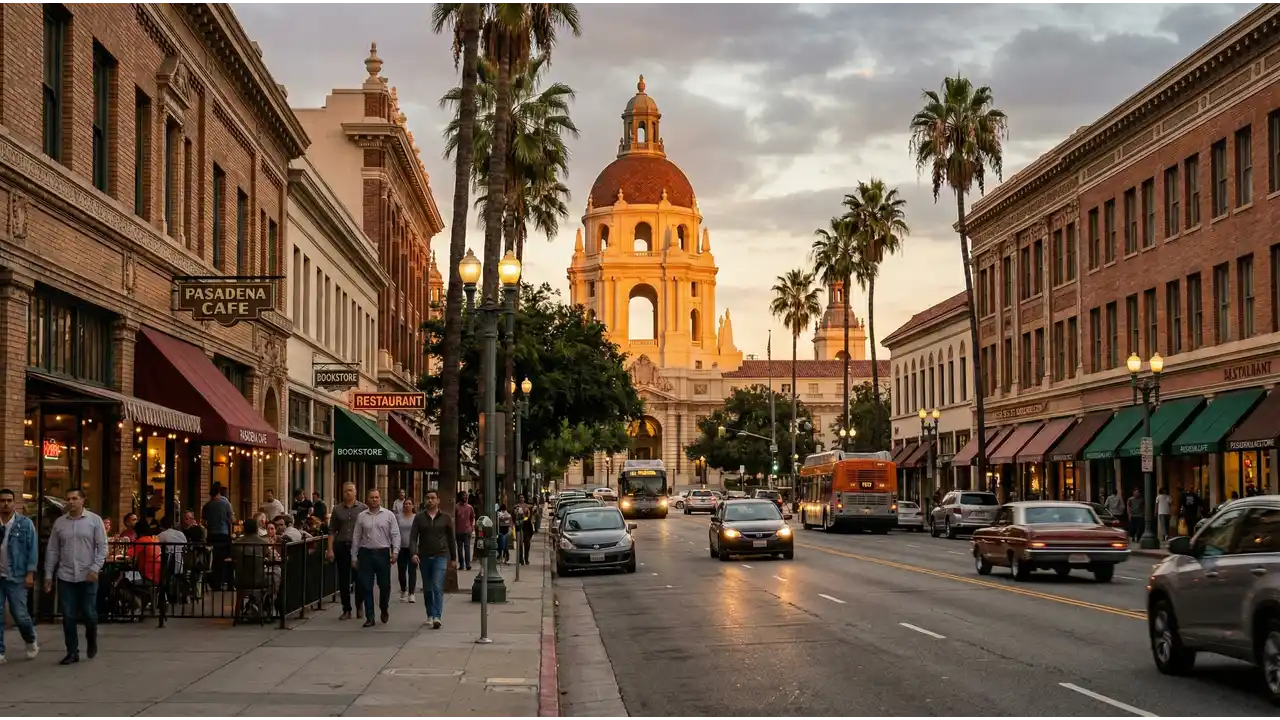
Pasadena is a city of 150,000 in the San Gabriel Valley, northeast of Los Angeles. Tree-lined streets, early 20th-century architecture, and the Rose Bowl define its character. The climate is mild year-round, with warm days and cool nights. The population is diverse, with significant Asian American, Latino, and white demographics. Daily life centers on a walkable downtown with shops, restaurants, and cultural venues. Many residents commute to LA for work. The city has a college-town feel anchored by Caltech, though housing costs reflect proximity to LA rather than a smaller market. Traffic and smog from the broader LA region are present concerns.
💡 Local Insights
Pasadena CA · 2026
Pasadena's cost of living is tied directly to the Southern California rental market. Housing runs $2,802 per month on average, with one-bedroom apartments typically $1,600 to $2,200 and two-bedrooms $2,200 to $3,200. Older complexes off Colorado Boulevard cost less; newer or centrally located units command higher rents. Owner-occupied homes start around $1,000,000 and climb steeply. Groceries average $612 per month for a single person buying at conventional supermarkets like Ralphs or Whole Foods. International markets in the area (Asian, Mexican) offer lower prices on produce and staples. Dining out costs more than groceries: a casual restaurant meal runs $15 to $20. Public transit exists via Metro bus and light rail, but most residents drive. A car is nearly essential for commuting to wider LA. Expats should expect California state income tax (8.8 to 13.3 percent depending on income) on top of federal rates. Local property tax is 1.25 percent of assessed value. Real estate costs drive the overall moderate budget of $4,700 per month.
Frequently Asked Questions
How much does it cost to live in Pasadena CA per month?
A moderate lifestyle in Pasadena costs $4,700 per month for a single person. Housing makes up the largest share at $2,802 per month, while groceries run $612 per month. Utilities, transport, dining out, and entertainment fill the remainder. A budget-conscious person can live on $2,820 per month by sharing housing, cooking at home, and using transit. Comfortable living (eating out regularly, private transportation, entertainment) requires $7,285 per month. Costs vary significantly by neighborhood and personal habits, but Southern California's housing market anchors all figures upward.
What is the average rent in Pasadena CA?
Average rent is $2,802 per month. One-bedroom apartments typically range from $1,600 to $2,200 per month. Two-bedroom units run $2,200 to $3,200 per month. Older buildings near South Pasadena or further from downtown are cheaper; newer units or those near Colorado Boulevard command higher rents. Furnished short-term rentals cost 20 to 40 percent more. Few vacant units exist, so competition is strong and lease terms can be restrictive. Landlords typically require income verification and credit checks. Many require first month, last month, and security deposit upfront.
Is Pasadena CA cheap to live in for expats?
No. Pasadena is expensive for expats accustomed to most non-US cities. Housing at $2,802 per month would be considered luxury in much of Latin America, Asia, or Eastern Europe. Compared to other California cities, Pasadena is slightly cheaper than central LA but similar to Long Beach or Santa Monica. If relocating from London, Sydney, or Tokyo, costs will feel moderate. If coming from Mexico City, Bangkok, or Lisbon, expect sticker shock. Most expat employers in the area offer relocation packages or housing allowances to offset costs. Visa sponsorship (H-1B, EB) is common for tech and aerospace workers, who typically earn six figures and treat housing as affordable.
How much does food cost per month in Pasadena CA?
Grocery shopping runs $612 per month for a single person eating basic meals at home. Ralphs, Whole Foods, and local markets line the city. Produce costs $1.50 to $3 per pound depending on season and source. Ethnic markets (especially Asian markets on Fair Oaks Avenue) offer cheaper vegetables and staples. Eating out costs $15 to $20 for casual meals, $40 to $70 for upscale dining. Coffee runs $5 to $6. A grocery trip for basics (bread, milk, eggs, chicken, rice, vegetables) totals $40 to $60 per week. Restaurants, food delivery, and alcohol add substantially to monthly food spend and are not included in the $612 figure.
What salary do you need to live comfortably in Pasadena CA?
A comfortable lifestyle costs $7,285 per month, which translates to roughly $87,420 per year gross before taxes. California state and federal income taxes reduce this to a net of approximately $58,000 to $62,000 annually, depending on filing status and deductions. This budget supports a one-bedroom apartment, frequent dining out, a reliable car or car-sharing membership, and discretionary spending on entertainment and travel. Many Pasadena professionals (engineers at Caltech, aerospace workers, managers in LA) earn $90,000 to $150,000 annually, which puts them well above comfortable. Renters earning $75,000 per year can live adequately but must budget carefully.
How does the cost of living in Pasadena CA compare to other places?
Pasadena runs $4,700 per month for a moderate lifestyle, with housing taking up $2,802 of that. You'll find it slightly more expensive than San Diego, which costs $4,450 monthly and has housing at $2,533. If you're comparing to the broader Southwest, Scottsdale is notably cheaper at $3,350 per month overall and $1,729 for housing, though it's a different market with different amenities. New York City is in a different tier entirely at $5,775 monthly with $4,100 in housing costs. Pasadena's primary expense driver is real estate. The city sits in the LA metro area where property values remain high relative to most of the country. Your actual costs will vary based on lifestyle choices, household size, and whether you're renting or buying, but housing will likely remain your biggest monthly commitment wherever you land in Southern California.
Yes, but with significant constraints. This budget requires shared housing (two people splitting a two-bedroom apartment, cutting individual housing to $1,100 to $1,300). Groceries must stay at or below $300 per month, meaning heavy reliance on discount grocers and cooking at home. No car ownership is practical; you rely on Metro bus and light rail or rideshare for occasional trips, adding $80 to $150 per month in transport costs. Dining out is rare. Entertainment and discretionary spending are minimal. Many graduate students and junior professionals live this way, often with roommates or family support. It is possible but requires discipline. Moving to a cheaper suburb (Ontario, San Bernardino) would ease this budget significantly.