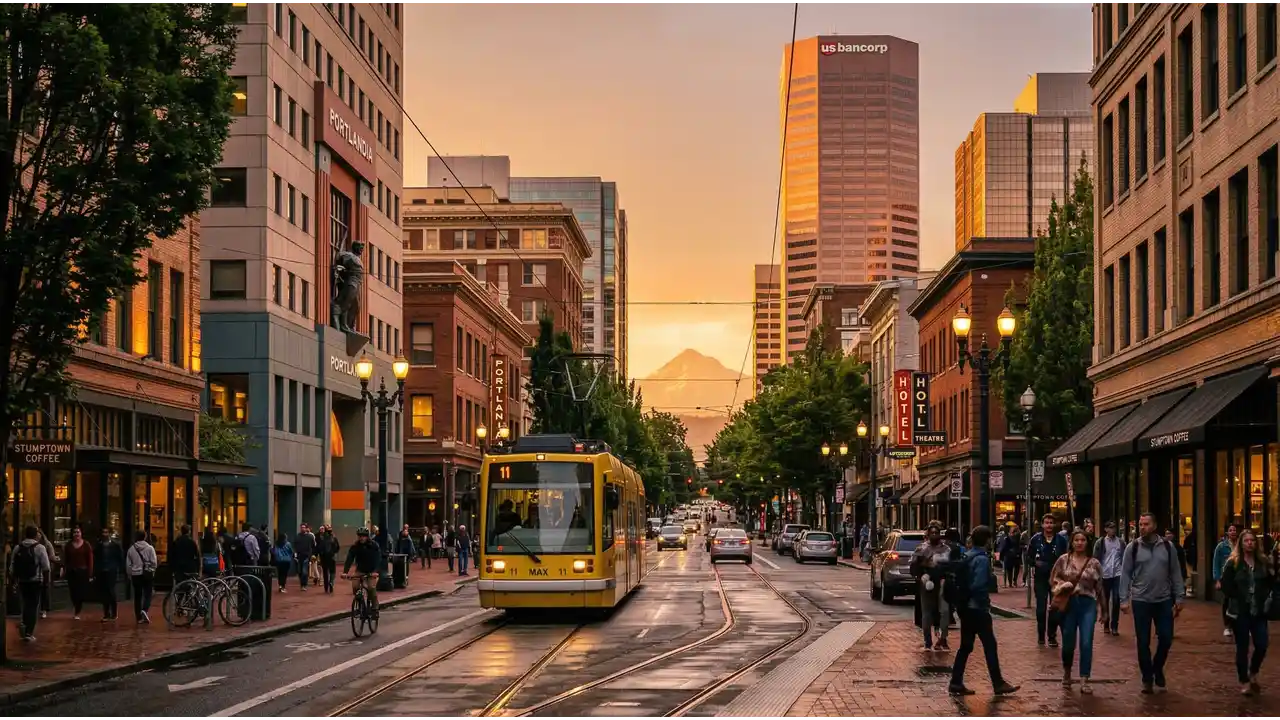
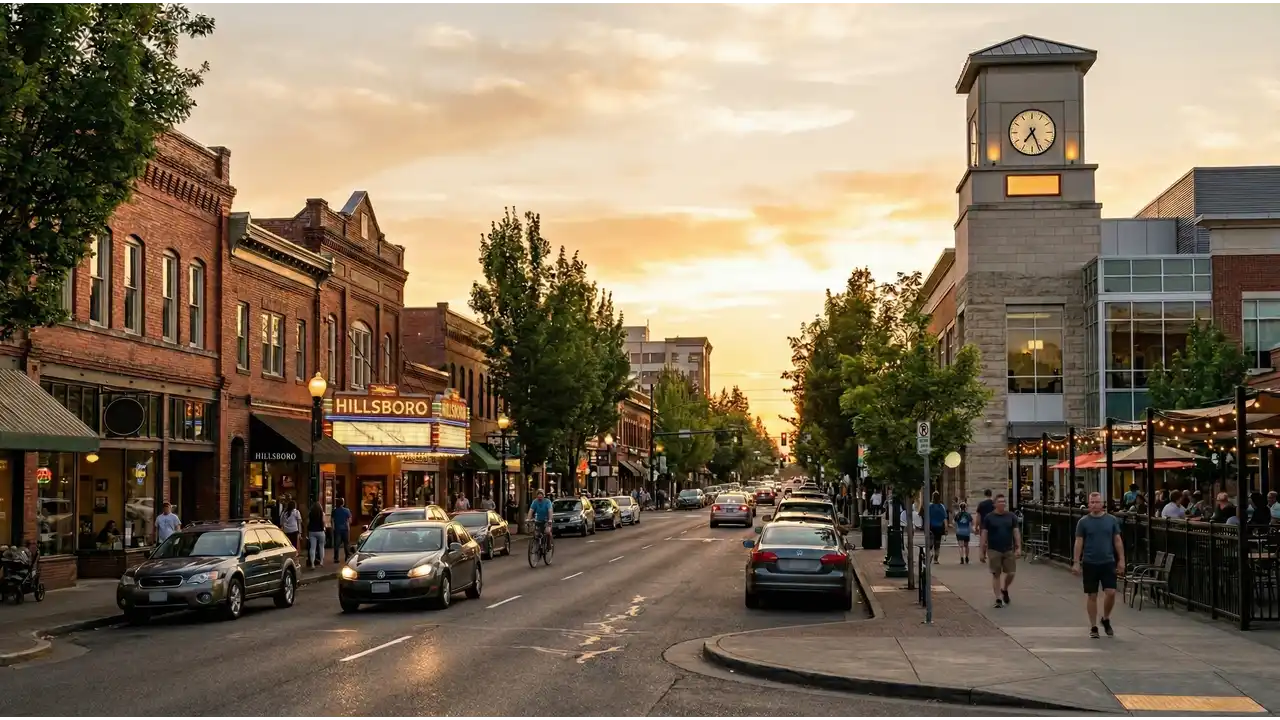
Portland is a mid-sized Pacific Northwest city with around 650,000 residents, known for tech employment, coffee culture, and outdoor recreation. The climate is temperate and rainy, particularly October through May. Daily life centers on walking and cycling in older urban neighborhoods. Most residents work in tech, healthcare, education, or service sectors. The city has strong urban planning that keeps neighborhoods walkable and transit-connected. Housing stock ranges from 1970s-80s apartment complexes to renovated Victorian homes. Summers are dry and warm; winters rarely freeze. Rent pressure has increased steadily, but remains lower than Seattle or San Francisco.
💡 Local Insights
Portland · 2026
Portland's costs divide clearly: housing drives the budget at $1,590/month, while groceries at $560/month sit below national averages. A one-bedroom apartment in central neighborhoods (Burnside, Hawthorne, Division) runs $1,400 to $1,800/month; outer areas like Jade District or St. Johns average $1,200 to $1,500/month. Food costs benefit from Oregon's no-sales-tax policy and strong farmers market culture. Groceries for a single person average $560/month; farmers market produce and bulk items run cheaper than chain supermarkets. Public transit via TriMet costs $100/month for unlimited rides. Most workers rely on buses and light rail rather than cars, saving significantly on parking and insurance. Expats often underestimate utility costs (heating and water run $150 to $200/month) and bike maintenance. Restaurant meals average $15 to $22/plate; most neighborhoods have cheap Asian and Latin food under $12.
Frequently Asked Questions
How much does it cost to live in Portland per month?
A moderate lifestyle in Portland costs around $3,325/month. This breaks down approximately as: housing $1,590/month, groceries $560/month, utilities $160/month, transport $100/month, and discretionary spending $815/month. Budget-conscious residents manage on $1,995/month by sharing housing, cooking at home, and using transit. Those seeking a comfortable lifestyle with dining out, entertainment, and more spacious housing should budget $5,154/month. These figures assume a single adult; couples sharing rent reduce per-person costs significantly.
What is the average rent in Portland?
Average rent in Portland sits at $1,590/month for a one-bedroom apartment. In central neighborhoods like Burnside, Hawthorne, and Division, expect $1,400 to $1,800/month. Outer neighborhoods like Jade District, St. Johns, and Lents run $1,200 to $1,500/month. Two-bedroom apartments average $1,900 to $2,300/month across the city. Prices have risen steadily but remain well below Seattle or Bay Area levels. Shared housing cuts individual costs by 40 to 50 percent. Most leases require first month, last month, and a security deposit upfront.
Is Portland cheap to live in for expats?
Portland sits in the middle tier for US expat destinations. Housing costs are lower than Seattle, San Francisco, or New York, but higher than mid-size Midwest cities. Expats accustomed to Southeast Asian or Latin American costs will find it expensive. Those from Europe or Australia often find it reasonable. Key advantages: no state sales tax (Oregon), extensive bus and light rail system, and affordable farmers markets. Disadvantages: rainy weather increases utilities; car insurance is mandatory for drivers; some neighborhoods have limited evening safety.
How much does food cost per month in Portland?
Groceries for one person average $560/month, or roughly $13/day. Milk runs $3.50 to $4.50/gallon; eggs $4 to $6/dozen; chicken breast $8 to $11/pound; rice and beans under $2/pound. Farmers markets (operating year-round) offer cheaper produce in summer. Eating out averages $15 to $22/plate at casual restaurants; Thai, Chinese, and Mexican food runs $10 to $14. Coffee shops charge $5 to $7 for specialty drinks. No state sales tax helps slightly on groceries. Alcohol is moderately priced; wine and beer in stores cost less than many US cities.
What salary do you need to live comfortably in Portland?
A comfortable lifestyle in Portland requires around $5,154/month, or roughly $62,000/year gross income. This supports a one-bedroom apartment in a central neighborhood, regular dining out, entertainment, and a small savings buffer. Most tech jobs pay $65,000 to $90,000; healthcare and education roles $50,000 to $75,000. After taxes, Social Security, and health insurance, plan on 70 to 75 percent of gross income remaining for living expenses. Couples with combined income of $90,000 to $110,000 live comfortably with room to save.
How does the cost of living in Portland compare to other places?
Portland sits in the middle tier of US metro costs. A moderate lifestyle here runs $3,325 per month, with housing at $1,590 per month.
Denver comes in slightly cheaper overall at $3,225 per month, though its housing costs are nearly identical to Portland's at $1,624 per month. If you're looking for significantly lower costs, Cincinnati offers real savings at $2,775 per month for a moderate lifestyle, with housing substantially less expensive at $1,206 per month.
On the other end, Boston is noticeably pricier. A moderate lifestyle there costs $4,675 per month, and housing alone runs $2,813 per month, nearly double Portland's housing expenses.
For someone relocating from a smaller Midwest city, Portland will feel more expensive. For someone leaving the East Coast, it will feel like genuine relief on your monthly budget.
Yes, but with discipline. A $1,995/month budget requires: shared housing (splitting a two or three-bedroom apartment) at $700 to $900/month per person, groceries around $400/month (buying bulk and cooking daily), transit pass $100/month, utilities $80/month (shared), leaving roughly $700/month for everything else. This cuts out regular dining out, entertainment, and travel. Most people on this budget work full-time, use libraries and free events, and rely on TriMet for mobility. It's sustainable for short-term stays or those with lower lifestyle expectations.