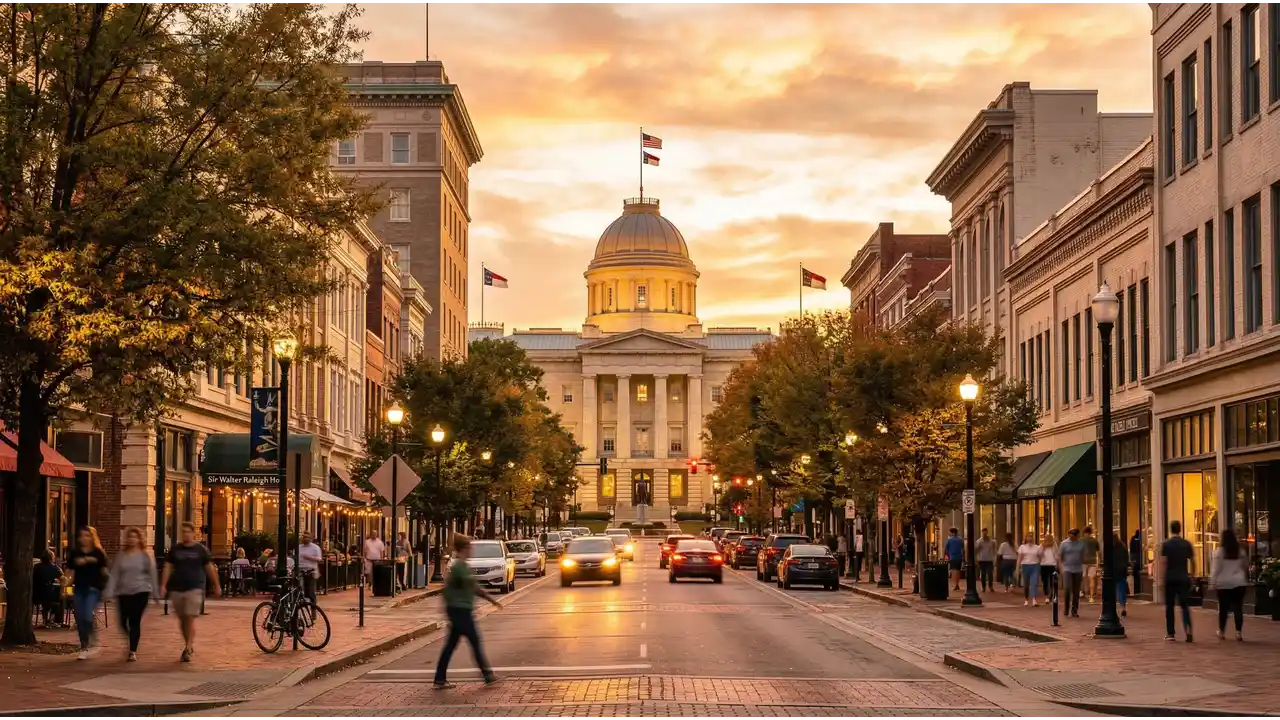
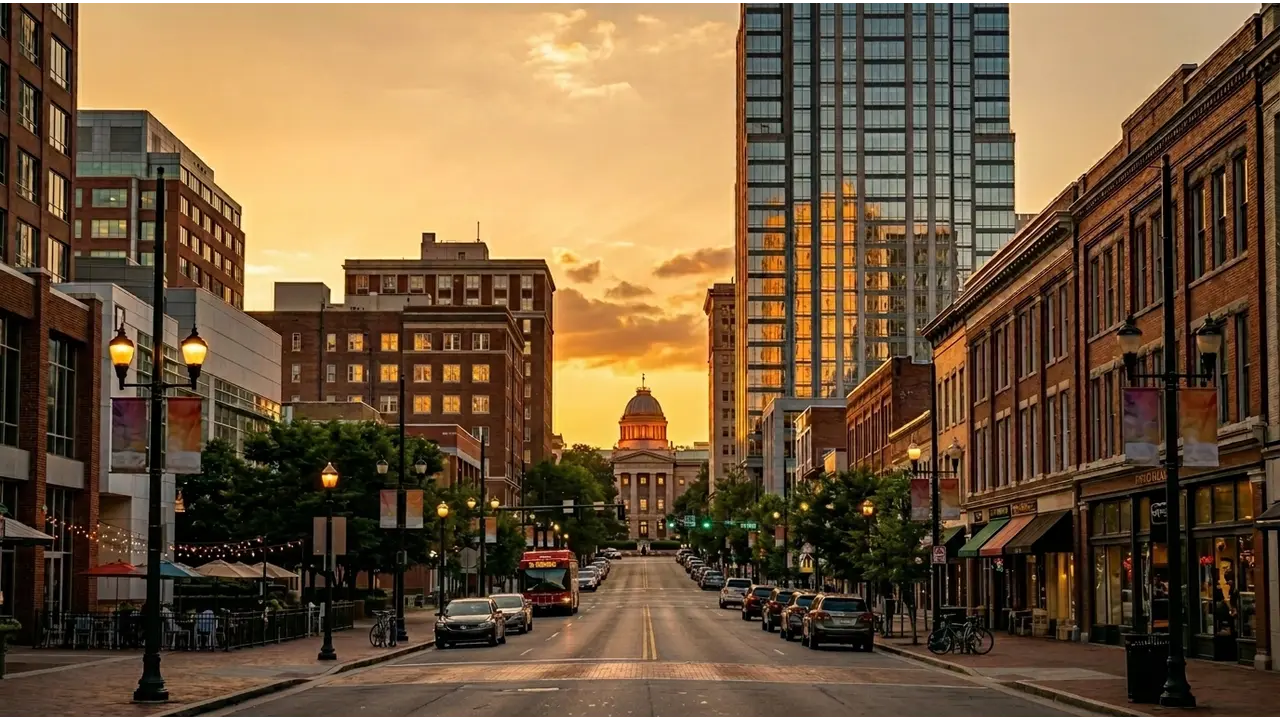
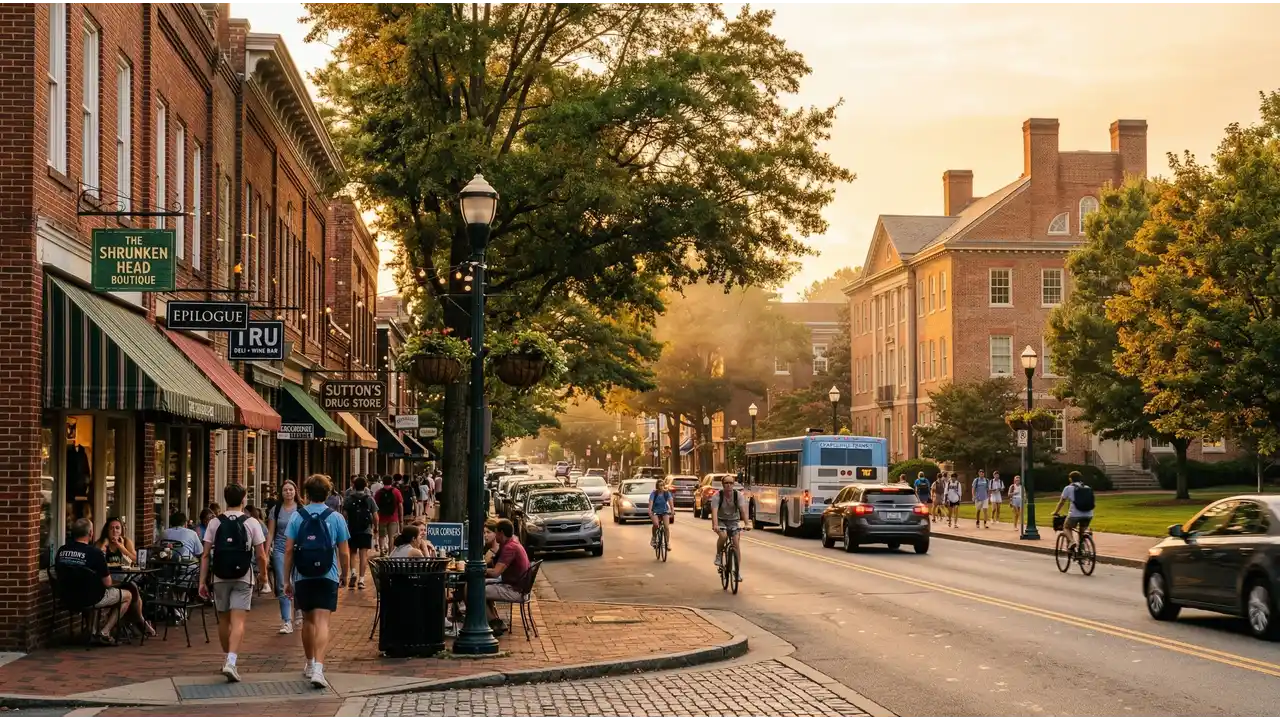
Raleigh is North Carolina's capital and part of the Research Triangle, a region driven by tech, biotech, and university research. The city has a mixed character: downtown is walkable with restaurants and breweries, while most residential areas are car-dependent suburbs. Summers are humid and hot, winters mild. The population is roughly 450,000 in the city proper, growing steadily. Many residents work in tech or healthcare. Daily life involves car commuting for most people, though downtown and nearby neighborhoods like Glenwood South are more pedestrian-friendly. The city attracts young professionals and families seeking lower costs than coastal metros.
💡 Local Insights
Raleigh · 2026
Raleigh's cost of living sits between low-cost Southern cities and high-cost metros, with a moderate lifestyle running $2,900/month. Housing averages $1,317/month and represents the largest expense. Rental competition has increased as the city attracts tech workers, pushing prices up in popular neighborhoods like Glenwood South and North Hills. Groceries cost around $511/month at standard supermarkets (Food Lion, Harris Teeter), consistent with Southeast averages. Eating out is cheaper than coastal cities, with casual meals around $12-16 and sit-down dinners $18-28 per person. Public transit exists but is limited to bus routes; most residents own cars, adding $600-800/month for fuel and insurance. Expats find Raleigh significantly cheaper than Northern metros but pricier than smaller Southern towns. Healthcare costs are moderate due to strong medical research infrastructure.
Frequently Asked Questions
How much does it cost to live in Raleigh per month?
A moderate lifestyle costs $2,900/month. This covers housing at $1,317/month (one-bedroom apartment, shared utilities), groceries at $511/month, transportation around $700/month (car-dependent), dining out and entertainment at $250/month, and miscellaneous expenses. A tighter budget of $1,740/month is possible by sharing housing, cooking most meals, and using transit where available. A comfortable lifestyle with more dining out, better housing, and discretionary spending runs $4,495/month.
What is the average rent in Raleigh?
Average rent is $1,317/month. A one-bedroom apartment in central neighborhoods like Glenwood South or downtown runs $1,400-1,600/month. Suburbs like North Hills or Wade Avenue offer $1,200-1,400/month. Two-bedroom apartments average $1,600-1,900/month. Neighborhoods farther from downtown, such as Cary or Chapel Hill suburbs, drop to $1,100-1,300/month but require longer commutes. Roommate situations often run $600-900/month per person. Raleigh's rental market has tightened in recent years due to tech sector growth, so prices have risen steadily.
Is Raleigh cheap to live in for expats?
Raleigh is moderately priced for expats, cheaper than major metros like New York or Boston but pricier than smaller Southeast cities or international destinations like Lisbon or Mexico City. Expats from Northern US cities find significant savings. International expats often report that salaries offer reasonable purchasing power. Healthcare is straightforward without complex bureaucracy. The main catch is the car-dependent infrastructure; expats accustomed to walkable or transit-rich cities will face unexpected transport costs. The expat community is small compared to bigger metros, which can be an advantage for those seeking a quieter American experience.
How much does food cost per month in Raleigh?
Groceries average $511/month per person. A basic shop at Harris Teeter or Food Lion costs $4-6 for staples like chicken breasts, $3-4 for milk, $2-3 for eggs, $6-8 for ground beef. Produce is moderate year-round. Whole Foods and specialty shops run 20-30 percent higher. Dining out ranges from $12-16 for casual meals (tacos, sandwiches) to $25-35 at mid-range restaurants. Coffee is $3-5. Grocery prices are stable; eating out is slightly cheaper than Northern metros but pricier than rural areas.
What salary do you need to live comfortably in Raleigh?
A comfortable lifestyle costs $4,495/month, suggesting a gross annual salary around $65,000-70,000 for a single person after taxes. For households, combined income of $90,000-100,000 provides flexibility for home ownership, dining out regularly, and travel. Entry-level tech jobs in Raleigh start at $55,000-60,000; mid-level positions at $75,000-90,000. The tech sector pays better than service or retail work. Dual-income households can easily reach comfortable territory. Cost of living is low enough that a $50,000 salary supports a modest life, though little flexibility remains.
How does the cost of living in Raleigh compare to other places?
Raleigh runs $2,900 for a moderate lifestyle, with housing at $1,317 per month. That puts it in the middle tier for mid-sized U.S. cities. Fort Worth comes in slightly cheaper overall at $2,775, though housing costs there are comparable at $1,240 per month. If you're looking for genuinely affordable options, Wichita runs $2,325 with housing at just $808. On the other end, Philadelphia costs substantially more at $3,350 monthly, with housing alone reaching $1,746. Raleigh's relatively moderate price point, combined with job growth in tech and life sciences, makes it competitive for people relocating from either coasts. Your actual expenses will depend heavily on which neighborhood you choose and your lifestyle choices around dining and entertainment.
Yes, but with significant constraints. That budget requires shared housing at $600-750/month, strict grocery spending of $511/month, minimal transportation (bike, bus, or ride-share), and almost no dining out or entertainment. Utilities and phone add $100-150/month. Healthcare emergencies break the budget. This works for students, very disciplined savers, or those with free housing. Most people report needing $2,200-2,500/month for genuine comfort. The budget tier is achievable but leaves little buffer for emergencies or spontaneity.