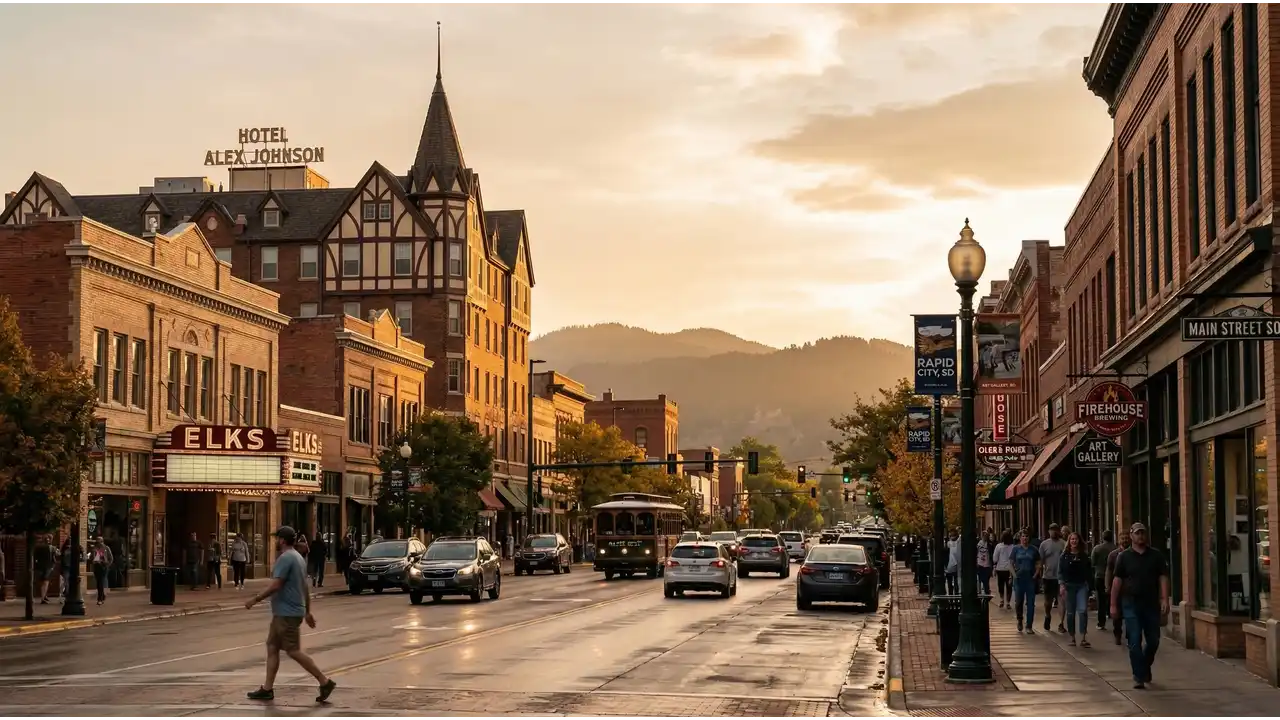
Rapid City is a regional hub in western South Dakota with about 75,000 residents. It serves as the commercial and cultural center for the Black Hills, anchored by proximity to Mount Rushmore and outdoor recreation. The city has a mix of young families, retirees, and workers in tourism, healthcare, and local government. Winters are cold and dry, summers mild. Daily life centers on car-dependent sprawl with a small downtown core. Most residents work locally or commute within the region. Cost of living is genuinely low compared to national averages, but prices have risen steadily since 2020.
💡 Local Insights
Rapid City SD · 2026
Rapid City's affordability rests on low housing costs and modest grocery prices, though both have climbed. Housing runs $1,138 per month, reflecting a mix of older rental stock and newer suburban properties. A one-bedroom apartment downtown or near the mall corridor costs roughly $900 to $1,100; a two-bedroom runs $1,100 to $1,300. Houses for rent start around $1,200. Groceries cost about $496 monthly for a single person eating at home, roughly 15 percent below the national average. Chain stores (Walmart, Hy-Vee) dominate; local farmers markets operate seasonally. Eating out is inexpensive, with casual meals under $12. Transport is car-dependent; no public transit exists. Gas, insurance, and maintenance add up fast if you own a vehicle. Healthcare and utilities are reasonable. The main cost driver is seasonal tourism inflation (June through September), which pushes short-term rentals up sharply but barely affects local permanent housing.
Frequently Asked Questions
How much does it cost to live in Rapid City SD per month?
A moderate lifestyle costs $2,675 per month. That covers housing at $1,138, groceries around $496, plus utilities, transport, dining out, and entertainment. A tight budget works on $1,605 monthly if you skip dining out and live in an older rental. A comfortable lifestyle runs $4,146 and includes dining out regularly, a car payment, and more discretionary spending. Actual costs depend heavily on whether you own a car and your housing choice.
What is the average rent in Rapid City SD?
Average rent is $1,138 per month. One-bedroom apartments near downtown or the mall area rent for $900 to $1,100; two-bedroom units run $1,100 to $1,300. Houses for rent start around $1,200. Prices are lowest in older neighborhoods north and west of downtown. South Rapid, a newer suburb, commands slightly higher rents. Short-term vacation rentals spike 30 to 50 percent during the summer tourism season (June to September), but permanent rentals stay stable year-round. Landlords rarely require more than first and last month's deposit.
Is Rapid City SD cheap to live in for expats?
Yes, relative to coastal US cities and most Western European cities. Housing and groceries are genuinely low. However, expats should know Rapid City is rural and car-dependent. Public transport does not exist, so you must own or lease a vehicle, which adds transport costs quickly. The job market outside tourism and healthcare is limited, so many expats work remotely. Winters are harsh and dark, which affects mood and heating costs. Healthcare is available but smaller than major metros. It suits remote workers and retirees well, but less so those seeking urban density or job mobility.
How much does food cost per month in Rapid City SD?
Groceries average $496 per month for one person eating home-cooked meals. Hy-Vee and Walmart dominate and offer competitive prices. Milk costs about $3.50 per gallon, eggs $2.50 to $3 per dozen, ground beef $5 to $7 per pound. Fresh produce is cheaper in summer at seasonal farmers markets. Eating out is affordable: casual lunch under $10, dinner entrees $12 to $18. A coffee is $3 to $4. Fast food and pizza are widely available and inexpensive. Specialty or organic groceries cost more but are not heavily stocked outside the larger chain stores.
What salary do you need to live comfortably in Rapid City SD?
A comfortable lifestyle costs $4,146 per month, which translates to a gross annual salary of roughly $52,000 to $55,000 (accounting for taxes). That budget includes renting a decent two-bedroom, eating out two or three times a week, maintaining a car, and moderate entertainment. Couples can live well on a combined $80,000 to $90,000. Remote workers earning US salaries find Rapid City very comfortable. Local wages tend to be lower, with median household income around $62,000, so most residents rely on dual incomes or live on tighter budgets.
How does the cost of living in Rapid City SD compare to other places?
Rapid City sits in the middle tier for US cost of living. A moderate lifestyle here runs $2,675 per month, with housing at $1,138 monthly. That puts it slightly cheaper than Cincinnati, where the same lifestyle costs $2,775 with housing at $1,206. You'll find Rapid City substantially more expensive than Nuremberg, which runs $1,975 for a moderate lifestyle and $801 for housing. Philadelphia is markedly dearer at $3,350 monthly overall and $1,746 for housing alone. For most Americans relocating within the country, Rapid City offers reasonable prices without the premium you'd pay in major coastal cities. If you're coming from Europe, expect to spend more here, though the trade-off is lower density and more outdoor access than you'd find in comparable European cities.
Yes, but with significant constraints. $1,605 is the budget tier figure. You must rent an older one-bedroom or share housing, spending $900 to $1,000 on rent. Groceries must be modest, around $400 to $450 monthly. Utilities, phone, and internet consume $150 to $180. That leaves almost nothing for transport, medical care, or emergencies. A car is nearly required, so this budget only works if you own one outright and maintain it yourself, or if you live within walking distance of work and shops. It is possible but leaves no margin for error or unexpected costs. Most residents on tight budgets supplement with second jobs or partner income.