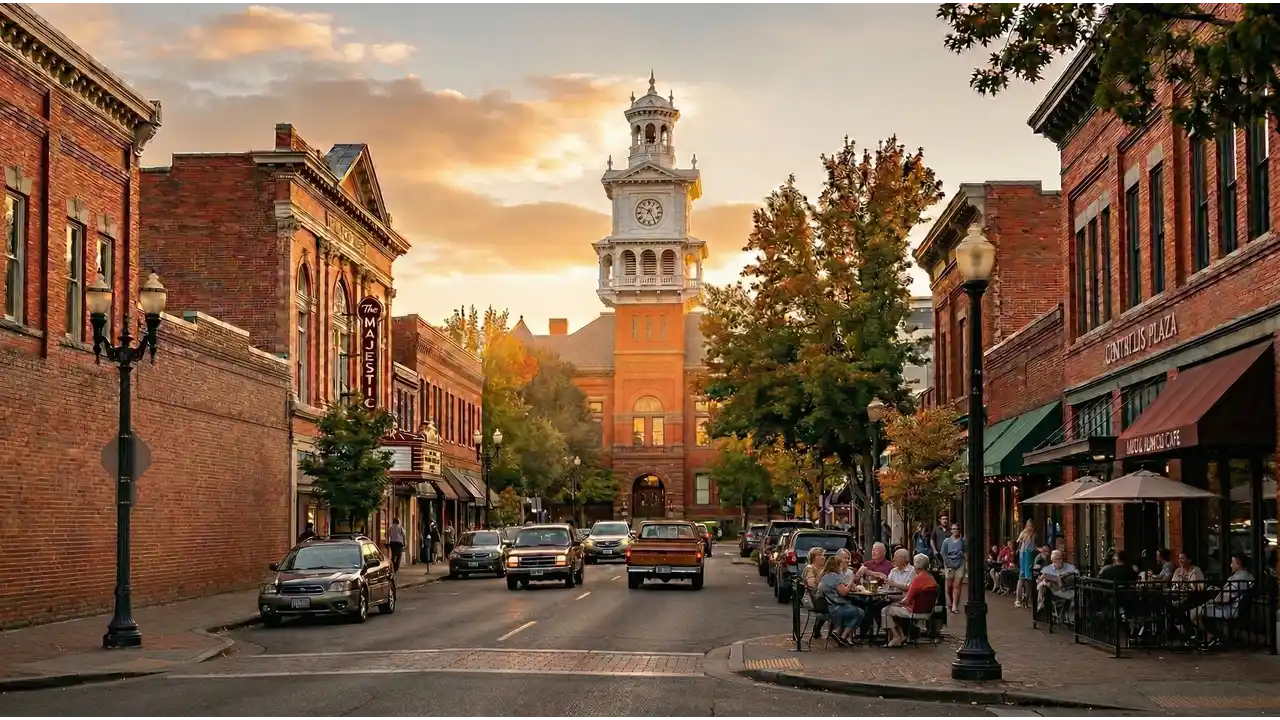
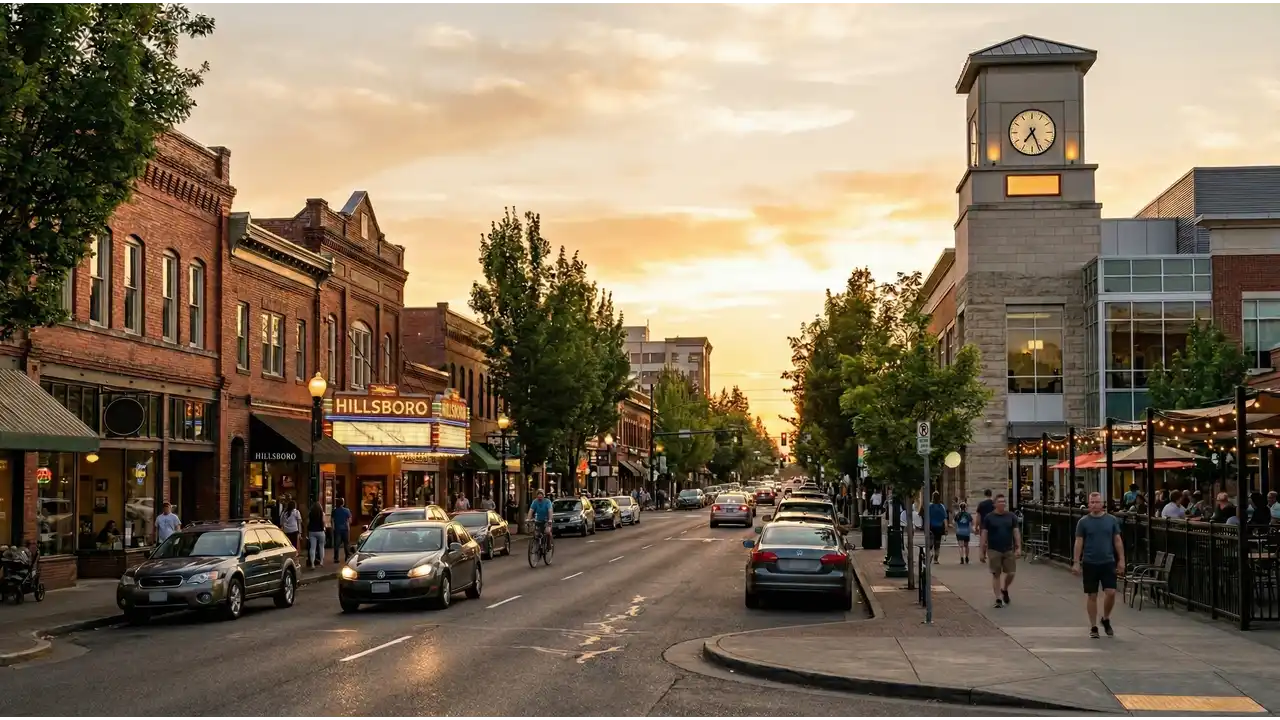
Salem is Oregon's capital city, a mid-sized regional center of about 175,000 people located in the Willamette Valley. The economy depends on state government, healthcare, and nearby agricultural and wine industries. Daily life centers on downtown, where you'll find state offices, courts, restaurants, and shops. The city sits at a lower cost tier than Portland, 45 minutes north, while maintaining similar Pacific Northwest character: mild, wet winters and dry summers. Housing stock is mixed, from older downtown buildings to suburban neighborhoods spreading east and south. Most residents drive; public transit exists but is limited.
💡 Local Insights
Salem · 2026
Salem's cost of living reflects its role as a regional capital rather than a major metro. Housing at $1,209/month is the primary cost driver, achievable in older downtown neighborhoods or newer suburban developments on the edges. One-bedroom apartments downtown rent in the $900-$1,100 range, while two-bedroom units run $1,200-$1,500. Houses for rent typically cost $1,300-$1,800/month depending on location and condition. Groceries at $562/month are standard for the Pacific Northwest, with a gallon of milk around $4 and ground beef near $6 per pound at local stores like Safeway and New Seasons. Eating out is moderate: casual lunches run $12-$16, dinner entrees $16-$28. Public transit (Cherriots bus system) costs $65/month for unlimited passes. Car ownership is practical given limited transit; gas and insurance factor significantly into budgets. Expats find Salem considerably cheaper than Portland or Seattle, with less competition for rental units, though winter rain and smaller cultural infrastructure deter some. Local pricing favors residents; no expat tax exists, though seasonal demand from government workers can tighten summer rentals.
Frequently Asked Questions
How much does it cost to live in Salem per month?
A moderate lifestyle in Salem costs approximately $2,950/month. Housing averages $1,209/month (rent or mortgage), groceries around $562/month, with transport, utilities, dining, and entertainment comprising the rest. Budget-conscious residents can manage on $1,770/month by choosing shared housing, cooking most meals, and using public transit. Those seeking more comfort, including dining out regularly and entertainment, should budget $4,573/month. These figures are based on local market data and actual household expenses in the area.
What is the average rent in Salem?
Average housing costs are $1,209/month. One-bedroom apartments in downtown Salem rent for $900-$1,100/month, while two-bedroom units run $1,200-$1,500/month. Three-bedroom houses rent between $1,300-$1,800/month depending on neighborhood and condition. Older downtown properties near Court Street are cheaper; newer suburban developments east of I-5 cost slightly more. South Salem neighborhoods like Keizer offer lower rents. Summer months (June-August) see higher demand from government workers, pushing prices up slightly. Landlords typically require first month, last month, and a security deposit equal to one month's rent.
Is Salem cheap to live in for expats?
Yes, Salem is relatively affordable for expats, particularly those relocating from major US metros or Western Europe. Housing costs are notably lower than Portland, Seattle, or San Francisco. Expats accustomed to cities like London or Munich will find groceries and dining reasonable. The main tradeoff is limited expat infrastructure compared to larger cities: fewer international restaurants, no large expat communities, and smaller English-language social networks. Public transit is sparse, requiring a car for most errands. Winter rain (October-April) surprises some expats. Government salaries and healthcare jobs dominate the job market; remote work is common among expats staying long-term.
How much does food cost per month in Salem?
Groceries average $562/month for one person eating a mixed diet. Staples at Safeway or New Seasons: milk $4/gallon, bread $3-$4, eggs $4-$5/dozen, chicken $6-$8/pound, ground beef $6-$7/pound, apples $2-$3/pound. Eating out is moderate: casual lunch $12-$16, dinner entrees $16-$28 at mid-range restaurants. Coffee costs $3-$5. Weekly farmers markets (May-November) offer local produce at competitive prices. Ethnic groceries (Latino, Asian) in central Salem are affordable. Alcohol is reasonably priced; local breweries sell pints for $6-$8.
What salary do you need to live comfortably in Salem?
A comfortable lifestyle in Salem requires approximately $4,573/month or $54,875/year gross income (accounting for taxes and benefits). This budget allows for a one-bedroom apartment or small house, regular dining out, entertainment, travel, and modest savings. For a couple or family, add proportionally. Oregon's income tax is progressive, ranging from 4.75-9.9 percent depending on income. Employers in Salem typically pay state government, healthcare, and education salaries competitively for the region but below national averages for comparable roles. A single earner at $55,000/year gross can live comfortably but with limited discretionary spending.
How does the cost of living in Salem compare to other places?
Salem sits in the middle tier of American affordability. A moderate lifestyle here costs $2,950 per month, with housing running $1,209 monthly. That puts Salem very close to Jacksonville, where a moderate lifestyle costs $2,850 per month and housing costs $1,253 per month. You'll spend noticeably less in Oklahoma City, where a moderate lifestyle totals $2,400 per month and housing is $891 per month. Seattle is substantially pricier. A moderate lifestyle in Seattle costs $3,950 per month, and housing alone runs $2,177 per month. For context, Salem offers genuine affordability compared to larger tech and coastal hubs, but you won't find the lowest costs in the country here. The tradeoff is access to a functioning mid-sized city with reasonable services and job options.
Yes, but with significant constraints. This budget tier requires shared housing (studio or one-bedroom split two ways) costing $800-$900/month per person, or a solo apartment in an older, less desirable neighborhood ($900-$1,000/month). Food means cooking nearly all meals and shopping sales, leaving $200-$250/month for groceries. Utilities, phone, and internet consume $150-$200. Transport is public transit or biking; car ownership is difficult. Dining out, entertainment, and travel are minimal. This budget works for students, early-career remote workers, or those with low expenses, but leaves little emergency buffer. Most single workers in Salem earn $2,200-$2,800/month, making this tier tight but survivable with discipline.