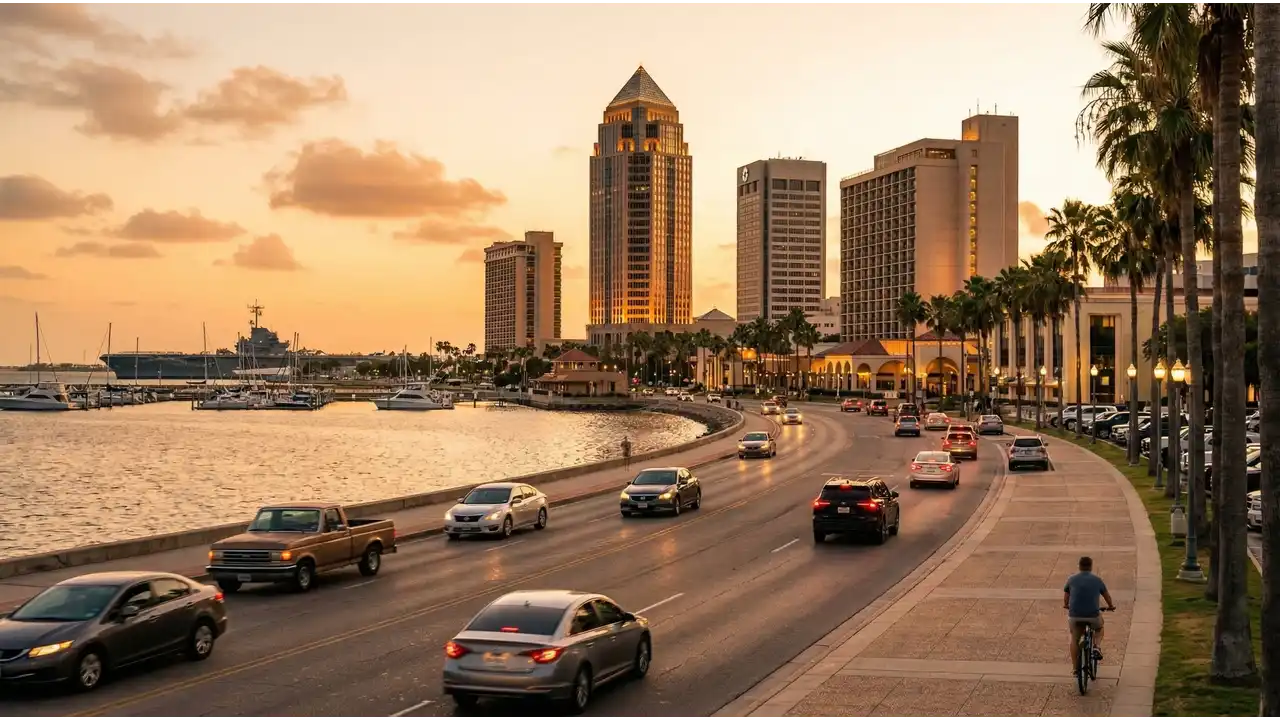
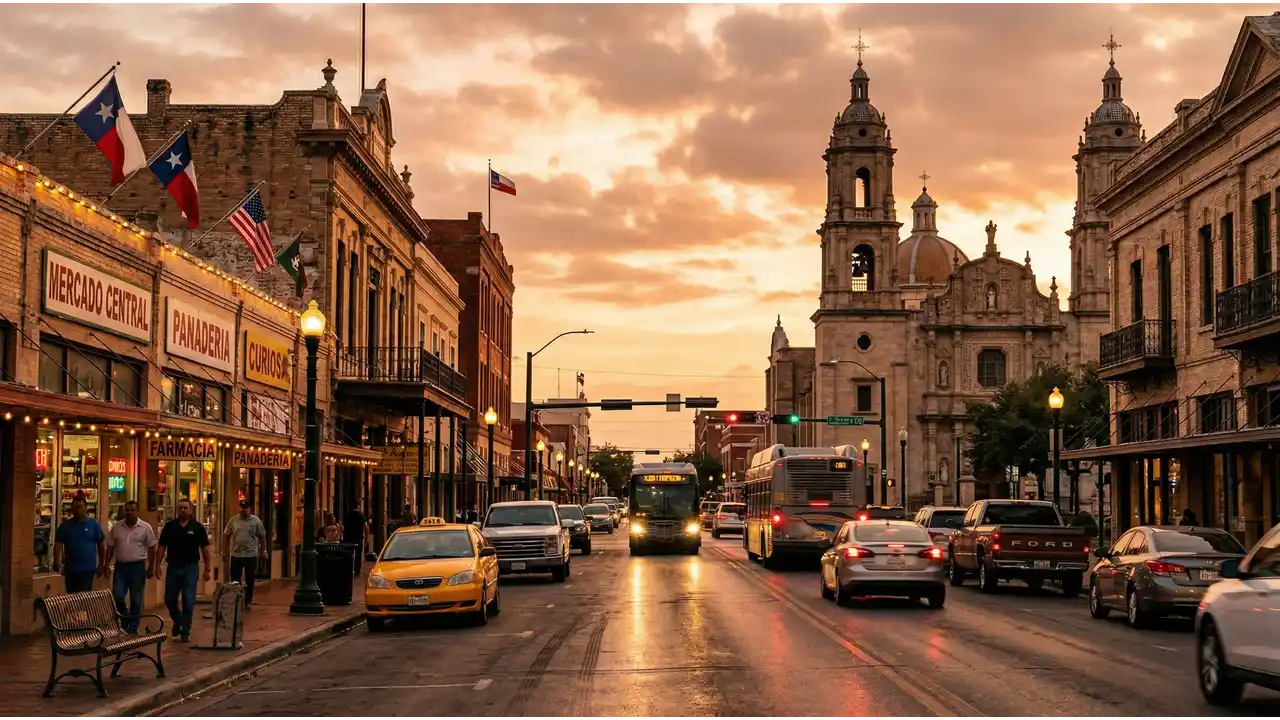
San Antonio is Texas's second-largest city, built around the River Walk and anchored by military presence, tourism, and growing tech sectors. The population is roughly 1.5 million in the metro area, with a significant Latino majority and long-established cultural institutions. Summers are hot and dry, winters mild. Daily life centers on car travel, though downtown and the River Walk are walkable. The city draws retirees, military families, and young professionals seeking lower cost of living than Austin or Dallas. Growth has accelerated in recent years, bringing new neighborhoods and rising rents, but affordability remains a draw compared to other major Texas metros.
💡 Local Insights
San Antonio · 2026
San Antonio remains genuinely affordable for a major US city, though prices have climbed. Housing costs around $1,030/month (median range $850 to $1,200 for a one-bedroom apartment, depending on neighborhood). South side areas like Southtown and residences further from downtown cost less; proximity to the River Walk or Pearl District commands premiums. Groceries run about $498/month for a moderate budget, comparable to national averages. Restaurant prices are low relative to other cities: tacos and Tex-Mex meals run $6 to $10. The city is car-dependent outside downtown, so transportation costs matter. VIA public transit exists but limited; most residents budget for a vehicle. Expats often find prices transparent and straightforward, with no significant hidden costs. The military presence keeps some neighborhoods stable in price but also creates transience. Utilities can spike in summer due to air conditioning demands.
Frequently Asked Questions
How much does it cost to live in San Antonio per month?
A moderate lifestyle in San Antonio costs $2,575/month. This breaks down roughly as: housing $1,030, groceries $498, utilities and other essentials making up the remainder. A more frugal budget runs around $1,545/month if you share housing or live outside central areas. A comfortable lifestyle with more dining out and discretionary spending costs $3,991/month. These figures reflect actual local prices and are lower than Dallas, Houston, or Austin, but higher than rural Texas.
What is the average rent in San Antonio?
Average rent is approximately $1,030/month for a typical one-bedroom apartment in established neighborhoods. One-bedrooms range from about $800 to $1,200 depending on location. South side areas (Southtown, near Mission Trail) sit at the lower end. Downtown and Pearl District units command $1,100 to $1,400. Two-bedroom apartments average $1,250 to $1,500. Shared housing and rooms rent for $500 to $700. Prices have risen notably over the past five years as the city has attracted relocations, but remain significantly below Austin or Dallas levels.
Is San Antonio cheap to live in for expats?
Yes, relative to most developed-country cost of living standards. Expats from Western Europe, Canada, or Australia will find housing, food, and transport substantially cheaper. Compared to other major US cities, San Antonio is genuinely affordable; rent and groceries are 20 to 30 percent below Austin or Houston. That said, it is not cheap by developing-country standards. Expats should budget $2,575 for a comfortable moderate lifestyle, not $600 to $900 monthly as in Southeast Asia or parts of Central America. The trade-off is robust infrastructure, stability, and healthcare quality.
How much does food cost per month in San Antonio?
Groceries average $498/month for a moderate diet. A week's groceries for one person runs $80 to $120. Beef, chicken, and fresh produce are competitively priced. Tacos and street food run $6 to $10 per meal. Full-service restaurant dinners cost $12 to $20 per entree. Casual chains and tex-mex cost $8 to $15. San Antonio's food scene is inexpensive compared to coastal cities, with abundant taco vendors, barbecue spots, and local chains keeping prices low. Eating out daily would add $400 to $600/month to your budget beyond groceries.
What salary do you need to live comfortably in San Antonio?
A comfortable lifestyle costs $3,991/month, implying an annual salary around $48,000 to $50,000 (gross, accounting for taxes and savings). This allows for a pleasant one-bedroom apartment $1,100 to $1,200, regular dining out, entertainment, and some travel. A couple earning combined $60,000 to $65,000 can live quite well with room for savings. The budget tier of $1,545/month requires roughly $20,000 to $22,000 annual income and means roommates or south-side housing, minimal dining out, and careful spending. Most professionals moving to San Antonio find their salaries go further here than in northern cities.
How does the cost of living in San Antonio compare to other places?
San Antonio sits in the middle of the Texas cost spectrum. A moderate lifestyle runs $2,575 per month here, which puts it slightly ahead of El Paso at $2,450 per month. Housing in San Antonio costs $1,030 monthly at the moderate tier, compared to $912 in El Paso, so both cities offer similar affordability overall.
If you're coming from elsewhere in the US, San Antonio is noticeably cheaper than upscale markets. Scottsdale runs $3,350 per month for a moderate lifestyle, with housing at $1,729. That's roughly 30 percent higher than San Antonio across the board.
For those considering Mexico, San Miguel de Allende is cheaper still at $1,725 monthly, though it's a smaller colonial city with different amenities. San Antonio gives you a major US city with lower prices than most comparable metros.
Yes, but with significant constraints. This budget tier requires a room in a shared house ($450 to $550), roommate apartment split ($500 to $650), or a studio in an outlying neighborhood. Groceries must stay disciplined at roughly $300 to $350/month. Dining out is minimal; most meals are home-cooked. Utilities, phone, internet, and transport on that budget leave little for discretionary spending. It works for students, remote workers with flexible spending, or those with subsidized housing. Most full-time working adults prefer the moderate budget of $2,575/month to avoid constant financial stress.