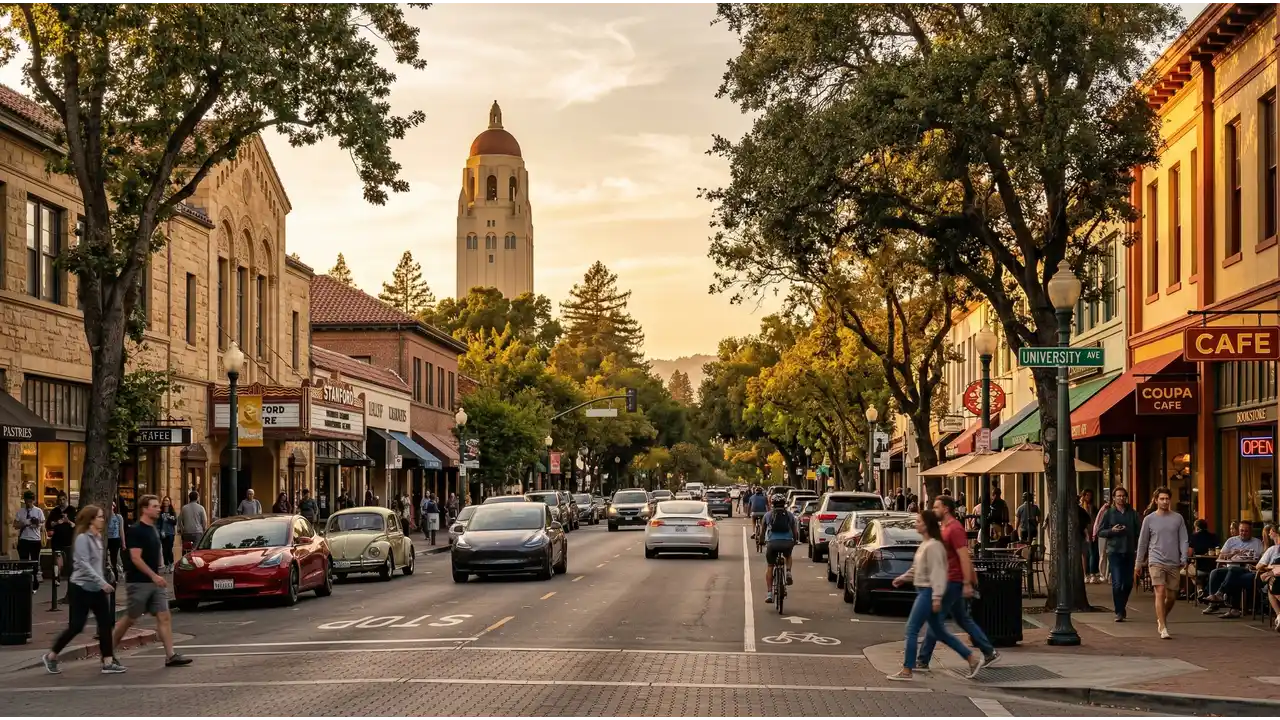
Santa Cruz is a coastal city in the San Francisco Bay Area with about 65,000 residents. The downtown wraps around a working beach and wooden boardwalk, with redwood forests and agricultural land just inland. Weather is mild year-round, rarely exceeding 75 degrees Fahrenheit. The population mixes university students (UC Santa Cruz), service workers, tech commuters, artists, and longtime residents. Daily life centers on the beach, local coffee shops, farmers markets, and a strong outdoor culture. Traffic to San Francisco or Silicon Valley jobs is a major daily reality for many commuters.
💡 Local Insights
Santa Cruz CA · 2026
Santa Cruz's cost of living sits at $5,000/month for a moderate lifestyle, driven almost entirely by housing. Rent for a one-bedroom apartment in central neighborhoods (Downtown, Westside) runs $2,400 to $3,200/month. Two-bedroom units average $3,100 to $4,100/month. Prices drop modestly in outlying areas like Aptos or Watsonville (15-25 minutes south), but not enough to reshape the overall picture. Grocery costs at $614/month reflect a competitive supermarket scene (Safeway, Sprouts, farmers market options) and moderate California pricing. Eating out is expensive: casual meals run $15-20, sit-down dinners $40-70 per person. Public transit (Santa Cruz Metro) costs $2.50 per ride; most residents drive. Expat pricing is not dramatically different from local pricing, though newcomers often underestimate rent stability. The commute factor matters more than cost alone. Workers heading to San Jose or Mountain View spend $12-15/day on gas and 45-90 minutes commuting.
Frequently Asked Questions
How much does it cost to live in Santa Cruz CA per month?
A moderate lifestyle costs $5,000/month. Housing accounts for $3,096/month, food (groceries) $614/month. The remaining $1,290 covers utilities ($150-180), transport ($200-250), and discretionary spending. A tighter budget at $3,000/month is possible but requires roommates or a small studio outside the center and strict discipline on dining out. A comfortable lifestyle with space and dining flexibility costs $7,750/month.
What is the average rent in Santa Cruz CA?
Median rent is $3,096/month. One-bedroom apartments in Downtown or near the beach run $2,400 to $3,200/month. Two-bedroom units average $3,100 to $4,100/month depending on location and condition. Neighborhoods like Westside and near the university are slightly cheaper ($2,800-3,200 for one-bedroom). Aptos or Seacliff, 15 minutes south, drop to $2,500-3,000 for one-bedroom but require a car. Vacancy rates are tight; landlords rarely negotiate. Deposits equal one month's rent.
Is Santa Cruz CA cheap to live in for expats?
No. Santa Cruz is expensive by global standards and moderate-to-high within the US. Expats from Western Europe, Australia, or Canada will find it pricier than their home countries. Expats from Asia or Latin America may find costs comparable to major metros like Tokyo, Singapore, or São Paulo, but rents rise faster than salaries. The real challenge is the Bay Area job market: expats who secure remote work elsewhere or jobs in tech/education find it manageable. Those relying on local wages struggle significantly.
How much does food cost per month in Santa Cruz CA?
Groceries average $614/month for one person eating at home. Eggs cost $6-8/dozen, milk $4-5/gallon, chicken breasts $10-12/pound. Farmers markets offer cheaper produce in summer. Eating out is expensive: casual lunch $15-20, dinner at a mid-range restaurant $40-70 per person. Coffee runs $5-6. Alcohol (wine, beer) is 15-20 percent more than national average. Shopping at Sprouts or discount chains (Grocery Outlet) trims 10-15 percent off grocery totals.
What salary do you need to live comfortably in Santa Cruz CA?
A comfortable lifestyle costs $7,750/month, suggesting an annual salary of $93,000 before taxes. This allows for a one-bedroom apartment, occasional dining out, a car, and modest savings. Realistically, accounting for California income tax and FICA, a gross income of $105,000-110,000 is needed to net $7,750/month after taxes and housing. Tech workers in Santa Cruz and commuters to Silicon Valley often earn $120,000-200,000+, making the cost of living easier to absorb.
How does the cost of living in Santa Cruz CA compare to other places?
Santa Cruz sits squarely in the upper range for US cost of living. A moderate lifestyle here runs $5,000 per month, with housing alone at $3,096 per month. That puts it nearly on par with San Francisco, where a moderate lifestyle costs $5,200 monthly and housing runs $3,302 monthly. Both coastal California cities command similar prices.
You'll pay significantly more than in Alexandria, where the same moderate lifestyle costs $3,500 monthly with housing at $1,910 monthly. New York City edges higher still at $5,775 for a moderate lifestyle and $4,100 for housing, though that premium is mostly housing-driven.
The core factor is Santa Cruz's desirability as a beach town near Silicon Valley. Limited housing stock and strong regional demand keep prices elevated. If you're relocating here, budget accordingly, particularly for rent.
Yes, but with major tradeoffs. You must have a roommate (cutting rent to $1,200-1,600) or live in a small studio 2-3 miles from downtown ($1,400-1,800). Groceries and utilities stay non-negotiable at roughly $850/month combined. That leaves $400-550 for transport, phone, and personal care. Dining out becomes rare. Car ownership is difficult; reliance on transit or biking is required. This budget works for students, remote workers with low expenses, or those with family support. It does not support a solo renter with a conventional lifestyle.