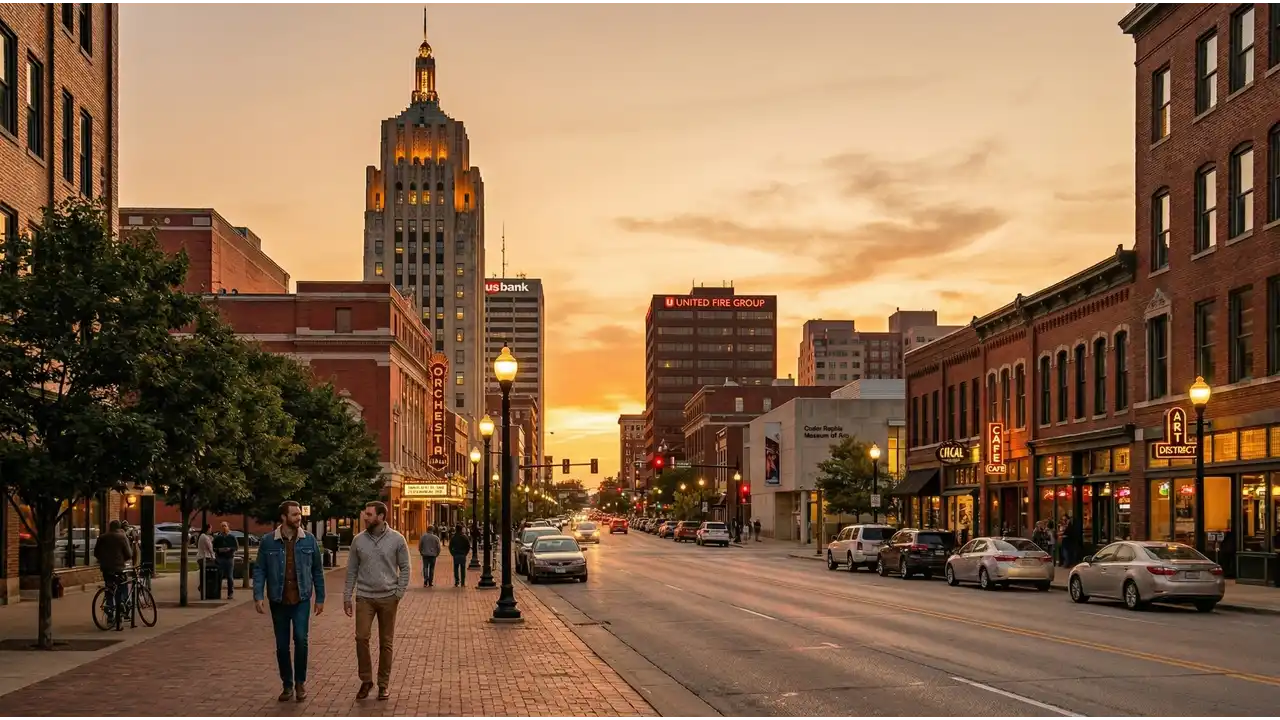
St. Paul is Minnesota's capital, a Mississippi River city of about 310,000 people with a strong public sector presence and solid middle-class character. Winters are severe (January averages 20 degrees Fahrenheit), and summers are brief but warm. The population is diverse, with significant Hmong, Somali, and Hispanic communities alongside white working and professional classes. Daily life centers on neighborhoods like Summit-University, Macalester-Groveland, and downtown, with many residents walking or biking in warmer months. The city sits directly across the river from Minneapolis, which affects both commuting patterns and cultural identity.
💡 Local Insights
St. Paul MN · 2026
St. Paul is genuinely affordable compared to coastal US cities, but not a bargain by Midwest standards. Housing runs around $1,325/month for a one-bedroom apartment in central neighborhoods or a two-bedroom in outer areas. Lowertown and downtown command premiums (up to $1,600), while areas like North End or East Side sit closer to $1,000. Winters push heating costs up significantly from November through March. Groceries average $508/month for one person buying typical US supermarket fare at chains like Cub Foods or Hy-Vee. Eating out ranges from $12 for casual sandwiches to $18-30 for sit-down restaurant meals. Public transit is free for some riders but limited compared to Minneapolis; most residents own cars. Expats find St. Paul markedly cheaper than Seattle or Denver, comparable to Pittsburgh, and pricier than Kansas City. Property taxes are notably high for Minnesota homeowners but don't affect renters directly.
Frequently Asked Questions
How much does it cost to live in St. Paul MN per month?
A moderate lifestyle in St. Paul runs about $2,900/month for one person. Housing is $1,325, groceries $508, with the remainder covering transport (public transit or car ownership), utilities, dining out, and entertainment. A tighter budget of $1,740/month is possible if you live in outer neighborhoods and cook at home extensively. A comfortable lifestyle with more flexibility runs $4,495/month, allowing restaurant meals, recreation, and savings room.
What is the average rent in St. Paul MN?
Expect to pay around $1,325/month for a one-bedroom apartment in central or desirable neighborhoods. Summit-University, Macalester-Groveland, and parts of Highland run $1,350-$1,600. Outer areas like North End, East Side, or St. Anthony Park offer two-bedroom units around $1,050-$1,250. Downtown Lowertown premium apartments reach $1,600-$1,800. These figures are for unfurnished rentals and exclude utilities. St. Paul rents have remained relatively stable; the market is neither hot nor declining.
Is St. Paul MN cheap to live in for expats?
St. Paul is moderately priced for expats, cheaper than most US coasts but not exceptional by global standards. For expats coming from Western Europe or Australia, it feels genuinely affordable. For those relocating from Southeast Asia, Latin America, or Eastern Europe, costs will feel high. Healthcare, childcare, and utilities are significantly more expensive than in many expat destinations. The trade-off is reliable infrastructure, low corruption, and stable employment. Expats often find North American salaries more than offset St. Paul's costs.
How much does food cost per month in St. Paul MN?
Groceries average $508/month for one person buying at mainstream supermarkets like Cub Foods, Hy-Vee, or Target. Milk runs $3.50-$4.50/gallon, chicken breast $7-$9/pound, eggs $3-$4/dozen. Farmer's markets in summer offer cheaper produce. Eating out: casual lunch $12-$15, dinner at a mid-range restaurant $18-$30 per person. Fast food runs $8-$12. St. Paul has no high-end food markups; prices align with national averages.
What salary do you need to live comfortably in St. Paul MN?
A comfortable lifestyle in St. Paul requires roughly $4,495/month, or about $54,000/year gross (accounting for taxes and benefits). This allows a one-bedroom apartment in a good neighborhood, regular restaurant meals, hobbies, car ownership, and meaningful savings. Household income varies widely: couples can manage on $65,000-$75,000 combined, while families with children typically need $65,000-$90,000+ depending on childcare and school choices. Many St. Paul professionals earn $55,000-$85,000 in education, healthcare, and government sectors.
How does the cost of living in St. Paul MN compare to other places?
St. Paul's moderate lifestyle costs $2,900 per month, with housing running $1,325. This positions the city in the middle tier of US cost-of-living, neither cheap nor expensive by national standards.
Cincinnati is a peer city, running $2,775 monthly for the same lifestyle and $1,206 for housing. Both are solid Midwest options with similar affordability. Oklahoma City is notably cheaper at $2,400 for a moderate lifestyle and $891 for housing, making it a real option if you want to stretch your budget further. On the other end, Alexandria costs $3,500 monthly with $1,910 in housing, roughly 20 percent higher across the board.
St. Paul offers genuine walkability and amenities without the price shock of coastal cities. Your money goes further on housing than in many comparable metros, though groceries and services align with broader regional trends.
Yes, but with tight constraints. Budget rent at $1,000-$1,100 in outer neighborhoods or shared housing, groceries at $400-$450, transport $150-$200, utilities $100-$150, leaving $100-$200 for phone, insurance, and minimal discretionary spending. Winter heating costs will squeeze this further. No restaurant meals, limited entertainment, and no car ownership unless already owned. Health emergencies or unexpected costs create genuine hardship. This budget works for students, remote workers with low expenses, or those with additional income or support. It requires discipline and geographic flexibility.