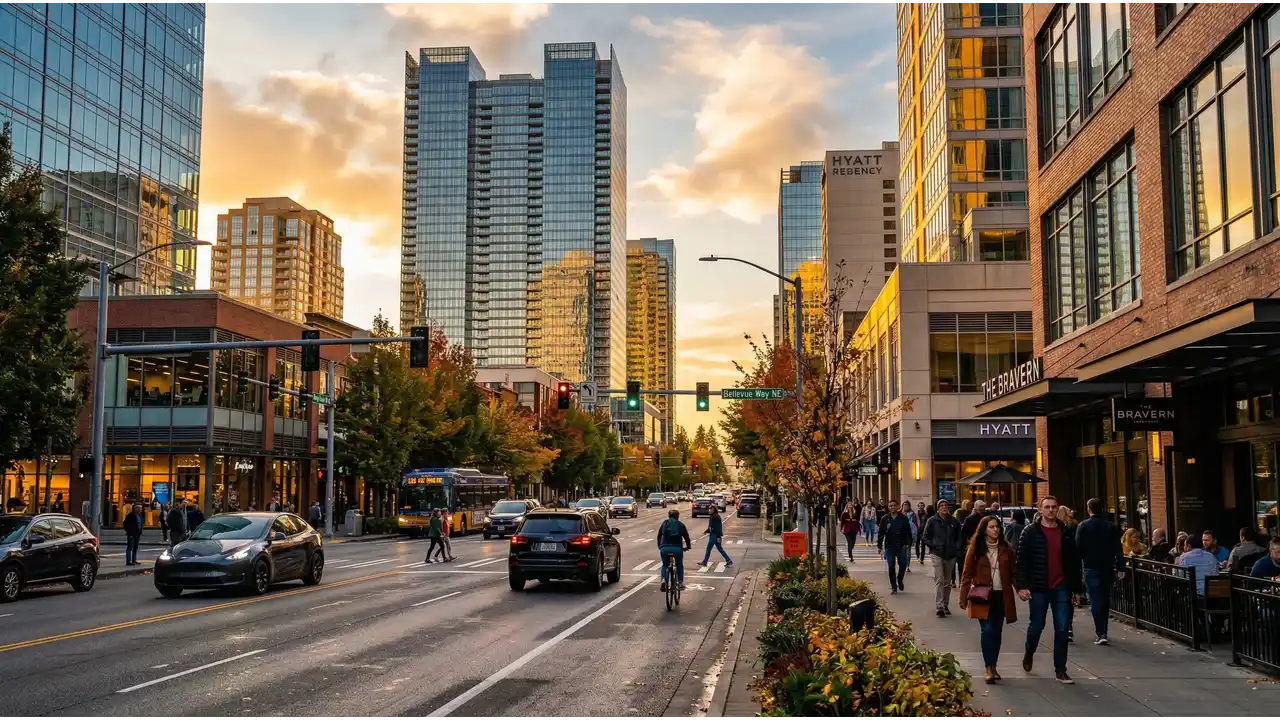
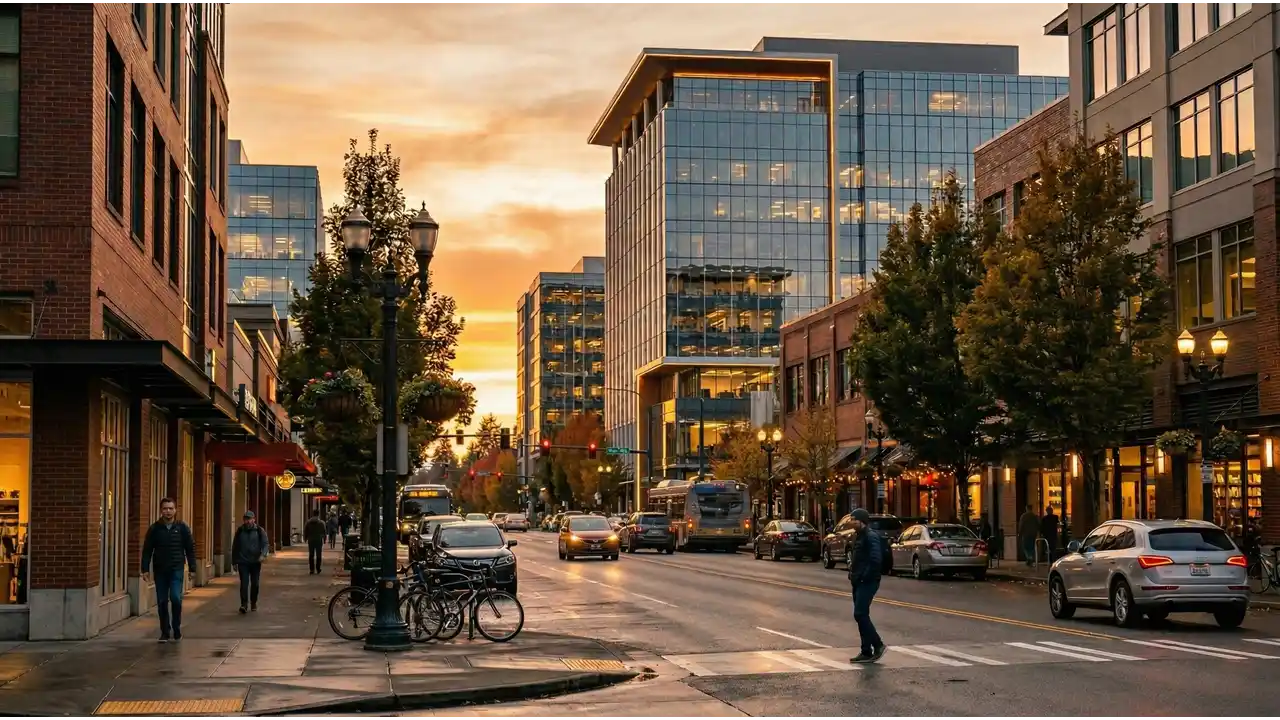
Tacoma is a working port city south of Seattle with a genuine mixed-income character. The waterfront and nearby parks draw outdoor enthusiasts. Summers are dry and mild, winters gray and wet. The population is diverse, with significant communities from Southeast Asia, Latin America, and Eastern Europe. Daily life centers on commuting (many work in Seattle), local restaurants reflecting immigrant communities, and waterfront recreation. Housing ranges from older, affordable neighborhoods to renovated downtown lofts. The pace is slower than Seattle but faster than rural Washington.
💡 Local Insights
Tacoma · 2026
Tacoma's cost advantage over Seattle is real but narrowing. Housing averages $1,571/month, covering one-bedroom apartments at $1,200-$1,400 in neighborhoods like Lincoln and Proctor, or $1,600-$1,850 for newer downtown units. Older Craftsman homes in South Tacoma rent lower, around $1,100-$1,300. Groceries run $566/month for a moderate diet, competitive with regional averages. Eating out costs less than Seattle: casual meals $12-$16, casual dinner $25-$35. Public transit (Pierce Transit) is limited compared to Seattle; most residents need cars, adding transport costs. Expats notice Tacoma's affordability but should factor in lower transit coverage and longer commutes if working in Seattle (45-90 minutes by car or commuter rail). No expat pricing premium exists; locals and newcomers pay the same.
Frequently Asked Questions
How much does it cost to live in Tacoma per month?
A moderate lifestyle in Tacoma runs $3,325/month. Housing is the largest expense at $1,571/month, followed by groceries at $566/month. Utilities, transport, dining out, and entertainment make up the remainder. A budget tier lifestyle (minimal spending, shared housing, no car) costs $1,995/month. A comfortable lifestyle with newer housing, dining out regularly, and entertainment reaches $5,154/month. These figures assume a single adult; families and those with cars will spend more.
What is the average rent in Tacoma?
Average rent is around $1,571/month for a moderate-lifestyle one-bedroom. Older neighborhoods like Lincoln, Proctor, and Hilltop offer one-bedroom units at $1,200-$1,400. South Tacoma and Eastside rentals range $1,100-$1,350. Downtown and waterfront one-bedrooms run $1,600-$1,850. Two-bedroom apartments average $1,700-$2,100 depending on condition and location. House rentals (3 bedrooms) range $1,800-$2,400. Prices have risen 3-5% annually. Check local property management sites and Craigslist for current listings rather than national aggregate sites.
Is Tacoma cheap to live in for expats?
Yes, relative to other US Pacific cities. Rent and groceries cost 15-25% less than Seattle, 10-20% less than Portland. For expats accustomed to major metros, Tacoma is affordable. For those from lower-cost regions (Southeast Asia, Mexico, parts of Latin America), housing will feel expensive on modest salaries. Expat communities exist but are smaller than in Seattle. No special pricing exists for expats. The trade-off: fewer ethnic restaurants and services than larger cities, plus limited public transit means a car is often necessary, offsetting some savings.
How much does food cost per month in Tacoma?
Groceries average $566/month. A single person buying basics (rice, beans, eggs, chicken, seasonal vegetables) spends $120-$160 weekly. Mid-range supermarkets like Safeway and QFC dominate; discount options (Grocery Outlet, Costco) are available. Ethnic markets (Asian, Latin American) offer cheaper produce and staples. Eating out: casual meals (tacos, Vietnamese pho, burgers) cost $12-$16; casual dinners $25-$35 per person; fine dining $60+. Coffee runs $2.50-$4. Weekend groceries shopping is typical; home cooking is cheaper than Seattle but prices have risen 4-6% yearly.
What salary do you need to live comfortably in Tacoma?
A comfortable lifestyle costs $5,154/month, suggesting a gross monthly income of $6,500-$7,000, or roughly $78,000-$84,000 annually, accounting for taxes and emergencies. This covers $1,571+ for housing, regular dining out, a car payment, insurance, entertainment, and travel. For household budget with children, add $1,500-$2,500 monthly depending on childcare. The median household income in Tacoma is around $58,000, so comfortable living requires above-median earnings. A moderate lifestyle at $3,325/month is achievable on $50,000-$55,000 gross income.
How does the cost of living in Tacoma compare to other places?
Tacoma's $3,325/month moderate budget is roughly 20-30% cheaper than Seattle ($4,200-$4,500), 10-15% cheaper than Portland ($3,700-$3,900), and 30-40% cheaper than San Francisco or Los Angeles. Housing is the largest gap: Tacoma $1,571 vs Seattle $2,200+. Compared to mid-size Midwest cities (Minneapolis, Kansas City), Tacoma is 15-25% more expensive, mainly due to West Coast housing. For expats from Canada, Tacoma is slightly cheaper than Vancouver but offers less public transit. Compared to overseas, it remains expensive for most Asian, Latin American, or Eastern European standards.
Can you live in Tacoma on $1,995/month?
Yes, but with constraints. A $1,995/month budget requires house sharing (reducing rent to $700-$900), minimal dining out (groceries only, occasional takeout), no car ownership (relying on transit or cycling), and no entertainment spending. This works for students, young professionals in transition, or those with significant savings. It cuts out restaurant meals, entertainment, subscriptions, and personal purchases. Public transit coverage is limited, so no-car living requires living near transit corridors or walking-distance jobs. Many do it, but it requires discipline. Most people find $2,500-$3,000 more realistic for independent living with modest comfort.