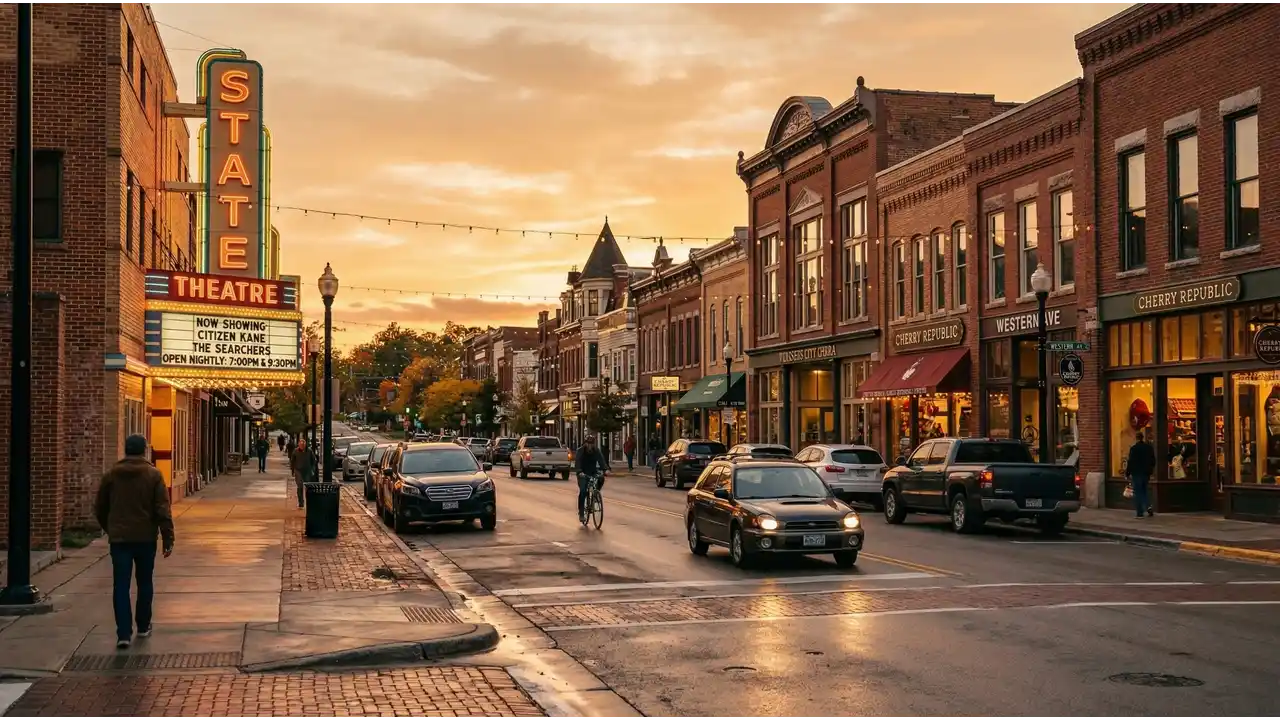
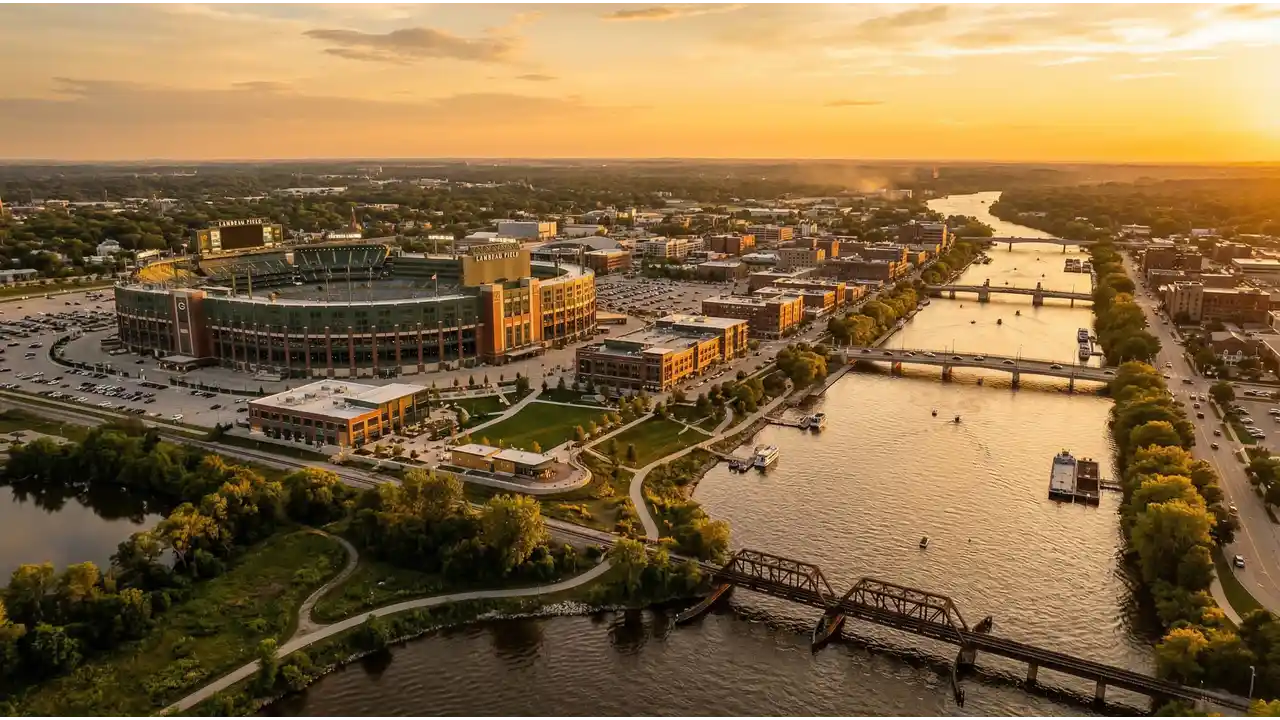
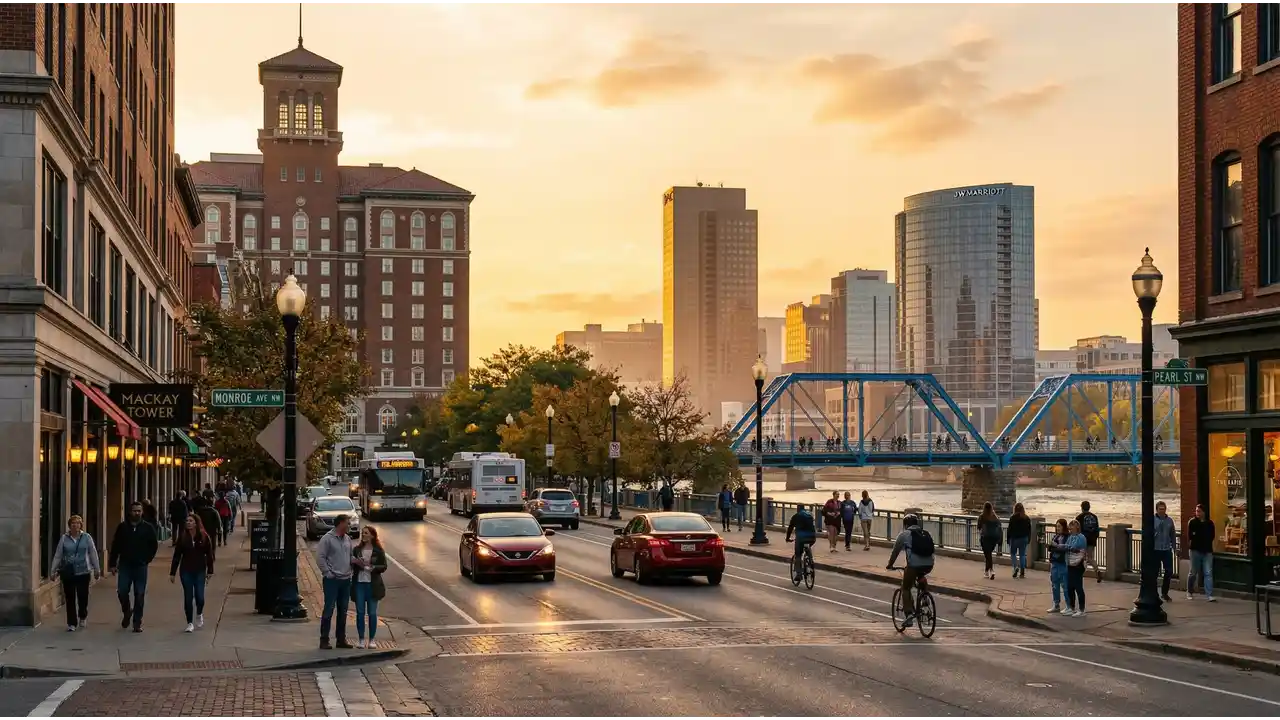
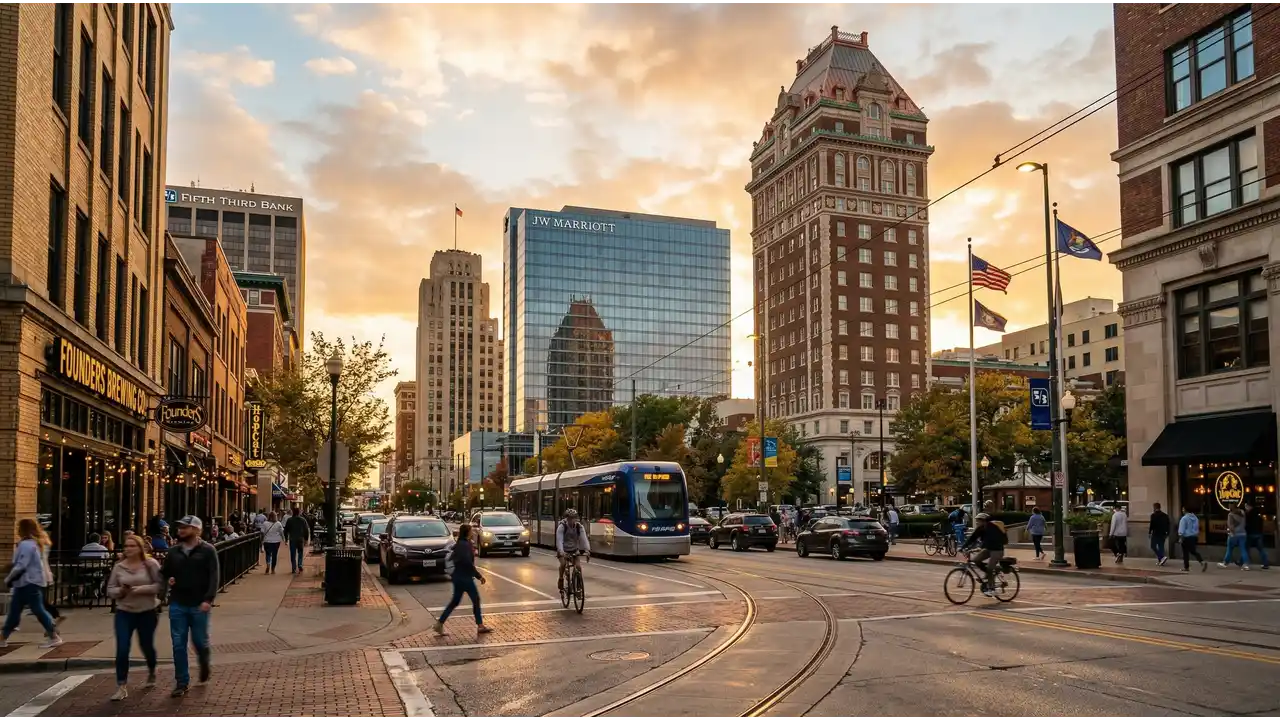
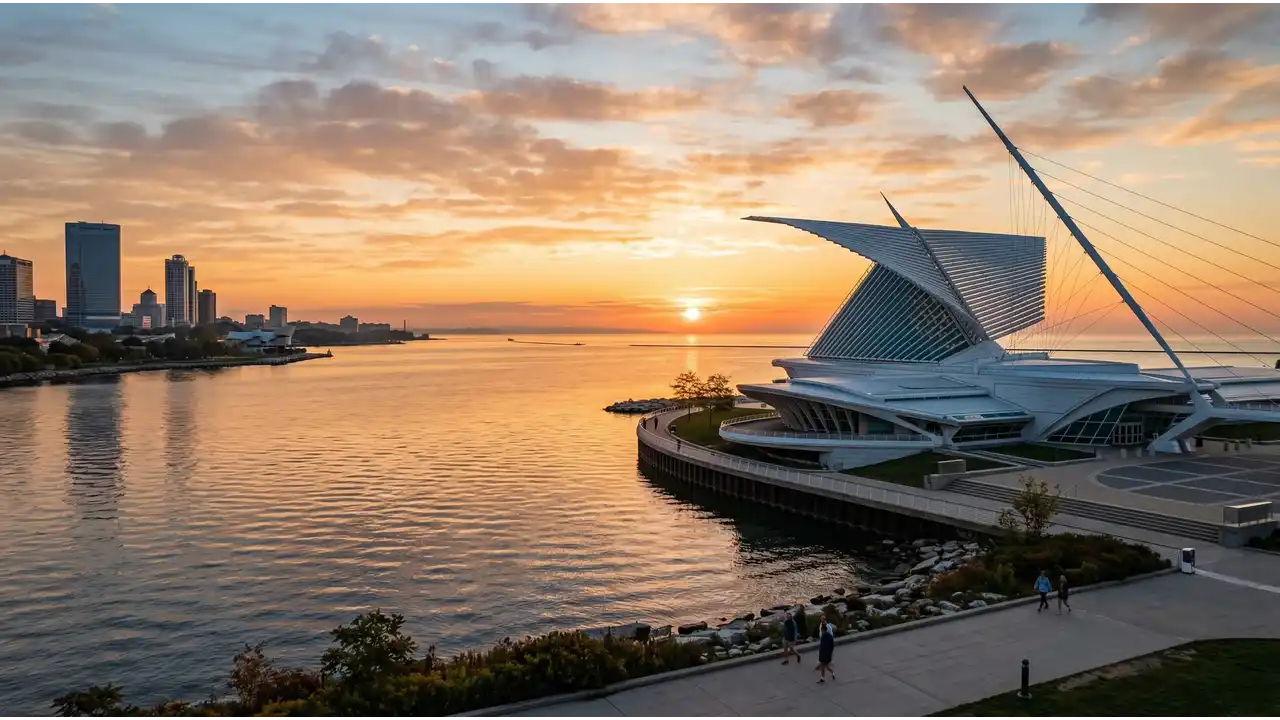
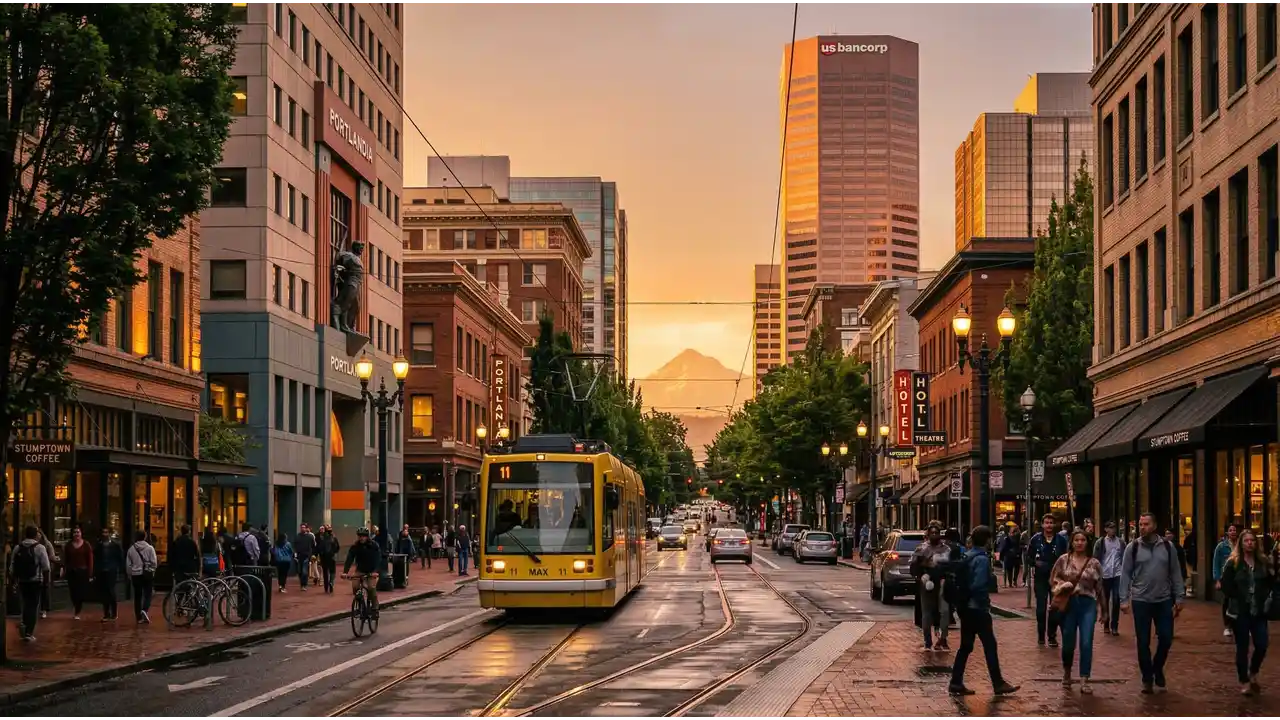
Traverse City is a waterfront town of roughly 15,000 people on the Grand Traverse Bay in northwest Michigan. It functions as both a seasonal resort destination and a year-round residential community. Winters are cold and snowy, summers mild and clear. The economy centers on tourism, wine production, and increasingly remote work and small business. Daily life revolves around outdoor recreation, farmers markets in warmer months, and a relatively quiet social rhythm compared to larger cities. The median household income is around $55,000. Most residents drive; public transit is minimal.
💡 Local Insights
Traverse City MI · 2026
Traverse City's cost of living sits below national average, driven largely by modest housing costs and a small-city wage structure. Housing costs $1,428/month on average, reflecting competition between seasonal investors and year-round residents. Downtown and waterfront properties command premiums; neighborhoods like East Bay and the Boardman area offer lower rents. Grocery costs average $507/month, roughly in line with rural Michigan. Eating out is cheaper than coastal cities but pricier than inland rural areas. Transportation is car-dependent; many residents budget for a used vehicle and gas. Seasonal tourism inflates summer rental prices dramatically (May-October can run 40 percent higher), affecting both long-term rentals and services. Utility costs spike in winter due to heating needs. Property taxes are moderate by US standards. Internet and cellular service are widely available but not fiber-ubiquitous outside town center.
Frequently Asked Questions
How much does it cost to live in Traverse City MI per month?
A moderate lifestyle costs $3,000/month. Housing averages $1,428/month, groceries $507/month, leaving roughly $1,065 for utilities, transport, dining out, entertainment, and miscellaneous expenses. A bare-bones budget runs $1,800/month (studio apartment, minimal dining out, one vehicle). A comfortable lifestyle with dining out regularly, recreation, and more spacious housing costs $4,650/month. Costs spike seasonally during tourism months.
What is the average rent in Traverse City MI?
Average rent is $1,428/month. One-bedroom apartments in town center run $900 to $1,100/month; two-bedroom units range $1,200 to $1,600/month. Waterfront and downtown properties cost more, often $1,500 to $2,000/month for comparable space. Neighborhoods like East Bay and Peninsula Township offer lower rents, around $800 to $1,200/month. Summer rentals (May through October) are significantly marked up for tourists. Rental inventory tightens in summer; winter offers more availability and lower rates. Most rentals require deposits and background checks.
Is Traverse City MI cheap to live in for expats?
Traverse City is moderately affordable for expats coming from Western Europe, Canada, or coastal US cities. Housing and food costs are genuinely lower than Toronto, London, or San Francisco. However, you will need a car, which adds cost. Medical care is accessible but not cheap without US health insurance. The town is small and socially quiet compared to larger cities; expats accustomed to big-city amenities may find limited nightlife, specialized shopping, or cultural diversity. It suits remote workers, retirees, and people prioritizing outdoor lifestyle over urban infrastructure.
How much does food cost per month in Traverse City MI?
Groceries average $507/month for a single person eating modest portions and cooking at home. A gallon of milk costs around $3.50, ground beef roughly $4.50/pound, chicken breasts near $4/pound. Fresh produce at farmers markets (June-October) is cheaper and seasonal; winter relies on supermarket chains like Meijer and Cupani's. Dining out is moderate: casual meals run $12 to $18, restaurant dinners $20 to $35. Wine is affordable given local production and tourism markup; bottles start at $15 to $20 retail. Specialty and organic items cost more in this small market.
What salary do you need to live comfortably in Traverse City MI?
A comfortable lifestyle costs $4,650/month, suggesting a gross income around $56,000 to $60,000 annually (assuming 30 percent tax and benefits). This allows a two-bedroom apartment or small house, regular dining out, a reliable used car, and discretionary spending on recreation and travel. Remote workers earning $50,000 to $70,000 USD live well here. Local wages are lower; median household income is around $55,000, split between two earners. Small business owners and seasonal workers often earn less and manage on the $3,000/month moderate budget or lower.
How does the cost of living in Traverse City MI compare to other places?
Traverse City sits in the middle of the Midwest cost spectrum. A moderate lifestyle runs $3,000 per month, with housing at $1,428 per month. That makes it slightly pricier than Raleigh, where a moderate lifestyle costs $2,900 monthly and housing runs $1,317. You'll find it considerably more affordable than Providence, where the same moderate lifestyle reaches $3,925 monthly with housing at $2,215. If you're coming from a genuinely cheap market, Memphis offers substantially lower costs at $2,500 monthly, though that's the outlier here rather than the norm for comparable Midwestern cities. Traverse City's costs reflect its appeal as a small but established city with tourism, wineries, and outdoor recreation. For most people relocating from coastal or major metro areas, it will feel like a genuine cost reduction.
Yes, but with tight constraints. You can rent a modest studio or one-bedroom outside town center for $700 to $950/month, leaving $850 for groceries, utilities, transport, and miscellaneous costs. Groceries must stay disciplined; dining out becomes rare or nonexistent. One reliable used vehicle plus insurance, gas, and maintenance will consume $200 to $300/month. Internet, phone, and utilities add $150 to $200/month. This budget requires no major medical costs, no childcare, and minimal entertainment spending. It is livable for a disciplined single person or couple without debt, but offers little cushion for emergencies.