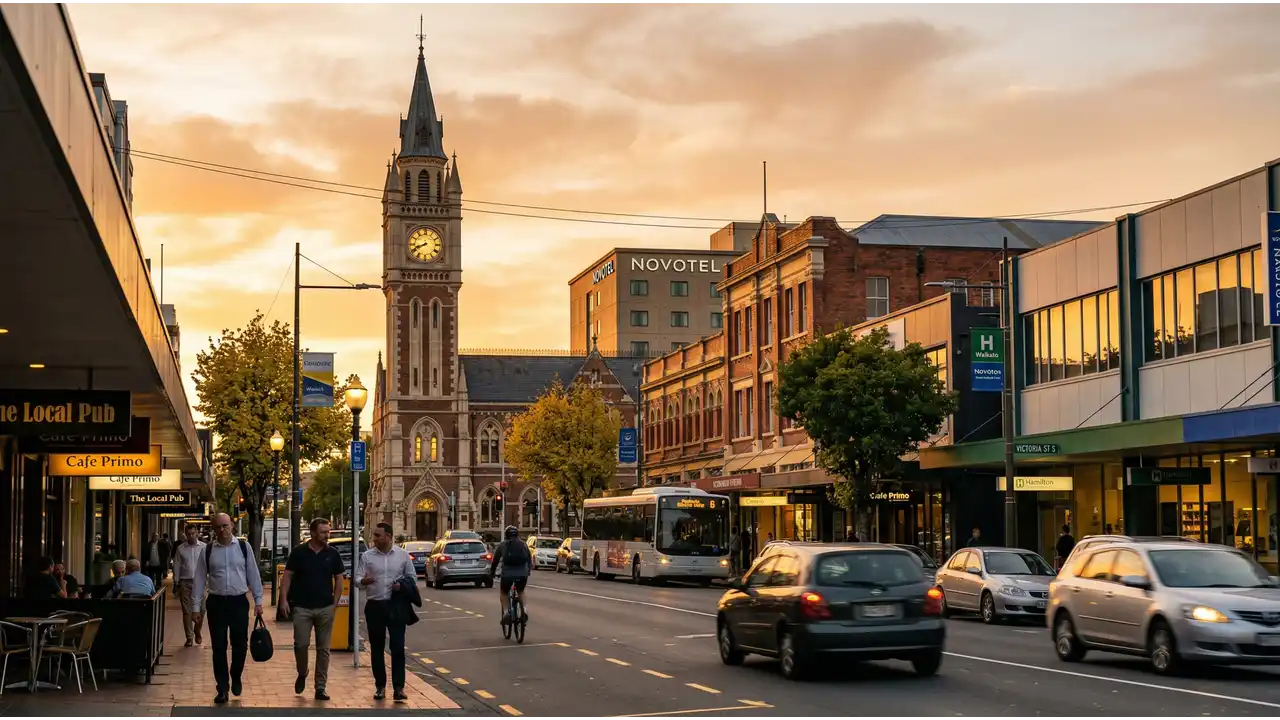
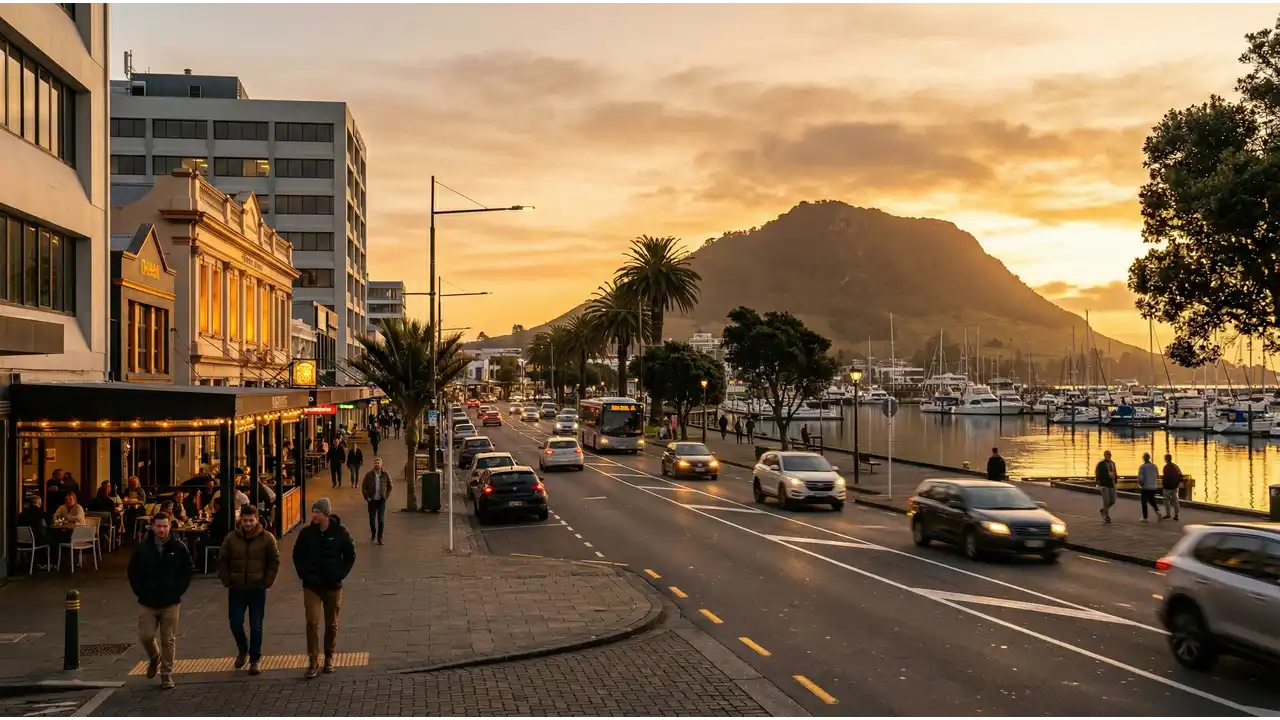
Wellington is New Zealand's capital, a compact city of about 215,000 people on the Cook Strait. The harbor dominates the landscape, with hills rising steeply behind downtown. Wind is a genuine feature of daily life here, not marketing copy. The city draws tech workers, creative professionals, and young families. Most neighborhoods are within 15 minutes of the center by bus or car. Weather is temperate but changeable: cool winters (50-60°F), mild summers (70-80°F). Coffee culture is serious. The pace feels slower than Sydney or Melbourne, but the cost of living reflects New Zealand's property market constraints and geographic isolation.
💡 Local Insights
Wellington · 2026
Wellington's cost of living runs high relative to other New Zealand cities, driven entirely by housing. Rent for a one-bedroom apartment in the city center ranges from $1,000 to $1,400, with outer suburbs dropping to $800-$1,000. This aligns with the $1,201/month housing average, which reflects a mix of central and suburban rentals. Housing costs spike for families needing two-plus bedrooms. Groceries at $346/month is reasonable but assumes local supermarkets (Countdown, New World, Pak'nSave) and cooking at home. Eating out regularly adds $15-$25 per meal. Transport costs stay low if you use the Metlink bus system (about $140/month for a monthly pass) or cycle, which is common. Car ownership attracts import duties that push vehicle prices 20-30% higher than comparable US models. Expats often underestimate housing costs and should budget $1,200-$1,500 for comfortable rentals. Local wages are typically NZ$60,000-$75,000 (roughly $36,000-$45,000 USD), which makes the cost-to-income ratio tight for those relocating on equivalent salaries.
Frequently Asked Questions
How much does it cost to live in Wellington per month?
A moderate lifestyle in Wellington costs $2,275/month. This covers housing at $1,201, groceries at $346, utilities ($150-$200), local transport ($140), phone and internet ($50-$70), and discretionary spending on entertainment and dining out. The budget tier is $1,365/month (minimal housing, no dining out, basic transport). A comfortable lifestyle runs $3,526/month, allowing for eating out weekly, hobbies, and private transport. These figures are benchmarked against local wage levels and expat spending patterns.
What is the average rent in Wellington?
Housing costs average $1,201/month across the city. In the central city (Te Aro, Lambton), one-bedroom apartments rent for $1,100-$1,400. Suburban areas like Newtown, Kelburn, and Berhampore range from $950-$1,200. Outer suburbs like Johnsonville or Karori drop to $800-$1,050. Two-bedroom apartments in the center run $1,400-$1,700. Rental agreements are typically fixed-term (6-12 months), and landlords require references and proof of income. The market has softened slightly in recent years but remains competitive. Most rentals exclude utilities.
Is Wellington cheap to live in for expats?
No, Wellington is expensive by most global standards and particularly pricey for New Zealand. Expats from North America or Northern Europe often find it comparable to mid-tier cities in their home countries, but wages are significantly lower. If you are relocating on a visa and earning a local salary (NZ$60,000-$80,000), you will find the cost-to-income ratio tight. Expats on remote salaries from higher-wage countries have more breathing room. The biggest shock is usually housing costs relative to property size and age. Utilities and imported goods add secondary costs.
How much does food cost per month in Wellington?
Groceries average $346/month for one person cooking at home. A weekly shop at Countdown or New World costs $80-$90 for fresh produce, dairy, bread, and basic proteins. Specific prices: milk $2-$3/liter, bread $3-$4/loaf, chicken breasts $10-$12/kg, apples $3-$4/kg. Eating out is notably more expensive: casual cafes run $15-$20 for lunch, restaurants $25-$40 per entree. Wellington's coffee culture means many workers spend $5-$7 daily on coffee. Imported goods (cheese, chocolate, certain fruits) cost 20-40% more than in the US due to import duties and shipping.
What salary do you need to live comfortably in Wellington?
A comfortable lifestyle costs $3,526/month, suggesting a gross annual salary of around NZ$55,000-$60,000 (roughly $33,000-$36,000 USD) to live without financial stress after tax. However, local median salaries are lower, around NZ$50,000-$55,000. Expats relocating should budget for higher initial costs (furniture, setup) and target a salary or remote income equivalent to at least $45,000-$50,000 USD annually. Partners working or remote income significantly improve the financial picture. Household budgets with two earners are typical for expats maintaining a comfortable standard.
How does the cost of living in Wellington compare to other places?
Wellington sits in the middle range for developed-world cities. A moderate lifestyle costs $2,275 per month, with housing running $1,201 of that.
Compared to other New Zealand cities, Wellington is cheaper than Dunedin, where a moderate lifestyle costs $2,500 monthly and housing sits at $1,074. If you're considering the Asia-Pacific region more broadly, Taipei is significantly less expensive at $1,625 for a moderate lifestyle, though it requires different housing and labor market assumptions.
Gold Coast, meanwhile, is notably dearer at $2,875 monthly for a moderate lifestyle and $1,641 for housing alone. Wellington's middle positioning reflects its status as New Zealand's capital with strong employment options and established expat infrastructure, but without the resort-town premiums found further north.
Yes, but with tight constraints. The budget tier of $1,365/month requires housing in the $700-$850 range (shared flat, outer suburb, or subsidized housing), minimal transport, cooking every meal, and no dining out. This is achievable for students, those in subsidized housing, or long-term residents with established flatshares. Expats moving to Wellington will struggle at this level unless they secure employer housing or partnership housing. Utilities, phone, and internet push the budget closer to $1,500 real quick. This tier assumes no car, consistent use of buses, and careful grocery shopping at budget supermarkets like Pak'nSave.