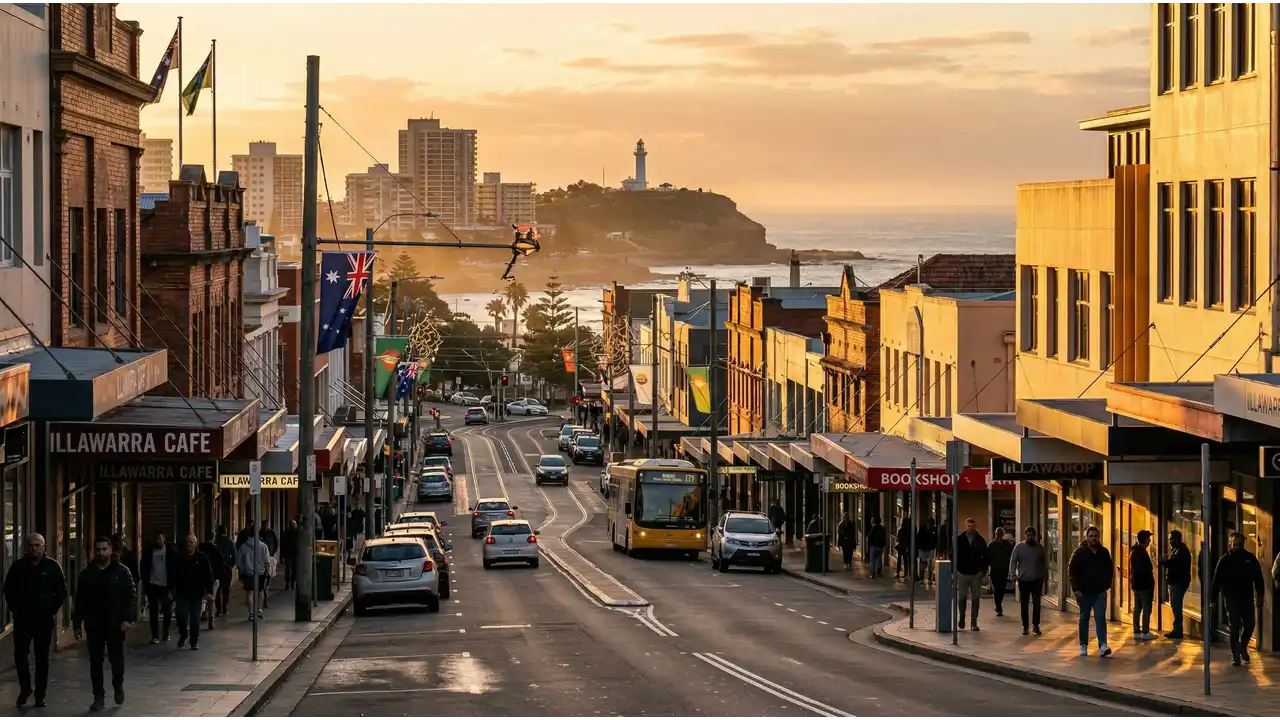
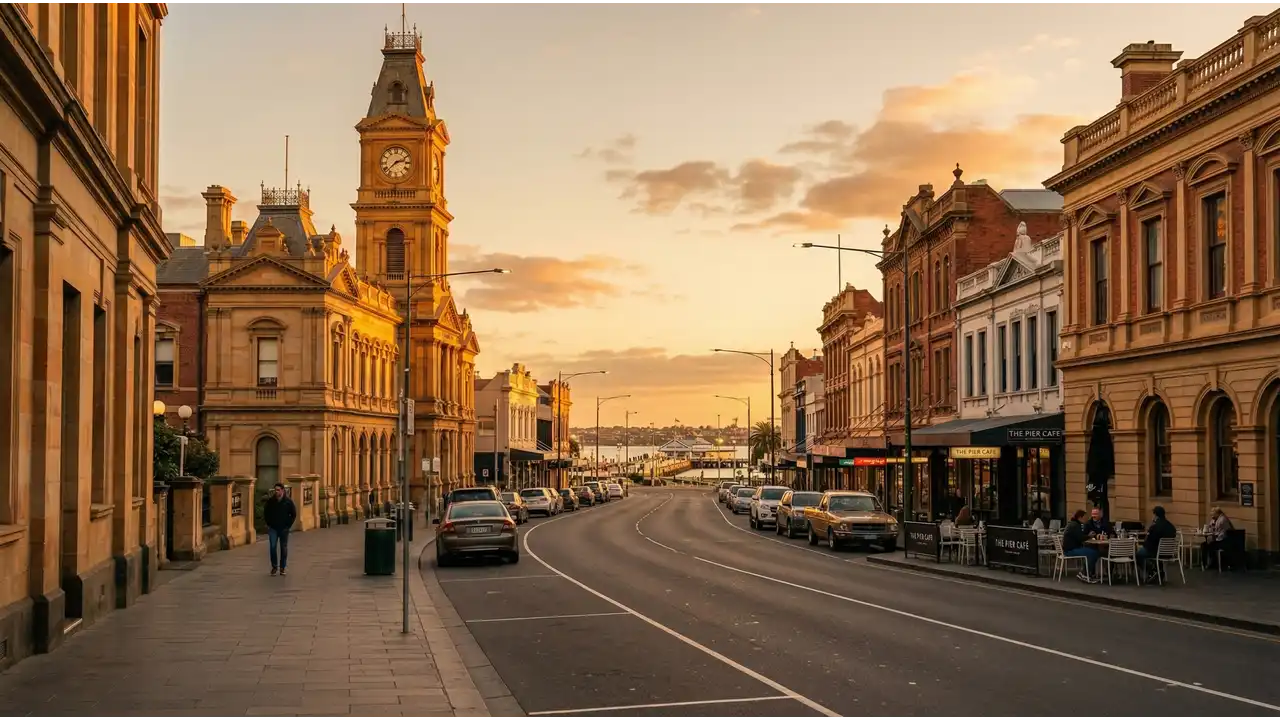
Wollongong is a port city on New South Wales' south coast, about 80 kilometers south of Sydney. It has a working-class heritage rooted in steel manufacturing, though that industry has contracted significantly. The city sits between the Pacific Ocean and the Illawarra Escarpment, with beaches and bushland forming the landscape. Most residents are Australian-born, with growing migrant communities from India, China, and the Philippines. Daily life revolves around beach culture, local cafes, and a university presence (University of Wollongong) that brings younger residents. The climate is temperate, with mild winters and warm summers. Cost of living is notably lower than Sydney, though housing has tightened in recent years.
💡 Local Insights
Wollongong · 2026
Wollongong's appeal lies in its lower costs relative to Sydney while maintaining access to coastal amenities and urban services. Housing costs average $1,162 per month, though this varies significantly by distance from the beach and city center. Inner-city suburbs like Fairy Meadow and West Wollongong run $1,200-$1,400 for a one-bedroom apartment, while outer areas like Albion Park or Dapto drop to $900-$1,100. Groceries average $456 monthly, roughly on par with Sydney supermarket prices (Woolworths, Coles, Aldi dominate). Transport costs are moderate; a monthly bus pass runs about $70, though many residents drive. Eating out is cheaper than central Sydney: casual lunch runs $12-$16, dinner at local restaurants $18-$28. Expats report that utilities and internet are their main cost surprises, running $150-$200 monthly combined. The trade-off is that Wollongong offers fewer job opportunities than Sydney, so relocation here typically suits remote workers or retirees.
Frequently Asked Questions
How much does it cost to live in Wollongong per month?
A moderate lifestyle in Wollongong costs approximately $2,575 per month. Housing typically accounts for $1,162 monthly, groceries around $456. The remainder covers utilities (electricity, water, internet around $150-$200), transport ($70 for transit or variable fuel costs), dining out, and entertainment. This figure assumes a one-bedroom apartment in or near the city center, regular grocery shopping at major supermarkets, and modest social spending. Living costs can fall to $1,545 monthly on a strict budget, or rise to $3,991 for a comfortable lifestyle with more dining out and discretionary spending.
What is the average rent in Wollongong?
Median rent in Wollongong is approximately $1,162 per month for a one-bedroom apartment. Inner suburbs closer to the beach and city center (Fairy Meadow, Gwynneville, North Wollongong) typically cost $1,200-$1,400 monthly. Outer suburbs (Albion Park, Dapto, Horsley) rent $900-$1,100. Houses range from $1,300 to $2,000 depending on location and size. The rental market has tightened since 2020, with vacancy rates around 1-2 percent, so competition is fierce for well-priced properties. Bonds are typically required and held in trust. Share housing is available and runs $500-$800 per person.
Is Wollongong cheap to live in for expats?
Wollongong is moderately priced for expats, roughly 15-20 percent cheaper than central Sydney but not a bargain by international standards. Housing and groceries are reasonable, but utilities, transport, and insurance can surprise newcomers with Australian pricing norms. The real advantage is time-to-affordability: expats on mid-range remote salaries can live more comfortably here than in Sydney. Visa sponsorship is rare outside healthcare and education, so most expats are on partner visas, student visas, or retirement visas. The expat community is smaller than Sydney's, which appeals to some and isolates others. Cost-of-living comparisons to Asia or Eastern Europe are unfavorable; versus Melbourne or Adelaide, Wollongong offers modest savings.
How much does food cost per month in Wollongong?
Monthly groceries for one person average around $456, based on regular shopping at Woolworths, Coles, or Aldi. Typical costs: milk $1.50-$2 per liter, bread $3-$4 per loaf, chicken $8-$12 per kilogram, rice $1.50-$2.50 per kilogram, fresh vegetables $1-$3 each. Eating out is cheaper than Sydney: casual lunch $12-$16, dinner at local restaurants $18-$28, coffee $4-$5. Farmers markets operate at Wollongong Mall on weekends with competitive produce pricing. Alcohol is expensive (wine $8-$15 per bottle in stores). Takeaway is ubiquitous and relatively cheap, with Thai, Indian, and Chinese meals $10-$14. Organic or specialty items cost 20-30 percent more.
What salary do you need to live comfortably in Wollongong?
A comfortable lifestyle costs approximately $3,991 per month, suggesting a gross salary around $50,000-$55,000 annually (accounting for taxes and superannuation). This budget accommodates a one or two-bedroom apartment, regular dining out, gym or hobby spending, and modest travel. At lower salaries ($35,000-$40,000 annually), residents can manage a moderate lifestyle at $2,575 per month but must watch discretionary spending. Couples can share housing costs, making dual incomes work further. Remote workers on USD or GBP salaries are significantly more comfortable; a $50,000 USD remote salary stretches very comfortably here. Local wages in healthcare, education, and retail typically fall $35,000-$50,000 before tax, making homeownership challenging for single earners.
How does the cost of living in Wollongong compare to other places?
Wollongong sits in a comfortable middle ground within Australia's major cities. A moderate lifestyle costs $2,575 per month here, with housing running $1,162 monthly. That's notably cheaper than Sydney, where the same moderate lifestyle reaches $3,050 per month and housing alone costs $1,709. Melbourne, a peer city in size and amenities, runs $2,725 for a moderate lifestyle with housing at $1,449, making it slightly pricier overall. If you're comparing across the Tasman, Christchurch offers a genuinely cheaper alternative at $2,050 per month with housing at $1,050. Wollongong's advantage is real but modest. You're paying less than Sydney's premium, but you're not getting the significant savings you'd find in Christchurch. For someone seeking a substantial Australian city without Sydney's cost shock, Wollongong represents genuine value.
Yes, but with significant constraints. A strict budget of $1,545 monthly means $1,162 on housing leaves roughly $383 for food, transport, utilities, and everything else. This requires: shared housing or outer-suburb rental ($900-$1,100), strict grocery shopping ($250-$300 on basic staples), minimal eating out, public transport or walking, and no discretionary spending. Many budget travelers and long-term backpackers do this, but it requires discipline. Australians on this budget often qualify for government assistance. For expats, this budget is tight unless earning in foreign currency or receiving other income. Utilities alone run $150-$200, leaving only $33-$183 for food and transport. Realistically, this budget works for single students with university support or those with no transport costs and minimal social spending. Most people need $1,800+ to live with basic comfort.