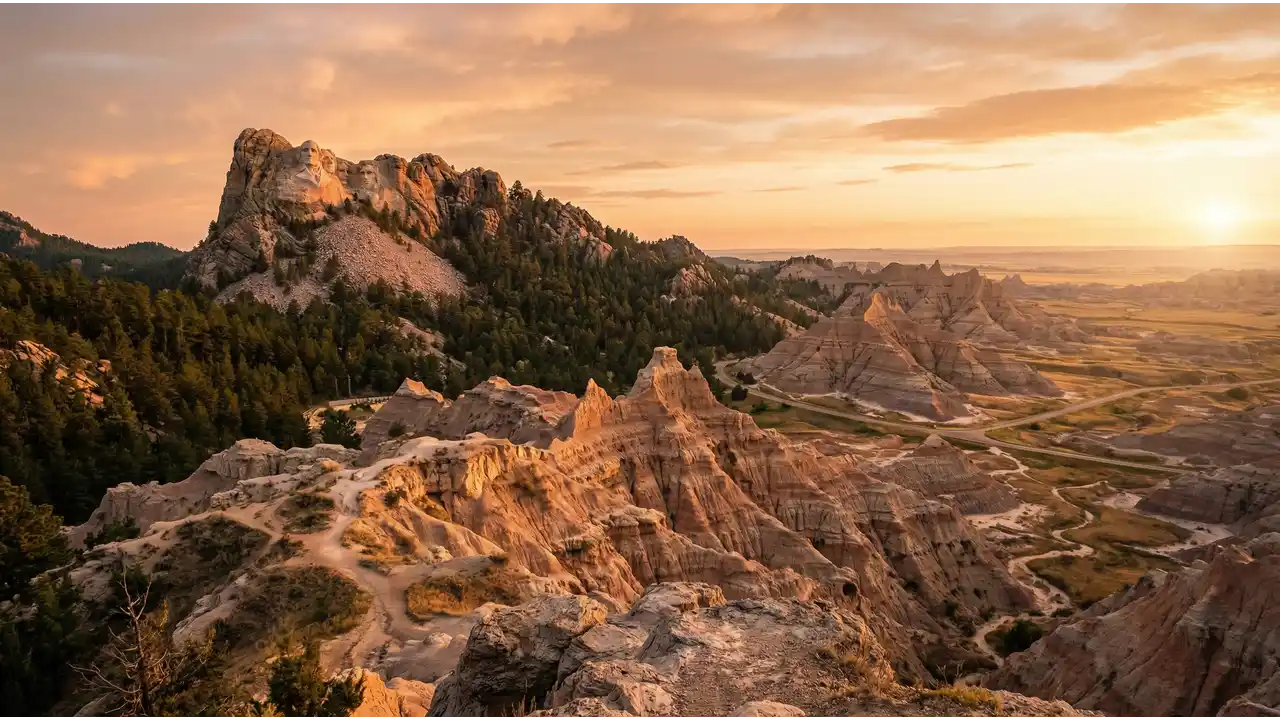
Wyoming is a rural, low-density state with a working landscape dominated by ranching, energy production, and outdoor recreation. Most residents live in small towns or cities like Cheyenne, Casper, and Jackson. Winters are cold and long across much of the state; summers are short and dry. The state has no income tax, a significant financial advantage. Daily life revolves around outdoor access, long distances between services, and a conservative political culture. Population density is the lowest in the continental US outside Alaska. Weather and isolation shape practical decisions about housing, vehicles, and winter preparation.
💡 Local Insights
Wyoming · 2026
Wyoming's cost of living advantage comes primarily from low housing costs and tax policy, not from wages or services being cheaper overall. Housing runs $879/month on average, reflecting rural availability and low demand pressure in most areas. Cheyenne and Casper have more competition, pushing rents higher; Jackson Hole is an outlier with resort-town pricing that far exceeds the state average. Groceries cost around $507/month for basic staples, similar to rural US averages. Transportation is non-negotiable: public transit is minimal outside city centers, and distances are vast. A reliable vehicle and winter tires are essentials, not luxuries. The lack of state income tax reduces effective cost for salaried workers but provides little benefit to those on fixed incomes. Energy bills spike in winter. Expats should factor in isolation, limited cultural amenities, and harsh weather as real costs in quality of life, even if rent is low. Local pricing applies uniformly; no expat premium exists.
Frequently Asked Questions
How much does it cost to live in Wyoming per month?
A moderate lifestyle in Wyoming costs around $2,450/month. This covers $879/month for housing, $507/month for groceries, utilities, transportation, and discretionary spending. The budget tier (minimal) runs $1,470/month, typically covering one person in a small rental with careful spending. A comfortable lifestyle, including dining out regularly and more spacious housing, costs $3,798/month. Wide variation exists between rural areas and towns like Jackson Hole, which is substantially more expensive than the statewide average.
What is the average rent in Wyoming?
Average rent in Wyoming is approximately $879/month for a moderate lifestyle. In smaller towns and rural areas, a one-bedroom apartment rents for $600-$800/month; two-bedroom homes run $700-$1,000/month. Cheyenne, the capital, sees rents around $800-$1,100/month for comparable units due to higher local demand. Jackson Hole, a resort town in the northwest, is an exception, with rents routinely exceeding $1,400/month for one-bedroom units. Availability outside these towns can be limited, requiring advance planning and flexibility on property type.
Is Wyoming cheap to live in for expats?
Wyoming is genuinely affordable compared to most Western countries and major US metropolitan areas, mainly due to low housing costs and no state income tax. For expats accustomed to London, Toronto, or coastal US cities, it feels inexpensive. However, the cost advantage narrows when you factor in essential expenses: vehicle ownership and fuel are non-negotiable due to sparse public transit, winter heating bills are high, and isolation limits free social activities. Expats should budget for travel to cultural amenities and family visits. Salaries are also typically lower than in larger metros, offsetting some cost savings.
How much does food cost per month in Wyoming?
Groceries cost approximately $507/month for a single person buying basic staples. Milk runs $3-$4/gallon, chicken $6-$8/lb, and fresh produce varies by season and availability. Winter months see produce prices rise due to reliance on imports. Eating out is moderately priced: a casual restaurant meal costs $12-$18, and a sit-down dinner for two with a drink runs $40-$65. Small towns have limited restaurant options; chain restaurants dominate outside city centers. Buying in bulk when possible reduces costs, though limited competition in rural areas sometimes offsets bulk discounts.
What salary do you need to live comfortably in Wyoming?
A comfortable lifestyle in Wyoming requires approximately $3,798/month, or roughly $45,600/year before taxes. This supports a person or couple with modest savings, occasional dining out, and space for hobbies or travel. For two adults with children, budget $5,500-$6,500/month to account for school activities, childcare, and larger housing. The lack of state income tax is significant: a $50,000 gross salary nets more in Wyoming than in high-tax states. However, rural wages are typically 10-20% lower than urban counterparts nationwide, so job selection matters more than tax advantage alone.
How does the cost of living in Wyoming compare to other places?
Wyoming's moderate lifestyle costs $2,450 per month, with housing at $879 per month. This puts it roughly in line with peer states. North Dakota runs $2,525 per month overall with housing at $978 per month, making it marginally more expensive across the board. If you're comparing to the broader US, Virginia is substantially dearer at $3,350 per month for a moderate lifestyle, with housing costs nearly double Wyoming's at $1,744 per month. Internationally, South Korea offers a cheaper option at $1,650 per month overall and $660 for housing, though that comparison reflects very different economic contexts and living standards. For most Americans considering a US move, Wyoming ranks as an affordable option, particularly if you prioritize lower housing costs and don't mind a rural or small-town setting.
Yes, but with tight constraints. The $1,470/month budget tier requires living in a small town or rural area, renting a small one-bedroom or shared space well below $800/month, and spending cautiously on groceries and utilities. This leaves little for transportation repairs, emergency savings, or social spending. Winter heating bills are a real risk to this budget, potentially forcing difficult choices. Dining out is rare. This budget works for minimalist lifestyles or as supplemental income, but provides no margin for unexpected costs like vehicle repairs or medical expenses. Most people find it unsustainably tight for more than a few months, particularly in winter.