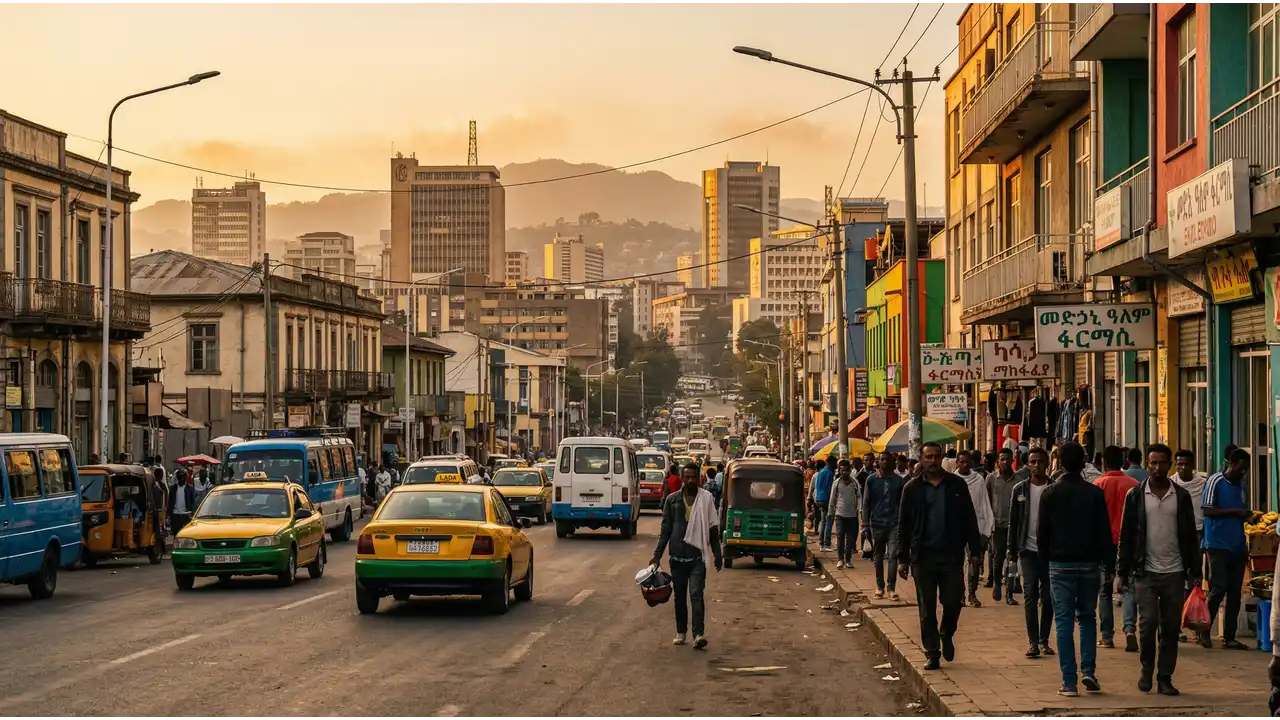
Addis Ababa is Ethiopia's capital and largest city, home to 3+ million people at an elevation of 7,726 feet. The climate is mild year-round, with rainy seasons from June to September and January to February. Daily life centers on congested commercial districts like Piazza and Bole, where minibuses (shared vans) serve as the main transport. Most neighborhoods mix residential compounds, small shops, and street-level commerce. Amharic is the primary language, though English is spoken in tourist and business areas. Power outages and water disruptions remain routine. The city draws Ethiopian families, government workers, NGO staff, and expats seeking affordable living in a functioning African capital.
💡 Local Insights
Addis Ababa · 2026
Addis Ababa's moderate cost of $1,500/month reflects both low wages and a tiered pricing system. Housing runs $816/month and is the largest expense. Neighborhoods like Bole and Kazanchis command higher rents ($1,000-$1,400 for a furnished two-bedroom), while older areas like Piazza or Kolfe offer smaller units for $500-$800. Local landlords often prefer dollar payment, and furnished rentals are standard. Groceries cost $221/month if you shop local markets (Ethiopian grains, vegetables, injera ingredients are cheap). Imported goods at supermarkets like Addis Supermarket drive costs up sharply. Transport is minimal (minibuses cost under $0.50 per trip), but reliable taxis and ride-sharing apps like Ride exist in central areas. Expats typically spend more on housing and imported food; locals stretching $900/month buy almost exclusively from markets and share housing. Utilities add $20-$40/month. Medical care and schooling (for expat children) create budget jumps not reflected in the moderate figure.
Frequently Asked Questions
How much does it cost to live in Addis Ababa per month?
A moderate lifestyle costs $1,500/month. Housing is $816/month, groceries $221/month, utilities around $25/month, and transport minimal (minibuses under $20/month total). Eating out occasionally, phone service, and personal care add another $200-$300/month. The budget tier is $900/month (mostly local living, limited dining out, shared housing), while comfortable expat living runs $2,325/month, accounting for furnished housing, frequent restaurant meals, and imported goods. Actual costs vary sharply by neighborhood and consumption habits.
What is the average rent in Addis Ababa?
Average rent is $816/month. Furnished one-bedroom apartments in central areas like Bole or Kazanchis rent for $700-$1,000. Two-bedroom furnished units run $1,000-$1,400. Older, unfurnished compounds in Piazza, Kolfe, or Addis Ketema rent for $400-$700. A few luxury high-rise apartments in Bole exceed $2,000/month but remain rare. Most rentals are furnished, and landlords typically require payment in cash dollars or birr. Lease terms vary, but deposits of one to three months' rent are standard. Neighborhood choice heavily influences the actual price within the $816/month average.
Is Addis Ababa cheap to live in for expats?
Addis Ababa is cheap compared to major Western cities or regional hubs like Nairobi or Dubai, but not for the reasons often claimed. Local residents live on $300-$500/month; the $1,500/month moderate budget reflects expat consumption (restaurant meals, imported goods, better housing). A furnished one-bedroom in a convenient neighborhood costs more than it would in many African cities outside South Africa. Healthcare, schooling, and visa fees are additional expat-specific costs. Long-term residents report stretching $1,200/month comfortably, but that requires deliberate budgeting and acceptance of local-style living (local restaurants, minibus transit, basic housing). Expats expecting Western standards spend $2,500+/month.
How much does food cost per month in Addis Ababa?
Groceries average $221/month if you shop local markets. A kilogram of teff (grain flour) costs $1-$2, onions $0.50/kg, tomatoes $0.75/kg, eggs $0.15 each, local cheese $3/kg. Milk, bread, and pulses are similarly inexpensive. Imported items (cheese, cereals, canned goods) at supermarkets cost 2-3 times local prices. Eating out at local restaurants is very cheap: injera with stew $1-$3, coffee $0.50, beer $1-$2. Mid-range restaurants in Bole charge $5-$10 for a meal. Most $1,500/month budgets assume eating out 2-3 times weekly and shopping mostly local.
What salary do you need to live comfortably in Addis Ababa?
Comfortable living costs $2,325/month and requires a stable income of roughly $2,800-$3,200/month (accounting for taxes, savings, and irregular expenses). For single expats, this covers furnished housing ($1,000-$1,200), frequent dining out, regular transport by app-based taxi, utilities, and occasional travel. Families with children add $500-$1,000/month for school fees and childcare. NGO and diplomatic staff earn $3,000-$6,000+/month and live well above the comfortable tier. Local professionals earning $500-$800/month manage by pooling housing, avoiding restaurants, and using minibuses. Comfortable expat living requires roughly 3-4 times the local median wage.
How does the cost of living in Addis Ababa compare to other places?
Addis Ababa is relatively affordable by global standards, though not the cheapest option in Africa. A moderate lifestyle costs $1,500 per month here, with housing at $816 per month. That puts it roughly in line with Luanda, where a moderate lifestyle runs $1,375 monthly. You'll find noticeably cheaper options in Kano, where a moderate lifestyle costs $1,025 per month. If you're comparing to European cities, Addis Ababa is significantly less expensive. Gothenburg runs $2,150 per month for a moderate lifestyle. Your money stretches furthest on local goods and services in Addis Ababa, though imported products and dining at international restaurants will consume a larger share of your budget. Housing availability and quality vary considerably by neighborhood, which affects real costs beyond the average figure.
Yes, $900/month is feasible but requires strict local living. Budget breakdown: housing $400-$500 (unfurnished compound or shared apartment), groceries $180-$200 (only local markets, no imported goods), utilities $20, transport $15-$20, phone $5. This leaves $150-$200 for personal care and emergencies. You will not eat out, use minibuses exclusively, and live in older neighborhoods like Piazza or Addis Ketema. Most budget-tier residents are Ethiopian nationals or long-term expats with local networks and comfort living simply. New expats on $900/month typically struggle with housing standards and meal monotony. This budget works but demands acceptance of local conditions without Western conveniences.