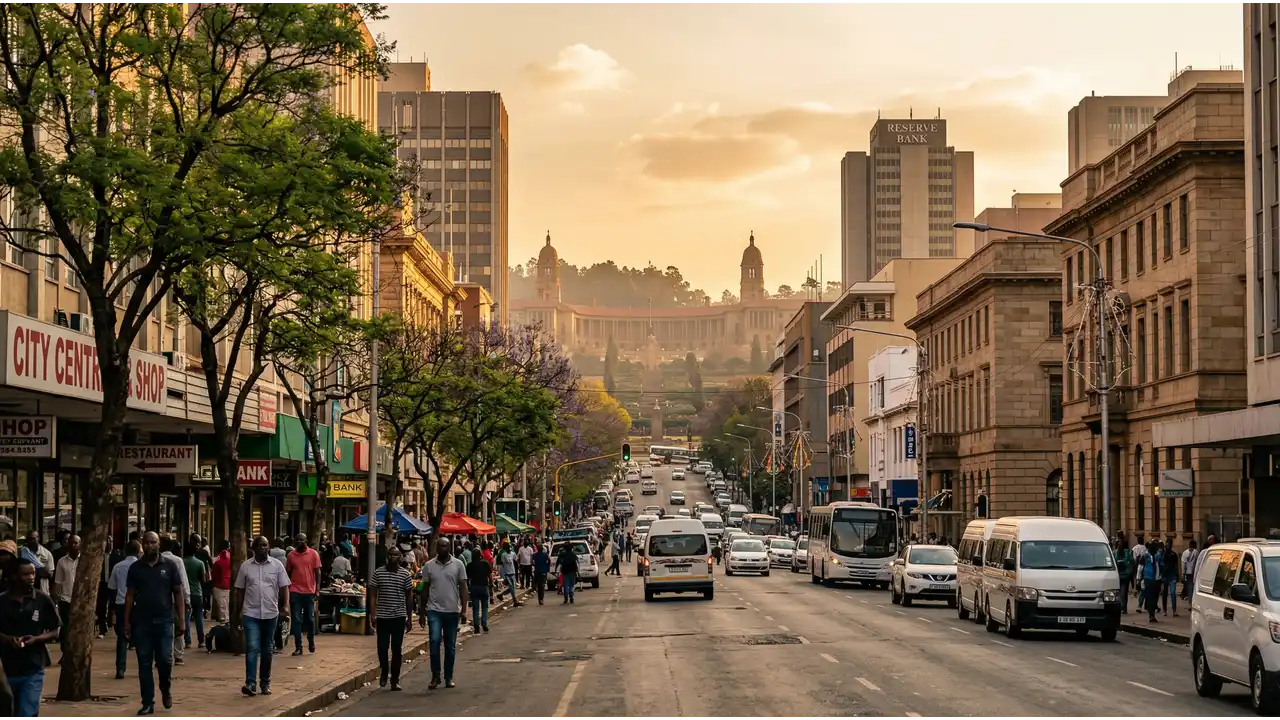
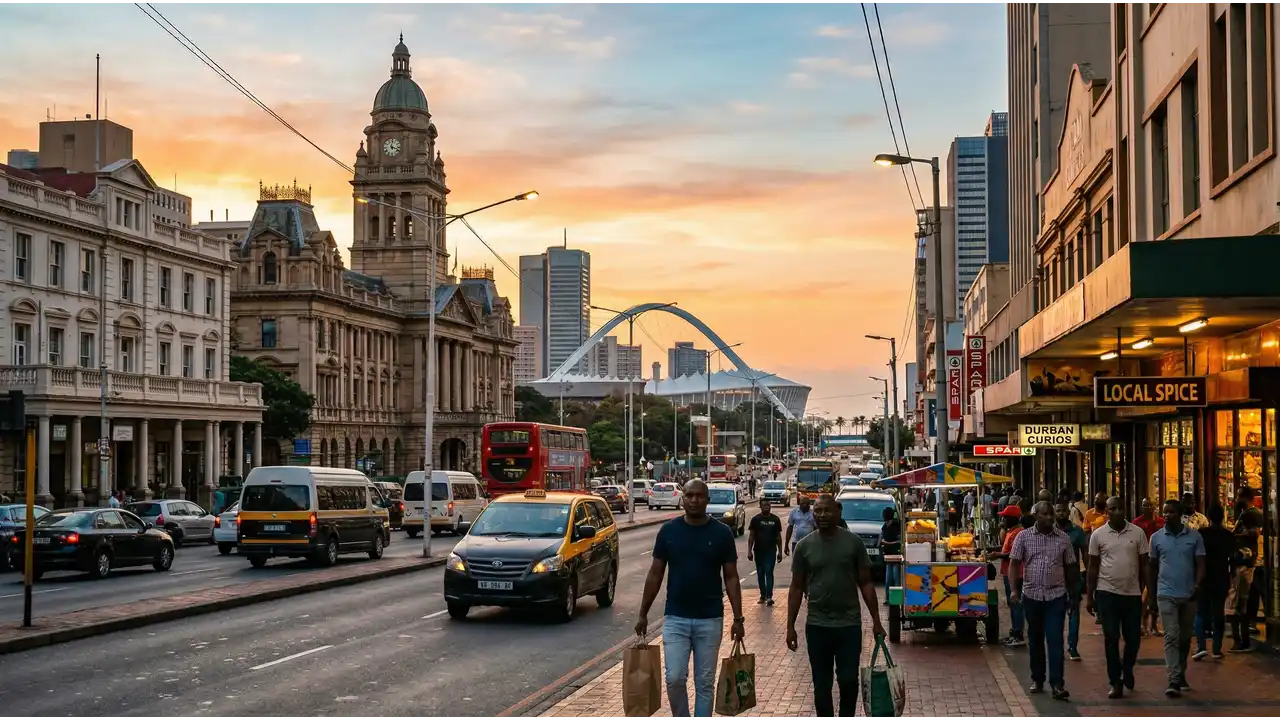
Johannesburg is South Africa's economic center, home to around 6 million people across a sprawling metropolitan area. The city sits on the Witwatersrand plateau at high altitude, with a subtropical highland climate: warm summers (November to March) and mild, dry winters. Daily life revolves around neighborhoods clustered by income level and history. Most residents drive or use minibus taxis; public transit is limited. The city has genuine cultural energy, from Soweto's historical significance to the art scene in Maboneng, but it requires caution about safety and navigation. Infrastructure works, but power cuts (loadshedding) are common. It's a working city, not a tourist fantasy.
💡 Local Insights
Johannesburg · 2026
Johannesburg costs less than most Western cities, but pricing splits sharply by area and whether you shop like a local or expat. Housing at $537/month covers a one-bedroom apartment in neighborhoods like Berea, Lorentzville, or further out in areas like Soweto or Randburg. Expats typically cluster in pricier zones like Sandton or Rosebank, pushing rent higher, but solid middle-ground options exist in inner-city regeneration areas like Maboneng ($400-600 range for similar space). Groceries run $214/month if you shop at Pick n Pay or Spar for basics; expat-focused stores (Woolworths) cost more. Transport is cheap (minibus taxi roughly $0.50-1 per trip, Uber widely used), but most expats buy or lease cars. Water and electricity are inexpensive but loadshedding forces some to install solar or generators. Local knowledge cuts costs; following expat clustering raises them. Foreigner pricing happens in restaurants and tourist areas but not in supermarkets.
Frequently Asked Questions
How much does it cost to live in Johannesburg per month?
A moderate lifestyle in Johannesburg costs around $1,200/month. This covers housing at $537/month, groceries around $214/month, utilities, local transport, and dining out occasionally. A tighter budget of $720/month is possible if you live in outer areas and cook at home, cutting housing and food significantly. A comfortable lifestyle runs $1,860/month, allowing for better accommodation, car ownership, and regular dining out. Costs vary widely by neighborhood and whether you use expat-oriented services.
What is the average rent in Johannesburg?
Average rent sits around $537/month for a one-bedroom apartment in accessible middle-income neighborhoods. In areas like Berea, Lorentzville, or Melville, expect $400-650/month. Outer sprawl areas like Soweto, Alexia, or further Randburg run $300-500/month. Expat-preferred zones like Sandton or Rosebank push $800-1,200/month for similar space. Two-bedroom apartments in middle neighborhoods range $650-900/month. Prices reflect location, security features, and amenities. Most rentals require proof of income and deposits equivalent to one month's rent. Furnished short-term rentals cost more. Long-term leases (12+ months) offer discounts versus month-to-month.
Is Johannesburg cheap to live in for expats?
Johannesburg is inexpensive compared to London, New York, Sydney, or Toronto, but not a bargain if you live like an expat. Local costs are genuinely low: $214/month for groceries, $1-2 for a minibus taxi ride, $3-5 for a beer at a neighborhood bar. But expats often pay more: restaurant meals aimed at foreigners run $8-15, private healthcare costs more than local clinics, and safe accommodation in preferred neighborhoods pulls rent to $800+/month. A local earning 15,000 ZAR/month ($820) lives tight but manages; an expat on $3,000/month lives comfortably but not extravagantly. The gap exists because of security, language, and service expectations, not the city itself.
How much does food cost per month in Johannesburg?
Groceries for one person average $214/month at chain supermarkets like Pick n Pay or Spar. A loaf of bread costs roughly $0.80, a liter of milk $0.95, eggs (12) $1.50, chicken breast (kg) $3.50, rice (kg) $0.70. Shopping at township markets or Chinatown (Fordsburg) cuts costs by 15-25 percent. Eating out ranges from $2 for street food or township shebeen meals to $8-12 for casual restaurants to $20-35 for mid-range establishments in expat areas. A coffee in the city center is $2-3. Alcohol is cheap: local beer around $1.50 at a tavern, $3-4 at a bar. Expat-focused restaurants (Sandton, Rosebank) charge $25-50 per meal.
What salary do you need to live comfortably in Johannesburg?
A comfortable lifestyle costs $1,860/month. In monthly income, this suggests a gross salary around $2,200-2,500/month (accounting for taxes) for stable, independent living. This budget allows for a one-bedroom apartment in a good neighborhood ($650-800), groceries and occasional dining out ($400-500), transport via car ownership or regular Uber ($300-400), utilities and internet ($100-150), and discretionary spending. Expats with dependent families need more. A household of two adults and one child comfortably needs $3,000-3,500/month. Local professionals (teachers, nurses, mid-level office workers) typically earn 20,000-35,000 ZAR/month ($1,100-1,900), making the moderate budget realistic for middle-class locals.
How does the cost of living in Johannesburg compare to other places?
Johannesburg sits in the middle of the regional cost spectrum. A moderate lifestyle here costs $1,200 per month, with housing at $537 monthly. That makes it slightly more expensive than Abuja, where a moderate lifestyle runs $1,075 with housing at $429. Maputo is noticeably cheaper, at $825 for a moderate lifestyle and $336 for housing. On the other end, Kinshasa is significantly dearer at $1,675 monthly for a moderate lifestyle and $637 for housing. Your money goes furthest in Maputo and least far in Kinshasa. Among major southern and central African cities, Johannesburg offers a middle ground, though your actual costs will vary based on neighborhood, lifestyle choices, and what you're comparing it against globally.
Yes, but tightly. $720/month requires living outside central areas (Soweto, Alexia, or Katlehong cost $250-350/month for a one-bedroom), shopping strategically for groceries ($150-170/month at township markets and budget chains), using minibus taxis exclusively (roughly $30-40/month), and cooking most meals at home. Utilities add $30-50. This leaves almost nothing for emergencies, phone credit, or social spending. It's sustainable for locals with family support networks or long-term residents with established routines. New expats should not budget this tightly; unexpected costs (medical, security, transport breakdowns) appear fast. This budget assumes no car ownership, minimal dining out, and living in less secure areas requiring careful navigation. Most expats find $1,200/month more realistic for basic peace of mind.