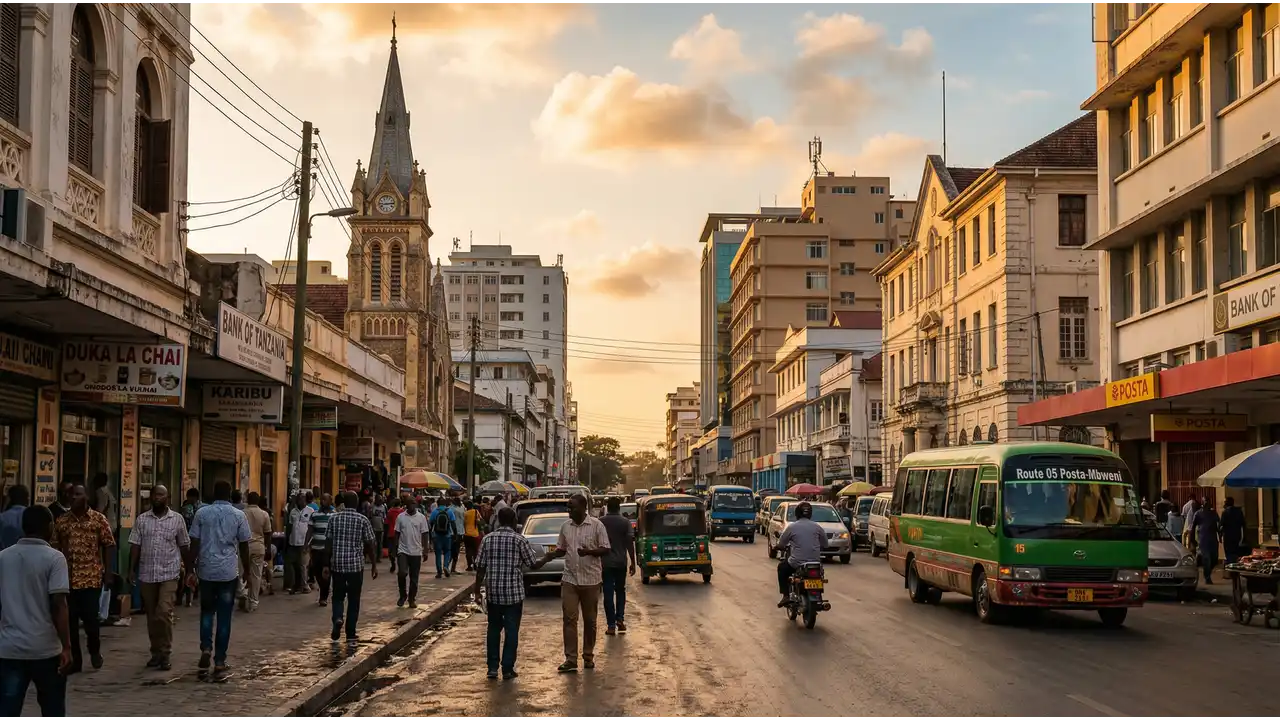
Nairobi is Kenya's capital and East Africa's largest city, home to around 4 million people. The city sits on a high plateau at 1,600 meters elevation, giving it a mild climate year-round. Daily life revolves around traffic-heavy commutes, shopping in sprawling malls like Westgate and The Hub, and dining at everything from street food stalls to upscale restaurants. The expat population is substantial, especially in neighborhoods like Westlands and Karen. Power cuts and water shortages happen regularly. Internet is reliable in most areas. Nairobi's pace is fast and informal, with significant economic inequality visible across neighborhoods. Security concerns exist but are manageable with common sense.
💡 Local Insights
Nairobi · 2026
Nairobi's cost structure reflects a middle-income city with significant expat and professional presence. Housing runs $422/month and varies sharply by location. Westlands and Upper Hill command $600 to $1,000 for a one-bedroom apartment. Karen and Kilimani offer similar prices. Eastleigh and South B are cheaper, $250 to $400. Local prices differ from expat prices, particularly in rental markets where foreigners often pay premiums. Groceries total $170/month if you shop at local markets like City Market or Carrefour supermarket. Imported goods cost significantly more. Transport is affordable: matatus (minibuses) cost $0.30 per ride, while Uber runs $1 to $4 for most trips. Expats gravitate toward restaurants and services that match home-country standards, which inflates personal spending. Eating out at local restaurants costs $3 to $8; Western restaurants in Westlands run $12 to $25 per meal. Healthcare for expats is expensive; insurance or private clinics are necessary. Utilities (electricity, water, internet) add $60 to $100 monthly. The main budget shock for expats is housing and dining quality trade-offs.
Frequently Asked Questions
How much does it cost to live in Nairobi per month?
A moderate lifestyle in Nairobi costs $950/month. This breaks down roughly as: housing $422/month, food (groceries) $170/month, transport $40 to $60/month, utilities $60 to $80/month, and discretionary spending on dining, entertainment, and personal services $200 to $250/month. The budget tier is $570/month (very basic, local-focused living), while comfortable living runs $1,473/month. Expats typically spend toward the comfortable end because of housing preferences, dining choices, and service costs. Locals can live well on less by using public transport, shopping at markets, and eating local food.
What is the average rent in Nairobi?
Average rent is $422/month, but this varies significantly by neighborhood and property type. In Westlands, Upper Hill, and Kilimani, expect $600 to $1,000 for a one-bedroom apartment. Karen and Muthaiga run similar or higher. Eastleigh and South B offer one-bedroom rentals from $250 to $400. Studio apartments in central locations rent for $300 to $500. Furnished vs. unfurnished makes a $100 to $200 difference. Lease terms are typically 12 months, and landlords often require deposits equal to 1 to 3 months' rent. Expats frequently pay 20 to 40 percent premiums over local rates. Real estate agents like Century 21 and Airbnb listings show current supply, though negotiation is common.
Is Nairobi cheap to live in for expats?
Nairobi is moderately priced compared to major Western cities, but not cheap for expats accustomed to purchasing power in developing countries. Housing is the main cost driver and often disappoints on space and condition relative to price. A $600 apartment in Westlands might be smaller and less maintained than equivalent rent in Latin America. Groceries are affordable if you shop locally, but imported goods (cheese, cereals, wine) cost 30 to 50 percent more than North America. Eating out at expat-friendly restaurants is expensive ($12 to $25 per meal). Healthcare, domestic help, and gym memberships are cheaper than Western cities but higher than neighboring East African countries. Expats on $1,500/month can live comfortably if they avoid high-end dining and housing; those earning $2,500/month have real flexibility.
How much does food cost per month in Nairobi?
Groceries for one person average $170/month if you shop at markets or mid-range supermarkets like Carrefour. A kilogram of tomatoes costs $0.50 to $1, maize flour $0.70 per kilogram, beans $1 to $1.50 per kilogram, eggs $1.50 to $2 per dozen, and chicken breast $3 to $5 per kilogram. Eating out at local restaurants (chapati, sukuma wiki, nyama choma) costs $2 to $4 per meal. Expat-oriented restaurants in Westlands charge $12 to $20 for main courses. Coffee at local stands is $0.50; at cafes in malls, $2 to $3. Imported groceries at Nakumatt or Carrefour cost 40 to 60 percent more. Monthly food budgets for expats typically run $300 to $500 depending on dining preferences.
What salary do you need to live comfortably in Nairobi?
Comfortable living in Nairobi costs $1,473/month. This supports decent housing in a safe, accessible neighborhood ($600 to $700), good groceries with occasional imported items ($250 to $300), reliable transport options including occasional taxis ($80 to $100), utilities and internet ($80), and regular dining out and entertainment ($300 to $400). For expats, a monthly salary of $2,000 to $2,500 is realistic for genuine comfort, allowing for travel, healthcare contingencies, and lifestyle preferences. Those earning $1,500 to $1,800/month can live well but need to be intentional about housing location and dining choices. Couples or families sharing housing costs can live comfortably on lower individual salaries. Local professionals earning $800 to $1,200/month live at or above the moderate level.
How does the cost of living in Nairobi compare to other places?
Nairobi sits in the middle range for African capitals. A moderate lifestyle here costs $950 per month, with housing running $422 per month. That puts it slightly more expensive than Marrakech, where a moderate lifestyle costs $900 monthly and housing $369, though the difference is marginal. Algiers is notably cheaper at $675 per month overall with housing at $201, making it a clear budget alternative if cost is your primary concern. On the other end, Conakry is considerably dearer at $1,325 per month with housing at $452. For expats and relocating professionals, Nairobi offers reasonable value relative to its status as East Africa's largest financial hub. Your money goes further here than in many Western cities, though less far than in smaller or less developed regional centers.
Yes, but only with strict discipline and local-focused choices. The budget tier of $570/month assumes shared housing ($200 to $250), market groceries ($170/month), matatu transport only ($15 to $20), minimal utilities ($30), and almost no eating out or entertainment. You would need to live in Eastleigh, South B, or Kibera, share an apartment, cook all meals at home, and avoid expat-oriented areas. Internet and phone must be minimal. Healthcare becomes risky without insurance. Occasional taxi rides or restaurant meals blow the budget. This is possible for locals with family networks or NGO workers with housing support, but extremely difficult for independent expats without cost-sharing arrangements. Most expats attempting this underestimate utilities, transport frequency, and social obligations that require spending. A budget of $800 to $900 is more realistic for independent expat living with acceptable quality-of-life trade-offs.