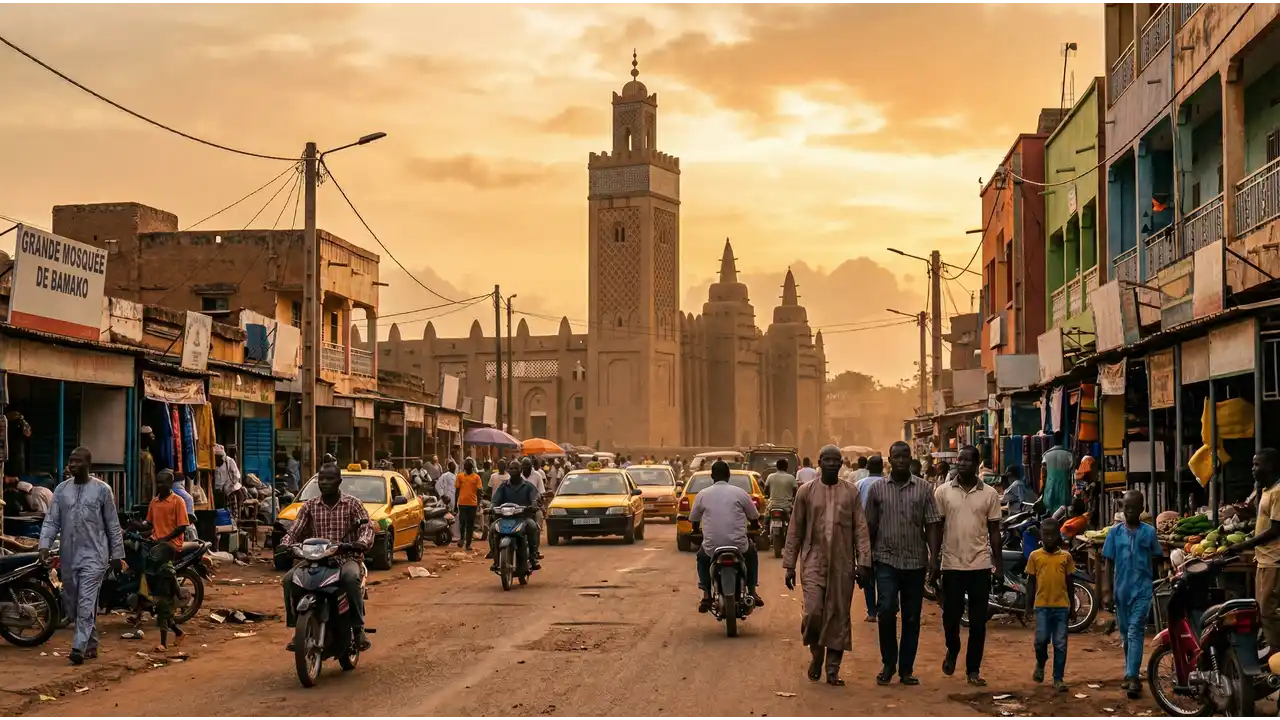
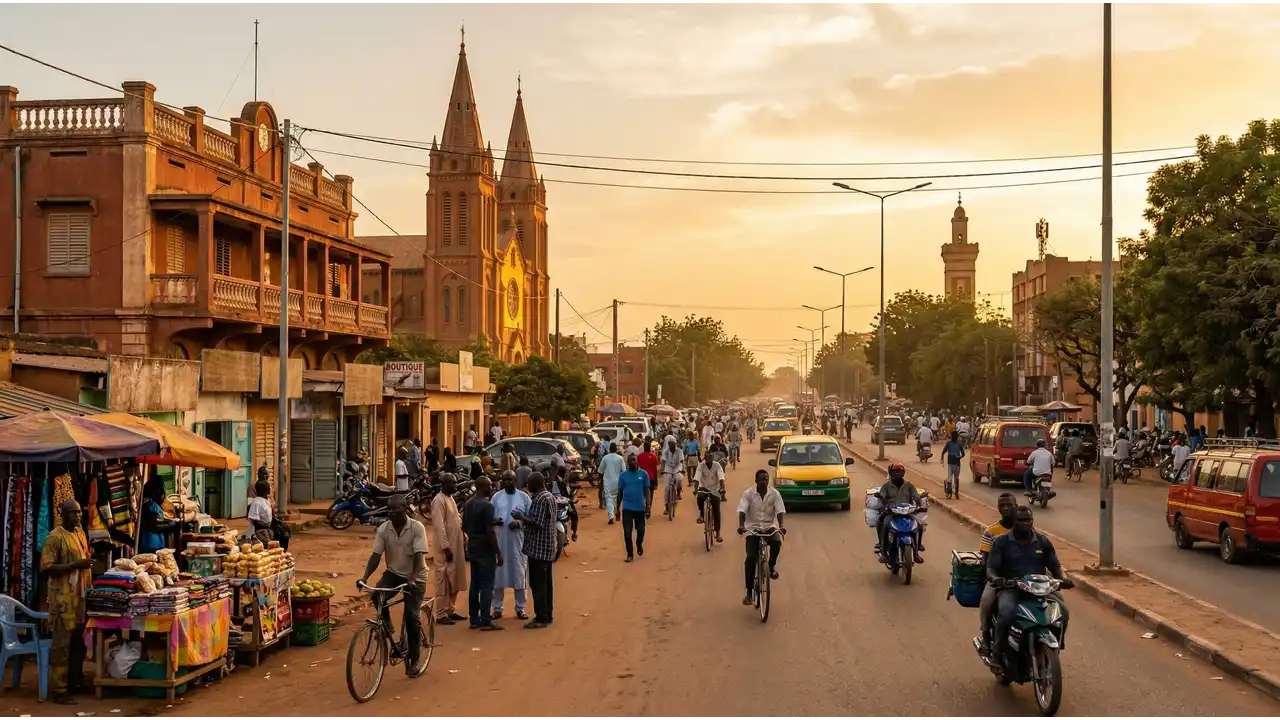
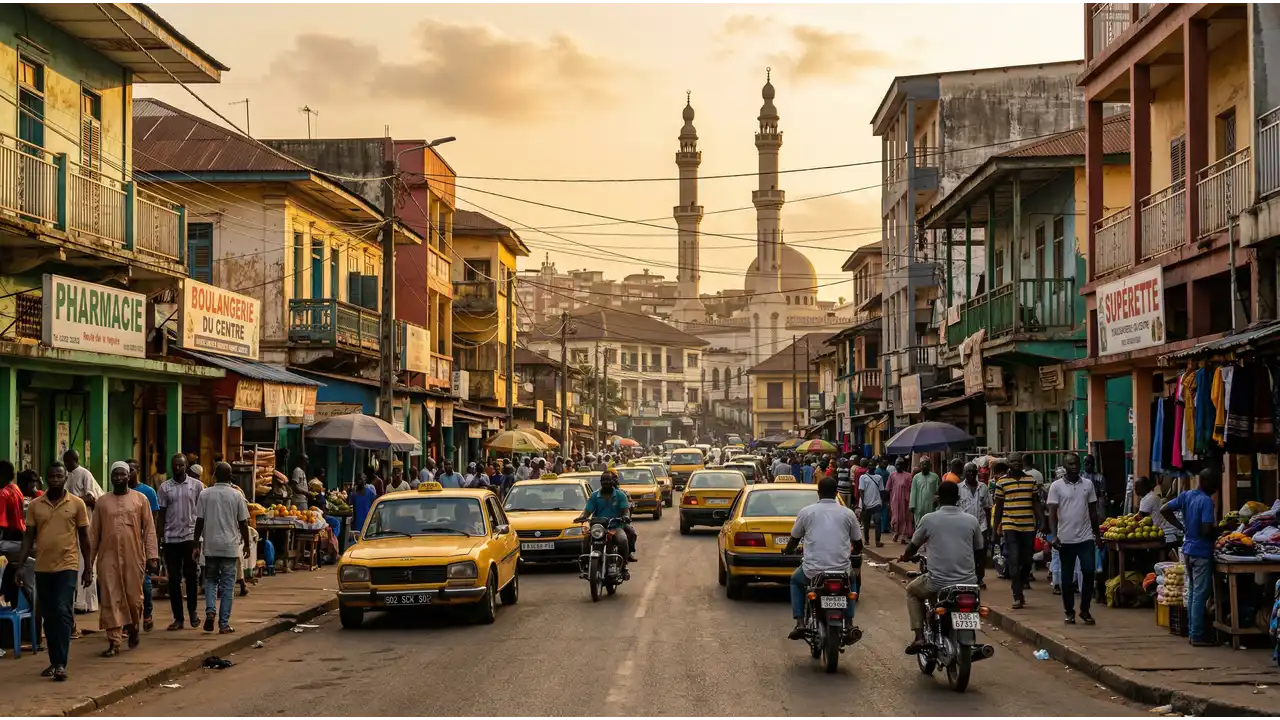
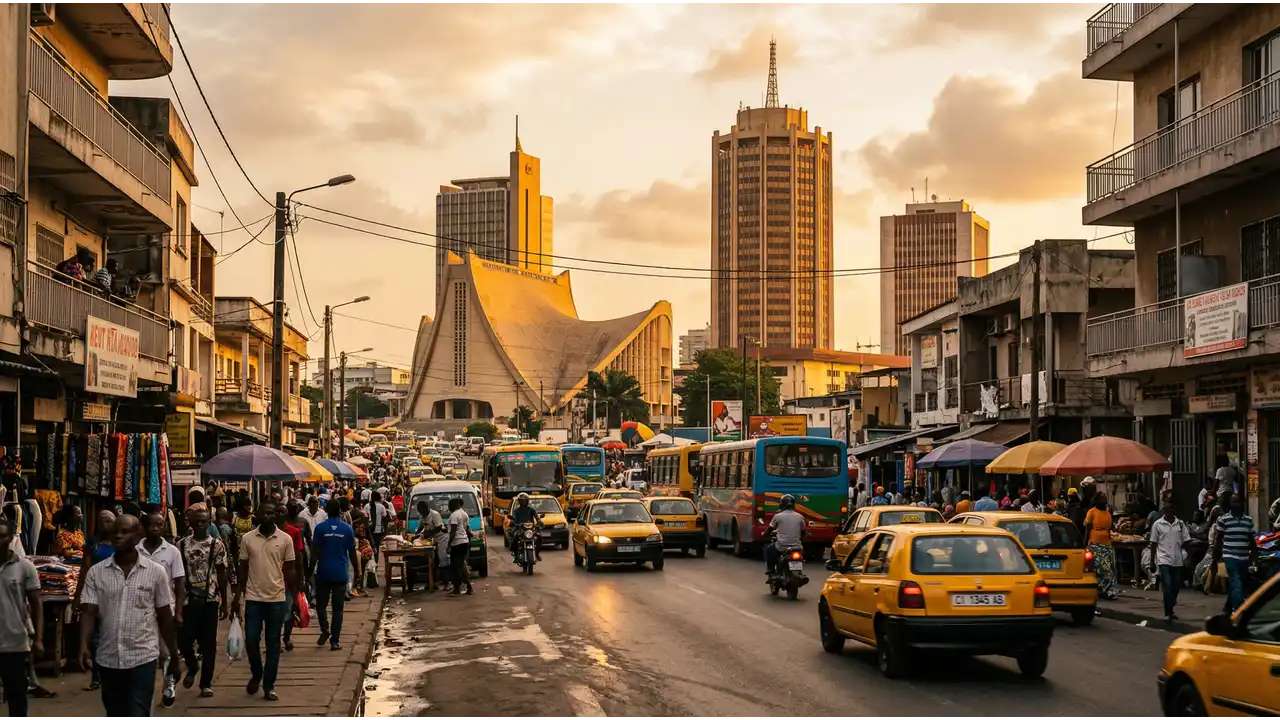
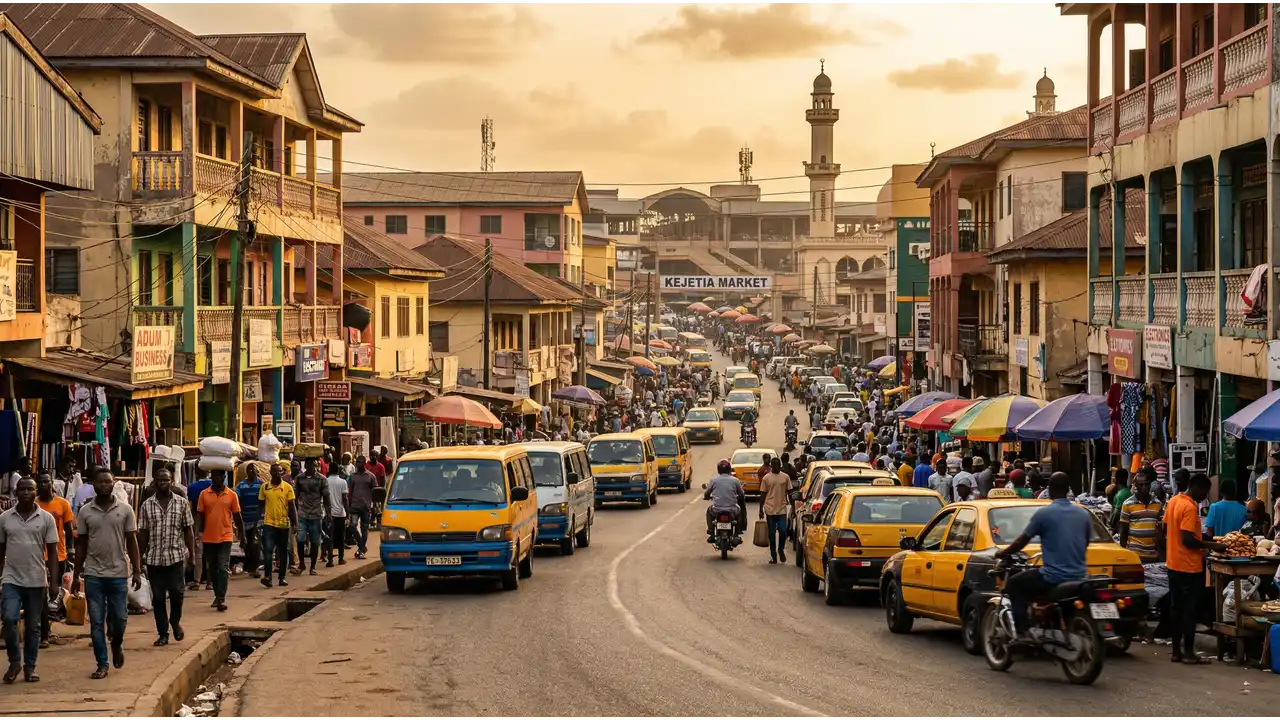
Bamako is Mali's capital and largest city, sitting on the Niger River in West Africa. It is home to roughly 1.4 million people and functions as the country's political, economic, and cultural center. Daily life centers on markets, street commerce, and close-knit neighborhoods. The climate is hot year-round, with a rainy season from June to October. Infrastructure is basic by wealthy-country standards: reliable electricity and water are inconsistent, roads are often unpaved, and the security situation requires attention. French is the official language, but Bambara is widely spoken. Expats and local professionals form a small but visible community, particularly in central neighborhoods like Koulouba and along the river.
💡 Local Insights
Bamako · 2026
Bamako operates on two pricing systems. Local prices for food, transport, and services are genuinely low. A month of groceries for one person runs around $282, with rice, beans, and seasonal vegetables dominating costs. Street meals cost $1 to $3. Housing at $452/month covers a modest one-bedroom apartment in neighborhoods popular with expats or educated professionals; local renters pay less, but expat-facing landlords price higher. Utilities (electricity, water, internet) add another $50 to $100 monthly and are the least reliable expense. Transport within the city uses shared minibuses called sotrama for under $0.50 per trip; no formal taxi meter system exists, so negotiation is standard. The biggest hidden costs for expats are security (private drivers, transport restrictions), imported goods, and medical care. Healthcare facilities are limited; serious illness often requires travel to Dakar or Accra. Imported goods from France or Europe carry a 50 to 100 percent premium over African prices. Local employment salaries are far lower than cost-of-living figures suggest; most foreign residents are funded from abroad.
Frequently Asked Questions
How much does it cost to live in Bamako per month?
A moderate lifestyle costs $1,325/month. This breaks down roughly as housing at $452, food at $282, transport at $40 to $60, utilities at $50 to $100, and discretionary spending on dining out, entertainment, or communications at $200 to $400. The budget tier of $795/month cuts housing to a basic shared apartment or room, minimal dining out, and essential transport only. The comfortable tier reaches $2,054/month with a larger apartment, frequent dining out, and more flexibility on utilities and transport. These figures assume you are managing your own costs; many expats with employer housing subsidies or per diem arrangements spend differently.
What is the average rent in Bamako?
Average rent is $452/month for a one-bedroom apartment in neighborhoods where expats and middle-income Malians live, such as Koulouba, Niarela, or Badalabougou. A studio or shared room runs $250 to $350. A two-bedroom in the same areas costs $650 to $850. Prices are highly negotiable, especially for longer leases. Housing is typically unfurnished; landlords expect tenants to provide fixtures and appliances. Utilities (electricity, water) are metered but supplied inconsistently and add $50 to $150 per month depending on usage and neighborhood. Most leases are informal; written agreements are common only among expat-oriented landlords. Security deposits equal one to three months' rent.
Is Bamako cheap to live in for expats?
Yes and no. Bambako's nominal costs are low by global standards: $1,325/month for a moderate lifestyle is cheaper than most African capitals. But expats pay more than locals because landlords, restaurants, and shops price for foreign clients, and imported goods cost extra. Medical care, education, security measures, and home services (cleaning, cooking, drivers) add up. The real cost for expats is often $1,600 to $2,000 monthly once utilities, transport reliability, and occasional dining out are included. Compared to Accra or Dakar, Bamako is cheaper. Compared to Kinshasa or Ouagadougou, it is roughly equivalent. The low figure assumes you eat local food, use public transport, and do not rely on expensive expat social circles.
How much does food cost per month in Bamako?
Groceries for one person cost around $282/month. This includes rice, millet, beans, dried fish, tomato paste, onions, and seasonal vegetables from local markets. A kilo of rice costs $0.80 to $1.20; beans $1.50 to $2; fresh tomatoes $0.40 to $0.60 per kilo depending on season. Meat (beef, chicken, lamb) is $5 to $8 per kilo. Imported goods like olive oil, cheese, or canned goods cost double to triple local prices. Eating out at street stalls or small restaurants costs $1 to $3 per meal. Mid-range restaurants (where expats congregate) charge $8 to $15 for lunch or dinner. Bread is cheap at $0.25 to $0.50 per loaf.
What salary do you need to live comfortably in Bamako?
A comfortable lifestyle costs $2,054/month. This buys a larger one or two-bedroom apartment, regular dining out at mid-range restaurants, reliable private transport (driver or regular taxi use), stable utilities, and discretionary money for entertainment, travel, or hobbies. For expats with families, add $500 to $1,000 monthly for international school fees if applicable. Remote workers earning $2,500 to $3,500 monthly (in USD or EUR) live well. Local professional salaries rarely exceed $1,000 per month except for senior government or NGO positions, which is why most expats fund their stay from abroad. If you are employment-based in Mali, negotiate salary in US dollars or euros and expect your employer to cover housing.
How does the cost of living in Bamako compare to other places?
Bamako is moderately priced by West African standards. A moderate lifestyle runs $1,325 per month, with housing at $452 monthly. This puts it slightly cheaper than Luanda, which costs $1,375 overall with housing at $523. You'll find Bamako noticeably more expensive than Nairobi, where a comparable lifestyle is $950 per month. However, it's significantly cheaper than Abidjan, the region's most costly major city at $1,675 monthly with housing alone reaching $910.
Your money stretches furthest in neighborhoods outside the central business district. Food, transportation, and utilities remain reasonable, though expat-oriented housing and imported goods carry premium prices. If you're coming from West Africa's pricier cities, Bamako offers meaningful savings. From East Africa or beyond, it's a moderate middle ground rather than a bargain destination.
Yes, if you adapt fully to local life and accept significant trade-offs. The budget tier of $795/month assumes a basic shared room or studio, eating only local market food (no restaurants or imported goods), using sotrama minibuses exclusively, minimal utilities consumption, and no car or driver. This works for long-term aid workers, students, or people with very low cost bases. Most expats find $795/month too tight because landlords price higher for foreigners, and expat social life (dining out, private transport for safety) eats into the budget quickly. The $795 figure is real but marginal. If you arrive in Bamako on that budget, expect to live frugally and either stay longer to network into cheaper local housing or supplement income within weeks.