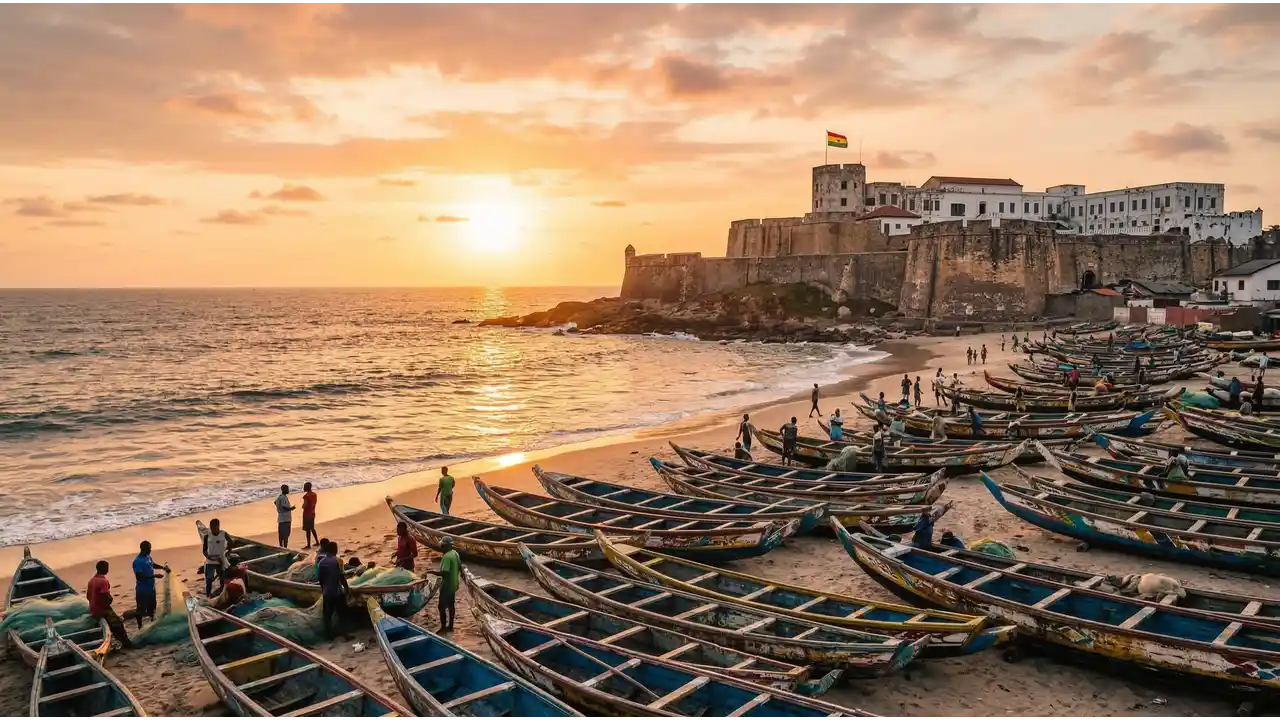
Ghana is a West African nation of around 33 million people, with English as the official language and a stable democratic government. Life centers on Accra, the capital, and Kumasi, the cultural hub. The climate is tropical with two rainy seasons. Daily life involves navigating shared taxis (tro-tros), shopping at neighborhood markets, and eating at chop bars (casual food stands) or restaurants. Power cuts occur but are less frequent than neighboring countries. Internet is reliable in urban areas. The cost of living is substantially lower than North America or Western Europe, though expat neighborhoods in Accra command premium prices.
💡 Local Insights
Ghana · 2026
Ghana's cost structure reflects a lower-income economy with pockets of expat-driven inflation. Housing averages $447 per month, but this masks huge variation. A modest one-bedroom apartment in a local neighborhood costs $200-400, while expat-oriented areas like Osu or East Legon push $600-1,200 or more. Groceries run about $162 monthly for basic local shopping (rice, cassava, tomatoes, eggs, chicken). Western imported goods cost 2-3 times local prices. Transport is cheap: tro-tros cost under $1 per trip, though driving or taking Uber adds up fast. The moderate lifestyle of $950 per month assumes you eat mostly local food, live outside premium expat zones, and use public transport or carpool. Utilities, internet, and healthcare vary widely depending on your area and habits. Expat pricing exists openly in tourist restaurants and some shops; shopping where locals shop reduces costs significantly.
Frequently Asked Questions
How much does it cost to live in Ghana per month?
A moderate lifestyle in Ghana costs around $950 per month. This breaks down roughly as: housing $447, groceries $162, transport $40-60, utilities and internet $50-80, and dining and activities $200-250. The budget tier runs $570 monthly for minimal expenses (basic housing, local food, minimal transport), while a comfortable lifestyle with more dining out, a nicer apartment, and occasional travel costs $1,473 per month. Real variation depends heavily on whether you live in a local neighborhood or an expat zone, and how much imported food and Western services you use.
What is the average rent in Ghana?
Average rent is approximately $447 per month based on typical expat and professional-class housing. In local neighborhoods outside Accra's expat districts, a one-bedroom apartment rents for $200-350 per month. Expat-focused areas like Osu, East Legon, or Cantonments range from $600-1,200 for similar or better quality. Furnished apartments cost 20-30 percent more. Outside Accra, Kumasi and Takoradi offer significantly cheaper options, often $150-250 for one-bedroom units. Utilities (water, electricity, gas) add another $30-60 monthly. Landlords typically require 2-3 months deposit upfront.
Is Ghana cheap to live in for expats?
Yes, Ghana is substantially cheaper than North America, Western Europe, or Australia, but not a bargain destination for expats anymore. A comfortable expat lifestyle (international school fees, frequent dining out, regular travel) easily exceeds $2,500-3,500 per month. Expat enclaves in Accra practice open price discrimination; the same apartment or meal costs 50-100 percent more than in local areas. However, expats working remotely on Western salaries find excellent value. The trade-off: lower costs come with trade-offs on predictability (power cuts, inconsistent internet), bureaucratic hassles, and the effort required to navigate systems not built for English speakers.
How much does food cost per month in Ghana?
Groceries for one person average $162 per month when shopping local markets and eating Ghanaian staples. A typical week costs: rice or cassava $15-20, chicken or fish $20-30, tomatoes and vegetables $10-15, eggs $8-12, bread $3-5, and basics like oil and salt $5-10. Eating at chop bars (local food stands) costs $1-3 per meal. Mid-range restaurants charge $5-12 per meal. Western supermarkets (Shoprite, Carrefour) cost 2-3 times more but stock imported goods. Imported items like cheese, cereals, or dairy products double or triple prices. Budget-conscious expats shopping markets and eating local food spend under $200 monthly; those preferring Western groceries and restaurants spend $400-600.
What salary do you need to live comfortably in Ghana?
A comfortable lifestyle costs approximately $1,473 per month, which translates to roughly $17,676 annually. This covers pleasant housing outside tourist zones ($600-700), diverse eating options including restaurants ($300-350), reliable transport including occasional taxis ($100-120), and recreation and services ($200-250). For expats, add 30-50 percent more if you prefer expat-area housing, international school fees, or frequent imported goods. A household with two adults might budget $2,200-2,500 monthly for comfort without excess. Remote workers earning in USD or EUR find this very affordable. Local professionals earning in Ghanaian cedis (roughly $200-400 monthly) live more modestly but manage on significantly less.
How does the cost of living in Ghana compare to other places?
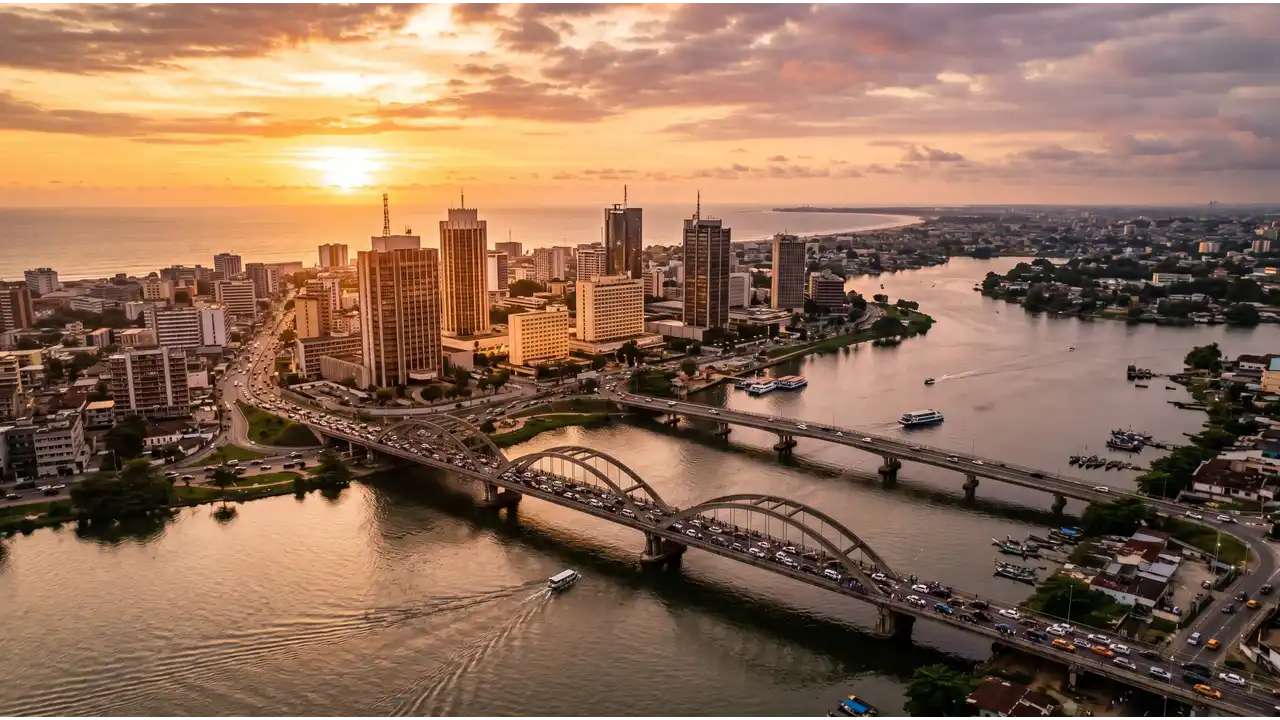
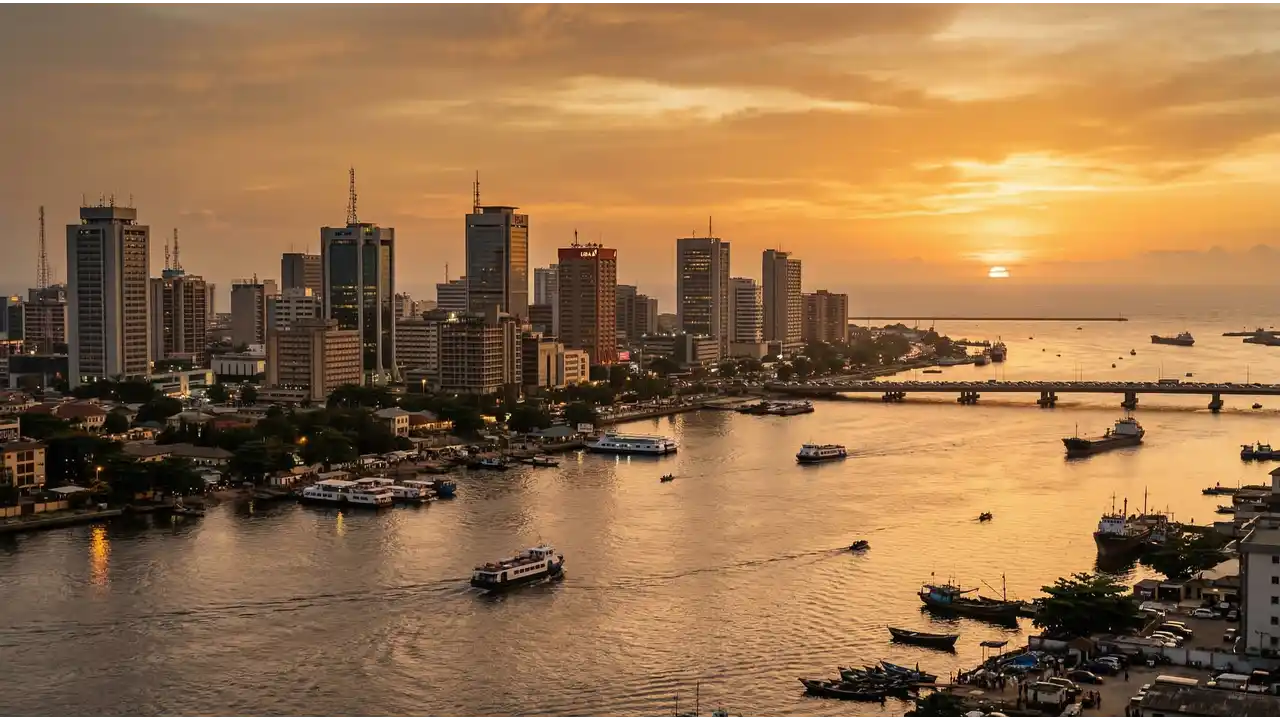
Ghana's moderate lifestyle costs $950 per month, placing it in the middle range for West Africa. Nigeria, a peer economy, runs $1,025 for the same lifestyle, making it slightly more expensive overall. Tunisia is notably cheaper at $675 per month. The Ivory Coast is the most expensive of these comparisons at $1,375 monthly.
Housing patterns show similar spreads. Ghana's moderate housing costs $447 per month. Nigeria's housing is actually less expensive at $390, despite the higher overall cost. Tunisia's housing is considerably cheaper at $217 per month, while the Ivory Coast's housing runs $523, the highest in this group.
For most expats and locals, Ghana offers reasonable value for a West African country with decent infrastructure and services. Your money stretches further here than in the Ivory Coast but not quite as far as in Tunisia.
Yes, but it requires discipline and comfort with uncertainty. The $570 monthly budget tier assumes: renting a basic one-bedroom in a local neighborhood ($250-300), eating only local market food and chop bars ($120-140), minimal transport via tro-tro ($30-40), and no room for imported goods, dining out, or emergencies. This is how many Ghanaian professionals and long-term expats live. It cuts out: frequent restaurant meals, Western groceries, cable TV, and regular entertainment. Power cuts and broken appliances mean unexpected costs. Medical care beyond basic clinics costs extra. This budget works if you speak some Twi or Ga, are comfortable negotiating prices, and don't need expat services. Most expats find $570 too tight; locals manage it by pooling resources and having informal safety nets.