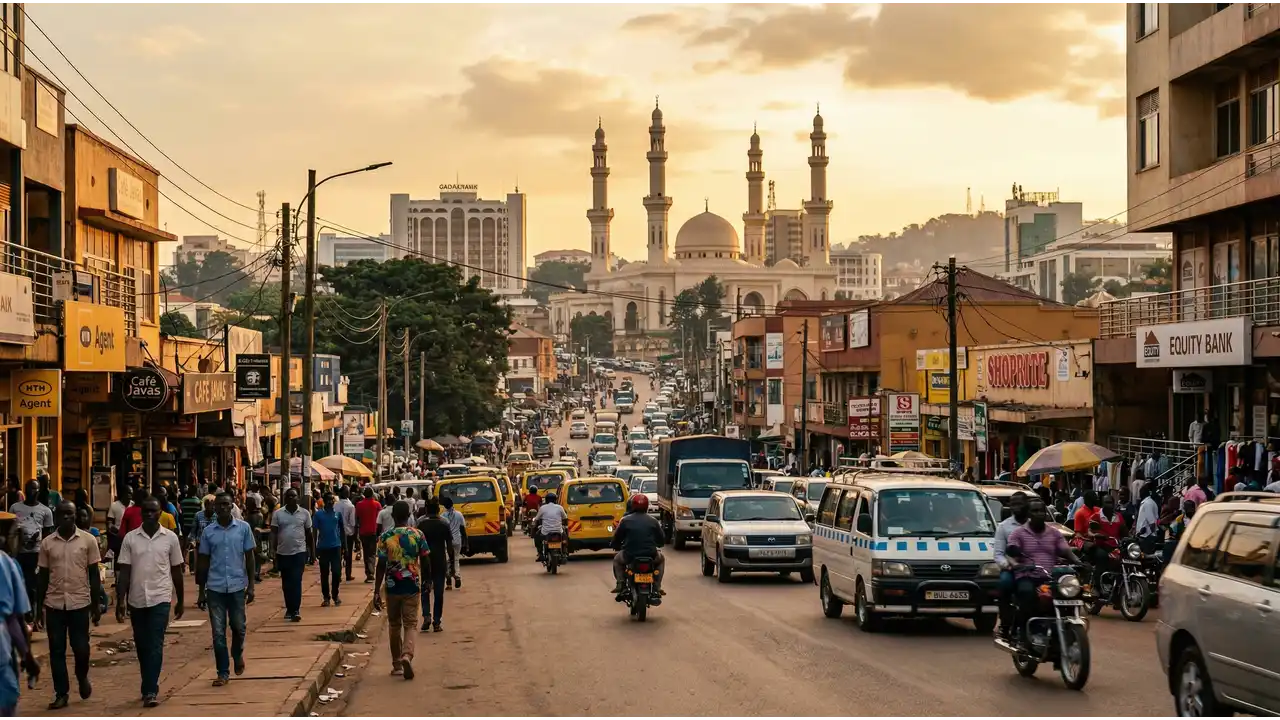
Kampala is Uganda's capital and largest city, built across rolling hills on the northern shore of Lake Victoria. The city functions as the country's economic and administrative hub, with a population exceeding 1.6 million. Daily life involves navigating traffic-heavy streets, frequent power outages, and a rainy season that turns some roads impassable. Most neighborhoods lack reliable sewage systems. The city attracts Ugandan professionals, regional traders, NGO workers, and expats seeking lower-cost urban living in East Africa. English is widely spoken. Food markets are abundant, transport is informal and cheap, and private options exist for those willing to pay for reliability in utilities and services.
💡 Local Insights
Kampala · 2026
Kampala's moderate cost of $900/month reflects real trade-offs. Housing costs around $451/month and varies sharply by neighborhood and amenities. A furnished one-bedroom apartment in expat zones like Kololo or Kampala Hill runs $500 to $800, while similar space in Makerere or Mulago runs $250 to $400. Outside the central area, unfurnished rentals drop below $300. Utilities are unreliable and often billed separately. Groceries cost roughly $145/month if you shop local markets for beans, maize, cassava, and greens. Imported goods and restaurant meals cost significantly more. Transport is extremely cheap if you use matatus (shared minibuses), typically 500 to 2,000 Ugandan Shillings per ride (under $1), but expats often hire drivers or use motorcycles for around $200 to $300/month. Water, electricity, and internet are additional line items. Your actual spending depends heavily on whether you embrace local markets and transport or opt for imported goods and private services.
Frequently Asked Questions
How much does it cost to live in Kampala per month?
A moderate lifestyle in Kampala costs around $900/month. This breaks down to housing at $451/month, groceries at $145/month, with the remainder covering utilities, transport, dining out, and personal expenses. A tighter budget of $540/month is possible if you live in cheaper neighborhoods, eat only from local markets, and use matatus for transport. A comfortable lifestyle runs $1,395/month and typically includes a better apartment, more eating out, private transport, and imported goods. Most expats fall between the moderate and comfortable figures depending on neighborhood choice and lifestyle preferences.
What is the average rent in Kampala?
Average rent in Kampala is approximately $451/month. In central expat neighborhoods like Kololo, Kampala Hill, or Nakasero, expect $500 to $800/month for a furnished one-bedroom apartment with reliable power and water. Mid-range areas like Makerere, Mulago, or Nsambya offer similar space for $250 to $400/month, often unfurnished. Outer neighborhoods like Bwaise or Kawempe have rentals under $300/month. These figures are for residential apartments; compound houses with multiple units are cheaper per unit. Utilities are usually separate and often unpredictable. Most landlords require 3 to 6 months upfront.
Is Kampala cheap to live in for expats?
Kampala is genuinely cheap compared to Nairobi, Dar es Salaam, or Lagos, but not as cheap as you might expect given the city's infrastructure challenges. A moderate expat lifestyle costs $900/month, which is low by regional standards, yet you are paying partly for unreliable utilities and limited services that force you to buy workarounds (generators, water tanks, security). If you live like a local, eat from markets, and use public transport, costs plummet. If you want Western comfort (imported food, private security, reliable power, a car), Kampala becomes much pricier. Many expats find the sweet spot is $1,200 to $1,500/month in decent neighborhoods with working amenities.
How much does food cost per month in Kampala?
Groceries for a month cost around $145/month if you shop local markets. Staples like maize flour, beans, cassava, plantains, and seasonal vegetables are extremely cheap. A kilogram of maize flour costs under $1, beans around $1.50/kg, and fresh leafy greens are 50 cents per bunch. Meat from butcheries ranges from $3 to $5/kg. Eating out at local restaurants (posho and beans, grilled meat) costs $1 to $3/meal. Western supermarkets and imported goods cost 3 to 5 times more. If you eat primarily at restaurants rather than cooking, add $200 to $300/month. Alcohol and coffee are cheap at local bars but expensive if you buy imported brands.
What salary do you need to live comfortably in Kampala?
A comfortable lifestyle in Kampala requires around $1,395/month. This allows you to live in a decent neighborhood with reliable utilities, eat a mix of local and imported food, dine out regularly, use reliable transport (private driver or motorcycle taxi), and have money left for entertainment and emergencies. Many expats working in NGOs, education, or international business earn between $1,500 and $3,000/month and live quite well. If you earn less than $1,000/month, you need to embrace local shopping, public transport, and fewer restaurant meals. If you earn $2,000+/month, you can afford a comfortable home, household staff, and imported goods without much thought.
How does the cost of living in Kampala compare to other places?
Kampala's moderate lifestyle costs $900 per month, placing it in the middle range for East African cities. Dar es Salaam runs $950 monthly, making it a near peer on overall cost. Cairo is notably cheaper at $575 per month, though it's in a different region and economy. Douala costs significantly more at $1,225 monthly, reflecting Cameroon's higher pricing across most goods and services.
Housing tells a similar story. Kampala's moderate housing runs $451 monthly. Dar es Salaam's housing costs $492, while Cairo's is considerably lower at $213. Douala's housing averages $466, only slightly above Kampala's despite the city's higher overall costs elsewhere.
For a typical expat or local on a moderate budget, Kampala offers genuine affordability compared to many African capitals, though it's noticeably pricier than Cairo.
Yes, but with significant constraints. A $540/month budget means renting in outer neighborhoods (Bwaise, Kawempe, Kasangati) for $200 to $300, spending $145 on groceries from local markets, and using only matatus for transport at under $20/month. This leaves roughly $75 for utilities, phone, and emergencies, which is tight. You cannot afford restaurant meals, imported goods, or private transport. You must speak some Luganda or have local friends to navigate markets and neighborhoods. You would live as a local does, which many expats find authentic but isolating. Most expats who try this budget find they need at least $700 to $800/month to live without constant stress.