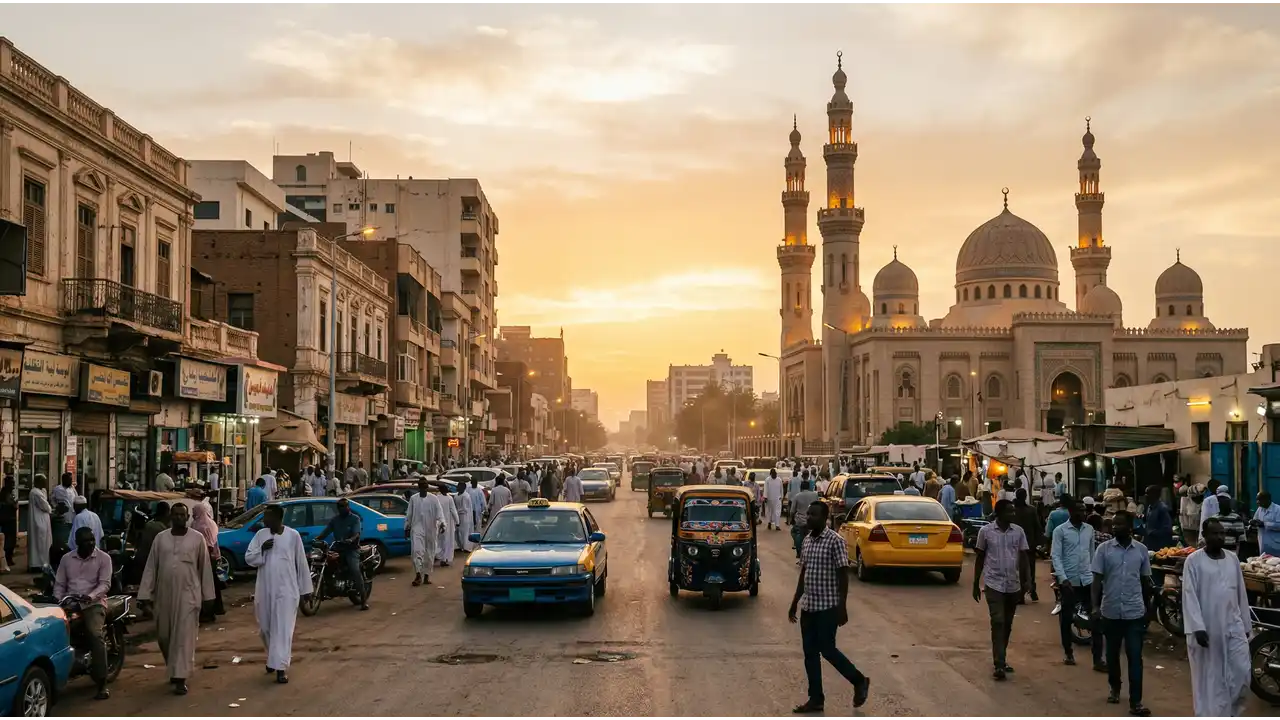
Khartoum is Sudan's capital, located where the White Nile and Blue Nile converge. The city has roughly two million people and functions as the country's political, economic, and cultural center. Daily life involves navigating a hot, semi-arid climate with temperatures regularly exceeding 100 degrees Fahrenheit. Most residents shop at local markets rather than supermarkets. Traffic is heavy and unpredictable. The city has experienced significant unrest and infrastructure challenges in recent years, which affects both availability of services and expat presence. Power cuts and water shortages are common. Despite these constraints, Khartoum remains affordable for those who adapt to local conditions.
💡 Local Insights
Khartoum · 2026
Khartoum's cost advantage comes from low housing and food prices when you shop like locals do. Housing at $176/month typically means a furnished one-bedroom apartment in central areas like Khartoum 2 or Gamma. Expats often pay more, up to $300-400/month, but this remains low globally. Food at $161/month buys staple groceries from local markets: durra (sorghum), lentils, onions, and tomatoes are cheap. Meat and imported goods cost significantly more. Eating at local restaurants costs $2-5 per meal; expat-oriented cafes charge $8-15. Public transportation is minimal and cheap (shared minibuses cost under $1 per trip), but many expats hire drivers or use private cars, which increases transport spending. Currency instability affects prices. Expat enclaves like Riyadh and diplomatic areas have inflated rents. Shopping local markets rather than supermarkets is essential for budget living. Security concerns may limit where you can travel freely, affecting your practical spending patterns.
Frequently Asked Questions
How much does it cost to live in Khartoum per month?
A moderate lifestyle in Khartoum costs around $675/month. This breaks down to roughly $176/month for housing, $161/month for groceries, $40-50/month for utilities and water, and the remainder for transport, eating out, and miscellaneous expenses. A budget tier lifestyle runs about $405/month, cutting back on dining out and housing quality. The comfortable tier reaches $1,046/month, allowing for more spacious housing, hired transport, and expat-oriented dining. These figures assume you shop local markets and use public transport or shared rides rather than maintaining a private car.
What is the average rent in Khartoum?
Average rent is approximately $176/month for a furnished one-bedroom apartment in central neighborhoods like Khartoum 2, Amarat, or Gamma. Two-bedroom apartments run $220-280/month. Expats typically pay higher rents, ranging from $300-500/month, depending on neighborhood and amenities. Diplomatic and expat enclaves like Riyadh charge significantly more, sometimes $600-800/month. Unfurnished properties are slightly cheaper. Utilities (electricity, water, gas) add another $20-30/month but are often subsidized or shared. Rent prices fluctuate with currency stability and local security conditions. Negotiate directly with landlords; most leases are informal.
Is Khartoum cheap to live in for expats?
Khartoum is very cheap by global expat standards if you adapt to local conditions. $675/month is roughly half what expats spend in Nairobi or Addis Ababa for comparable lifestyle. However, the low cost comes with real trade-offs: unreliable utilities, limited availability of Western goods, periodic security concerns, and infrastructure instability. Expats who insist on imported groceries, private vehicles, and Western-standard housing will spend closer to $1,200-1,500/month. Those comfortable with local markets, public transport, and modest apartments find Khartoum genuinely affordable. The low dollar cost masks the practical friction of living there.
How much does food cost per month in Khartoum?
Grocery shopping at local markets costs approximately $161/month for basics: durra flour, lentils, beans, rice, onions, tomatoes, and seasonal vegetables. Local fruits are seasonal and cheap when available. Meat from butchers runs $3-5 per kilogram. Imported goods like cheese, butter, and packaged foods cost 2-3 times more than local staples. A meal at a local restaurant costs $2-4; expat-oriented cafes charge $10-15. Street food (fuul, ta'ameya) is under $1. Weekly shopping at central markets like Omdurman's Grand Market offers the best prices. Supermarkets exist but carry imported stock at inflated prices, used mainly by expats.
What salary do you need to live comfortably in Khartoum?
A comfortable lifestyle costs approximately $1,046/month. This budget allows for a furnished two-bedroom apartment ($250-300), regular dining out at mid-range restaurants, hired transport or a shared driver, and modest entertainment. It covers utilities, phone service, and occasional travel. A salary of $1,200-1,300/month (after tax) provides comfortable buffer. This assumes you're not maintaining a private car or shopping exclusively at expat supermarkets, which would push costs significantly higher. Many expats working for NGOs, embassies, or international organizations earn $1,500-3,000/month and live quite well. Local Sudanese salaries are typically $200-500/month, reflecting the broader economy.
How does the cost of living in Khartoum compare to other places?
Khartoum is genuinely affordable by global standards. A moderate lifestyle costs $675 per month, with housing at $176 monthly. That puts it cheaper than Nairobi, where a moderate lifestyle runs $950 and housing reaches $422 per month. Compared to Antananarivo, Khartoum is slightly less expensive overall (Antananarivo costs $750 monthly) though housing there is pricier at $303. Lahore is the budget option among these comparisons at $475 monthly, making Khartoum roughly 40 percent more expensive for the same lifestyle. Your money stretches furthest in smaller cities and rural areas across Sudan, but Khartoum's costs remain manageable if you adopt local habits for food and transportation. Exchange rate fluctuations can affect real purchasing power, particularly for imported goods.
Yes, but with significant constraints. The budget tier of $405/month works if you rent a basic apartment for $120-140/month, spend $130-150/month on groceries from markets, keep utilities minimal, and avoid eating out or traveling. You'll live in less central neighborhoods, cook all meals, use public minibuses only, and have almost no discretionary spending. This budget is realistic for long-term residents integrated into local life but very tight for someone new to the city. Most expats at this level share housing or live outside the center. Unexpected costs like repairs or medical care quickly break this budget. It's survivable but leaves no margin for error or comfort.