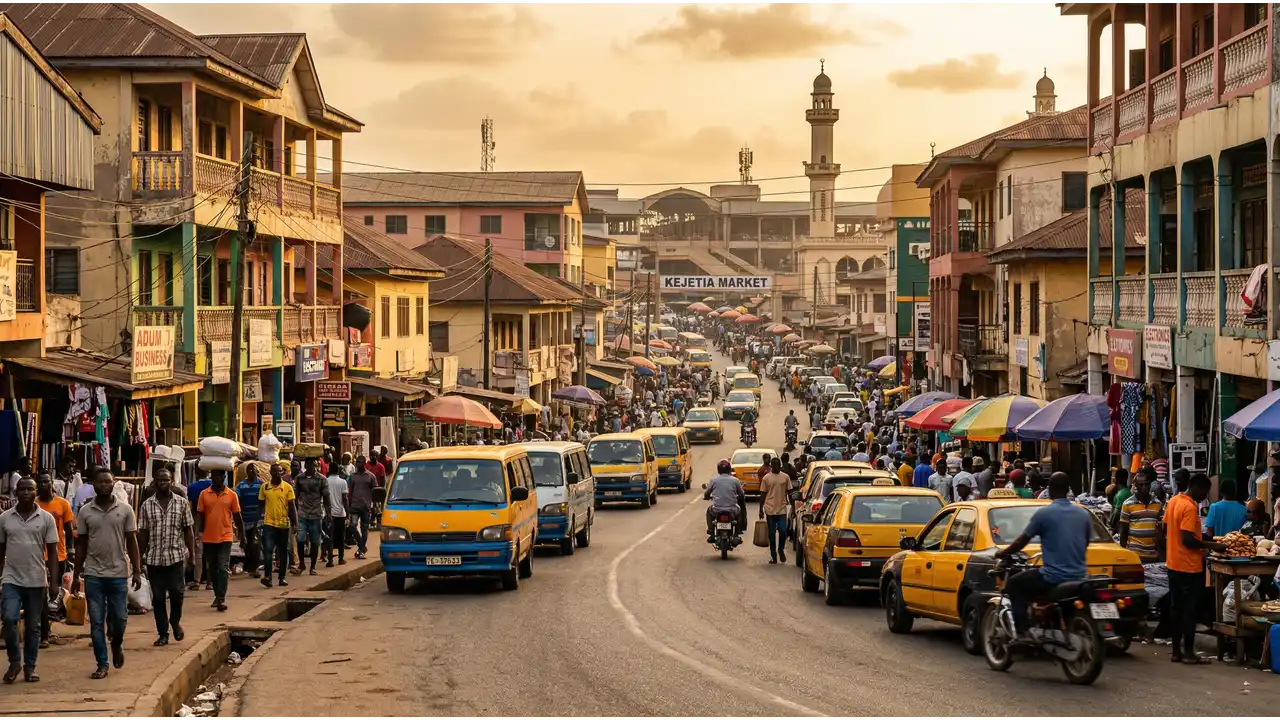
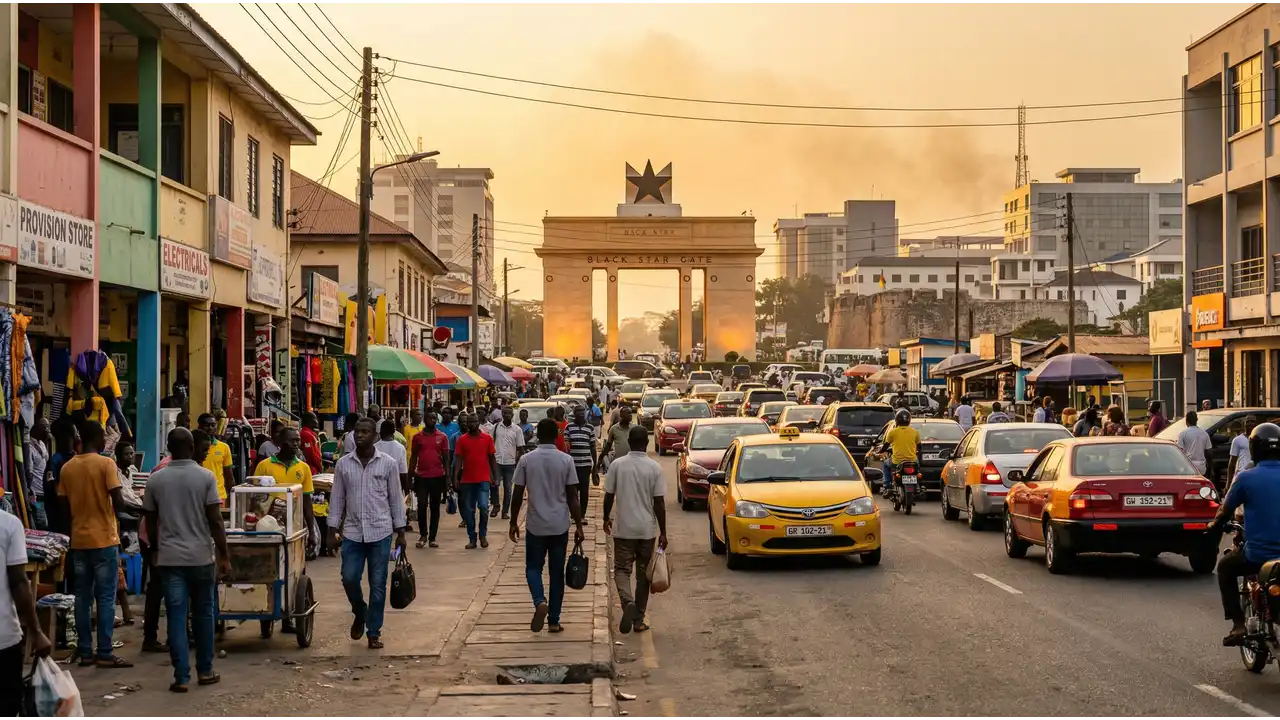
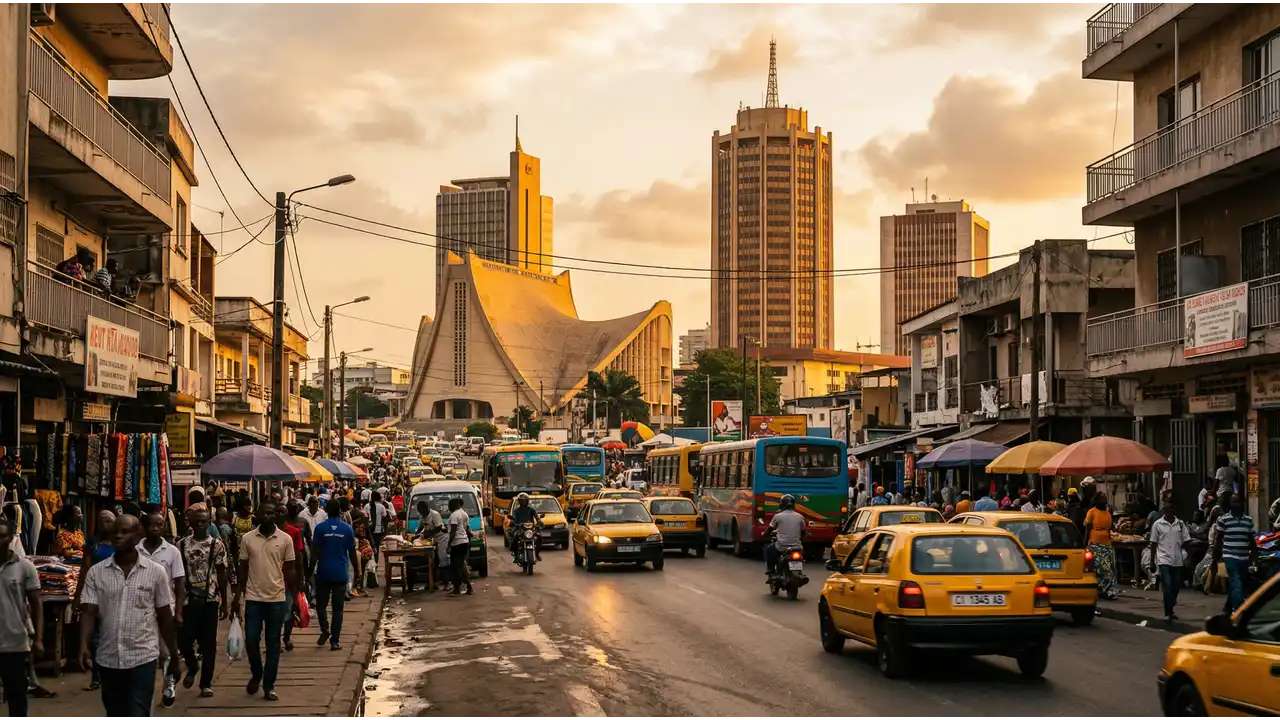
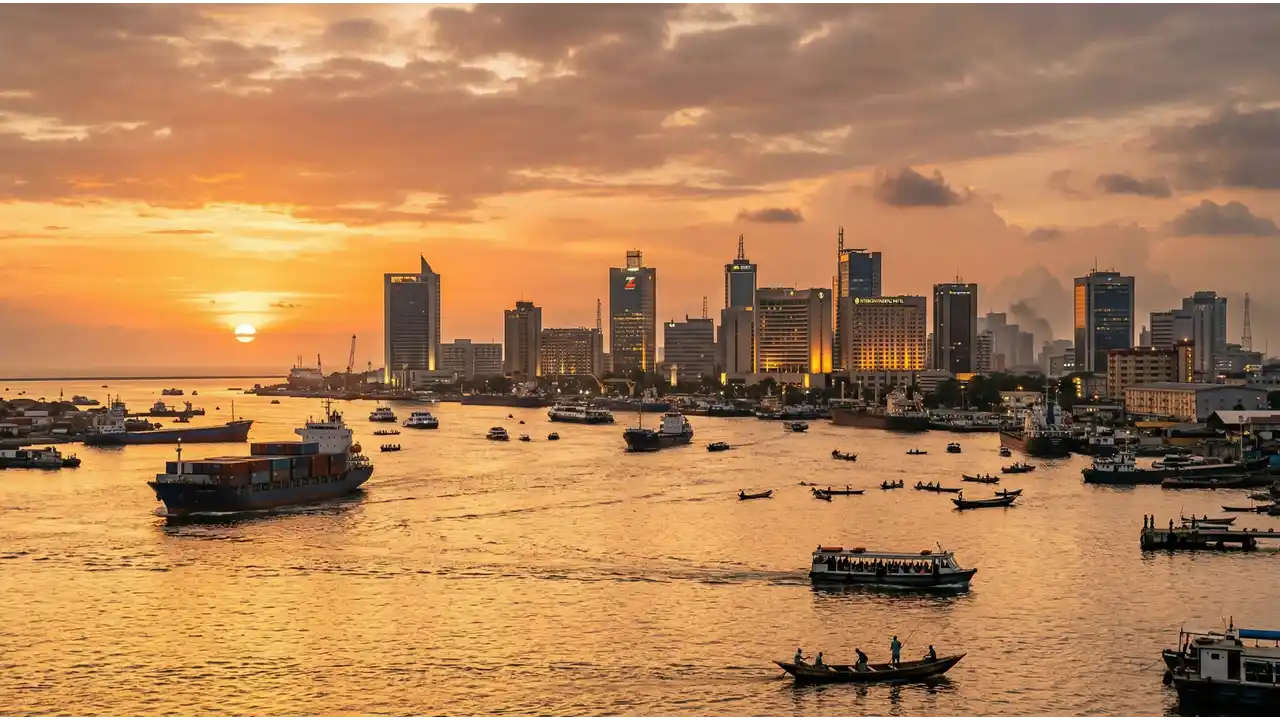
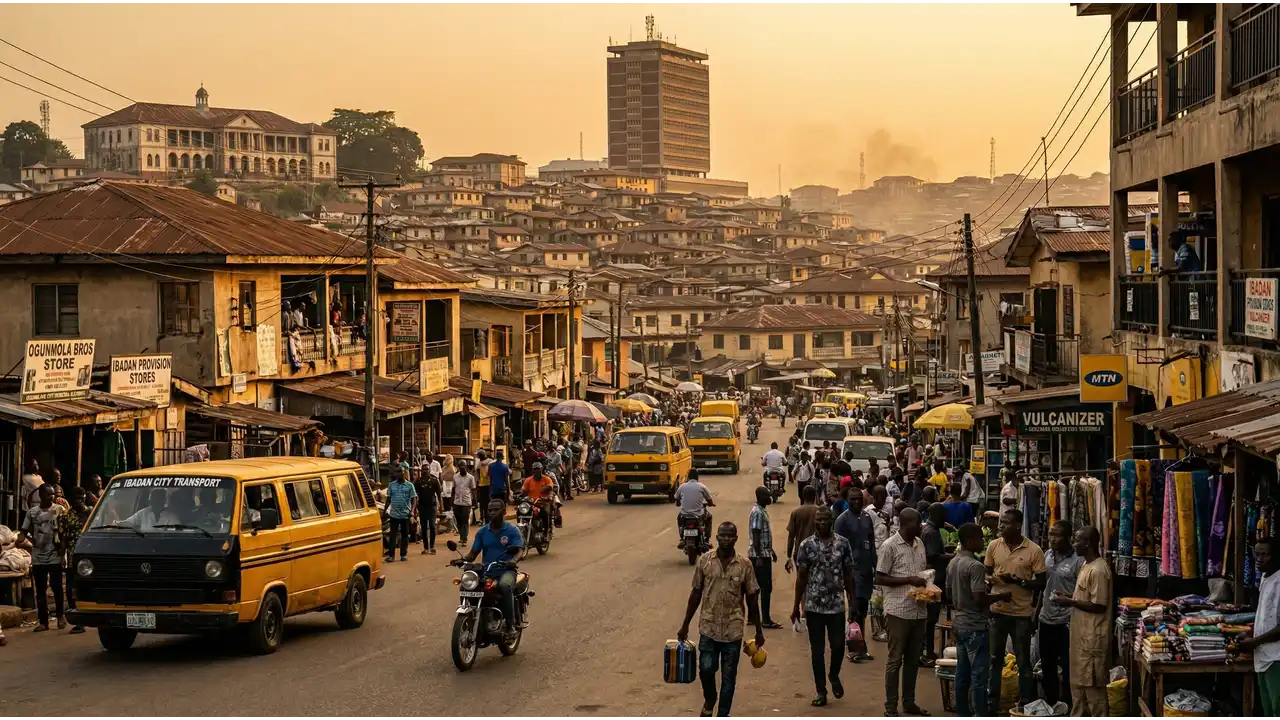
Kumasi is Ghana's second-largest city and the capital of the Ashanti Region. It sits in the forest zone, roughly 270 kilometers north of Accra, with a population around 2 million. The city functions as a commercial and administrative hub, with markets, universities, and manufacturing alongside government offices. Humidity is high year-round; the climate is tropical with two rainy seasons. Most residents are Ghanaian, though expat communities exist in specific neighborhoods. Daily life centers on markets, informal commerce, and traffic-heavy streets. Power cuts and water shortages occur but are less severe than in smaller towns. English is widely spoken. The pace is faster than rural Ghana but slower than Accra.
💡 Local Insights
Kumasi · 2026
Kumasi's costs run lower than Accra but with real variation by neighborhood and expat status. Housing, calculated at $447 per month, represents Ghana's national level that Kumasi inherits rather than a separate local measurement. In practice, expat-friendly areas command higher rents; Ghanaian-oriented neighborhoods cost substantially less. Food groceries total $162 per month using local markets and shops (Ashanti Market, Tafo Market). Expats often pay 30-50% premiums on imported goods and restaurant dining. Transport relies on shared taxis (tro-tros), which cost under $1 per trip within the city. Motorcycles (okada) run $0.30-0.60 per ride. Utilities add $40-80 monthly depending on usage and supply reliability. Healthcare varies: private clinics run $20-50 per visit, public facilities are cheaper but slower. Communication and internet are cheap ($10-20/month for mobile, $20-40 for home broadband). Negotiating rent, buying at local markets, and avoiding expat restaurants stretch budgets significantly.
Frequently Asked Questions
How much does it cost to live in Kumasi per month?
A moderate lifestyle in Kumasi costs approximately $950 per month. This breaks down roughly as follows: housing runs $447 per month (Ghana's national figure); groceries cost $162 per month; utilities and internet add $50-100; transport within the city averages $30-50; and meals at local restaurants run $2-5 each. The budget tier sits at $570 per month for those willing to rent in Ghanaian-oriented neighborhoods, eat entirely at markets and street stalls, and use public transport exclusively. A comfortable lifestyle runs $1,473 per month with better housing, regular restaurant dining, and more reliable utilities.
What is the average rent in Kumasi?
The housing figure of $447 per month represents Ghana's national level that Kumasi inherits, not a separate Kumasi market measurement. Local rents vary widely. In expat-favored zones like Adum and Tafo, one-bedroom apartments rent for $300-600 per month depending on condition and proximity to commercial areas. Ghanaian-oriented residential areas charge $100-250 for similar units. Houses with multiple bedrooms and compounds run $400-1,000 in middle-class neighborhoods. Utilities (water, electricity, waste) add $30-60 monthly and are often separate from rent. Lease agreements typically run one year, and deposits equal one month's rent. Prices are negotiable, especially for longer terms or local arrangements.
Is Kumasi cheap to live in for expats?
Yes, relative to North America and Europe, Kumasi is inexpensive. However, expat costs run 40-60% higher than Ghanaian locals pay because of housing preferences, imported food, private healthcare, and restaurant dining habits. A single expat can live comfortably on $1,200-1,500 monthly; couples often spend $1,800-2,200. Compared to other West African cities, Kumasi is cheaper than Lagos or Dakar but similar to Accra (which has better infrastructure). The real advantage lies in low baseline costs, not in expat discounts. Long-term expats who live locally, shop at markets, and use public transport reduce costs substantially.
How much does food cost per month in Kumasi?
Groceries cost approximately $162 per month when shopping at local markets. Staples include cassava, plantains, yams, rice, beans, and tomatoes at $0.50-2.00 per kilogram. Eggs run $6-8 per dozen; chicken costs $2-4 per pound; fish is $3-6 per pound. Cooking oil, salt, and spices are inexpensive. Imported goods (cheese, canned products, Western cereals) cost 3-5 times local prices. Street food and market chop shops serve full meals for $1-2. Mid-range restaurants charge $4-8. Expats eating primarily at restaurants and importing groceries easily spend $300-400 monthly on food. Markets operate daily; Ashanti Market and Tafo Market are the largest. Haggling is standard practice.
What salary do you need to live comfortably in Kumasi?
A comfortable lifestyle in Kumasi costs approximately $1,473 per month. This assumes better housing ($600-800), eating out regularly, reliable utilities, occasional entertainment, and the ability to travel within Ghana. For a single person, a gross monthly salary of $1,800-2,000 provides comfortable cushion after taxes and unexpected costs. Couples often budget $2,200-2,600 monthly to live well without financial stress. Expats working remotely on Western salaries find this very comfortable. Those earning local Ghanaian wages (typically $300-800 monthly) must live much more frugally. Teaching, skilled trades, and professional work typically pay $600-1,500 monthly in Kumasi.
How does the cost of living in Kumasi compare to other places?
Kumasi sits in the middle tier of West African cities for cost of living. A moderate lifestyle here runs $950 per month, with housing at $447 monthly. That puts it slightly more expensive than Khartoum, where a moderate lifestyle costs $675 per month, though Khartoum's housing is considerably cheaper at $176. You'll find Kumasi roughly comparable to Kampala, where both the moderate lifestyle ($900) and housing ($451) are nearly identical. The real jump comes if you're comparing to larger regional hubs like Bamako, where a moderate lifestyle reaches $1,325 monthly. For most expats and remote workers, Kumasi offers reasonable value, particularly if you avoid the most upscale neighborhoods and eat local. Your actual spend will depend heavily on whether you choose local or imported goods and what your housing standards are.
Yes, but only with deliberate choices. The budget tier of $570 per month requires renting in Ghanaian-oriented neighborhoods ($100-200), buying all food from markets and cooking at home ($120-150), using only shared taxis ($20-30), and avoiding restaurants, entertainment, and imported goods. This covers rent, food, transport, and basic utilities but leaves little margin for healthcare, phone credit, or unexpected costs. A single person with this budget works full-time or has secondary income. Expats attempting $570 monthly face genuine hardship and cultural isolation. Ghanaian nationals living this way manage through extended family support and informal safety nets. The figure is theoretically possible but practically stressful for most individuals.