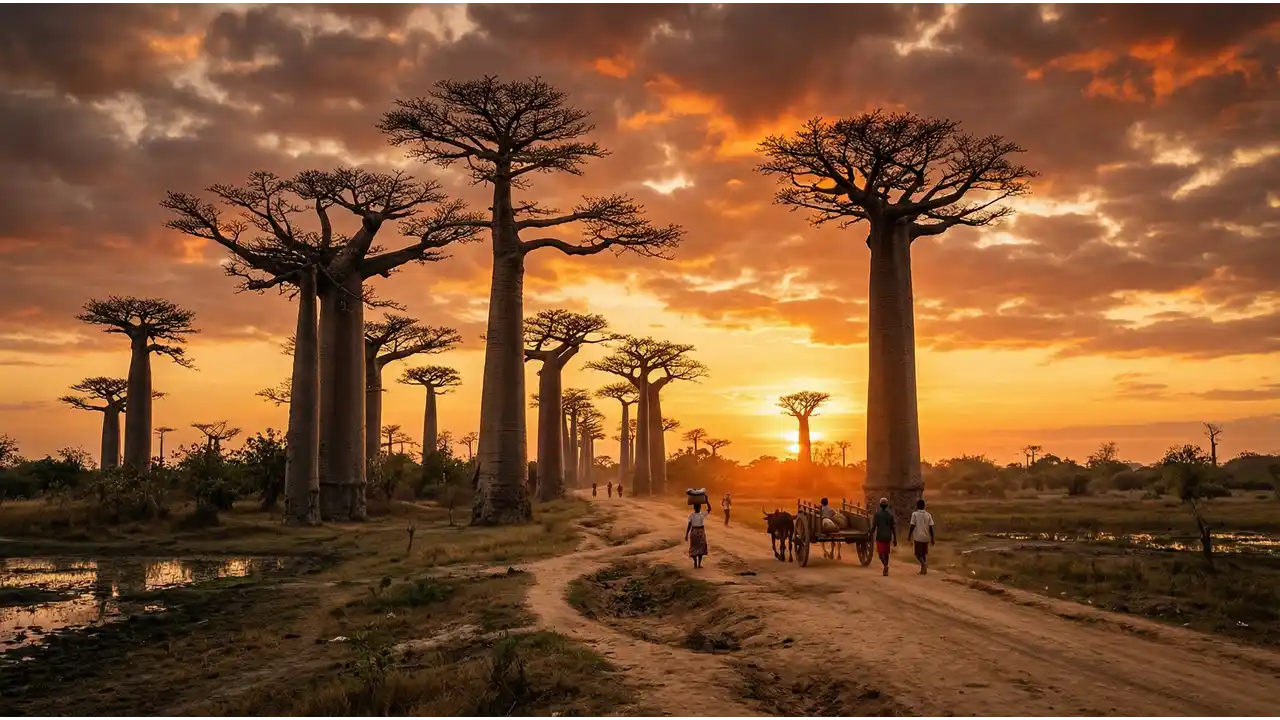
Madagascar is the world's fourth-largest island, located off the southeast coast of Africa. The population of roughly 28 million speaks Malagasy and French. Daily life centers on Antananarivo, the capital, or coastal towns like Toliara and Antalaha. The climate is tropical to subtropical, with a rainy season from November to March. Infrastructure outside major cities is basic. Most residents depend on markets, street food, and small shops. Expats and remote workers cluster in Antananarivo and beach towns, where internet reliability varies. The local currency, the Ariary, fluctuates against the dollar. Healthcare and education drive expat costs higher than local averages.
💡 Local Insights
Madagascar · 2026
Madagascar is genuinely inexpensive by global standards, though costs divide sharply between local and expat pricing. Housing averages $303 per month, with simple furnished apartments in Antananarivo renting for $200 to $400 depending on neighborhood and condition. Beachside rentals cost more. Groceries run around $144 per month if you shop local markets and cook at home; imported goods (cheese, cereal, quality wine) cost two to three times more. Street food and basic local restaurants charge $1 to $3 per meal. Transport is cheap: taxi-brousses (minibuses) between towns cost cents per kilometer, and in-city rides run $0.50 to $1. Water and electricity are affordable but unreliable in many areas. Healthcare and schooling push expat budgets higher. The Ariary weakens periodically, which can raise dollar costs for those holding local currency. Negotiate rent, buy from markets instead of supermarkets, and accept that reliability comes at a premium.
Frequently Asked Questions
How much does it cost to live in Madagascar per month?
A moderate lifestyle costs around $750 per month. A bare-bones budget runs $450 per month with tight choices on housing and food. A comfortable lifestyle, including better housing, dining out regularly, and international healthcare, costs $1,163 per month. Housing averages $303 per month, groceries around $144. Transport, utilities, and entertainment make up the remainder. Costs are lowest outside the capital and highest for expats seeking international-standard services.
What is the average rent in Madagascar?
Average rent is around $303 per month. In Antananarivo, simple one-bedroom apartments in older neighborhoods rent for $150 to $250; newer or central areas run $300 to $450. Coastal towns vary widely: beachfront property in tourist areas costs more, while inland towns are cheaper. Furnished rentals are standard. Expats often pay 30 to 50 percent premiums for 'foreigner-friendly' properties with reliable water and electricity. Long-term leases (12 months) often reduce monthly rates. Always negotiate; posted prices are starting points.
Is Madagascar cheap to live in for expats?
Yes, but with caveats. Groceries and local transport are genuinely cheap. Rent is affordable if you accept basic apartments and local neighborhoods. However, expats typically spend more than local figures suggest because they seek reliable utilities, internet, healthcare, and imported foods. A realistic expat budget on $750 per month requires comfort with trade-offs: intermittent water, slow internet, local hospitals, and cooking at home. Compare that to $1,200 to $1,500 monthly in West African countries like Senegal, and Madagascar remains cheaper. The trade-off is infrastructure reliability.
How much does food cost per month in Madagascar?
Groceries average $144 per month if you shop local markets. Rice, beans, cassava, bananas, and eggs are inexpensive. Fresh fish and meat cost $2 to $4 per pound. Imported goods (cheese, cereal, quality chocolate) cost three times local prices. Eating out: street meals run $1 to $2, casual local restaurants $3 to $5 per plate, restaurants catering to expats $10 to $20. Cooking at home is the cost-effective approach. Markets in Antananarivo are lively and cheap but require time and language skills to navigate confidently.
What salary do you need to live comfortably in Madagascar?
A comfortable lifestyle costs around $1,163 per month. This covers decent housing (around $400 to $500), groceries and occasional dining out ($250 to $300), reliable internet and utilities ($80 to $120), transport ($50 to $80), and a buffer for healthcare or unexpected costs. Remote workers earning $1,500 to $2,000 per month live very comfortably and can save significantly. Those earning $750 to $1,000 can manage if they budget carefully and skip expensive imports or frequent restaurant meals.
How does the cost of living in Madagascar compare to other places?
Madagascar sits in the lower-middle range for African cost of living. A moderate lifestyle costs $750 per month, with housing at $303 monthly. This puts it cheaper than Kenya, where a moderate lifestyle runs $800 with housing at $320 per month. Egypt is notably more affordable, with a moderate lifestyle at $550 and housing at $209 monthly. If you're considering the region's pricier option, Mauritius costs considerably more at $1,050 for a moderate lifestyle and $447 for housing. Madagascar's affordability reflects its status as one of Africa's lower-income countries, though prices have risen in the capital and tourist areas. Outside Antananarivo, costs drop further, particularly for food and local transport.
Yes, but only if you live like a local. This budget buys: basic housing for $150 to $200, groceries for $130 to $144, transport for $20 to $30, and utilities for $20 to $30. You must live outside tourist areas, cook all meals, avoid imported food, and accept occasional utility outages. Healthcare, internet, and any regular travel become luxuries. Many NGO staff and long-term expats prove it is possible, but it requires acceptance of local standards for comfort and connectivity. Budget travel or an intentional minimalist lifestyle, not typical expat living.